
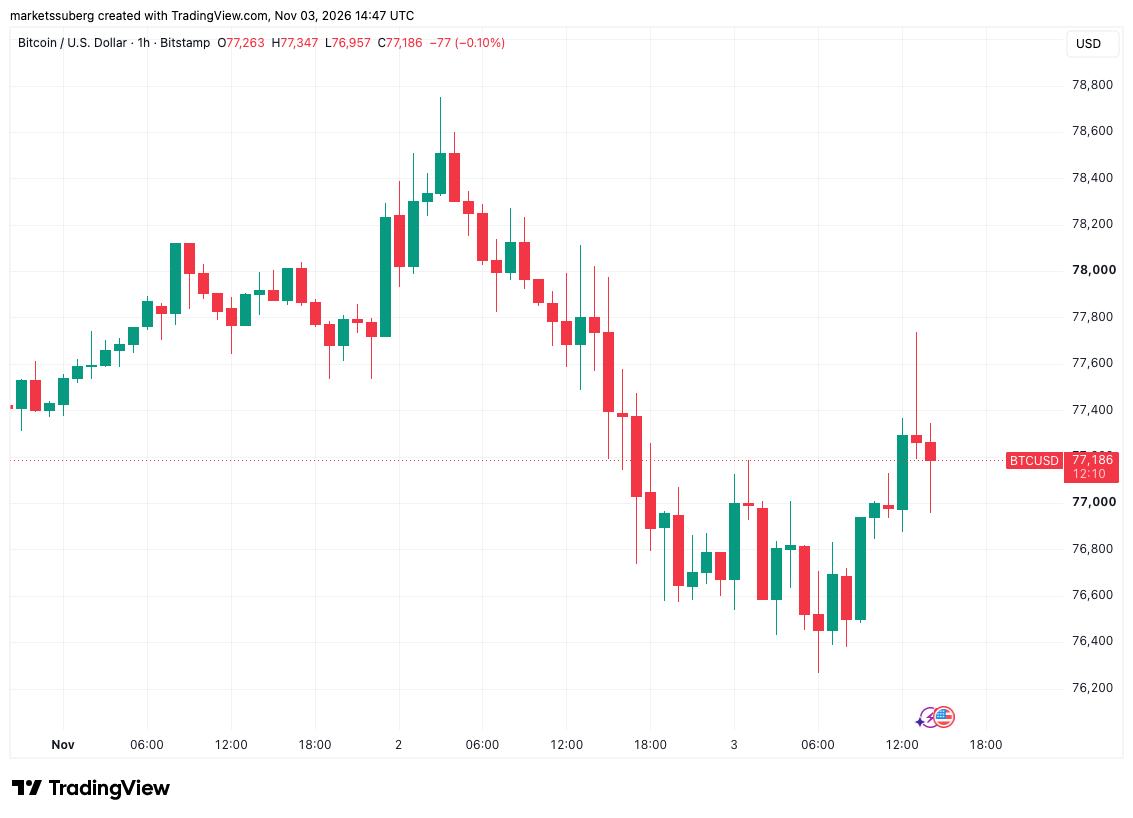
Bitcoin (BTC) experienced an upward trend at the Tuesday Wall Street open, buoyed by a resurgence in tech stocks and a nuanced outlook on the US midterm elections. The digital asset, trading around $77,000, managed to hold onto gains made after touching local lows near $76,300 on Friday, according to data from TradingView. This recovery in Bitcoin’s price occurred against a backdrop of mixed signals in traditional financial markets, where investors grappled with the potential ramifications of the upcoming US midterm elections and company-specific earnings reports.
The cryptocurrency market, often sensitive to broader economic and geopolitical shifts, showed resilience as traditional markets navigated complex factors. While Bitcoin has historically exhibited a degree of correlation with risk assets like technology stocks, its recent performance suggests a potential decoupling or at least a more complex interplay of influences. The price action on Tuesday indicated that positive sentiment in the tech sector was providing a supportive environment for digital assets, even as underlying uncertainties persisted.
Tech Stocks Navigate Mixed Signals and Election Apprehension
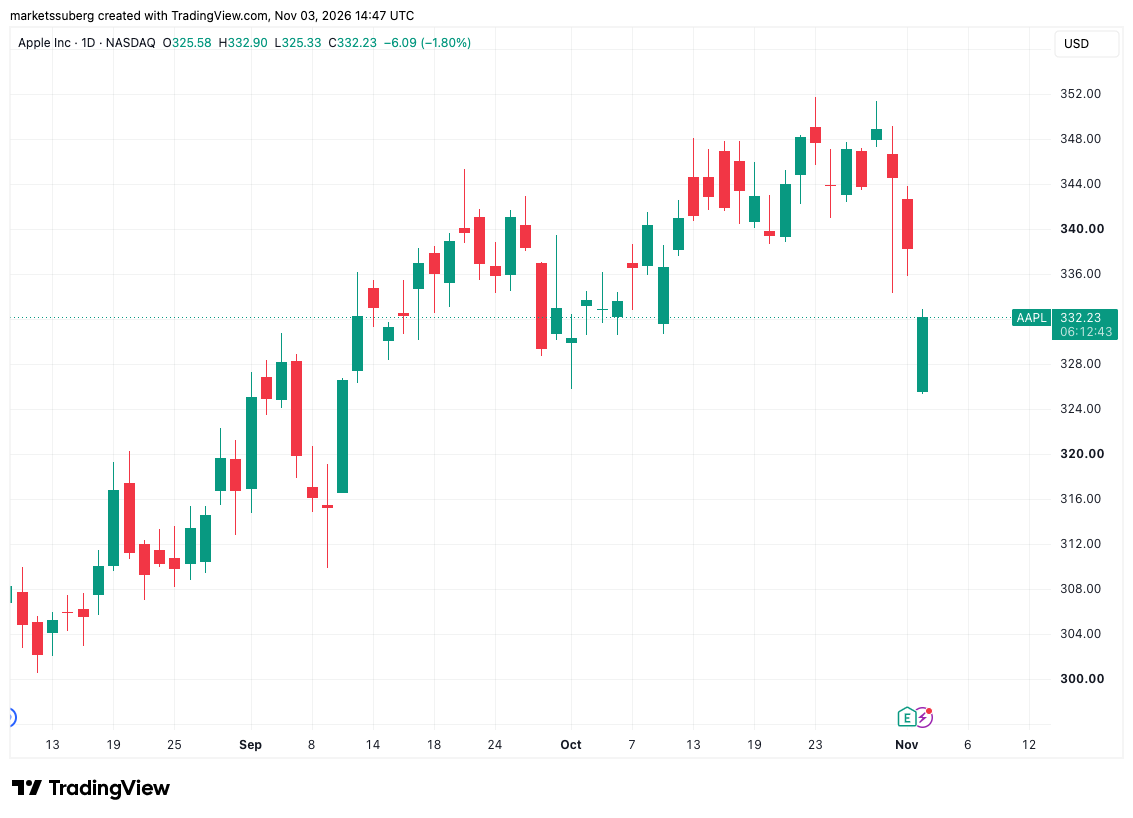
The US stock market opened with a degree of caution, as major indices grappled with conflicting economic indicators and political developments. Apple shares, a bellwether for the technology sector, saw an attempt to recoup earlier losses. The tech giant had experienced a significant premarket decline of 4% following its fourth-quarter earnings report. The company projected gross margins for the December quarter to be between 45% and 46%, a notable decrease from the 47.9% recorded in the prior quarter. This downward revision was attributed by Apple to escalating costs associated with memory chips, a critical component in its product line.
Beyond corporate earnings, the impending US midterm elections loomed large over market sentiment. Polls had indicated a potential for substantial gains by the Democratic Party, which could alter the balance of power in Congress. However, a prevailing sense of skepticism permeated the investment community. Analysts cautioned that the electoral outcomes might not align with the more decisive shifts suggested by polling data, leading to increased market volatility.
Tobin Marcus, head of US policy and politics at equity research firm Wolfe Research, articulated this sentiment to CNBC, stating, "Investors seem to have a significant dose of skepticism about whether the final outcome is going to be quite as favorable to Democrats as the polling suggests." Wolfe Research further suggested that the polls might be "likely overstating Democratic strength," implying a potentially narrower victory or even Republican resilience in key races. This divergence between poll predictions and investor expectations contributed to a cautious trading environment.
The implications of a divided Congress, or indeed any shift in political control, are significant for fiscal policy, regulatory frameworks, and economic stimulus measures. Historically, periods of political transition and uncertainty have led to increased market choppiness as investors attempt to price in future policy directions.
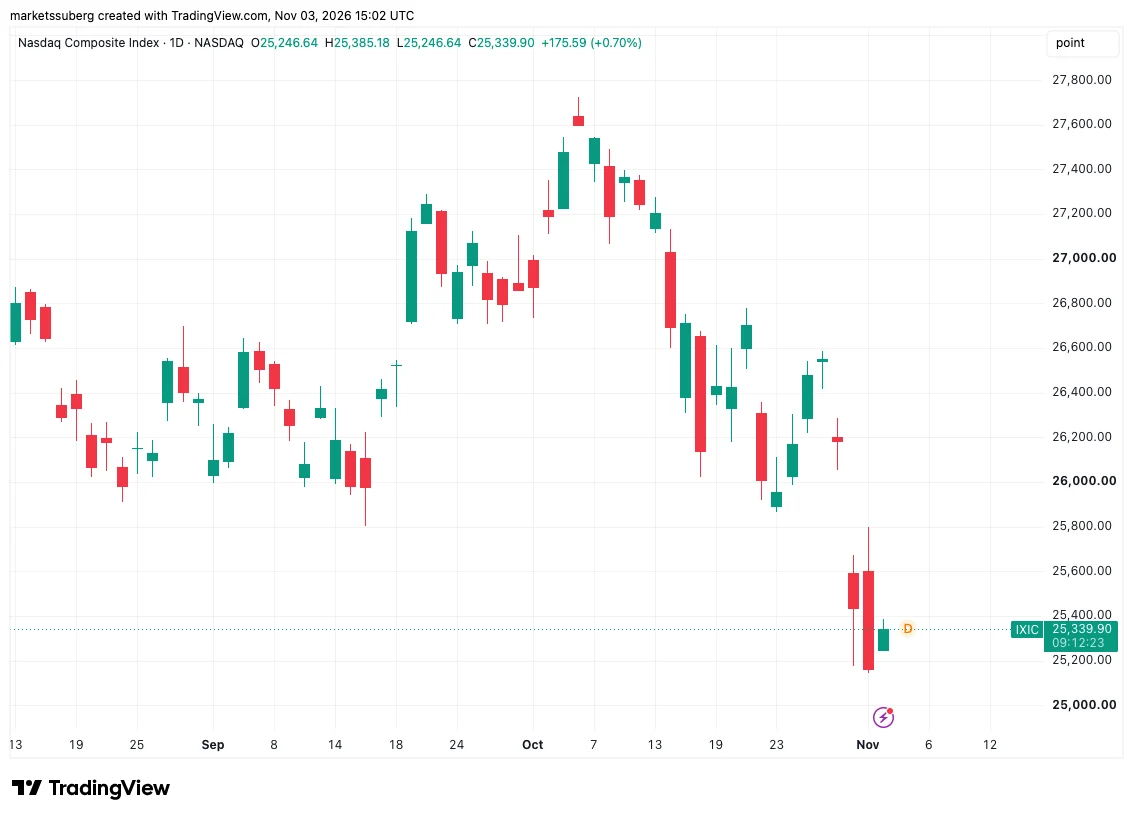
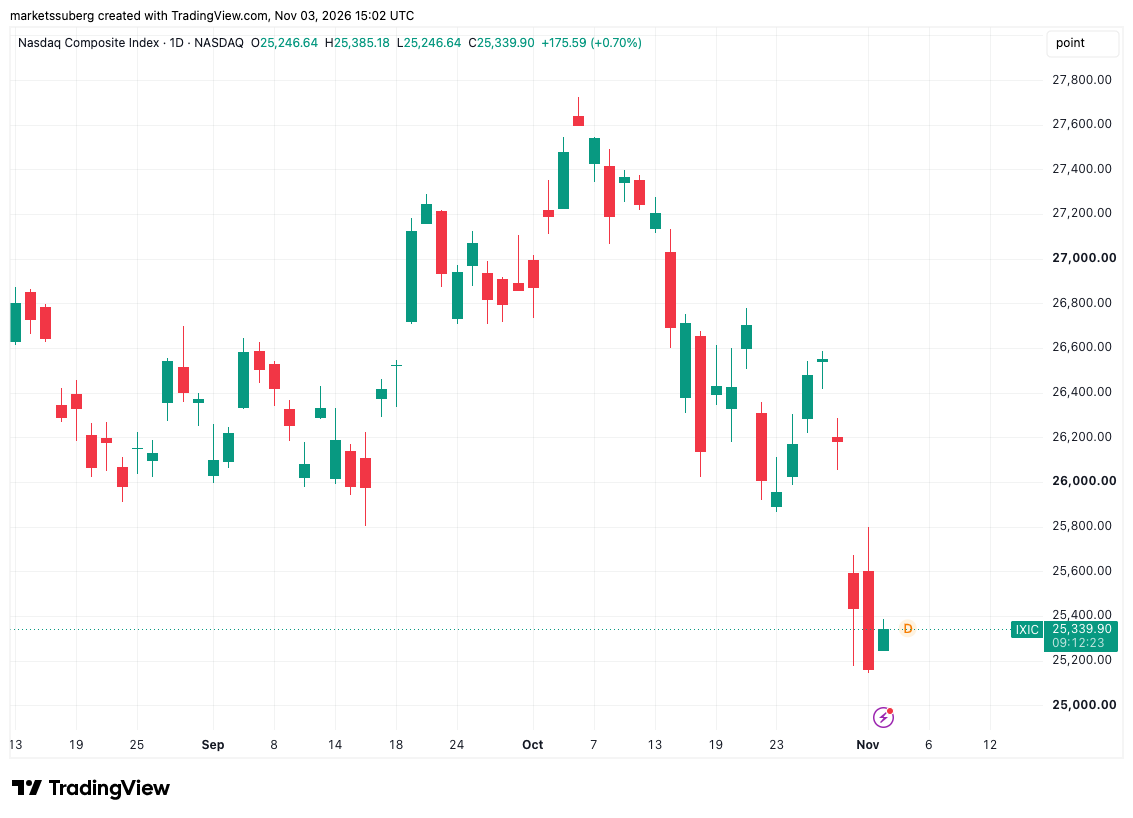
On Monday, the broader market reflected these concerns. The S&P 500 closed down by 0.5%, while the tech-heavy Nasdaq Composite Index saw a more pronounced decline of 1.1%. Analysts at The Kobeissi Letter, a prominent trading resource, argued that this market weakness was not solely attributable to concerns over artificial intelligence (AI) spending, but rather a more fundamental repricing driven by US political uncertainty.
"The reality is that the market is pricing-in a major shift in the political landscape of the US," The Kobeissi Letter posted on X (formerly Twitter). Their analysis suggested that the market was anticipating a scenario of protracted legislative gridlock, particularly if the elections resulted in a divided Congress. Such a scenario could lead to frequent policy impasses, rendering economic and regulatory decisions less predictable. The firm’s commentary underscored a fundamental market principle: "A change in the political landscape always comes with uncertainty; markets hate uncertainty." The stark conclusion offered was, "Objectively, the market is in the process of pricing-in two years of political gridlock." This sentiment highlights the market’s aversion to unpredictability, which can stifle investment and economic growth.
Bitcoin’s Price Trajectory Amidst Election Ambiguity
Bitcoin’s performance on Tuesday suggested that the cryptocurrency was finding some support from the broader risk-on sentiment emerging in certain segments of the equity market. While the digital asset hovered around the $77,000 mark, its ability to remain above the $76,300 support level demonstrated a degree of stability. This level had been tested earlier in the week, and its defense indicated that recent buyers were not yet significantly underwater, a crucial psychological and technical indicator for market sentiment.
The correlation between Bitcoin and the Nasdaq Composite Index, particularly in recent years, has been a subject of considerable analysis. Both assets are often viewed as growth-oriented investments, susceptible to macroeconomic shifts and investor risk appetite. The Nasdaq’s downturn on Monday, reflecting broader tech sector anxieties, had exerted downward pressure on Bitcoin. However, the nascent recovery in tech stocks on Tuesday provided a tailwind for Bitcoin, suggesting that the correlation remained a significant factor in its price movements.
The uncertainty surrounding the US midterm elections adds another layer of complexity to Bitcoin’s outlook. Depending on the election outcomes, potential policy shifts could impact the regulatory landscape for digital assets. For instance, a significant change in congressional control could lead to new legislative proposals concerning cryptocurrency taxation, oversight, or even the approval of Bitcoin-related financial products. The market’s anticipation of these potential policy developments is a key driver of its pricing in the lead-up to and aftermath of the elections.
Oil Markets Digest Geopolitical Developments
In parallel to the equity and cryptocurrency markets, oil prices also navigated a complex geopolitical landscape. Crude oil prices showed signs of digesting a recent US strike on Iran’s Qeshm Island, a strategically important location for controlling the Strait of Hormuz, a vital oil transit route. This development occurred just days after US Secretary of State Marco Rubio indicated that President Donald Trump was open to a diplomatic resolution of the US-Iran conflict. These remarks had previously triggered a significant 7% drop in West Texas Intermediate (WTI) crude oil prices on Monday.
On Tuesday, WTI crude oil experienced a fluctuating trading session. It initially surged to $98.80 per barrel before retreating below $94, marking its lowest level since October 15. This price action reflects the market’s attempt to balance the immediate geopolitical tensions with the prospect of de-escalation. The Strait of Hormuz is a critical chokepoint for global oil supply, and any disruption in this region can have immediate and significant impacts on global energy prices. The market’s reaction suggests that the diplomatic overtures were having a more pronounced impact on sentiment than the immediate military action, at least in the short term.
The interplay between geopolitical events and commodity prices is a well-established phenomenon. Oil prices are particularly sensitive to supply disruptions and the potential for conflict in key producing regions. The US-Iran dynamic, a persistent source of tension in the Middle East, carries substantial implications for global energy markets. The market’s current pricing appears to be weighing the immediate risk of escalation against the perceived likelihood of a diplomatic breakthrough, leading to a degree of price volatility.
Broader Implications and Future Outlook
The confluence of these market movements—Bitcoin’s recovery, tech stock resilience, and the evolving geopolitical oil narrative—paints a picture of a financial world increasingly interconnected and sensitive to a wide array of global events. The US midterm elections, in particular, represent a significant variable that could shape economic policy and regulatory approaches for years to come.
For Bitcoin and the broader cryptocurrency market, the outcome of the elections could have profound implications for regulatory clarity. A more favorable regulatory environment could unlock further institutional adoption and investment, while increased scrutiny or restrictive policies could present headwinds. The market’s current pricing of potential political gridlock suggests an expectation of slower legislative progress, which could mean a more gradual evolution of cryptocurrency regulations.
The performance of tech stocks remains a critical barometer for risk appetite. A sustained rebound in the tech sector would likely provide a more robust foundation for Bitcoin’s ascent. Conversely, any renewed weakness in technology shares, potentially triggered by disappointing earnings, persistent inflation concerns, or further geopolitical shocks, could drag Bitcoin lower.
The oil market’s reaction to the US-Iran situation highlights the enduring impact of geopolitical risk on commodity prices. Any sustained escalation of tensions in the Strait of Hormuz would almost certainly lead to a significant upward revision in oil prices, with potential ripple effects across the global economy, including increased inflationary pressures. Conversely, successful diplomatic de-escalation could lead to a more stable or even declining oil price environment.
In conclusion, Tuesday’s trading session underscored the dynamic and interconnected nature of global financial markets. Bitcoin’s upward trajectory, occurring within a broader tech stock rebound and amidst the backdrop of US midterm election uncertainty, demonstrated the asset’s capacity to draw support from positive market sentiment. However, the underlying political and economic uncertainties suggest that volatility is likely to remain a key characteristic of the market landscape in the near future. Investors will be closely monitoring election results, corporate earnings, and geopolitical developments for further direction.

