

The global financial landscape has witnessed an extraordinary bull run in recent years, with the S&P 500 index, a benchmark for broad market performance and a cornerstone of many retirement portfolios, skyrocketing by approximately 57% over the past two years alone. Looking further back, its value has more than doubled in just five years, a trajectory that has prompted both exhilaration among investors and a growing chorus of caution from financial analysts. This rapid appreciation has led many to question the sustainability of current valuations, particularly amidst fervent speculation surrounding the transformative potential of Artificial Intelligence (AI).
An Unprecedented Market Rally and Shifting Fortunes
The significant upward trend has created a paradoxical situation for investors. Individuals who, as recently as the "Covid Era," perceived themselves as halfway to their retirement goals may now find their financial positions dramatically advanced, potentially even surpassing their initial targets. Conversely, long-retired individuals might feel a newfound affluence, leading to considerations of more extravagant purchases or changes in spending habits. This raises a fundamental question echoing across the investment community: Is this growth a reflection of genuine economic strength and innovation, or does it signal an impending market bubble, a financial illusion poised for a significant correction?

A recent query from an investor encapsulates this widespread concern: "The market appears to be in a substantial bubble due to intense hype around Artificial Intelligence. Does this increase its vulnerability to a major crash in the future, and how might such an event impact my retirement savings?" To address this, a meticulous examination of the contemporary financial environment and stock market dynamics is essential, starting with the foundational understanding of what constitutes a stock.
Understanding Stock Value: Beyond the Price Tag
At its core, a stock represents an ownership stake in a company, granting its holder a share of the company’s future earnings. This concept can be analogized to owning a rental property. When one owns a rental house, the primary financial benefit is the rent collected. After deducting expenses, the remaining sum constitutes profit. The market value of the house, while appearing to increase on paper, only translates into tangible gains upon sale. Even then, the proceeds would likely be reinvested at similarly inflated prices for another property, yielding no immediate increase in cash flow. True profitability in rental property hinges on increasing net earnings through improvements, cost efficiencies, or expanding rental income.
When a rental property is sold, its price is ideally determined by the anticipated future income stream. For instance, a house generating $2,000 per month ($24,000 annually) sold for $240,000 represents a price-to-earnings (P/E) ratio of 10 (240k / 24k = 10). However, if the same property fetches $480,000, the P/E ratio climbs to 20. While lucrative for the seller, this higher ratio suggests a less favorable outlook for the buyer, implying lower future returns relative to the initial investment.

Applying this principle to the stock market reveals a similar trend. An investment of $100,000 in the S&P 500 in 2019, with dividends reinvested, would have grown to an estimated $256,960 by 2025 – a remarkable 157% gain. Yet, over the same period, the underlying corporate earnings attributable to that $100,000 investment only increased from $5,290 to $7,540, a more modest 42% rise. This disparity has pushed the market’s aggregate P/E ratio from approximately 20 in 2019 to around 30 today, according to data from analysis sites like multpl.com.
This escalation in the P/E ratio indicates that investors are currently paying a significantly higher premium for each dollar of corporate earnings. While owning stocks remains profitable, purchasing them at today’s elevated P/E ratio suggests that future returns, as a percentage of portfolio value, will likely be lower compared to periods when valuations were more modest. This is a fundamental mathematical reality of investing.
The Role of Anticipated Earnings: A Case for Growth
The narrative shifts when future earnings are projected to rise significantly. Consider the rental house scenario again: an investor might pay an inflated price today if they knew a major economic development, such as a new Apple campus, was imminent, promising rapidly escalating rents for years to come. This anticipation of future growth justifies a higher current valuation.

Similarly, an individual company’s stock price often surges on positive news that signals future profitability. During the COVID-19 pandemic, Peloton Interactive saw its stock soar as investors erroneously believed the home exercise boom would be a permanent shift. Once reality set in and sales normalized, the stock price corrected. The current market-wide exuberance, however, prompts a different question: Does it signify an expectation of universally accelerated economic growth across the entire economy?
The "Magnificent Seven" and Market Concentration
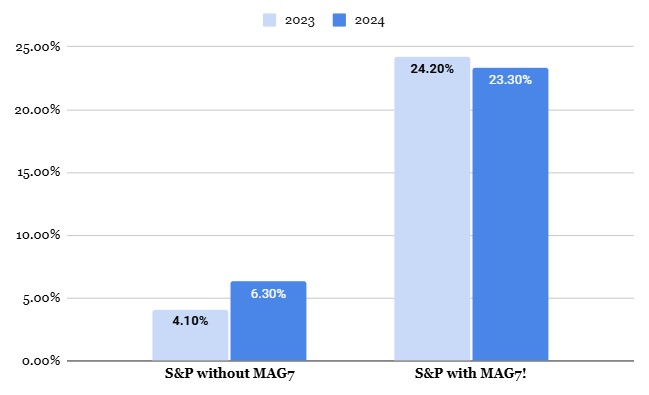
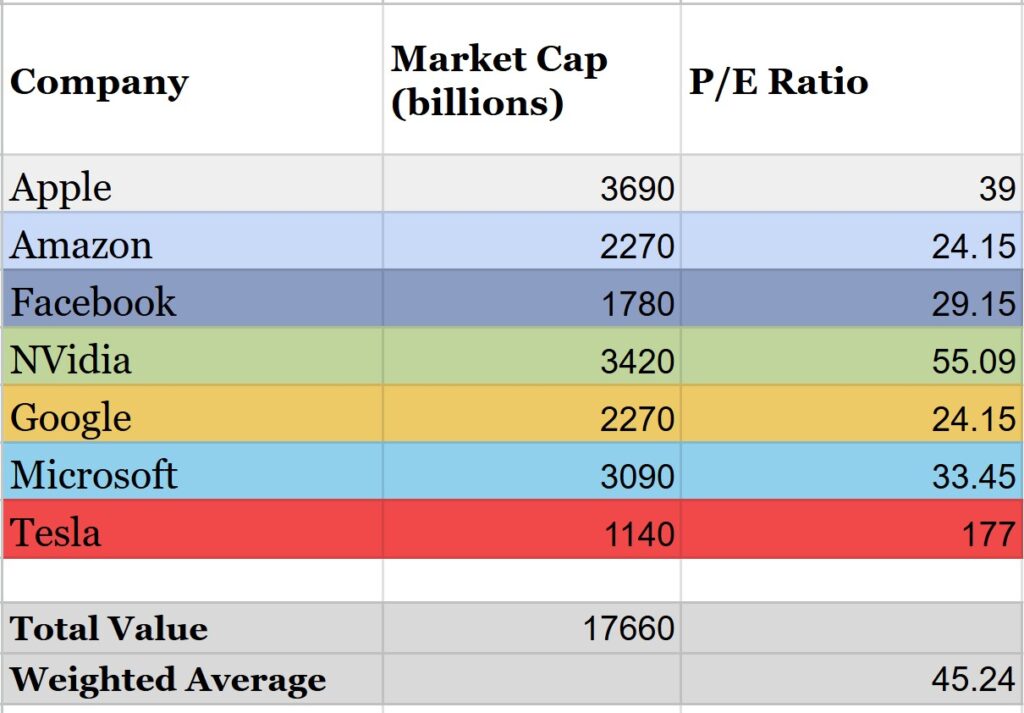
A closer inspection of the S&P 500 reveals that the recent market surge is not evenly distributed. Approximately three-quarters of the index’s growth has been driven by just seven colossal technology companies, collectively dubbed the "Magnificent Seven": Apple, Nvidia, Microsoft, Amazon, Alphabet (Google), Meta Platforms (Facebook), and occasionally Tesla. These companies represent a staggering concentration of market value, collectively accounting for over 25% of the S&P 500’s total market capitalization, which currently stands at an astounding $17.66 trillion.
These tech giants, characterized by high profitability and immense growth potential, have seen their share prices aggressively bid up by investors betting on continued expansion. Their weighted average P/E ratio is significantly higher, hovering around 45, starkly contrasting with the P/E ratio of the remaining 493 companies in the S&P 500, which stands at a more modest, though still above-average, 20. This bifurcation suggests that while investors anticipate a generally healthy U.S. economy, they expect the biggest tech firms to enjoy disproportionately faster growth.
Artificial Intelligence: The Catalyst for Current Euphoria
The common thread weaving through the valuation surge of these tech behemoths is the rapid advancement and pervasive hype surrounding Artificial Intelligence. Recent breakthroughs in AI, particularly in areas like large language models and generative AI, have astonished the business world, demonstrating human-like reasoning and capabilities across an expanding array of applications. This technological leap has ignited a global frenzy, with industries across the spectrum envisioning a new era of unprecedented productivity and profit growth.
Six of the "Magnificent Seven" are investing hundreds of billions of dollars into constructing vast data centers filled with advanced supercomputers, critical infrastructure for AI development and deployment. Nvidia, the seventh, occupies a uniquely advantageous position as the primary supplier of the specialized graphics processing units (GPUs) essential for these supercomputers. The insatiable demand for Nvidia’s hardware has allowed the company to command premium prices and ship products by the trainload, making it a direct beneficiary of the AI infrastructure boom.
The implications of AI extend far beyond infrastructure. The technology now enables sophisticated tasks such as detailed analysis of complex documents (novels, legal contracts), identification and rectification of coding errors, autonomous driving, advanced medical diagnostics (e.g., melanoma detection from images), accelerated drug discovery, and the development of humanoid robots capable of performing physical labor. The prevailing sentiment is that humanity stands on the precipice of an era defined by an infinite, highly intelligent, and essentially free workforce, effectively removing the historical constraints of finite human intelligence and labor.
The Unpredictable Future: Profits, Competition, and Societal Shifts
While the transformative potential of AI is widely acknowledged, the precise timeline and ultimate outcomes remain shrouded in uncertainty. The critical question for investors is whether the projected profits of these companies will materialize at the levels currently being factored into their valuations. Potential challenges include unforeseen cost overruns in AI development, intensified competition, and the inherent risks associated with deploying increasingly autonomous and intelligent systems.
Beyond corporate profits, the broader societal implications of AI present a complex picture. The prospect of widespread job displacement due to automation raises concerns about mass unemployment and potential social upheaval. Such scenarios could dramatically alter economic structures and wealth distribution, potentially concentrating immense wealth in the hands of a few, as playfully depicted by the image of a hypothetical "Sam Altman atop his personal mountain of $100 trillion dollars." Ultimately, the future trajectory of AI and its economic impact is unknowable, a sentiment echoed by the perennial truth in investing: nobody truly knows what the future holds.
Historical Economic Growth and Valuation Anomalies

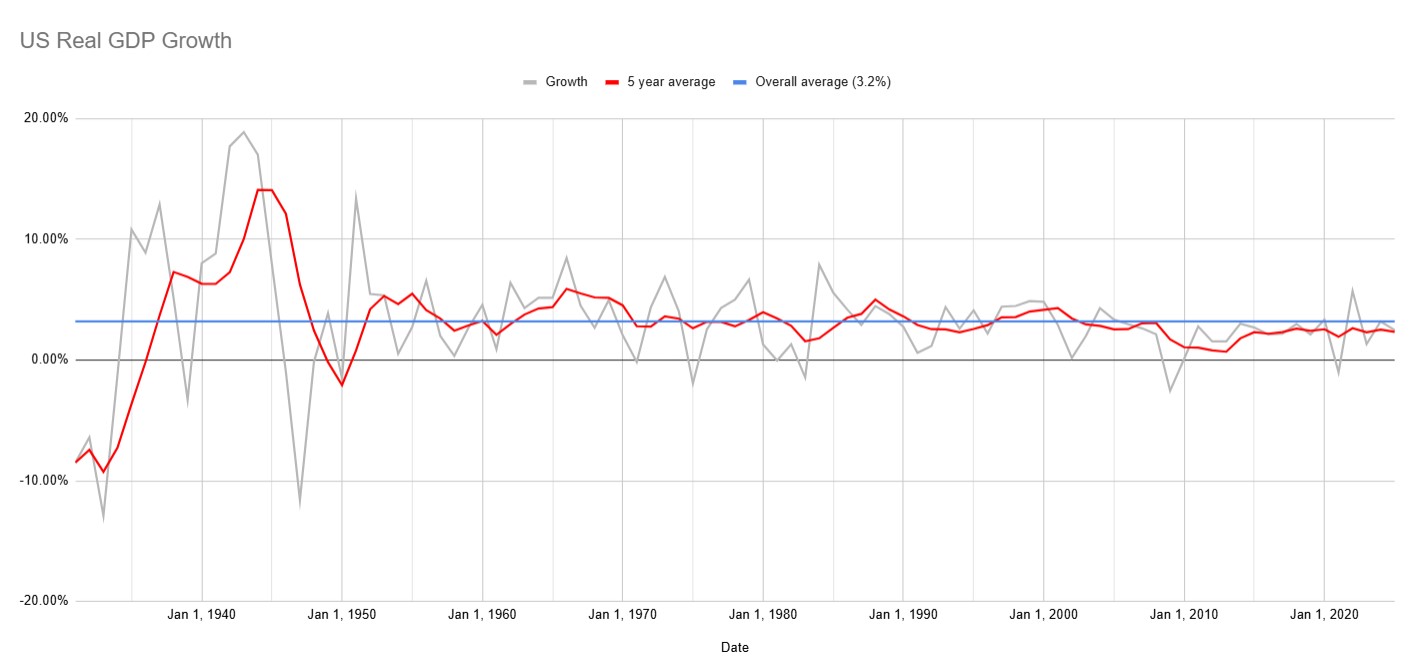
Despite the revolutionary advancements, historical data offers a sobering perspective. The long-term average real GDP growth rate for the U.S. economy has remarkably stabilized at around 3% after inflation, decade after decade. Interestingly, recent decades have actually exhibited slower than average growth, which, when viewed in isolation, provides even less fundamental justification for the current elevated stock market valuations. This historical consistency underscores the challenge of sustaining exceptionally high growth rates over extended periods, even with groundbreaking technological innovation.
Navigating the Market: Investor Strategies and Alternative Considerations
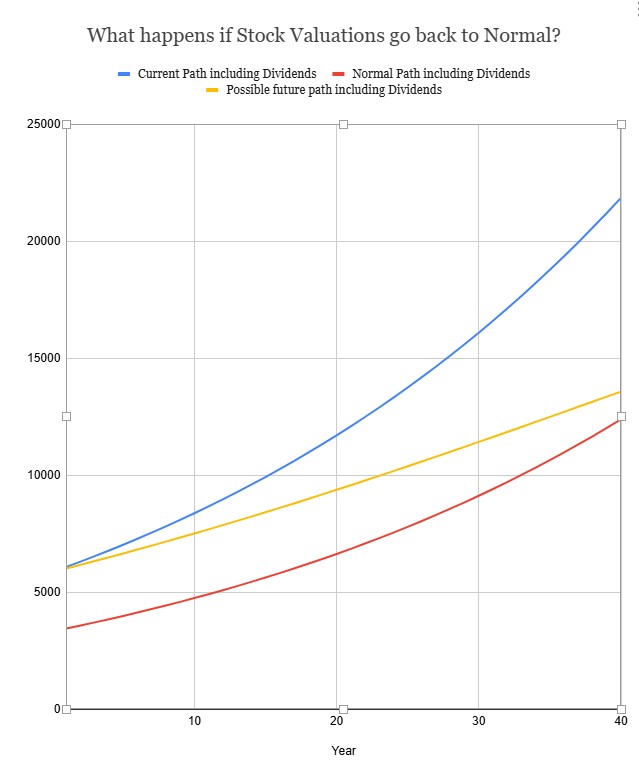
Given the current market environment, what actionable steps should investors consider? The consistent advice from long-term investment philosophy remains: relax, maintain a disciplined investment strategy, and resist the temptation to time the market. Attempting to sell high and buy low is a notoriously difficult and often losing endeavor. Over the long run, even if market valuations normalize, a path of steady, albeit potentially lower, returns is still expected. The economy will continue to grow, and corporate earnings will generally follow suit, but future investors might simply be willing to pay a lower multiple for those earnings.
Diversification and Expert Projections
While the U.S. stock market remains a robust investment vehicle, exploring diversification beyond it is prudent. Vanguard, a titan in the index fund industry, issues annual 10-year annualized return forecasts. Their latest projections suggest that international stocks and even bonds are expected to outperform U.S. stocks in the coming decade. This forecast is underpinned by the lower P/E ratio of international stocks (e.g., Vanguard’s VXUS fund has a P/E of 15.9), indicating they are trading at a significant discount compared to their U.S. counterparts. However, Vanguard’s similar predictions in previous years have yet to materialize, partly due to the concentrated AI boom primarily impacting U.S. tech giants.
Robo-advisors like Betterment offer diversified portfolios that allocate across various asset classes, including international stocks and bonds, aiming for potentially higher returns with reduced volatility and tax advantages. A typical Betterment core portfolio, encompassing a broader range of holdings, currently exhibits a weighted average P/E ratio of approximately 22, representing a more balanced valuation compared to the highly concentrated S&P 500.
The Wisdom of Warren Buffett and Mortgage Considerations
Even seasoned investors like Warren Buffett, the "Oracle of Omaha," signal caution. Berkshire Hathaway’s substantial cash reserves, amounting to $334 billion, and its reluctance to repurchase its own shares (which it deems slightly overvalued at a P/E ratio around 21) indicate a belief that bargains are scarce in the current market. This cautious stance from one of history’s most successful value investors underscores the prevailing sentiment of elevated valuations.
For individual investors, the decision to pay off a mortgage versus investing in the stock market becomes more nuanced in a high-interest rate environment. Historically, investing surplus cash into index funds while maintaining a mortgage often yielded better long-term returns. However, with current mortgage rates potentially reaching 7%, paying off the mortgage effectively offers a guaranteed, tax-free return equivalent to that interest rate. This makes it a highly competitive alternative to potentially lower expected stock market returns, particularly for those who value the psychological peace of being debt-free.
The Enduring Principles of Long-Term Investing
The core tenets of successful long-term investing remain unchanged: maintain a consistent investment strategy, diversify appropriately, and avoid emotional reactions to daily market fluctuations. While staying informed is valuable, particularly through reputable sources like The Economist, excessive focus on daily news headlines often leads to suboptimal decisions.
Ultimately, true "market-beating returns" in life are often found outside the financial markets. Reinvesting the time and mental energy saved from worrying about market volatility into engaging in physical activities and enjoying the natural world offers tangible, guaranteed benefits for well-being and happiness. The serene vistas of a riverwalk or the challenge of a mountain peak represent a different kind of wealth, one that offers immediate and profound returns, irrespective of market cycles. The debate over AI’s impact and market valuations will continue, but the fundamental principles of living a fulfilling and financially secure life endure.

