
A federal appeals court has delivered a significant setback to the Trump administration’s efforts to implement key components of its election integrity order concerning mail-in voting. In a 2-1 decision issued on July 26, 2026, the 1st U.S. Circuit Court of Appeals sided with 23 Democrat-led states and the District of Columbia, rejecting the Justice Department’s plea to pause a lower court injunction. This ruling effectively blocks federal agencies from enforcing several provisions of President Donald Trump’s Executive Order 14399 in these states, just months before the crucial November 3 midterm elections. The decision immediately sets the stage for a likely expedited appeal to the Supreme Court, highlighting the deep partisan divisions and ongoing legal battles over election administration in the United States.
The Appellate Court’s Decision and Immediate Aftermath
The majority opinion from the 1st Circuit Court of Appeals affirmed the preliminary injunction initially issued by U.S. District Judge Indira Talwani in June. This injunction prevents the Department of Homeland Security (DHS), the U.S. Postal Service (USPS), and the Department of Justice (DOJ) from carrying out specific directives outlined in Executive Order 14399. The appeals court’s refusal to grant a stay means that the lower court’s ruling remains in effect while the broader appeal process unfolds, a timeline that could extend well beyond the upcoming midterms.
Central to the appellate court’s reasoning was the argument that the plaintiff states faced "rapidly approaching deadlines" and "no practical choice but to respond" to the executive order immediately, even if federal agencies had not yet finalized all implementing rules. This contradicted the administration’s assertion that the lawsuit was premature, as the order’s directives were already creating significant administrative and logistical burdens for state election officials. The dissenting judge, however, likely echoed the administration’s position that the order was not yet fully actionable and therefore not ripe for judicial intervention, or that the federal government possessed the inherent authority to issue such directives.
With the appeals court ruling now in place, the Justice Department has strongly indicated its intention to seek emergency relief from the Supreme Court. This move, which was anticipated and flagged by the administration earlier in the litigation, underscores the urgency and high stakes involved. An emergency appeal to the nation’s highest court would likely request a swift decision, potentially even before the full appellate process concludes, given the proximity of the midterm elections.
Background of Executive Order 14399: A Push for Election Integrity
President Trump signed Executive Order 14399 in March 2026, framing it as a critical measure to "shore up confidence in an election system Republicans have long argued is vulnerable to fraud and error." The order was a direct response to persistent concerns raised by the administration and its allies regarding the security and integrity of elections, particularly in the context of expanded mail-in voting.
Key provisions of EO 14339 included:
- Voter Roll Verification: Directing the Department of Homeland Security (DHS) to compile comprehensive lists of confirmed citizens eligible to vote and to share these lists with state election authorities. The intent was to facilitate the accurate purging of voter rolls, removing individuals who are not U.S. citizens or are otherwise ineligible.
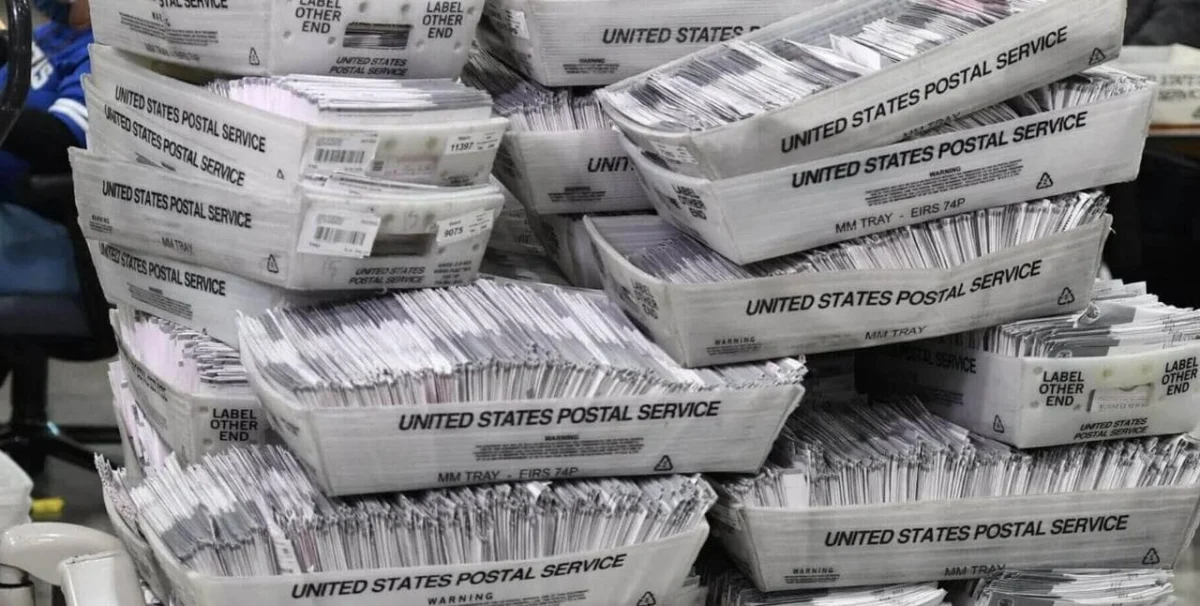
- Mail-in Ballot Standards: Instructing the U.S. Postal Service (USPS) to establish new, more stringent handling and processing standards for mail-in ballots. This aimed to address concerns about ballot harvesting, timely delivery, and chain of custody for ballots cast remotely.
- Fraud Investigation Prioritization: Ordering the Department of Justice (DOJ) to prioritize investigations into allegations of election fraud, specifically targeting state and local officials who send federal ballots to individuals who should not receive them or engage in practices deemed to compromise ballot integrity.
The administration argued that these measures were necessary safeguards to prevent voter fraud, enhance transparency, and ensure the legitimacy of election outcomes. Proponents of the order pointed to instances, often anecdotal or unproven on a large scale, of irregularities in previous elections, particularly those with widespread mail-in voting. They contended that verifying citizenship, standardizing ballot handling, and prosecuting questionable practices were fundamental to maintaining public trust in the democratic process.
The Heart of the Dispute: Federal vs. State Authority
The lawsuit, led by California, Massachusetts, Nevada, and Washington, and joined by 19 other states and the District of Columbia, centers on a fundamental constitutional question: who holds primary authority over the administration of federal elections? The plaintiff states, all governed by Democrats, contend that the U.S. Constitution grants them, not the President or the federal government, the principal power to manage federal elections within their borders.
Their legal arguments largely rest on the Election Clause (Article I, Section 4) of the Constitution, which states that "The Times, Places and Manner of holding Elections for Senators and Representatives, shall be prescribed in each State by the Legislature thereof; but the Congress may at any time by Law make or alter such Regulations." The states argue that while Congress has a role, the President, acting unilaterally through executive order, does not possess the authority to dictate election procedures to sovereign states. They also invoked the Tenth Amendment, asserting that powers not delegated to the federal government by the Constitution, nor prohibited by it to the states, are reserved to the states respectively, or to the people. Election administration, they argue, is one such reserved power.
U.S. District Judge Indira Talwani, in her initial ruling in June, largely agreed with the states’ position, finding that several provisions of Executive Order 14399 likely exceeded President Trump’s constitutional authority. This ruling highlighted the delicate balance of power between federal and state governments in the American federal system, particularly concerning an area as sensitive and fundamental as democratic elections. Critics of the executive order argued that it represented an unprecedented federal overreach into state sovereignty, potentially creating chaos and undermining established state election laws and processes.
Chronology of Legal Challenges
The legal battle over Executive Order 14399 has unfolded rapidly, reflecting the urgency imposed by the approaching midterm elections:
- March 2026: President Donald Trump signs Executive Order 14399, outlining new directives for federal agencies regarding election integrity and mail-in voting.
- Late March/Early April 2026: A coalition of 23 Democrat-led states and the District of Columbia, spearheaded by California, Massachusetts, Nevada, and Washington, files a lawsuit challenging the executive order. They argue it oversteps presidential authority and infringes upon states’ constitutional rights to administer elections.
- May 2026: Legal arguments are heard in the U.S. District Court, where states detail the administrative burdens and potential legal conflicts posed by the order, while the Justice Department defends the president’s authority and the necessity of the integrity measures.
- June 2026: U.S. District Judge Indira Talwani issues a preliminary injunction, effectively blocking key provisions of EO 14399 in the plaintiff states. The judge concludes that the states are likely to succeed on the merits of their claim that the order exceeds presidential authority.
- Late June 2026: The Justice Department appeals Judge Talwani’s injunction to the 1st U.S. Circuit Court of Appeals, simultaneously requesting a stay of the injunction while the appeal proceeds. This request aims to allow federal agencies to begin implementing the order’s provisions ahead of the midterms.
- July 26, 2026: The 1st U.S. Circuit Court of Appeals, in a 2-1 decision, denies the Justice Department’s request for a stay, leaving the preliminary injunction in place. This ruling means the order’s challenged provisions cannot be enforced in the 23 plaintiff states and D.C. for the foreseeable future.
- Immediately Following the Ruling: The Justice Department signals its strong intent to seek emergency relief from the Supreme Court, recognizing the limited time before the November 3 midterm elections.
Reactions from Key Stakeholders
The appeals court’s decision has elicited strong reactions from various parties involved in the contentious debate:
- Justice Department: While an official statement from the Attorney General is pending, sources within the Justice Department indicate disappointment with the ruling and a firm resolve to pursue all available legal avenues. "The administration remains committed to safeguarding the integrity of our electoral process and ensuring every legal vote counts," stated one DOJ official on background, "We believe the President’s executive order is a lawful exercise of his constitutional authority, and we intend to seek immediate review from the Supreme Court to uphold these vital protections for our elections."
- Plaintiff States: Attorneys General from the plaintiff states hailed the decision as a victory for states’ rights and constitutional principles. "This ruling reaffirms that states, not the President, are responsible for administering elections," said California Attorney General Maria Rodriguez in a press conference. "Presidential executive orders cannot unilaterally rewrite state election laws or impose unconstitutional mandates that burden our election officials and potentially disenfranchise voters. We stand ready to defend this victory all the way to the Supreme Court if necessary." Similar sentiments were echoed by the Massachusetts Attorney General, who emphasized the importance of maintaining stable and predictable election processes free from last-minute federal interference.
- Legal Analysts: Legal experts are divided on the ultimate outcome, particularly at the Supreme Court level. "This case presents a classic federalism challenge," commented Professor David Lee, a constitutional law scholar at Georgetown University. "The core issue is whether the President’s inherent executive power extends to areas traditionally reserved for state legislatures, even when framed as national security or integrity concerns. The Supreme Court’s conservative majority might be sympathetic to arguments of federal executive power, but they also have a strong track record of protecting states’ rights." Others noted the expedited timeline, suggesting that the Court might prioritize a decision that provides clarity before the midterms, regardless of the ultimate ruling on the merits.
- Election Officials: Beyond the legal and political rhetoric, many state and local election officials expressed a desire for clarity and stability. "Our primary goal is to run a fair, secure, and accessible election," stated Brenda Chen, President of the National Association of Election Administrators. "Constant changes and legal battles, especially so close to an election, create immense administrative challenges and can confuse voters. We need clear, consistent guidance, and we hope the Supreme Court can provide that quickly."
The Road Ahead: A Potential Supreme Court Showdown
The Justice Department’s stated intention to seek emergency relief from the Supreme Court means the nation’s highest judicial body will likely be drawn into this contentious election dispute. An application for an emergency stay would bypass the standard appellate process, asking the Supreme Court to temporarily suspend the appeals court’s ruling and allow the executive order’s provisions to be enforced while the full legal battle continues.
For the Supreme Court to grant an emergency stay, the administration would typically need to demonstrate:
- Likelihood of Success on the Merits: That it has a strong chance of winning the underlying case once fully litigated.
- Irreparable Harm: That without the stay, it will suffer irreparable harm (e.g., compromised election integrity) that cannot be remedied later.
- Balance of Equities: That the harm to the administration outweighs the harm to the states if the stay is granted.
- Public Interest: That granting the stay serves the public interest.
The highly politicized nature of election law, coupled with the imminent midterms, ensures that any Supreme Court intervention will be closely scrutinized. The Court’s decision, whether to grant or deny the emergency stay, could profoundly impact the logistical and procedural aspects of voting in over 20 states.
Implications for the Upcoming Midterm Elections
The appeals court’s decision, and any subsequent Supreme Court action, carries significant implications for the November 3 midterm elections:
- Voter Roll Management: If the injunction remains, DHS will be unable to compel states to accept and utilize federal lists of confirmed citizens for voter roll clean-up. States will continue to rely on their existing, varied methods for maintaining voter registration databases, which critics argue are less robust and more susceptible to errors.
- Mail-in Ballot Procedures: The USPS will be prevented from imposing new, uniform handling standards for mail-in ballots in the affected states. This means states will proceed with their current, diverse rules regarding ballot design, mailing, collection, and processing, potentially leading to inconsistencies across jurisdictions and continued concerns from those advocating for stricter federal oversight.
- Fraud Investigations: While the DOJ can still pursue election fraud investigations under existing laws, the executive order’s directive to "prioritize" certain types of cases, particularly those involving state and local officials sending ballots to ineligible voters, will be suspended in the plaintiff states. This might reduce the immediate federal pressure on specific state election practices.
- Voter Confidence: The ongoing legal battles, regardless of outcome, contribute to an environment of uncertainty and can erode public confidence in the electoral process. Voters in affected states might be confused about rules, while partisan narratives about "rigged" elections or "voter suppression" could intensify.
- Campaign Strategies: Both Republican and Democratic campaigns will be closely watching these developments. The inability to implement federal election integrity measures might lead Republican campaigns to double down on messaging about the need for state-level vigilance, while Democratic campaigns might emphasize the accessibility of current voting methods and criticize federal overreach.
Broader Context: The Enduring Debate on Mail-in Voting
This legal battle is not an isolated incident but rather the latest chapter in a long-running national debate over election administration, particularly concerning mail-in voting. The widespread adoption of mail-in ballots, significantly accelerated during the COVID-19 pandemic in 2020, brought both unprecedented accessibility and heightened scrutiny.
- Arguments for Accessibility: Proponents of mail-in voting emphasize its role in increasing voter participation, particularly for individuals with disabilities, those who travel, or those with inflexible work schedules. Data from recent elections has shown higher turnout rates in states with robust mail-in voting options.
- Concerns about Fraud and Security: Critics, predominantly from the Republican party, consistently raise concerns about the potential for fraud, ballot harvesting, duplicate votes, and the security of ballot drop boxes. While widespread, systemic voter fraud has been repeatedly shown to be exceedingly rare by numerous studies and investigations, the perception of vulnerability persists among a significant segment of the electorate. Examples often cited include issues with signature verification, non-citizen voting, and late or lost ballots.
- Historical Precedent: Historically, election administration has been a function primarily managed by states. Federal intervention, when it occurs, typically comes through acts of Congress, such as the Voting Rights Act. Executive orders in this domain are relatively novel and thus face significant constitutional challenges regarding separation of powers and federalism.
The decision by the 1st U.S. Circuit Court of Appeals underscores the profound disagreements over how American elections should be conducted. It highlights the tension between federal efforts to ensure perceived national election integrity and states’ constitutional prerogatives to manage their own electoral processes. As the nation draws closer to the 2026 midterms, all eyes will now turn to the Supreme Court, which holds the power to provide immediate clarity, or further complicate, this pivotal legal and political standoff. The outcome will undoubtedly shape not only the conduct of the upcoming elections but also the long-term balance of power in determining the future of American democracy.

