
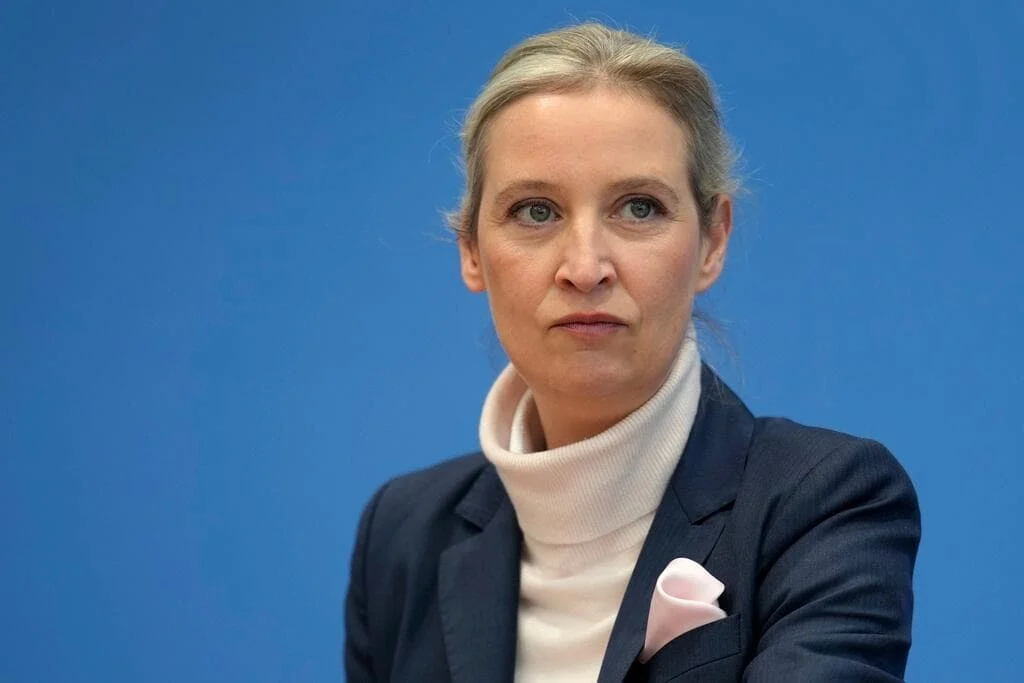
The Alternative for Germany (AfD) has marked a significant political milestone, registering an unprecedented 23 percent support in the latest "Hessentrend" poll conducted in the western German state of Hesse. This latest surge positions the party, co-chaired by Alice Weidel, just two percentage points behind the traditionally dominant Christian Democratic Union (CDU/CSU), which saw a notable seven-point decline to 25 percent. The results underscore a deepening dissatisfaction with the incumbent political establishment and signal a potential realignment within the German political landscape.
Contextualizing the Political Shift in Hesse
The "Hessentrend" poll, a key indicator of political sentiment within the state, has revealed the lowest result ever recorded for the CDU in Hesse, a state where the party has historically held considerable sway. This dramatic shift is not an isolated incident but reflects broader trends of voter disillusionment observed across Germany, particularly concerning the performance of the federal "Ampel" coalition government comprising the Social Democratic Party (SPD), the Greens, and the Free Democratic Party (FDP).
Hesse, one of Germany’s most economically robust and populous states, is often considered a bellwether for national political trends. Its status as a prosperous western state makes the AfD’s record surge particularly noteworthy, challenging the long-held perception that the party’s support base is predominantly confined to eastern Germany. The poll results indicate a significant erosion of trust in traditional parties and a growing willingness among voters to consider alternatives, even those positioned on the far-right of the political spectrum.
The full breakdown of the "Hessentrend" poll indicates the Greens at 16 percent, the SPD at 15 percent, and the Left Party at 7 percent. The Free Democratic Party (FDP) registered 4 percent, while the Free Voters garnered 3 percent. These figures suggest a fragmented political landscape, making traditional coalition formations increasingly challenging. For instance, a "black-red" coalition, referring to a CDU-SPD alliance, appears no longer viable based on these numbers, highlighting the complex arithmetic facing party strategists in future state elections.
Voices from the AfD: Alice Weidel’s Strategic Messaging
Alice Weidel, co-chair of the AfD, promptly capitalized on the poll results, using her X (formerly Twitter) platform to amplify the party’s message. Her posts consistently frame the AfD as the only viable alternative to what she describes as the "left-wing policies" of the mainstream parties, particularly targeting the CDU. "Even in the West, more and more citizens are realizing that the firewall-CDU is governing the country ever deeper into the abyss with left-wing policies. A turnaround can only come with the AfD," Weidel asserted, directly challenging the CDU’s long-standing strategy of isolating the AfD.
Weidel’s rhetoric is carefully crafted to tap into prevailing anxieties among the German populace, focusing on key issues such as economic decline, energy policy, and immigration. She has repeatedly criticized the current ruling parties for what she characterizes as policies detrimental to German industry and the national economy. These criticisms resonate with a segment of the electorate feeling the pinch of rising living costs and economic uncertainty.
Discontent as a Primary Driver
The underlying cause for the dramatic shift in voter sentiment is unequivocally attributed to widespread dissatisfaction with the current state government’s performance. The "Hessentrend" poll revealed that a substantial 54 percent of respondents expressed dissatisfaction with the government’s work, while only 38 percent believed it was adequately addressing the state’s challenges. This level of discontent acts as a fertile ground for populist parties like the AfD, which present themselves as outsiders capable of delivering radical change.
This dissatisfaction extends beyond state-level governance and is deeply intertwined with national political dynamics. The federal "Ampel" coalition has faced persistent criticism for its handling of multiple crises, including inflation, the energy crisis exacerbated by the war in Ukraine, and debates surrounding Germany’s immigration policies. The perceived inability of the mainstream parties to offer convincing solutions to these complex problems appears to be driving voters towards the AfD, which offers simplified, albeit often controversial, answers.
The "Firewall" Debate and Shifting Stances on Cooperation
One of the most significant implications of the AfD’s rising popularity is the intensifying debate surrounding the "firewall" — the explicit refusal of mainstream parties to cooperate with the AfD. Historically, parties across the political spectrum, from the CDU to the Left Party, have maintained a strict cordon sanitaire around the AfD, refusing to enter into coalitions or even form working majorities with them. However, the latest poll results, particularly the public’s stance on cooperation, suggest this firewall is weakening.
Nius, a German news outlet, reported that no clear majority of respondents in Hesse favored a strict separation from the AfD. Approximately a third of those polled supported decisions on a case-by-case basis regarding cooperation, while a quarter expressed a general openness to collaboration. This nuanced public opinion poses a significant dilemma for mainstream parties, especially the CDU, which has consistently advocated for no engagement with the AfD. The pressure to respect voter mandates and form stable governments could force a re-evaluation of these long-held positions, particularly at the municipal and state levels where practical governance often overrides ideological purity.
Furthermore, the idea of an outright ban on the AfD, a topic that periodically resurfaces in German political discourse, also faces considerable public resistance. Around 50 percent of respondents rejected the notion of banning the party, with this figure rising to 59 percent among CDU voters. This indicates that despite concerns about the AfD’s increasingly radical rhetoric and its classification as a "suspected right-wing extremist case" by the domestic intelligence agency (Verfassungsschutz) in several states, a significant portion of the electorate views a ban as undemocratic or counterproductive.
National Implications and Economic Headwinds
The AfD’s strong performance in Hesse has significant implications beyond the state’s borders, reverberating through Germany’s national political landscape. The party’s consistent polling at around 20-22 percent nationally for several months suggests that its rise is not a temporary phenomenon but a sustained shift in voter preferences. This puts immense pressure on Chancellor Olaf Scholz’s "Ampel" coalition, which has struggled with low approval ratings, and on the opposition CDU/CSU, which is grappling with its own identity and strategy in an increasingly polarized environment.
Weidel has been particularly vocal on economic issues, which are central to the AfD’s appeal to voters concerned about Germany’s industrial future. In a recent post, she slammed the "Black-Red" (CDU-SPD) alliance for its role in the "industrial electricity price," highlighting the detrimental impact of high energy costs on German industry. "Due to the rising energy prices, the costs for subsidies to companies are growing. The AfD will make electricity affordable for everyone again with a sensible energy policy!" she declared.
Germany’s industrial sector, a traditional powerhouse of the economy, has indeed faced severe challenges from soaring energy prices, supply chain disruptions, and increased global competition. Many energy-intensive businesses have either curtailed production or considered relocating operations abroad. Audi’s announcement of a new plant in the U.S., which Weidel immediately seized upon, serves as a potent symbol of this industrial exodus. She accused the ruling coalition of "driving the automotive industry abroad through engine bans and high energy costs" and pledged that the AfD would deliver "technological openness and affordable energy!" This narrative of economic decline and government mismanagement resonates strongly in industrial heartlands, contributing to the AfD’s appeal.
Migration and Social Policy: A Core AfD Stance
Beyond economic issues, migration remains a cornerstone of the AfD’s political platform and a potent driver of its support. Weidel explicitly criticized left-wing parties for attempting to "craft themselves a new electorate" by proposing to grant foreigners voting rights after just five years of residency. This statement encapsulates the AfD’s hardline stance on immigration, which includes calls for stricter border controls, reduced immigration, and expedited deportations.
The debate over migration policy has intensified in Germany, particularly with the continued influx of refugees and asylum seekers, and the perceived strain on public services and social cohesion. Mainstream parties are often caught between humanitarian obligations and public demands for more restrictive policies. The AfD exploits this tension, portraying itself as the only party willing to address these concerns head-on, even if its proposed solutions are often criticized as xenophobic or unworkable. The proposal to grant voting rights to non-citizens after a relatively short period is particularly controversial and fuels the AfD’s narrative that mainstream parties are undermining national identity and sovereignty.
Looking Ahead: Potential Scenarios and Challenges
The AfD’s record surge in Hesse is a stark reminder of the volatile political climate in Germany and the growing challenges facing its established parties. If these trends continue, the political landscape could become even more fragmented, making government formation at both state and federal levels increasingly difficult.
For the CDU, the poll results represent a significant crisis. As the traditional party of the center-right, its ability to attract voters concerned about the economy and immigration is being directly challenged by the AfD. The party will face intense pressure to refine its message, address voter concerns more effectively, and potentially re-evaluate its "firewall" strategy without alienating its liberal-conservative base. The internal debate within the CDU regarding its future direction and leadership is likely to intensify.
The "Ampel" coalition, already struggling with internal disagreements and low public approval, will also view these results with alarm. The inability to stem the tide of AfD support underscores the widespread dissatisfaction with its policies and governance. With federal elections on the horizon, the coalition parties must find ways to regain public trust and offer compelling visions for Germany’s future.
For Hesse itself, the poll suggests a complex post-election scenario. The traditional routes to forming a stable government—whether through grand coalitions or smaller alliances—are becoming less clear. The possibility of minority governments or prolonged coalition negotiations looms large, potentially leading to political instability in a state known for its steady governance.
Ultimately, the AfD’s ascent in Hesse is more than just a local poll result; it is a symptom of deeper societal anxieties and a significant challenge to Germany’s post-war political consensus. The coming months will reveal whether mainstream parties can effectively counter this trend or if the Alternative for Germany is set to further entrench itself as a major force in German politics. The political discourse is expected to become even more polarized, with critical debates on economic policy, immigration, and the very future of Germany’s democratic institutions.

