
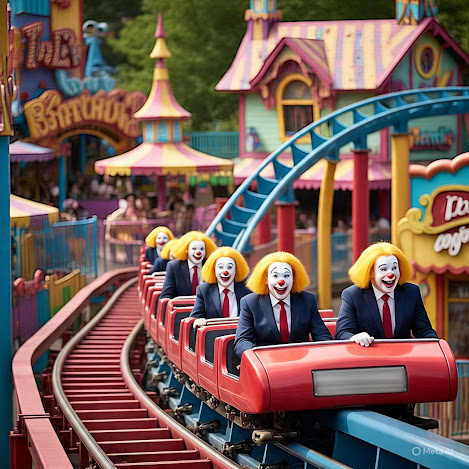
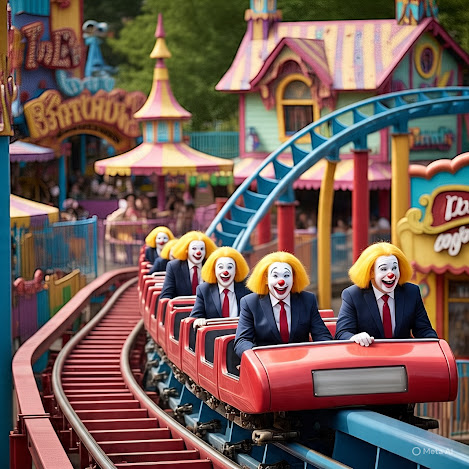
The global financial landscape has experienced a period of unprecedented turbulence in recent months, marked by sharp market declines and subsequent remarkable recoveries. This volatility, particularly evident in the stock market since February 2025, has largely been attributed to a significant shift in international trade policy, specifically the widespread implementation of tariffs by the United States government. What began as a multi-year climb culminating in early 2025 abruptly transformed into a wild roller coaster ride, with the S&P 500 index plummeting by over 20% at its nadir in early April, only to stage an astonishing rebound, returning to near its previous peak by mid-June. This rapid whipsawing of asset values has left investors, businesses, and policymakers grappling with uncertainty, largely pointing to the escalating global trade disputes as the primary driver.
The Genesis of Market Turmoil: A Chronology of Tariff Actions
The current economic turbulence gained significant momentum following a series of executive actions regarding tariffs. In late February 2025, global markets were still riding the crest of a multi-year bull run, fueled by technological advancements and strong corporate earnings. However, this period of relative calm was shattered on April 2nd, when the administration announced a sweeping expansion of tariffs, dubbed "Liberation Day" by some, targeting a broad range of imported goods from key trading partners. This declaration triggered immediate and severe market reactions, with the Dow Jones Industrial Average experiencing one of its steepest single-day percentage drops since the Great Depression. The S&P 500 followed suit, wiping billions off market capitalization and prompting widespread investor panic.
Subsequent weeks saw further escalations and de-escalations, as tariff threats were alternately imposed, modified, or temporarily suspended, creating a climate of extreme unpredictability. Each announcement of increased tariffs typically corresponded with market downturns, reflecting investor anxiety over rising costs and disrupted supply chains. Conversely, any hint of a reduction or pause in tariff implementation often spurred significant market rallies, indicating a collective hope for a return to more stable trade relations. This pattern has continued, illustrating the direct correlation between the administration’s trade policy and investor sentiment.
Defining Tariffs: A Fundamental Economic Instrument
At its core, a tariff is a tax levied by a government on imported goods or services. It is effectively a sales tax applied at the border, paid by the entity importing the goods – whether it be an individual purchasing an e-bike directly from an overseas manufacturer, or multinational corporations like Amazon, Walmart, or Apple importing vast quantities of products. While paid by the importer, the financial burden of tariffs is almost invariably passed on to the end consumer through higher retail prices. This happens because businesses, facing increased costs of goods, adjust their pricing strategies to maintain profit margins.
Beyond consumer goods, tariffs also impact industrial sectors. For instance, if Home Depot plans a new store or Chevron requires components for an oil rig, tariffs on imported steel, copper, lumber, and countless other raw materials and manufactured parts directly increase the cost of these construction projects. Similarly, the housing market is affected, as a significant portion of building materials originates from various international sources. The broader economic consequence of tariffs is a general increase in prices across the board, akin to a broad-based sales tax. This typically slows economic activity and reduces the purchasing power of consumers. On the positive side, the revenue generated from tariffs flows into government coffers, potentially aiding national budget funding or deficit reduction.
For a nation’s economy to function optimally, a balanced and predictable tax system is crucial. This system should ideally feature the lowest possible tax levels necessary to sustain government operations, alongside fairness and predictability, to incentivize hard work and enable long-term planning for individuals and businesses. Critics argue that the current tariff regime, characterized by frequently changing and arbitrarily high rates, undermines these principles, introducing significant uncertainty and distorting market signals.
The Dual Nature of Tariffs: Protectionism vs. Free Trade
Governments often employ tariffs with the stated aim of protecting domestic industries. For example, imposing a substantial tax on imported automobiles like Hondas could grant a competitive advantage to domestic manufacturers such as General Motors. This policy aims to boost sales for GM, potentially leading to increased employment, expanded manufacturing facilities, and even fostering innovation within the domestic auto sector. While this might benefit specific industries and their employees, consumers often face higher prices and a reduced selection of goods, as the protected industry faces less competitive pressure.
Tariffs can serve strategic national interests, such as safeguarding critical defense industries by taxing imported fighter jets to ensure the viability of domestic manufacturers like Boeing and Lockheed. However, the motivation can also be influenced by political considerations, where tariffs are enacted to appease powerful industry lobbyists or specific voter bases in swing states. A notable example cited by critics is the tax on imported solar panel components, a policy initially implemented by the previous administration and further amplified by the current one. Such tariffs, despite their potential to protect domestic manufacturing of these components, are seen by many economists as counterproductive. They argue that cheap imported solar technology offers readily available, low-cost energy, which lowers overall living expenses and stimulates industrial growth. Impeding the flow of such wealth-generating inputs is viewed as economically detrimental.
While tariffs can stimulate job growth in specific protected sectors, the broader economic impact is often less favorable. The hypothetical $5,000 tariff on imported Hondas, while potentially boosting GM’s sales and hiring, simultaneously forces consumers to pay more for vehicles that may be of lower quality or offer fewer choices. This increase in transportation costs can ripple through the economy, affecting sectors like logistics (e.g., Amazon’s delivery fleet) and ultimately raising prices for a wide array of goods and services. Furthermore, shielding domestic companies from foreign competition can reduce their incentive to innovate and improve efficiency, potentially hindering long-term growth and competitiveness.
Most economists advocate for the very sparing use of tariffs due to their propensity for causing unintended negative consequences, reducing overall employment, and slowing economic growth. Exceptions are typically made for critical areas like food security or national defense, where the broader societal benefits might outweigh the economic costs.
The Current Administration’s Tariff Philosophy and Challenges
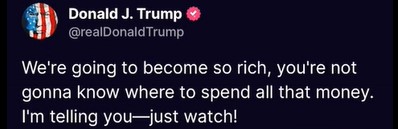
The administration’s approach to tariffs has been a source of considerable debate. Public statements have often posited tariffs as a mechanism to generate national wealth, focusing primarily on the first-order effect of domestic job creation in protected industries. This perspective, however, appears to disregard the widespread economic inefficiencies and increased costs that tariffs impose across other sectors. The market’s consistent reaction—share prices falling upon tariff announcements and rising upon their reduction—suggests that the investment community, which directly funds and operates U.S. companies, largely views tariffs as detrimental to corporate profitability and overall economic health.
This dichotomy has led to theories that the administration’s aggressive tariff strategy may serve as a negotiating tactic rather than a purely economic policy. The theory posits that by imposing significant tariffs, the U.S. aims to extract concessions from trading partners, reduce trade deficits, or force a renegotiation of existing trade agreements from a position of perceived strength. In this view, the economic costs are considered acceptable collateral damage in pursuit of broader strategic objectives.
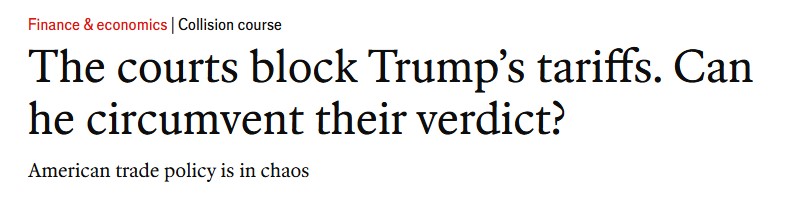
The expansive use of executive power to impose tariffs has also raised constitutional questions regarding the balance of power. Critics argue that subjecting the entire economy to the unilateral decisions of a single individual deviates from the constitutional framework of three independent branches of government designed to prevent such concentration of authority. Legal challenges are already emerging, with companies and industry groups contesting the legality of certain tariffs in court, citing issues ranging from procedural irregularities to the overreach of presidential authority in trade matters. The outcome of these legal battles will be crucial in defining the limits of executive power in trade policy.
The Magnitude of Current Tariffs and Delayed Impact
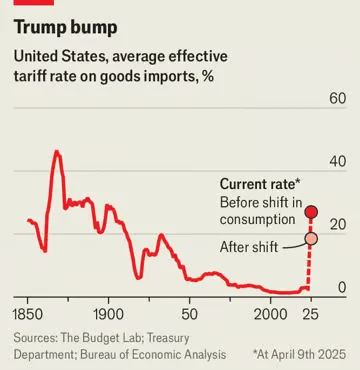
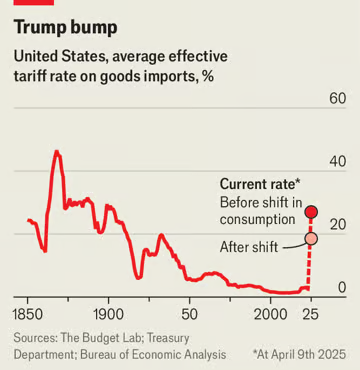
Despite fluctuating rates, the current overall level of U.S. tariffs remains significantly higher than at any point in the last 75 years, contrasting sharply with the low-tariff, free-trade environment upon which the modern U.S. economy has been built. Historical data from organizations like The Economist illustrate a dramatic increase in average tariff rates in recent years, reversing a decades-long trend of trade liberalization.
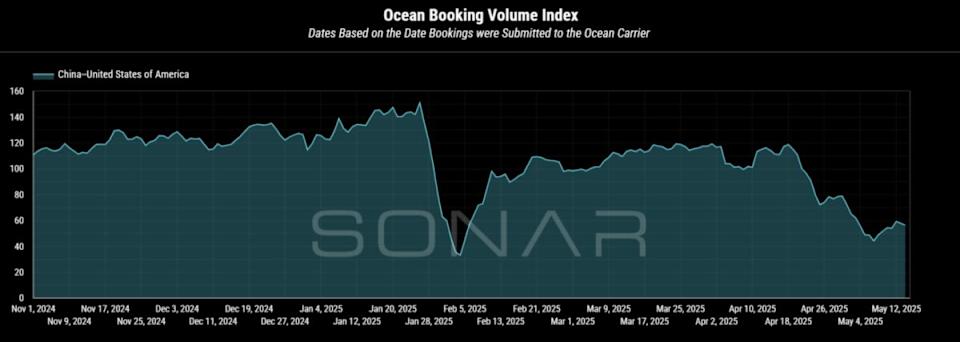
The full impact of these tariffs on consumer prices has not yet been entirely felt due to several mitigating factors. The U.S. economy, often compared to a massive cargo ship, possesses substantial inventory buffers, typically holding several months’ worth of most goods. Anticipating the imposition of tariffs, many importers proactively increased their orders, creating stockpiles of goods at pre-tariff prices. However, data from shipping indices, such as the Freightwaves Ocean Shipping Index (OSI), indicate a significant drop in import volumes since the tariffs were enacted. This suggests that the nation is currently drawing down its existing and pre-tariff stockpiled inventory. As these cheaper goods are depleted, and if import volumes remain low, the market is likely to experience shortages and more pronounced price increases, potentially manifesting throughout the latter half of 2025. While the absence of certain non-essential imported items might be manageable, disruptions to the supply of core industrial components, tools, and machinery could have more severe economic consequences.
Navigating the Future: Scenarios and Implications
The path forward for the U.S. and global economies under the current tariff regime presents two primary, divergent scenarios:
1. Persistent High Tariffs:
Should the current high tariff levels become a long-term fixture of U.S. trade policy, the implications could be profound. Domestically, consumers would face sustained higher prices for a wide array of goods, leading to reduced purchasing power and potential inflationary pressures. Businesses would contend with increased input costs, supply chain disruptions, and reduced competitiveness in global markets. This could trigger a re-shoring of some manufacturing, but often at a higher cost, leading to slower economic growth and potentially job losses in sectors reliant on international trade or affordable imported components. Globally, persistent tariffs risk escalating into full-blown trade wars, with retaliatory tariffs from trading partners further stifling international commerce, disrupting global supply chains, and potentially leading to a fragmentation of the world economy. Investment flows could be diverted, and geopolitical tensions might intensify as countries seek to secure domestic markets.
2. Tariffs as a Negotiating Tactic Leading to De-escalation:
Alternatively, if the tariffs are ultimately a strategic maneuver designed to gain leverage in trade negotiations, a resolution could see a gradual reduction or elimination of these duties. This scenario would likely result in a swift revitalization of global trade. Businesses would benefit from stable and predictable trade environments, allowing for renewed investment, optimized supply chains, and lower production costs. Consumers would see a return to more competitive pricing and a wider variety of goods. The global economy, unburdened by trade barriers, could experience accelerated growth as the free exchange of goods, services, and capital resumes. This outcome aligns with the long-held economic consensus that open markets and collaborative international trade generally foster greater prosperity for all participants. The historical success of free trade agreements and organizations like the WTO underscores the belief that mutual respect and cooperation in trade lead to shared economic enrichment.
Investor Resilience and the Information Imperative
Despite the significant market volatility, the rapid recovery of the U.S. stock market to near all-time highs suggests a prevailing investor belief that the current tariff-driven turbulence will ultimately be a temporary phase. This resilience reflects confidence in the underlying strength of the economy and the eventual return to more rational and stable trade policies. Experienced investors often recall historical periods of economic uncertainty, recognizing the long-term upward trajectory of markets despite short-term fluctuations. Panic selling during downturns, as evidenced by some unfortunate individual investor actions in April 2025, often results in locking in losses rather than preserving capital.
This period of economic uncertainty also highlights a critical lesson in information consumption. In an age dominated by click-funded commercial media, the primary objective has shifted from informing to capturing attention, often through sensationalism, outrage, and fear. This inherent bias can significantly distort public understanding of complex economic issues. To navigate this landscape effectively, individuals are encouraged to either disengage from the constant news cycle or, for topics of genuine interest, to become subject matter experts by consulting original sources, academic research, and diverse analytical perspectives. A deeper understanding reveals the inherent inaccuracies and oversimplifications prevalent in much of mainstream reporting, underscoring the importance of critical thinking and independent verification in forming informed opinions.

In conclusion, while the immediate future of global trade policy remains uncertain, the long-term outlook for a resilient and adaptive economy, operating within a balanced democratic framework, remains optimistic. The current period serves as a powerful reminder of the intricate interplay between political decisions, economic realities, and the imperative for informed public discourse.

