

The financial landscape has undergone a dramatic transformation as interest rates, long anchored near zero, have surged to levels not seen in over two decades, fundamentally altering borrowing costs, investment strategies, and economic projections worldwide. This abrupt shift marks the conclusion of an extraordinary era characterized by exceptionally cheap money, prompting widespread re-evaluation among consumers, businesses, and policymakers alike.
The End of an Era: A Decade of Ultra-Low Rates

For nearly fourteen years, the global financial system operated under an unprecedented regime of ultra-low interest rates. Following the 2008 financial crisis, central banks, most notably the U.S. Federal Reserve, embarked on aggressive monetary easing policies. This involved slashing benchmark interest rates to near-zero levels and implementing quantitative easing programs, injecting trillions of dollars into the financial system. The primary objective was to stimulate economic recovery, prevent deflation, and encourage investment and consumer spending by making credit highly accessible and affordable.
This period, extending from roughly 2009 through early 2022, saw a sustained environment where mortgages, corporate loans, and consumer credit were historically inexpensive. For instance, the federal funds rate, the benchmark for many other interest rates, remained below 1% for significant stretches, even dipping to 0-0.25% during the initial phase of the COVID-19 pandemic response in March 2020. This prolonged period of easy money fueled asset price inflation, particularly in real estate and equities, and facilitated robust economic growth, innovation, and job creation. Businesses expanded rapidly, often leveraging cheap debt, while consumers enjoyed enhanced purchasing power for homes, vehicles, and other goods.
The Inflationary Surge and the Fed’s Pivot
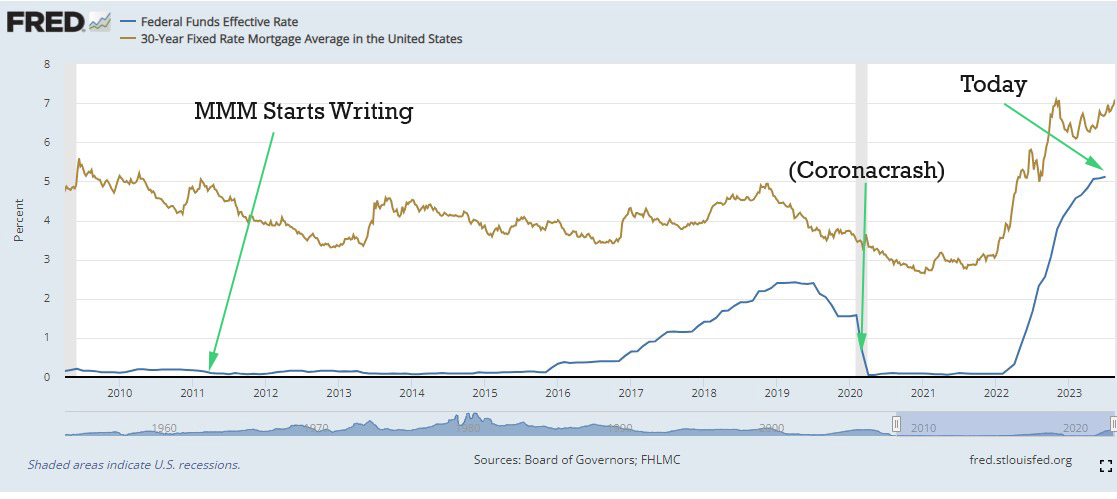
The sustained economic expansion, coupled with a confluence of global events, eventually led to an unforeseen and rapid surge in inflation. Supply chain disruptions exacerbated by the pandemic, robust consumer demand supported by fiscal stimulus, and geopolitical tensions, notably the conflict in Ukraine, contributed to a dramatic rise in prices across various sectors. The U.S. Consumer Price Index (CPI), a key measure of inflation, accelerated sharply, peaking at 9.1% year-over-year in June 2022—a level not witnessed in four decades—far exceeding the Federal Reserve’s target of 2%.
In response to this escalating inflationary pressure, the Federal Reserve, under Chairman Jerome Powell, initiated a significant pivot in its monetary policy. Beginning in March 2022, the Federal Open Market Committee (FOMC) commenced a series of aggressive interest rate hikes, marking a stark departure from its previous accommodative stance. Over a span of roughly 18 months, the federal funds rate was raised eleven times, moving from near-zero to a range of 5.25% to 5.50% by July 2023. This rapid tightening cycle was designed to cool down an overheated economy by making borrowing more expensive, thereby curbing demand and bringing inflation back down to the target level. The Fed’s commitment to price stability became paramount, even acknowledging the potential for economic slowdown or increased unemployment as a consequence of its actions.
Interest Rates Return to Historical Norms

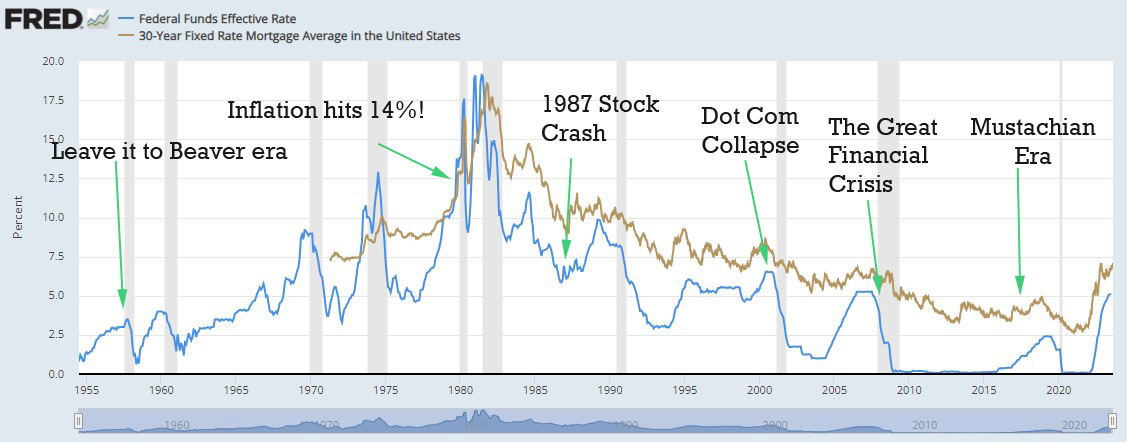
While the recent ascent of interest rates feels dramatic in the context of the past two decades, a broader historical perspective reveals that current rates are, in fact, closer to long-term averages than the anomalously low rates that preceded them. For much of the latter half of the 20th century, interest rates frequently hovered in the mid-single digits or even higher. For instance, the average 30-year fixed mortgage rate has historically ranged between 5% and 8% over several decades. The current federal funds rate, though a 20-year high, aligns more closely with pre-2008 patterns than the extremely low rates of the quantitative easing era.
This contextualization is crucial for understanding market sentiment. What is perceived as "high" today by many who entered the financial world after 2008 is merely a return to more typical conditions. This normalization implies that the economic adjustments currently underway are, in many respects, a recalibration to sustainable, long-term financial principles rather than an unprecedented crisis.
Impact on the Economy and Financial Markets

The ripple effects of these interest rate adjustments are profound and far-reaching, influencing every segment of the economy.
Mortgage Market and Housing:
The housing sector has experienced one of the most direct and significant impacts. The average 30-year fixed mortgage rate, which stood below 3% in late 2021, soared to over 7% by mid-2023. This dramatic increase has substantially eroded housing affordability. For an average home priced at $400,000 with a 10% down payment, the monthly mortgage payment (excluding taxes and insurance) could jump from approximately $1,500 at a 3% rate to over $2,400 at a 7.5% rate. This represents an increase of nearly $900 per month, or over $10,000 annually, for the same property.
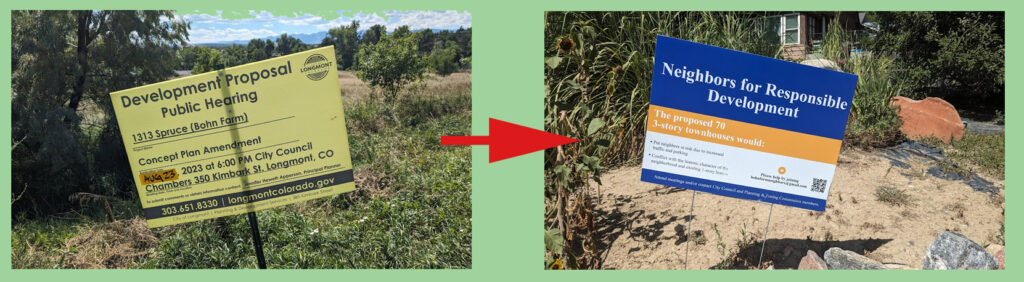
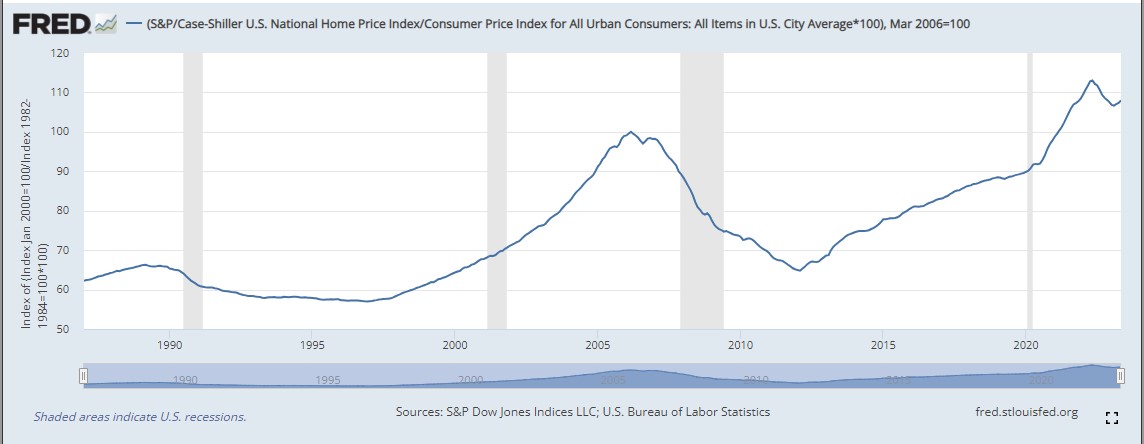
Consequently, buyer demand has softened considerably, leading to a notable slowdown in home sales across many regions. Existing homeowners with historically low mortgage rates are disincentivized from selling, further tightening inventory in some markets. While some areas have seen price stabilization or modest declines, a widespread and sharp drop in national home prices has largely been mitigated by persistent housing shortages, driven by factors such as underbuilding over the past decade, rising construction costs, and restrictive local zoning policies that hinder new development. The long-term trajectory of housing prices will depend heavily on the balance between sustained demand, the pace of new construction, and evolving demographic shifts.
Corporate Borrowing and Investment:
Businesses, particularly those reliant on debt financing for expansion, have faced higher costs of capital. Borrowing for new projects, equipment upgrades, or operational needs has become more expensive, prompting companies to scale back investment plans. This has been evident in sectors like technology, where many companies, having grown rapidly during the low-rate environment, announced significant hiring freezes and layoffs (e.g., thousands of job cuts at major tech firms like Meta and Amazon in late 2022 and early 2023). Venture capital funding has also tightened, as investors become more discerning and demand quicker paths to profitability in a higher-rate environment.
Consumer Spending and Savings:
Consumers are also feeling the pinch of higher borrowing costs for credit cards, auto loans, and other forms of debt. However, the flip side of higher rates is improved returns on savings. High-yield savings accounts and money market funds, which offered negligible returns for years, now provide interest rates of 4.5% or more, presenting attractive options for cash holdings. This shift encourages consumers to save more and potentially reduce reliance on debt, fostering greater financial discipline.
Stock Market Performance:
The stock market initially reacted with volatility and corrections to the Fed’s aggressive tightening cycle. Higher interest rates typically make future corporate earnings less valuable in present terms, affecting valuations, especially for growth stocks that rely on future earnings potential. From its peak in early 2022, the overall U.S. market experienced a downturn, remaining relatively flat through mid-2023. However, many analysts suggest that a market correction, making equity valuations more reasonable, presents opportunities for long-term investors. Historical data consistently indicates that the stock market tends to appreciate over extended periods, despite short-term fluctuations. Therefore, a strategy of consistent investment in diversified index funds remains a widely recommended approach, rather than attempting to time market movements based on interest rate cycles.
The Inverted Yield Curve: A Recessionary Signal?
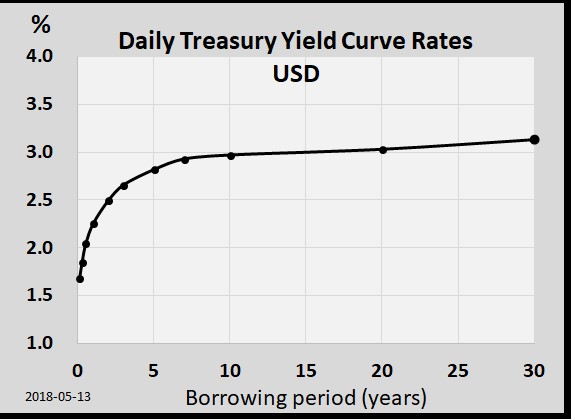
A particularly notable development in the current economic climate is the persistent inversion of the U.S. Treasury yield curve. Typically, a yield curve slopes upward, meaning that lenders demand higher interest rates for locking up their money over longer periods, compensating for increased risk and inflation over time. For example, a 30-year bond would traditionally yield more than a 2-year bond.
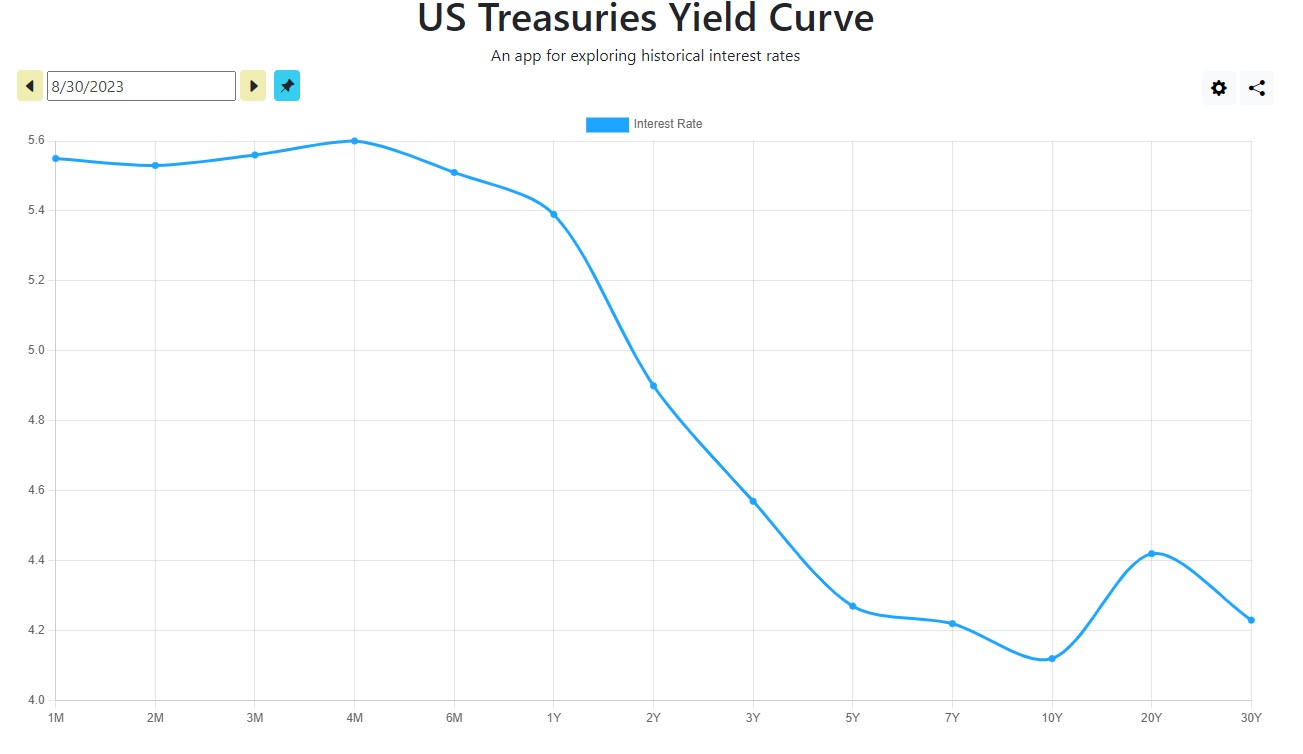
However, since late 2022, the yield curve has been inverted, with short-term Treasury yields (e.g., 1-year or 2-year bonds) exceeding long-term yields (e.g., 10-year or 30-year bonds). As of mid-2023, for instance, a 1-year Treasury bill might offer around 5.4%, while a 10-year Treasury bond yields closer to 4.05%. This unusual configuration suggests that bond investors anticipate interest rates will decline in the future, often as a response to an economic slowdown or recession.
Historically, an inverted yield curve has been a remarkably reliable predictor of impending economic downturns. In the past 75 years, it has preceded ten out of eleven U.S. recessions, with the lag between inversion and recession typically ranging from 6 to 24 months. While not an infallible indicator, its consistent track record prompts economists and policymakers to closely monitor this signal, suggesting that an economic contraction or at least a significant cooling period may be on the horizon within the next 18-24 months.
Official Outlook and Expert Forecasts
The Federal Reserve has repeatedly affirmed its unwavering commitment to restoring price stability, indicating that interest rates will remain elevated until inflation is firmly on a path toward its 2% target. Official statements from FOMC meetings underscore a data-dependent approach, with future rate decisions contingent on incoming economic data, including inflation figures, employment reports, and wage growth.
Economists and market analysts offer a range of forecasts regarding the future trajectory of interest rates and the broader economy. While a consensus leans towards a potential easing of rates once inflation is controlled, there is less agreement on the timing and severity of any accompanying economic slowdown. Some predict a "soft landing," where inflation subsides without a deep recession, while others anticipate a more significant contraction given the historical implications of an inverted yield curve. Despite some signs of cooling, the labor market has demonstrated remarkable resilience, with unemployment rates consistently near 50-year lows, confounding some predictions of a rapid economic decline.
Navigating the New Economic Landscape
For individuals and businesses, adapting to this new interest rate environment requires strategic financial planning. Key considerations include:
- Debt Management: Prioritizing the reduction of high-interest consumer debt (credit cards, personal loans) becomes even more crucial in a high-rate environment.
- Savings and Investments: While attractive short-term yields on savings accounts are appealing, a balanced long-term investment strategy, often incorporating diversified equity portfolios, remains essential for wealth accumulation. Market corrections can present opportune entry points for long-term investors.
- Housing Decisions: Prospective homebuyers face higher financing costs, necessitating a careful assessment of affordability and market conditions. Existing homeowners with low fixed-rate mortgages may find it advantageous to retain their current financing.
- Business Strategy: Companies must adapt to higher capital costs by optimizing operational efficiencies, carefully evaluating investment projects, and maintaining robust balance sheets.
The current economic environment represents a significant adjustment from the prolonged period of ultra-low interest rates. While the transition may bring challenges, it also signifies a return to more normalized financial conditions. Maintaining a lean financial lifestyle, prioritizing savings, and making informed, long-term decisions are paramount for navigating these evolving economic waters successfully. The focus should remain on personal financial resilience and adaptability, as the broader economic cycles of interest rates and market fluctuations will always be a part of the landscape.

