
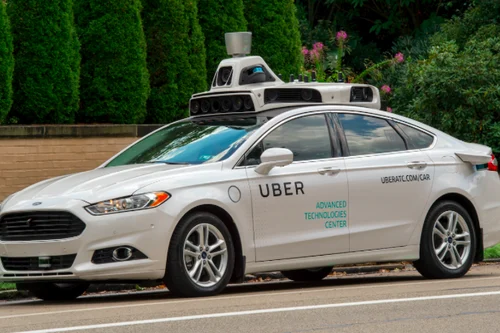
Ride-hailing giant Uber is reportedly executing a strategic pivot, aligning with driver unions in several key cities and states to advocate for regulations that could significantly slow the deployment of fully autonomous robotaxis. This unexpected collaboration seeks to promote what Uber terms "hybrid networks," systems that integrate both autonomous vehicles and human drivers, according to recent reports by the Financial Times. This calculated move by Uber, traditionally at odds with organized labor, signals a profound shift in its strategy, ostensibly aimed at safeguarding its extensive human-driver network and market dominance amidst escalating competition from advanced autonomous vehicle (AV) developers like Alphabet-owned Waymo and Tesla.
The "unholy alliance," as it has been dubbed by some industry observers, is manifesting in legislative and regulatory battles across the United States, notably in New Jersey and Washington, D.C. In these jurisdictions, Uber and its newfound labor allies are actively pushing back against the rapid, unfettered expansion of autonomous taxi services. The core of Uber’s proposal in New Jersey, for instance, mandates that any platform offering robotaxi services must ensure human drivers provide a substantial 85% of rides during an initial three-year pilot program. This requirement, if enacted, would effectively limit the operational scale of fully autonomous fleets and provide a significant protective barrier for Uber’s current business model. Concurrently, in Washington, D.C., Uber, under the leadership of CEO Dara Khosrowshahi, has joined unions in opposing proposed autonomous vehicle legislation, arguing that the permitting regime outlined in the bill could inadvertently create a monopolistic environment, potentially locking out smaller competitors and platforms like Uber itself, which currently relies heavily on human drivers.
A Shift in Strategy: Uber’s AV Journey and Competitive Pressures
Uber’s strategic repositioning marks a significant departure from its historical trajectory and a direct response to the evolving landscape of urban mobility. For years, the promise of fully autonomous vehicles has been a central tenet of the ride-hailing industry’s long-term vision. The elimination of driver wages, a substantial operational cost, holds the potential to dramatically increase profitability and offer more competitive fares, thereby expanding the market. Major players like Waymo, a subsidiary of Google’s parent company Alphabet, have invested billions in developing and deploying robust self-driving technology, achieving significant milestones in cities such as Phoenix and San Francisco. Waymo One, its commercial ride-hailing service, has been operating fully driverless rides in specific geofenced areas for years, demonstrating a tangible lead in the race to autonomy. General Motors’ Cruise, another prominent AV developer, also made substantial inroads in cities like San Francisco, though it has faced recent regulatory setbacks following safety incidents, underscoring the complexities and challenges of large-scale AV deployment. Meanwhile, Elon Musk’s Tesla has been aggressively pursuing its Full Self-Driving (FSD) technology, with ambitions to launch a "Cybercab" robotaxi service in the near future, adding another formidable competitor to the fray.
Uber’s own journey into autonomous vehicle technology has been circuitous. The company initially invested heavily in its Advanced Technologies Group (ATG), a dedicated unit for self-driving research and development. However, after years of significant investment and various challenges, including a fatal accident involving an Uber AV in Arizona in 2018, the company sold ATG to Aurora Innovation in 2020, taking a stake in the self-driving startup. This move signaled a shift from internal development to a strategy of partnering with AV technology providers. While Uber has since announced partnerships with companies like Waymo and Motional to integrate their autonomous vehicles onto the Uber platform, it remains reliant on its vast network of human drivers for the overwhelming majority of its global operations. The Financial Times noted that Uber is still "behind its arch-rival Waymo" in autonomous driving technology. This technological gap, coupled with the accelerating pace of fully autonomous deployments by competitors, creates an existential threat to Uber’s current business model and market share. The proposed "hybrid network" mandates, therefore, appear to be a tactical maneuver designed to buy Uber time to advance its own AV integration strategies and potentially close the technology gap, all while leveraging its existing human-driver base as a competitive advantage against fully driverless rivals.
The Gig Economy and Labor’s Long Struggle
The term "unholy alliance" is particularly apt given Uber’s contentious history with organized labor and its drivers. Since its inception, Uber’s business model has been predicated on classifying its drivers as independent contractors rather than employees. This classification has allowed the company to avoid providing traditional employee benefits such as minimum wage, overtime pay, health insurance, and collective bargaining rights. This approach has led to numerous legal battles, protests, and legislative initiatives, most notably California’s Assembly Bill 5 (AB5), which sought to reclassify gig workers as employees, a measure Uber and other gig companies vehemently opposed and ultimately circumvented through a costly ballot initiative, Proposition 22.
Driver unions and labor advocates have consistently pushed for better pay, improved working conditions, and the right to unionize. For years, Uber has been viewed as a primary antagonist in the fight for gig worker rights. Therefore, this sudden alignment with unions, particularly on a matter that could preserve human driving jobs, represents a seismic shift. From the perspective of driver unions, this alliance, however temporary or opportunistic, offers a rare opportunity to influence policy in a way that protects their members’ livelihoods from the imminent threat of full automation. It provides a platform to advocate for a "just transition" for drivers, ensuring that the march of technological progress does not leave millions of workers behind without viable alternatives. While the alliance might be driven by Uber’s self-interest, it serves the immediate interests of labor in slowing down what they perceive as an existential threat to their members’ employment.
Legislative Battlegrounds: New Jersey and Washington D.C.
The legislative proposals in New Jersey offer a clear illustration of Uber’s strategy. The mandate for 85% human-driven rides during a three-year pilot program for any robotaxi platform is a powerful tool to constrain purely autonomous operations. This percentage is not arbitrary; it’s high enough to make large-scale fully autonomous deployment economically unfeasible for companies like Waymo or Cruise, which are designed to operate without human safety drivers. Such a regulation would effectively force AV companies to either limit their scale dramatically or to integrate human drivers, undermining their core value proposition of driverless efficiency. The three-year pilot period also provides a substantial window during which Uber could refine its own hybrid model or catch up on AV technology.
In Washington, D.C., Uber’s opposition to proposed AV legislation, framed as a concern for "smaller competitors" and "platforms such as Uber," is equally telling. The existing legislative framework might favor companies with extensive capital to meet stringent permitting requirements, potentially making it harder for a platform like Uber, which partners with AV companies, to integrate its services without significant regulatory hurdles. By challenging such legislation, Uber aims to shape the regulatory environment to be more accommodating to its own hybrid operational model, ensuring it can remain a key player even as autonomy advances. These lobbying efforts highlight the sophisticated ways in which technology companies are increasingly engaging with the political process to shape market outcomes, often under the guise of promoting fairness or consumer choice.
Economic Underpinnings: The Cost and Promise of Autonomy
The economic rationale for autonomous vehicles in ride-hailing is compelling. Human drivers represent the largest operational cost for companies like Uber, typically accounting for 60-80% of fare revenue. Removing this cost through full autonomy promises to unlock immense profitability and allow for aggressive pricing strategies that could significantly expand the ride-hailing market. The global ride-hailing market was valued at over $100 billion in 2023 and is projected to grow substantially, with AVs expected to capture a significant share in the coming decades. Companies like Waymo have demonstrated that fully autonomous operations, once scaled, can offer substantial cost efficiencies.

For Uber, however, this future presents a dilemma. While the company eventually aims for greater automation, its immediate competitive disadvantage in fully autonomous technology means that a rapid transition could severely erode its market share. Mandating hybrid networks could preserve Uber’s existing dominance, protect its current revenue streams derived from human-driven rides, and provide a buffer period. This strategy allows Uber to continue leveraging its vast network of millions of human drivers, a critical asset that competing robotaxi services do not possess. In essence, Uber’s newfound concern for labor appears to be inextricably linked to protecting its financial interests and market position rather than a sudden philanthropic pivot towards driver welfare. The cost savings from AVs would benefit the company immensely in the long run, but only if Uber can control the pace and terms of their deployment.
Statements and Perspectives from Key Stakeholders
While official statements directly addressing this specific "unholy alliance" might be limited, it is possible to infer the likely positions of various stakeholders:
- Uber’s Stance (Inferred): Uber would likely frame its position as advocating for a "safe, responsible, and equitable transition" to autonomous vehicles. A spokesperson might emphasize the importance of "driver opportunities" and "consumer choice," arguing that hybrid networks offer the best of both worlds – the efficiency of AVs with the flexibility and accessibility of human drivers. They would likely argue against regulatory frameworks that could create monopolies or stifle innovation for smaller players, portraying their efforts as promoting a "level playing field."
- Driver Unions’ Perspective (Inferred): Union representatives would likely express their primary concern for "protecting livelihoods" and ensuring a "just transition" for their members in the face of automation. They would highlight the value of human drivers in terms of safety, customer service, and adaptability, welcoming Uber’s support for hybrid models as a necessary step to manage the social and economic impacts of technological change. They would likely call for policies that include retraining programs and social safety nets for displaced workers.
- AV Developers (Waymo, Tesla) (Inferred): Companies like Waymo and Tesla would likely emphasize the superior safety, efficiency, and scalability of fully autonomous systems. They would advocate for regulatory frameworks that foster "open innovation" and allow for the rapid deployment of their advanced technology, arguing that such systems offer significant "consumer benefits" through lower costs and increased availability. They would likely express concerns about "protectionist regulations" that could hinder technological progress and limit consumer access to the benefits of full autonomy, potentially viewing Uber’s actions as an attempt to stifle competition through legislative means.
- Policy Makers/Regulators (Inferred): Legislative bodies and regulatory agencies would likely articulate a need to "balance innovation with public interest," including public safety, economic impact, and fair competition. They might express a desire for "thoughtful and phased approaches" to AV deployment, acknowledging the complex interplay of technological advancement, workforce considerations, and urban planning. Their ultimate decisions would reflect a weighing of these diverse pressures.
Broader Implications: The Future of Urban Mobility and Regulation
Uber’s strategic shift carries significant broader implications for the future of urban mobility, the regulatory landscape, and the global labor market.
Regulatory Fragmentation: This strategy risks creating a fragmented regulatory environment across different cities and states. A patchwork of varying mandates – some requiring high percentages of human drivers, others more permissive of full autonomy – could complicate the scaling of AV operations. This could hinder the industry’s ability to achieve economies of scale and slow down the overall pace of AV adoption in the United States, potentially putting it behind countries with more unified regulatory approaches.
Pace of Innovation: While intended to slow competitors, Uber’s strategy could, paradoxically, slow the entire industry’s progression towards full autonomy. If AV companies are forced to adapt their business models to include human drivers or operate at significantly reduced scales, the incentive for rapid innovation and investment in fully driverless technology might diminish.
Consumer Impact: For consumers, the outcome is mixed. Hybrid networks might offer a more gradual transition, potentially preserving the human element of service that some riders prefer. However, it could also delay the full benefits of autonomy, such as potentially lower fares and 24/7 ubiquitous service that fully driverless fleets promise.
Labor Market Transformation: The most profound impact could be on the millions of gig workers currently driving for ride-hailing platforms. If hybrid networks become the norm, it could provide a temporary reprieve, extending the lifespan of human-driven jobs. However, it also raises questions about the long-term future of these roles. Will drivers become "AV copilots" or support staff? The need for robust retraining programs and social safety nets for a future workforce less reliant on driving remains critical.
The Ethics of Competition and "Weaponizing Regulation": The core analysis from the original article — that this move is "a great example of weaponizing regulation to slow the competition" — is particularly salient. While all companies engage in lobbying, actively seeking mandates that favor one’s current operational model over a technologically advanced competitor’s raises ethical questions about fair competition. It suggests a willingness to leverage legislative processes to create barriers to entry or delay market disruption, rather than solely competing on technological merit or service innovation. This approach could be seen as an incumbent’s tactic to maintain power, rather than fostering an environment of open competition that ultimately benefits consumers through innovation.
Uber’s Rebranding: This pivot also marks a significant shift in Uber’s corporate identity. Once the quintessential disruptor, challenging established industries and regulatory norms, Uber is now embracing a more established, almost defensive, posture. It is leveraging its scale and political capital to shape regulations in a way that protects its existing assets, moving from a revolutionary force to a more traditional, politically engaged corporate entity.
Conclusion: A Tipping Point for Autonomous Ride-Hailing
Uber’s unexpected alliance with driver unions represents a critical juncture in the evolution of autonomous ride-hailing. It underscores the complex interplay between technological innovation, economic imperatives, labor rights, and regulatory frameworks. This strategic maneuver, driven by competitive pressures and a desire to preserve market share, has the potential to reshape the trajectory of AV deployment, potentially slowing its widespread adoption and creating a more fragmented regulatory landscape. While it offers a temporary lifeline to human drivers and allows Uber valuable time to enhance its own AV integration, it also ignites a fierce debate about the ethics of leveraging regulation for competitive advantage and the ultimate vision for urban mobility. The outcomes of these legislative battles in New Jersey, Washington D.C., and potentially other jurisdictions, will not only determine Uber’s future but will also set precedents for how the world transitions to an autonomous future, balancing progress with the profound social and economic implications for its workforce.

