
Boeing’s ambitious timeline for the certification and delivery of its largest 737 MAX variant, the MAX 10, has hit an unexpected snag. Federal aviation regulators have paused the crucial approval process for the long-awaited aircraft following the discovery of a new software anomaly that could affect an automated navigation function during critical flight maneuvers. This development emerged over the weekend, placing Boeing CEO Kelly Ortberg, just two years into his tenure, in the familiar position of addressing another significant challenge stemming from the controversial MAX program. The news sent Boeing shares plummeting, underscoring the acute sensitivity of investors and regulators alike to any software-related issues concerning the aircraft family.
The Unfolding Glitch: A Technical Deep Dive
The software issue at the heart of the latest delay involves a previously known glitch that has resurfaced with potentially broader implications. As first reported by The Wall Street Journal on Monday afternoon, airlines were privately notified in August of this year regarding a flaw that could cause an automated navigation function to disengage unexpectedly during an aborted landing. An aborted landing, also known as a go-around, is a demanding maneuver where pilots initiate a climb after deciding not to land, often due to unstable approaches, runway obstructions, or air traffic control instructions. The unexpected disengagement of an automated navigation system during such a high-workload phase could significantly increase pilot burden and potentially compromise safety.
Sources indicate that this particular software anomaly affects the vertical navigation (VNAV) system, a sophisticated component that assists pilots in managing the aircraft’s altitude and speed profiles. While the pilots technically remain in control, and are trained for such scenarios, the Federal Aviation Administration (FAA) is scrutinizing the "workload component under these more obscure situations." This suggests a concern not just about the immediate safety implication of the glitch itself, but about the added cognitive and manual demands it places on flight crews, particularly in adverse or high-stress conditions.
Adding to the complexity, some airlines, upon learning of the glitch, reportedly requested deliveries of their existing 737 MAX orders with an older software version that does not contain this specific flaw. This highlights a proactive measure by carriers to mitigate potential operational disruptions and safety concerns, but it also signals a fragmented software deployment across the MAX fleet. Boeing is now tasked with developing and implementing a robust software patch to permanently rectify the problem across all affected variants, including the MAX 10.

FAA’s Decisive Intervention and Regulatory Scrutiny
The Federal Aviation Administration, under the leadership of Administrator Bryan Bedford, has taken a firm stance, declaring that certification of the 737 MAX 10 variant will be explicitly held up until a thorough assessment of the new software issue is completed. Administrator Bedford, speaking to reporters near Washington on Monday, emphasized that the agency has not yet concluded whether the flagged software concern constitutes a definitive "safety of flight issue." However, he made it unequivocally clear: "But we will be delaying the 10 until we’re satisfied we don’t have an issue here." This statement reflects a cautious and methodical approach, born from the painful lessons of the past.
Interestingly, Administrator Bedford revealed that the smaller 737 MAX 7, which received FAA clearance earlier this summer, was certified with the latest version of the software. This version was intended to fix a known issue on the vertical navigation system but, in an unfortunate turn of events, "unexpectedly introduced a new, but smaller, bug." This revelation underscores the intricate challenges of modern aircraft software development and the potential for unintended consequences even when addressing existing problems. The FAA’s current scrutiny is focused on the potential ripple effects and the cumulative impact of these interconnected software behaviors. The agency’s commitment to ensuring that no new aircraft enters service with any unresolved safety questions remains paramount.
A Shadow of the Past: The Lingering Legacy of the MAX Crashes
This latest software setback cannot be viewed in isolation. It unfolds against the backdrop of Boeing’s most profound crisis in its history: the twin fatal crashes of the 737 MAX 8 in 2018 and 2019. These disasters, involving Lion Air Flight 610 and Ethiopian Airlines Flight 302, claimed 346 lives and led to a global grounding of the entire 737 MAX fleet for 20 months. Investigations ultimately pinpointed a faulty Maneuvering Characteristics Augmentation System (MCAS) software, designed to push the aircraft’s nose down under specific conditions, as a primary contributing factor. The MCAS, relying on a single angle-of-attack sensor, erroneously activated and repeatedly forced the aircraft into a dive, overriding pilot inputs.
The subsequent recertification process was exhaustive and unprecedented. It involved a comprehensive overhaul of the MCAS software, extensive simulator testing, and new pilot training protocols. The FAA, along with international regulators, imposed rigorous requirements to ensure the MAX’s safety before allowing it back into service, a process that concluded with its ungrounding in late 2020. The memory of these events continues to cast a long shadow over Boeing, its reputation, and the regulatory environment. Any new software-related anomaly, no matter how seemingly minor, is now subjected to an intensely higher level of scrutiny, not just by regulators but also by the public, airlines, and investors. This historical context makes the current delay for the MAX 10 particularly damaging to Boeing’s efforts to fully restore trust and move past its previous troubles.

The Strategic Importance of the 737 MAX 10
The 737 MAX 10 is not just another variant; it represents a critical piece of Boeing’s strategy in the fiercely competitive narrowbody market. Designed to be the largest member of the 737 MAX family, it aims to directly counter the runaway success of Airbus’s A321neo, which has captured a significant share of the lucrative single-aisle market. With a capacity to seat up to 230 passengers in a single-class configuration, compared to 220 for the MAX 9 and 210 for the highest-capacity MAX 8, the MAX 10 offers airlines enhanced revenue potential and lower operating costs per seat, making it an attractive proposition for high-demand routes.
Boeing has secured orders for over 1,500 MAX 10 aircraft from major carriers worldwide, including United Airlines, Delta Air Lines, Ryanair, and IAG (parent company of British Airways and Iberia). These orders underscore the aircraft’s strategic importance in carriers’ fleet modernization and expansion plans. For Boeing, the MAX 10 is crucial for maintaining its market position against Airbus, securing future sales, and generating much-needed cash flow. CEO Kelly Ortberg had expressed optimism as recently as this month, telling investors that approval for the new jet could be "very soon" following the MAX 7’s earlier certification. This latest delay is a significant blow to those expectations and Boeing’s carefully planned rollout schedule.
Financial Repercussions and Market Volatility
The immediate market reaction to the FAA’s decision was sharp and negative. Boeing shares plummeted by 6.1% in late-afternoon trading following the reports, marking the largest intraday decline for the aerospace giant since October 20, 2025. This significant drop reflects investor anxiety over further delays, potential additional costs for software development and testing, and the broader impact on Boeing’s delivery targets and financial performance.
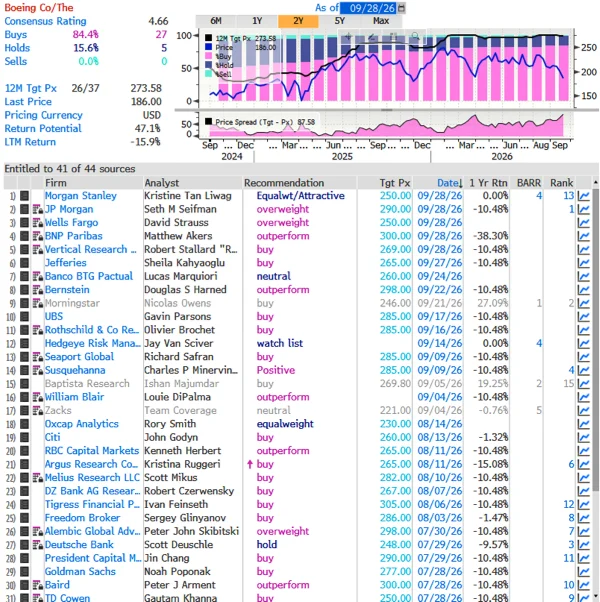
Boeing’s stock has already had a challenging year, trading down 14% year-to-date and largely sideways since the twin MAX jet crashes in 2018 and 2019. While Wall Street analysts tracked by Bloomberg maintain a generally bullish outlook, with 27 "Buy" ratings, 5 "Holds," and zero "Sells," and a 12-month average price target of $273.58, the immediate market reaction signals a deep-seated sensitivity to negative news, particularly regarding the MAX program. Delays in certification translate directly into delayed deliveries, which can trigger penalty clauses in contracts with airlines and impact Boeing’s ability to recognize revenue. Moreover, the additional engineering resources required for the software patch represent an unbudgeted expense, further straining the company’s financial resources already under pressure from supply chain disruptions and other quality control issues.

Airline Operations and Supply Chain Impact
For airlines that have placed substantial orders for the 737 MAX 10, this delay poses considerable operational and strategic challenges. Carriers rely on precise delivery schedules for fleet planning, route development, and crew training. Unexpected delays force airlines to scramble for alternative capacity, potentially leasing older, less fuel-efficient aircraft or deferring planned route expansions. This can have a cascading effect on their financial performance and competitive positioning.
While some airlines reportedly accepted earlier MAX variants with older software to avoid the glitch, this creates a logistical headache. It means that once the software patch is developed and certified, these aircraft will require retrofitting, leading to potential groundings and further operational disruptions. The complexity of managing different software versions across a large fleet adds another layer of operational burden.
Beyond airlines, the delay also impacts Boeing’s extensive global supply chain. Suppliers ramp up production in anticipation of delivery targets, and sudden pauses or changes can lead to inventory buildups, production adjustments, and financial strain for these partners. The aerospace manufacturing ecosystem is highly interconnected, and disruptions at Boeing reverberate throughout the industry.
Navigating the Path Forward: Boeing’s Critical Test
For CEO Kelly Ortberg, this latest challenge represents a critical test of leadership and engineering prowess. The immediate priority for Boeing is to swiftly and definitively address the software glitch. This entails not only developing a robust patch but also subjecting it to rigorous internal testing and subsequent independent validation by the FAA and other international regulators. The process must be transparent, thorough, and leave no room for doubt regarding safety.

Beyond the technical fix, Boeing faces the ongoing imperative of rebuilding trust. This involves clear and consistent communication with regulators, airlines, and the public. Any perception of downplaying the issue or rushing a solution could further erode confidence, with long-term consequences for the MAX program and Boeing’s market standing. The company must demonstrate an unwavering commitment to safety, prioritizing it above all else, even if it means further delays and financial sacrifices.
The competitive landscape also looms large. Airbus, with its highly successful A321neo, stands to gain from any prolonged delays to the MAX 10. Airlines might consider shifting orders or exploring alternative options if Boeing struggles to deliver its promised aircraft in a timely manner. The pressure on Ortberg and his team to deliver a swift and satisfactory resolution is immense, not only to secure the MAX 10’s future but to solidify Boeing’s reputation as a reliable and safe aircraft manufacturer.
In conclusion, the FAA’s decision to halt the 737 MAX 10 certification due to a new software glitch is more than just a procedural delay; it is a potent reminder of the enduring scrutiny surrounding the MAX program and the paramount importance of software integrity in modern aviation. As Boeing works to develop a fix, the world will be watching to see if it can navigate this latest hurdle without further compromising its fragile recovery and the trust of its customers and the flying public. Time to get to work, Ortberg.

