
Global financial markets commenced September on a distinctly cautious note, with stock futures retreating as a broad-based sell-off in sovereign bonds pushed yields to levels not seen in over a decade for some key economies. This risk-off sentiment was exacerbated by escalating geopolitical tensions in the Middle East, which sent oil prices sharply higher, and a renewed hawkish stance from central banks. Investors are now navigating a complex landscape marked by inflation concerns, robust economic data, and a tightening monetary policy outlook.
A Turbulent Start to September for Equities
The opening of September saw major U.S. stock futures firmly in the red, with S&P futures down 0.6% and Nasdaq futures sliding 1.2% by 8:00 AM ET. The tech sector, which had largely driven market gains earlier in the year, bore the brunt of the sell-off. Reports of a labor union strike at Micron in Taiwan contributed to this pressure, sending the semiconductor giant’s stock down 2% in pre-market trading. This weakness extended across the broader semiconductor and memory chip sectors, which were down 1.4% and 2.2% respectively. Even the "Magnificent Seven" tech behemoths – Apple (-0.1%), Alphabet (-0.7%), Amazon (-1.3%), Meta (-1%), Microsoft (-1.1%), Nvidia (-1.3%), and Tesla (-1.2%) – all registered pre-market losses, indicating a widespread retreat from growth-oriented assets.
In contrast, defensive sectors and energy stocks were poised to outperform, reflecting a flight to safety and a direct benefit from surging crude prices. Small-cap stocks surprisingly led large-caps despite the broader rise in interest rates, suggesting some rotation within equity markets. This early September decline comes at a historically challenging time for the S&P 500, which has averaged an 0.88% loss in September over the past three decades, underscoring seasonal headwinds.
Unprecedented Surge in Global Bond Yields
The most striking development was the relentless ascent of global bond yields, reaching multi-year and even multi-decade highs. This global bond sell-off, which had been building momentum, intensified at the month’s outset.
US Treasuries Lead the Charge
U.S. Treasury yields rose across the curve, with the benchmark 10-year yield touching 4.79%, its highest level since January 2025. The 30-year yield extended its stay above 5%, marking its longest such streak since 2006. This steepening of the yield curve, with longer-dated maturities rising more significantly than shorter ones, reflects growing investor concerns about long-term inflation and the fiscal outlook.
Asia and Europe Follow Suit
The impact was particularly pronounced in Asia, where 10-year Japanese Government Bond (JGB) yields surpassed 3.00% for the first time since 1996, climbing by 5.5 basis points to 2.99% (at the time of reporting). This move was partly influenced by recent pressure from U.S. Treasury Secretary Scott Bessent, who reportedly urged the Bank of Japan to tighten its monetary policy amid yen weakness. However, Japan’s Finance Minister Satsuki Katayama later downplayed these reports, stating the BoJ’s policy would be guided by economic conditions, not external influence.
European markets also experienced significant bond sell-offs. The German 10-year Bund yield climbed to its highest level since 2011, while UK Gilts sharply underperformed, with their 10-year equivalent reaching levels not seen since 2008. Euro-area inflation quickened to its highest level in almost three years, cementing expectations for a rate hike from the European Central Bank next week and further pressuring European sovereign debt. Traders are now pricing in two 25 basis point hikes by the Bank of England by February.
Drivers Behind the Yield Spike
Several interconnected factors are driving this global surge in yields:
- Persistent Inflation Concerns: Despite some moderation, inflation remains elevated globally. Investors are demanding higher compensation to hold long-term debt, fearing that central banks may struggle to bring inflation back to target. ISM Prices Paid, a key component of the ISM manufacturing report, is under close watch as a critical inflation indicator.
- Government Spending and Debt Levels: Worries about substantial government spending and rising national debt levels, particularly in the U.S., are contributing to upward pressure on yields. U.S. Treasury Secretary Bessent hinted at potential discussions on a fiscal consolidation package, though he downplayed intentions to directly influence bond markets.
- Financing the AI Buildout: The burgeoning artificial intelligence sector is requiring significant corporate borrowing for infrastructure development, adding to overall demand for capital and pushing up corporate borrowing costs, which in turn influences sovereign yields.
- Hawkish Central Bank Rhetoric: A clear shift in central bank communication towards a more aggressive stance on combating inflation has played a pivotal role.
Geopolitical Tensions Fuel Oil Price Rally
Compounding the market anxieties, fresh geopolitical instability in the Middle East sent oil prices soaring. Continued disruptions to energy flows through the strategically vital Strait of Hormuz prompted a sharp rise in crude benchmarks.
Strait of Hormuz Incident
Reports emerged of two oil supertankers being struck by unknown projectiles in quick succession while transiting the Strait of Hormuz. This incident, confirmed by maritime security consultants Marisks, immediately injected a significant risk premium into oil markets. WTI crude futures surged above $87, reaching their highest level since July 27, while Brent crude climbed above $92, up 2.71% in the preceding session and another 1.09% overnight.
Broader US-Iran Conflict
The supertanker attacks are the latest escalation in renewed hostilities between the U.S. and Iran. Over the weekend, the U.S. reportedly struck Islamic Revolutionary Guard Corps (IRGC) targets on Larak island in the Strait of Hormuz, with Iran retaliating with attacks on facilities in the UAE and Jordan. U.S. officials, including former President Trump, indicated further responses to Iran’s actions, although Trump also sought to temper fears by describing the conflict as a "relatively little war for us," suggesting limited strikes. The unresolved tensions, however, continue to cast a shadow over global energy supplies.
Energy Market Impact
The ripple effect of the oil price surge was also seen in European natural gas prices, which rose 4.23% to their highest level since January 2023 at €69.81/MWh. This broad increase in energy costs contributes directly to inflationary pressures globally, adding another layer of complexity for central banks already grappling with price stability.

Central Banks Signal Sustained Tightening
The hawkish pivot by central banks, particularly the U.S. Federal Reserve, is a central theme driving current market dynamics.
Fed’s Hawkish Stance
Fed Chair Kevin Warsh’s speech at the Jackson Hole symposium last Friday marked a significant shift in communication. His comments were notably more specific and decidedly hawkish, reaffirming the Fed’s commitment to the 2% PCE inflation target and the federal funds rate as its primary policy tool. Warsh explicitly stated that there were "few signs of policy restraint" and that the Fed has "work to do" unless "underlying inflation is moving to our objective, clearly and at sufficient speed." This forceful message was a correction to perceived missteps in earlier communications.
In response, Fed funds futures repriced aggressively, with the probability of a September Fed rate hike jumping from just 36% last Thursday to approximately 70% as of early Tuesday. Traders are now pricing in around 60 basis points of hikes by next June. Analysts at major financial institutions now believe the burden is on incoming data to show a significant downside surprise to prevent a 25 basis point hike in September, with some expecting a total of 50 basis points of hikes this year. Joachim Klement, a strategist at Panmure Liberum, warned that "equity investors should be much more worried about rising long-term bond yields, particularly in the US," citing continued inflation pressures and Warsh’s hawkish stance. Goldman Sachs’ Robert Kaplan also stated he would be raising interest rates in September absent any surprises.
Global Central Bank Pressure
Beyond the Fed, other central banks are also feeling the heat. The aforementioned rise in Euro-area inflation strengthens the case for an ECB rate hike. The Bank of England is also expected to act, with traders pricing in multiple hikes. The interaction between U.S. Treasury Secretary Bessent and the Bank of Japan further highlights the global coordination, or lack thereof, in monetary policy in response to global inflation and currency movements.
Corporate Headlines and Sectoral Shifts
Amid the broader macro turmoil, specific corporate developments also contributed to market sentiment.
Tech Under Pressure
The strike by Micron’s labor unions in Taiwan directly impacted the semiconductor giant, sending its stock lower. This event underscores the fragility of global supply chains and the potential for localized disruptions to have broader market implications, especially in critical sectors like technology. The general weakness in the Magnificent Seven names further indicates a re-evaluation of high-growth tech stocks in a rising yield environment.

Broader Corporate Developments
- Western Union: The financial services company and its Australian division are under investigation by Australia’s financial crimes agency regarding the effectiveness of their anti-money laundering and terrorism financing controls.
- Airbnb: The rental platform is reportedly testing a strategy to take a smaller cut of rental fees from hosts, an effort to combat the trend of customers booking directly outside its platform. This indicates increasing competitive pressures in the sharing economy.
- Apple vs. OpenAI: Apple filed a court claim alleging that OpenAI is actively destroying crucial evidence, escalating their ongoing legal battle. This highlights the intense competition and legal sparring within the rapidly evolving AI landscape.
IPO Market Activity
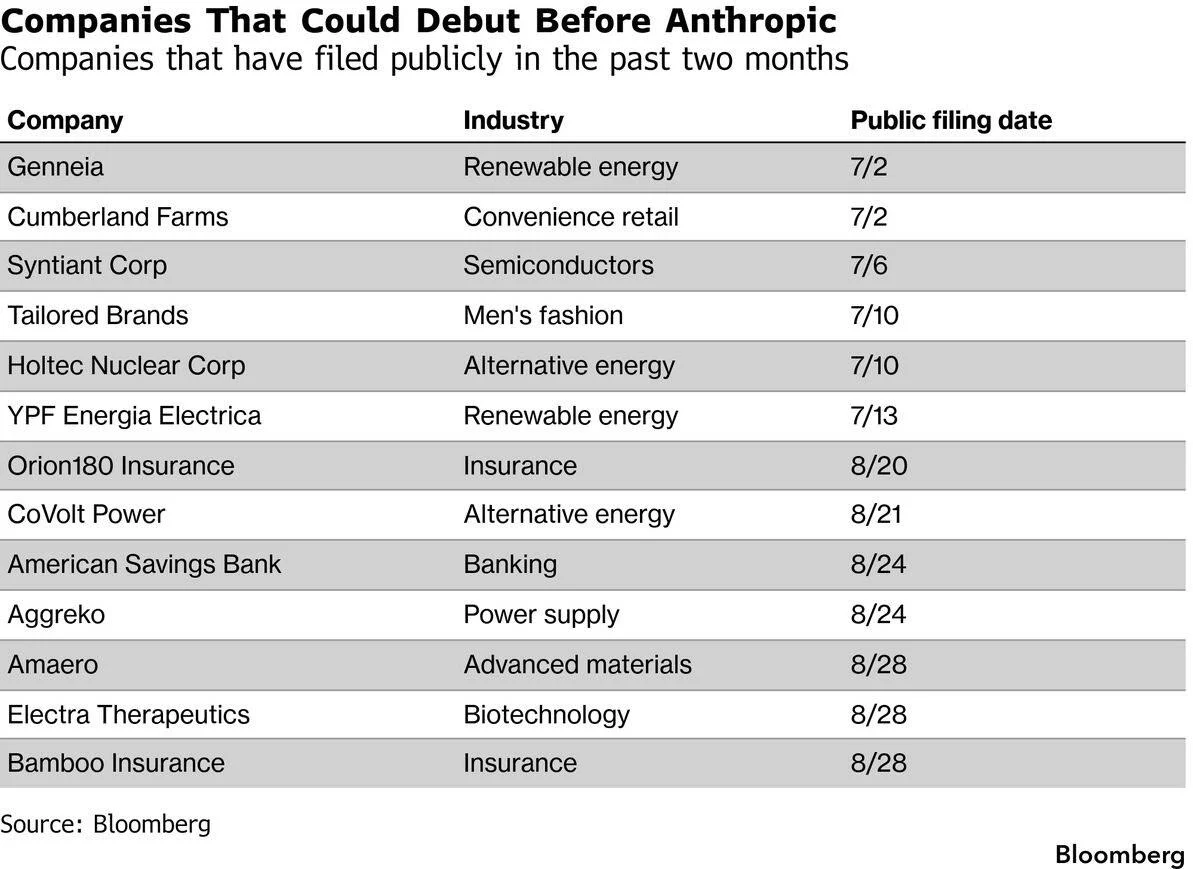
The market is bracing for a surge in Initial Public Offerings (IPOs) ahead of Anthropic’s anticipated "megadeal." Companies are reportedly rushing to file, seeking to capture investor attention before Anthropic potentially absorbs significant market capital. Anthropic itself is said to have agreed to a massive $35 billion computing deal with Lambda, a cloud provider backed by Nvidia, to rapidly expand its AI capacity, signaling immense investment in AI infrastructure.
Market Sentiment and Outlook
The confluence of rising yields, geopolitical risks, and hawkish central bank rhetoric creates a challenging outlook for investors.
September Seasonality Concerns
September has historically been the toughest month for the S&P 500, with an average loss of 0.88% over the past three decades. This seasonal weakness, coupled with the current risk-off environment, suggests a potentially volatile period ahead.
Expert Commentary
- Joachim Klement (Panmure Liberum): Emphasized the critical concern of rising long-term bond yields for equity investors, pointing to continued inflation pressures and hawkish central bank stances.
- Scott Rubner (Citadel Securities): Noted a shift in near-term asymmetry for U.S. equities into September. While describing a summer of strong earnings and rebuilding investor exposure, he views the current month as an opportunity to reduce exposure and add cheap protection, rather than the start of a broader bearish tilt.
- Laura Cooper (Nuveen): Stated that the rise in real yields has "a little bit more room to run." She highlighted that the August inflation print will be the "key catalyst going forward" for the Fed’s next steps, rather than payrolls, given the central bank’s focus on price stability.
Volatility Dynamics
Short-term S&P 500 option volatility has fallen to near year-long lows, suggesting a degree of complacency or a belief that immediate shocks are contained. However, longer-term contracts are signaling more concern, with the spread between 1-year and 1-month volatility widening to the 96th percentile over the past year. This divergence indicates that while immediate risks might seem manageable, market participants are hedging against potential longer-term turbulence.
Key Economic Data on the Horizon

Upcoming economic data releases will be crucial in shaping market expectations and central bank decisions.
US Macro Indicators
Today’s macro data focus is on the August ISM Manufacturing report and July JOLTS Job Openings. The ISM Manufacturing report, particularly the Prices Paid component, will be closely watched for signs that the "growth story remains intact" and for inflationary pressures. JOLTS data is expected to reaffirm a stable labor market with limited layoffs, reflecting a "low hiring / low firing" environment. Later this week, the August employment report on Friday will be a major test, with economists expecting a rebound in payrolls and stable unemployment. Next week’s inflation data (PCE and CPI) will be even more significant for the Fed’s trajectory, given their renewed emphasis on price stability.
Global Data Points
In Asia, China’s Caixin Manufacturing PMI expanded at a faster pace in August, rising to 51.5, suggesting improving demand. In Europe, the Eurozone August HICP print, expected to track around +3.36% YoY based on country releases like Germany’s +2.9% print, will be pivotal for the ECB’s upcoming rate decision.
Conclusion
The commencement of September has delivered a stark reminder of the multifaceted challenges facing global markets. The synchronized surge in bond yields across major economies, fueled by persistent inflation concerns and hawkish central bank rhetoric, is reshaping investment strategies. Geopolitical flare-ups, particularly in the critical Strait of Hormuz, have injected a significant risk premium into energy markets, threatening to reignite inflationary pressures. While some market participants see opportunities for rotation and strategic protection, the consensus points to a period of heightened volatility and cautious positioning as investors await crucial economic data and further clarity on monetary policy and geopolitical stability. The interplay of these forces will define market performance in the coming weeks, making informed decision-making paramount.

