
The renowned proponent of financial independence, Mr. Money Mustache (MMM), has openly shared a surprising nine-month journey into Amazon’s exclusive Vine program, revealing the sophisticated psychological mechanisms that can inadvertently steer even the most frugal individuals toward unintended consumerism. What began as a seemingly innocuous opportunity to acquire "free stuff" for product reviews evolved into a significant personal experiment, shedding light on behavioral economics, the true cost of convenience, and the pervasive nature of modern consumption patterns.
Amazon Vine: An Exclusive Glimpse into the Reviewer Program

The Amazon Vine program, an invitation-only initiative, grants selected reviewers—dubbed "Vine Voices"—access to a wide array of products free of charge in exchange for honest, unbiased reviews. Amazon launched this program to assist customers in making informed purchasing decisions by providing reviews from trusted, prolific reviewers who have a history of writing helpful feedback. Sellers benefit from early, credible reviews for new products, which can significantly influence sales and product visibility on the platform. The basic premise is straightforward: reviewers order items, evaluate them, and submit their feedback, typically agreeing to review a high percentage (e.g., 80%) of the products they receive to maintain their status.
For Mr. Money Mustache, known for his rigorous frugality and advocacy for a deliberate, anti-consumerist lifestyle, the invitation last winter came unexpectedly. It followed a five-star review for a heated vest, an item he had genuinely purchased and appreciated. "Congratulations! You’ve been selected to join Amazon Vine for writing helpful reviews!" read the email, an enticing proposition for someone already contributing reviews out of personal initiative. Perceiving it as a fun way to save money on items he might otherwise buy, and to conduct a real-world experiment for his blog, MMM accepted the terms and conditions without extensive deliberation, thus commencing an unforeseen saga that challenged his core principles.
The Unfolding Saga: Nine Months of "Free" Consumption

Over the subsequent nine months, MMM’s engagement with the Vine program unfolded in a manner he later described as a "surprising journey." Initially, the program offered tangible benefits, allowing him to save thousands of dollars on essential tools and materials for his construction business and the MMM-HQ Coworking space. Items like high-quality light fixtures, various tools, plumbing parts, an EV charger, and even specific clothing items such as his distinctive Eagle shirt, were acquired through Vine. He also managed to source practical items like super-realistic artificial plants that proved ideal for low-maintenance courtyard gardens at the HQ, and even a contractor-grade extension cord.
The "bounty" was often shared with friends and coworkers, who assisted in requesting and reviewing items, transforming the process into a collaborative, albeit sometimes comical, endeavor. The inclusion of a seemingly photoshopped cold plunge image among the procured items highlighted the diverse and often peculiar range of products available.
However, as the experiment progressed through spring and summer, a subtle yet significant shift occurred. The initial excitement of "free stuff" began to give way to a sense of unease. The program’s design, while ostensibly beneficial, started to exert a powerful, almost coercive, influence on his behavior, leading to daily checks of the Vine page even without a genuine need for products.

Behavioral Economics at Play: Scarcity and the Casino Effect
Mr. Money Mustache’s experience offers a compelling real-world illustration of concepts explored in behavioral economics, particularly those outlined in Michael Easter’s "Scarcity Brain." Easter’s work delves into how modern platforms, from gambling sites to social media algorithms, exploit inherent weaknesses in human evolutionary programming: the pursuit of unpredictable rewards and the fear of missing out (FOMO). MMM observed these exact mechanisms at play within the Amazon Vine interface.
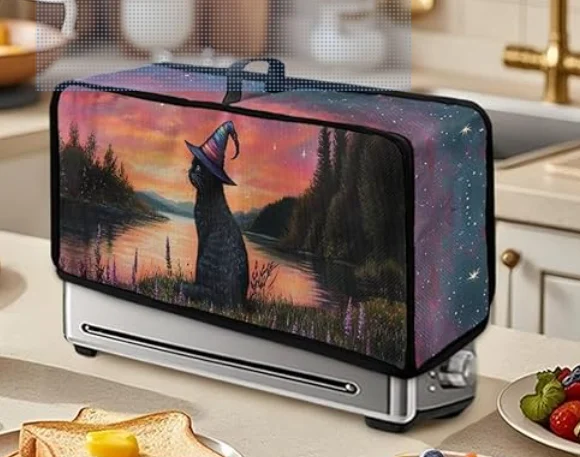
The Vine platform operates like a finely tuned slot machine or a social media feed. Each login presents a variable rewards schedule; sometimes, the offerings are mundane or useless (e.g., "pink plastic disposable party plates," a "toaster cover with a cat wearing a witch hat"), while other times, genuinely valuable items appear. This unpredictability keeps users engaged, constantly checking for the next "score." The fleeting availability of desirable items—they can disappear within minutes—activates a strong sense of urgency and FOMO, compelling reviewers to claim them quickly. Furthermore, the tiered system (Vine Silver to Vine Gold, requiring 80 reviews) acts as a gamified incentive, pushing users to engage more deeply to unlock perceived higher status and better access, regardless of the actual utility of the upgrade.

This "online casino effect" effectively hijacked MMM’s usually robust frugality instincts. Despite recognizing the manipulative nature of the system, he found himself caught in a cycle of checking, ordering, and reviewing, driven by the intermittent reinforcement and the desire not to miss out on a valuable item.
The Hidden Costs: Time, Environment, and Psychological Toll
While the program yielded financial savings, the broader implications of MMM’s participation extended beyond mere monetary value. The constant stream of packages led to overflowing recycling bins, a stark contradiction to his deeply held environmental values. The sheer volume of manufacturing and packaging waste generated by the acquisition of often frivolous items directly clashed with his blog’s core message of sustainable living and conscious consumption.

Beyond the environmental footprint, there was a significant time cost. The process of unpacking, photographing, and batch-writing reviews became a weekly chore, consuming hours he would have preferred to dedicate to other pursuits. He described this engagement as a form of "laziness and procrastination," an easy online activity that diverted him from more meaningful, life-enriching activities like physical exercise, construction projects, or creative writing.
The psychological toll also became evident. During the peak of what he termed a "consumerism bender," MMM experienced feelings of mild embarrassment, discreetly tucking away boxes to avoid the scrutiny and laughter of his son and girlfriend over some of his more "frivolous purchases." This self-awareness marked the beginning of his "recovery stage," where he consciously began to disengage from the program.
"Work" Redefined: Lessons in Autonomy and "Fuck You Money"

The Vine experience, for MMM, also served as a powerful reminder of the nature of conventional employment. He observed the program’s "reviewer-unfriendly features," such as deliberately poor search functionality and lack of filtering options, designed to maximize reviewer engagement without valuing their time. The bureaucratic, AI-based review evaluation system, which would arbitrarily flag and require trivial edits to "totally tame, factual reviews," further highlighted the impersonal and often illogical demands placed upon participants.
This simulated "work" environment underscored the value of autonomy that financial independence had granted him. Having been "the boss" for two decades, MMM keenly felt the frustration of being a "low-wage worker" in a system he couldn’t influence. He drew parallels to his 2017 Uber Driving experiment, where he similarly identified numerous improvements but lacked the authority to implement them. This reinforced his belief that "fuck you money"—the financial freedom to reject undesirable work—is crucial for maintaining control over one’s time and professional dignity.
The Tangible Price: Tax Implications of Free Goods

A crucial, often overlooked aspect of the Amazon Vine program is its tax implications. While products are offered "free," the Internal Revenue Service (IRS) considers the fair market value of these items as taxable income. Amazon issues a 1099-NEC form to Vine reviewers whose estimated value of goods (EVG) exceeds $600 in a calendar year. For 2025, MMM’s account showed approximately $7,000 worth of items, potentially incurring a tax liability of around $1,750 at his marginal tax rate of 25%.
Initially, this represented a significant "penance" for impulsive ordering. However, further research and advice from the Vine community revealed a crucial detail: in many cases, the estimated value can be marked down by 80% before declaring it, as opening and reviewing a product significantly diminishes its resale value. This adjustment drastically reduced his anticipated tax bill from $250 to approximately $50 for the purely "nonsense" items, mitigating some of the financial sting. The majority of the items (75%) were used for his business or HQ renovations, effectively converting a potential tax burden into business assets or expenses.
Disengagement and the Path to "Badassity"

MMM’s disengagement from Vine was not an explicit cancellation but a strategic behavioral intervention. He employed a "Keystone Habit" trick, remapping his browser bookmark for the Vine page to his "Badassity Tracker"—a personal chart for daily habits. Now, clicking the former Vine link directs him to a reminder to perform a quick exercise, replacing a passive consumerist habit with an active, health-promoting one.
This intentional redirection highlights a core principle of behavior change: replacing undesirable habits with positive ones. The experience also led him to reflect on "One More Year Syndrome," a phenomenon where financially independent individuals continue working beyond necessity due to ingrained habits, social pressures, or the subtle allure of perceived benefits, mirroring his struggle to disengage from Vine.
Broader Implications for Consumerism and Financial Independence

Mr. Money Mustache’s Amazon Vine experiment serves as a potent parable for modern consumerism and the pursuit of financial independence. It underscores that even individuals with strong anti-consumerist values are susceptible to the sophisticated psychological nudges embedded in digital platforms. The allure of "free" combined with the mechanics of scarcity and unpredictable rewards can subtly override rational decision-making, leading to increased consumption, wasted time, and environmental impact.
The lessons gleaned extend beyond Amazon Vine, urging a continuous self-assessment of one’s habits and motivations. As MMM concludes, the journey is about ongoing self-reflection and incremental course corrections. The experiment highlights the importance of asking critical questions: "Are my daily habits moving me towards my goals or away from them?", "Am I spending my time and money on things that genuinely bring me joy and fulfill my values?", and "What am I doing just because it’s easy, rather than because it’s genuinely useful?"
While the author acknowledges the potential for this article to violate Vine’s terms and conditions, the educational value of the experiment in demonstrating the pervasive power of behavioral engineering and reinforcing the principles of conscious living and financial autonomy is deemed paramount. The saga of Mr. Money Mustache and Amazon Vine stands as a contemporary cautionary tale, reminding us that true freedom often lies in recognizing and resisting the subtle forces that seek to dictate our consumption and, by extension, our lives.

