
A recent account from Mr. Money Mustache, the widely recognized blogger and proponent of financial independence, sheds light on the often-unseen complexities and psychological pitfalls embedded within Amazon’s exclusive Vine review program. What began as an innocent foray into obtaining "free" products for helpful reviews quickly evolved into a nine-month saga, revealing how even financially savvy individuals can succumb to sophisticated behavioral nudges, leading to unintended consequences for their time, finances, and personal values.
The Genesis of an Experiment: A Reviewer’s Unexpected Invitation

The journey commenced last winter when Mr. Money Mustache (MMM), known for his pragmatic advice on frugality and early retirement, posted a five-star review for a heated vest purchased on Amazon. His satisfaction with the product and a desire to share his positive experience led to an unanticipated invitation from Amazon: "Congratulations! You’ve been selected to join Amazon Vine for writing helpful reviews!" Familiar with the program and its "Vine Voices," who receive products at no upfront cost in exchange for unbiased reviews, MMM initially perceived this as a beneficial opportunity. The core premise of Amazon Vine allows selected reviewers to order items for free, with the stipulation that at least 80% of ordered products must be reviewed. "Who doesn’t like free stuff?" MMM recounted thinking, reasoning that if he was already reviewing products voluntarily, why not be rewarded? With minimal deliberation, he accepted the terms and conditions, embarking on an experiment that would profoundly illustrate the subtle yet powerful influence of e-commerce platforms.
A Dual-Edged Sword: Initial Gains and Mounting Concerns
Over the subsequent nine months, MMM’s participation in Amazon Vine unfolded as a complex experience, marked by both tangible benefits and growing self-awareness of its hidden costs. On the upside, the program delivered considerable savings, estimated at several thousand dollars. These savings primarily materialized in tools and materials genuinely needed for his construction business and the MMM-HQ Coworking space, aligning with his initial goal of acquiring necessary items without incurring direct costs. Examples included practical items like high-quality light fixtures, various tools, plumbing parts, and even an EV charger. The program also provided unique finds, such as a "ridiculous Eagle shirt" featured in a music video and a large supply of artificial plants that proved surprisingly effective for hard-to-water courtyard areas at the MMM HQ. Furthermore, MMM engaged friends and coworkers in the process, allowing them to request and review items, fostering a sense of shared bounty and amusement over some of the more unusual products. This communal aspect offered a temporary mitigation of the individual burden.

However, beneath the surface of these benefits, a disquieting pattern began to emerge. MMM observed how Amazon’s system effectively "hijacked" his ingrained frugality instincts, coaxing him into behaviors that diverged from his core principles. The act of receiving free items, coupled with the program’s design, inadvertently steered him towards a form of consumerism he typically eschewed.
The Behavioral Science Behind the Vine: Scarcity Brain and Variable Rewards
Mr. Money Mustache’s experience offers a compelling real-world illustration of concepts explored in behavioral science, particularly those detailed in Michael Easter’s book, Scarcity Brain. Easter’s work dissects how modern digital platforms, including gambling sites, marketing strategies, and social media algorithms, exploit inherent weaknesses in human evolutionary programming: an evolved need to acquire scarce resources and a susceptibility to unpredictable rewards.

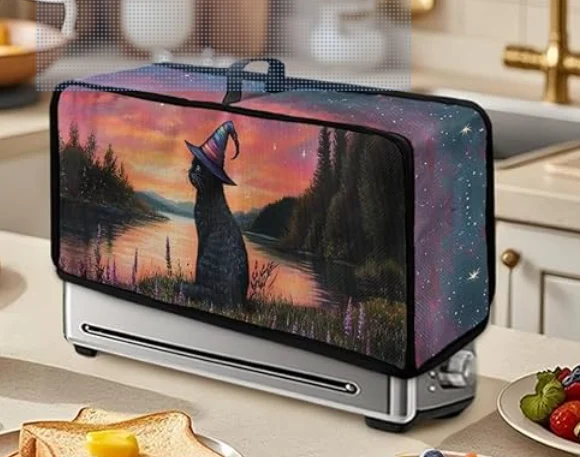
Amazon Vine, in its operational design, mirrors these psychological triggers. The platform operates as a fluctuating marketplace, where available items change daily, sometimes offering mundane, irrelevant products (e.g., "pink plastic disposable party plates" or a "toaster cover with a cat wearing a witch hat"), and at other times presenting genuinely valuable "scores" (e.g., high-quality light fixtures, construction tools, or an EV charger). This unpredictable reward schedule is a cornerstone of addiction mechanics, akin to the intermittent reinforcement used in slot machines. Reviewers are incentivized to check the Vine page frequently, driven by the fear of missing out (FOMO) on a desirable item. The "scarcity" of good products among a sea of less useful ones, combined with the intermittent availability, creates a compelling loop. The promise of an unexpected, valuable find keeps users engaged, even when the immediate gratification is low, fostering a habit of constant checking and ordering. This dynamic, as MMM noted, led him to "check the Vine page every day for scores, even when I didn’t actually need anything."
The Hidden Costs: Time, Environment, and Psychological Burden
As the experiment progressed, the true "costs" of the Amazon Vine program became increasingly apparent to MMM, extending beyond mere financial considerations.

Time as a Non-Renewable Resource: The process of receiving, unpacking, photographing, testing, and writing reviews for numerous products consumed significant amounts of time. MMM described an "assembly-line speed" for unpacking and photographing, followed by batch-writing reviews weekly. This labor, while seemingly minor for each item, accumulated into hours diverted from more personally fulfilling activities. He realized he was "spending time I’d rather spend doing something else."
Environmental Footprint: A staunch advocate for environmental sustainability, MMM found his participation directly contradicting his values. The influx of packages, leading to an overflowing recycling bin and the manufacturing and packaging waste associated with each item, became a stark reminder of the environmental impact of his incentivized consumption. This conflict between personal values and induced behavior highlighted the insidious nature of the program.
Psychological Impact: During the peak of his involvement, MMM described a "consumerism bender" characterized by daily package deliveries and even a degree of shame, as he found himself "discreetly tucking away the boxes when they were around to evade scrutiny" from his son and girlfriend. This period underscored a significant deviation from his disciplined, anti-consumerist lifestyle, illustrating how powerful external incentives can override deeply held personal principles. He recognized that the habit became a form of "laziness and as a form of procrastination," providing an easy distraction from more demanding, yet ultimately more rewarding, endeavors.

The Bureaucratic Maze and the "Low-Wage Worker" Mentality
MMM also critiqued the user experience of the Vine program, highlighting features that underscored the reviewers’ position as "low-wage workers" rather than VIPs. The search functionality was deemed "crap," lacking essential filters or sorting options, a design choice MMM interpreted as a deliberate strategy by Amazon to compel reviewers to sift through all available items, regardless of the value of their time. Furthermore, the AI-based review evaluation system proved frustratingly bureaucratic. It would occasionally flag "totally tame, factual reviews" for not meeting "Community Standards" without providing specific reasons, forcing reviewers to engage in arbitrary edits until the AI was "pacified." This inefficient and opaque system reinforced the perception of being a cog in a larger, impersonal machine.
Tax Implications: The "Free" Isn’t Free

One crucial aspect often overlooked in "free product" programs is the tax liability. Amazon Vine operates under U.S. tax law requiring the issuance of a 1099-NEC form for the retail value of all items received by reviewers at the end of the year. This means the products are not truly free but rather discounted by the individual’s marginal tax rate. For MMM, with an estimated marginal tax rate of 25%, his receipt of approximately $7,000 worth of items in 2025 translated into a potential tax bill of $1,750.
MMM clarified that about 75% of these items were for commercial use in his business, effectively converting the "free" products into real income through their application in projects. However, approximately $1,000 worth of items constituted "pure nonsense," incurring a $250 tax bill as a "penance" for impulsive ordering. An important update, gleaned from wise readers, indicated that in many cases, this estimated value can be marked down by 80% before declaring it, as opening and reviewing a product significantly reduces its resale value. This adjustment could reduce MMM’s tax bill for frivolous items to a more modest $50, illustrating the complexities of tax reporting for such programs.
The Broader Implications: "Fuck You Money" and Systemic Traps

MMM drew a powerful parallel between his Vine experience and the dynamics of conventional employment. He reflected that for many, the Vine program’s structure – a set of tasks and rules within a system they didn’t create and cannot significantly alter – mirrors the typical workplace. The expectation to "crank out your TPS Reports without rocking the boat too much" in exchange for a paycheck resonates with the Vine requirement to review products to maintain program access. This observation echoed his 2017 Uber Driving experiment, where he quickly identified systemic improvements but lacked the authority to implement them.
This realization underscored the profound value of "Fuck You Money," a concept central to the financial independence movement, representing the financial freedom to refuse undesirable work or exploitative systems. After 20 years of financial independence, MMM found himself unwittingly drawn into a system that, while seemingly benign, chipped away at his autonomy and values. The experience served as a potent reminder of the importance of being "the boss" of one’s own time and choices.
Path to Recovery: Reclaiming Habits and Self-Reflection

MMM’s recovery from the "consumerism bender" involved a conscious effort to break the ingrained habit. He leveraged the "Keystone Habit" trick, remapping his browser bookmark for the Vine page to his "Badassity Tracker"—a personal chart designed to remind him of daily habits that genuinely contribute to his well-being, such as exercise. This strategic redirection aimed to replace a detrimental digital habit with a positive physical one, shifting his focus from passive consumption to active self-improvement.
The lessons learned extended beyond personal habits, touching upon the phenomenon of "One More Year Syndrome," where individuals, even those financially able to retire, continue working due to psychological inertia or perceived obligations. MMM noted that his Vine experience offered insight into how such subtle behavioral nudges can keep people trapped in cycles that no longer serve them.
Epilogue and Continuing Dialogue

As of this article’s publication, MMM has effectively disengaged from the Amazon Vine program, though he has not explicitly canceled his account. He acknowledged that publicly detailing his experience might violate Vine’s terms and conditions (jokingly referred to as "the first rule of Vine is to not talk about Vine"), potentially leading to his removal from the program—a development he would consider "a funny story as well."
Ultimately, Mr. Money Mustache’s Amazon Vine experiment transcends a mere product review program. It serves as a compelling case study on the pervasive influence of behavioral economics in e-commerce, the true cost of seemingly "free" goods, and the critical importance of continuous self-reflection. His journey underscores that in an increasingly gamified digital world, maintaining personal values, managing habits consciously, and questioning inherent assumptions are indispensable tools for navigating consumer culture and upholding financial and personal autonomy. The "tiny course correction" made by identifying and addressing these behavioral traps can, over time, lead to a profoundly different and more aligned life path.

