
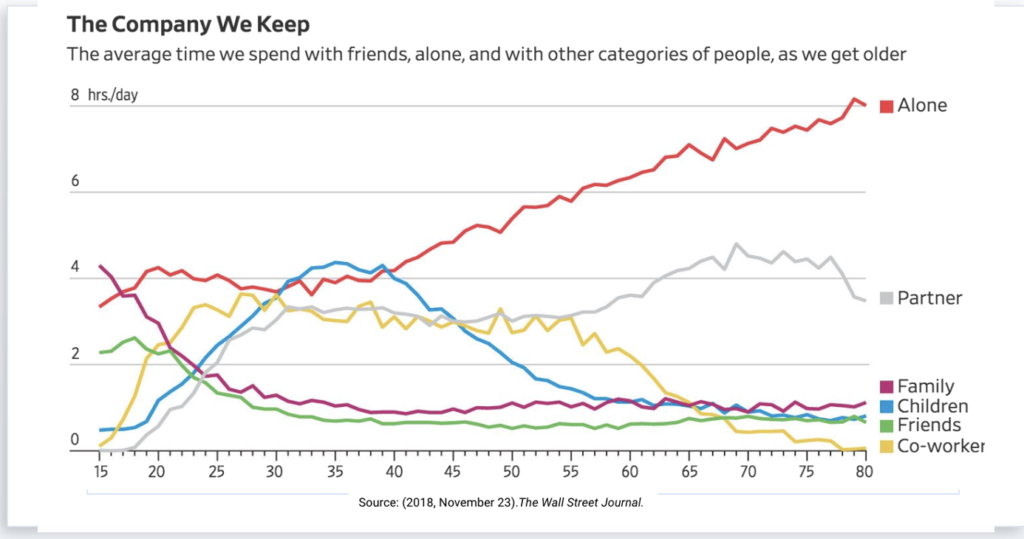
The transition into retirement, often heralded as a period of newfound freedom and expanded leisure, presents a unique set of psychological challenges that are only beginning to be fully understood by researchers and retirees alike. While the liberation from professional obligations is widely anticipated and celebrated, a less discussed yet profoundly impactful aspect of this life stage is the significant increase in solitary time, leading individuals to spend an unprecedented amount of time in the company of their own thoughts. This introspection, while potentially enriching, can also become a fertile ground for internal dialogues that shape one’s experience of this new chapter, according to experts in psychology and self-talk.
Recent discussions, notably featured on "The Retirement Wisdom Podcast," have highlighted the critical nature of these internal conversations. These dialogues, occurring entirely within an individual’s mind, are not merely passive musings. They can actively influence the trajectory of retirement, either by constricting one’s perspective and opportunities or by fostering a more intentional and expansive approach to this significant life transition. The nature of these internal exchanges, whether they are constructive or critical, plays a pivotal role in determining the overall quality of the retirement experience.
Dr. Marilee Adams, founder and CEO of The Inquiry Institute and author of the extensively revised fifth edition of Change Your Questions, Change Your Life, posits that the questions individuals ask themselves are fundamental in shaping their cognitive and emotional frameworks. Her research identifies two primary modes of internal operation: the "Judger" mindset and the "Learner" mindset. Judger questions are characterized by a backward-looking or inwardly critical orientation, often accompanied by blame and self-recrimination. Examples include queries like, "What’s wrong with me?" "Why did this happen?" or "Why bother?" These questions tend to foster a sense of stagnation and self-doubt.
In contrast, Learner questions are forward-looking, driven by curiosity, a sense of agency, and a focus on possibility. They manifest as inquiries such as, "What do I want now?" "What can I contribute?" or "How else can I think about this?" These questions, according to Dr. Adams, are instrumental in unlocking new perspectives and empowering individuals to actively shape their future. The stark divergence between these two questioning styles underscores their potential impact on an individual’s overall well-being and capacity for growth, particularly during periods of significant life change like retirement.
The timing of Dr. Adams’ insights is particularly relevant as individuals navigate the complexities of retirement. This major life transition often involves a loss of established professional identity, structured routines, and regular social and professional feedback mechanisms. In the absence of these external anchors, the internal monologue can become more pronounced, and Judger questions can gain an unchecked momentum. The challenge, therefore, is to consciously redirect attention from self-criticism towards aspirations for meaning, joy, contribution, enhanced relationships, and continued personal development.
Complementing Dr. Adams’ work, Dr. Ethan Kross, director of the Emotion & Self Control Laboratory at the University of Michigan and author of Chatter: The Voice in Our Head, Matters, and How to Harness It, offers a scientific perspective on the phenomenon of self-talk. Dr. Kross distinguishes between ordinary negative thoughts and what he terms "chatter"—a self-perpetuating cycle of worry, rumination, and catastrophizing. While acknowledging that negative emotions can serve as valuable learning experiences in moderation, he emphasizes that the detrimental effects arise when individuals become trapped in these patterns.
A significant point of convergence between the work of Dr. Adams and Dr. Kross lies in their shared conviction that the objective is not to silence the inner voice but to cultivate a more skillful and discerning relationship with it. Both scholars underscore the universality of an inner critic and the necessity of its acceptance as a fundamental aspect of human consciousness. Crucially, they both highlight the power of awareness as the gateway to choice, enabling individuals to transition from automatic reactions to intentional responses.
Dr. Adams’ contribution is particularly notable for its elegant framework, "The Choice Map," which provides a practical and accessible pathway for managing internal dialogues. This model encourages individuals to recognize when they are operating from a Judger mindset, to consciously pause, and then to actively shift into a Learner perspective. A particularly potent "switching question" offered by Dr. Adams is, "Who do I choose to be in this moment?" This question empowers individuals to reclaim their agency and consciously define their present experience, irrespective of past circumstances or internal criticisms.
Dr. Kross, on the other hand, advocates for a "toolbox" approach to managing self-talk, suggesting that different situations call for distinct strategies. His recommendations include "distance self-talk," a technique where individuals address themselves by their own name and offer coaching as they would to a friend. Another effective strategy is "mental time travel," which involves contemplating a current problem from a future vantage point, such as six months or a year from now. He also suggests incorporating physical activities, like a walk in nature, as a ritual to help regulate emotional states and foster a more balanced perspective. Collectively, these techniques equip individuals with the means to become more adept "chatter advisors," capable of navigating their internal landscape with greater efficacy.
Practical Strategies for Enhancing Inner Dialogue
In light of these findings, several actionable strategies can be implemented to foster a more constructive inner dialogue, particularly as individuals adjust to retirement:
1. Cultivating Awareness: The foundational step involves consciously paying attention to one’s internal conversation. This means actively listening to the thoughts that arise throughout the day, without immediate judgment.
2. The "Stop. Breathe. Be." Practice: Drawing from the work of Dr. Aditi Nerurkar, as shared by Dr. Adams, a simple yet profound technique involves a physical pause. By stopping, taking a few deep breaths, and simply being present, individuals can interrupt the momentum of automatic thought patterns and create space for more intentional responses. This momentary cessation can disrupt negative feedback loops before they become entrenched.
3. Identifying Question Types: Once awareness is established, the next step is to categorize the questions being asked. Are they predominantly Judger questions, characterized by criticism and blame, or Learner questions, driven by curiosity and possibility? This identification process is crucial for recognizing patterns of negative self-talk.
4. Navigating the "Judger Pit": When caught in a negative loop, the "Switching Lane" move, as described by Dr. Adams, becomes essential. This involves consciously posing a Learner question to facilitate a shift in mindset. For instance, if a Judger question is "Why did I make that mistake?", a Learner question might be, "What can I learn from this experience?" This reframing can redirect focus from self-condemnation to constructive learning.
5. Altering the Internal Voice: Following Dr. Kross’s guidance, individuals can experiment with changing the voice in which they address themselves. Using one’s own name and adopting a compassionate, coaching tone—as if speaking to a close friend—can help depersonalize criticism and foster a more supportive internal environment. For example, instead of "I can’t believe I did that," one might ask, "What advice would you give yourself right now if you were your own best friend?"
6. Shifting the Temporal Perspective: Dr. Kross’s technique of mental time travel offers a powerful way to contextualize current challenges. By asking, "How important will this feel six months from now?" or "What will be my perspective on this in a year?", individuals can gain a broader, more objective view, often diminishing the perceived magnitude of immediate difficulties.
7. Managing Venting and Seeking Broader Perspectives: While expressing feelings is important, the act of venting can sometimes reinforce negative thought loops. Identifying individuals who offer empathy and can help broaden one’s perspective, rather than simply commiserating, is a crucial aspect of healthy emotional processing. This involves seeking out conversations that offer constructive insights and encourage a more balanced outlook.
Implications for Retirement and Beyond
The growing body of research into self-talk and internal dialogue underscores a critical insight: retirement, while offering freedom, is most effectively navigated when paired with a refined approach to one’s thoughts and emotional landscape. The internal voice, often perceived as an unchangeable aspect of personality, is in fact a malleable tool. With consistent practice and the application of evidence-based strategies, this inner critic can be transformed into a valuable ally and a supportive coach.
This paradigm shift has far-reaching implications not only for the retirement years but for overall psychological well-being. By consciously shaping the nature of our internal conversations, we gain greater control over our emotional states, enhance our resilience in the face of adversity, and cultivate a more profound sense of purpose and contentment. The ability to manage one’s inner world effectively is, therefore, not merely a coping mechanism but a fundamental skill for thriving in all stages of life.
The insights from Dr. Adams and Dr. Kross, supported by extensive research and practical application, provide a robust framework for individuals seeking to optimize their mental and emotional lives. As more individuals embrace retirement and confront the internal landscapes it reveals, the understanding and application of these principles will become increasingly vital for fostering a fulfilling and purposeful post-career existence. The ongoing exploration of these internal dialogues promises to unlock new avenues for personal growth and well-being, transforming the solitary hours of retirement into an opportunity for profound self-discovery and empowerment.
Further Exploration and Resources:
For those interested in delving deeper into the science and practice of managing inner dialogue, several resources are available:
- Podcast Conversation with Dr. Marilee Adams: A comprehensive discussion exploring the principles of Change Your Questions, Change Your Life in the context of retirement is available on "The Retirement Wisdom Podcast."
- The Choice Map Survey: Dr. Adams’ Inquiry Institute offers an online survey that helps individuals assess their questioning patterns and provides a downloadable version of "The Choice Map" for practical application.
- Books by Dr. Marilee Adams: The latest edition of Change Your Questions, Change Your Life offers detailed strategies for transforming internal dialogues.
- Podcast Conversations with Dr. Ethan Kross: Two insightful episodes on "The Retirement Wisdom Podcast" delve into Dr. Kross’s work on self-talk, including discussions on Chatter and strategies for managing internal voices.
- Books by Dr. Ethan Kross: Chatter: The Voice in Our Head, Why It Matters, and How to Harness It provides a scientific exploration of inner dialogue and practical tools for its management. His subsequent work, Shift: Managing Your Emotions—So They Don’t Manage You, offers further insights into emotional regulation.

