
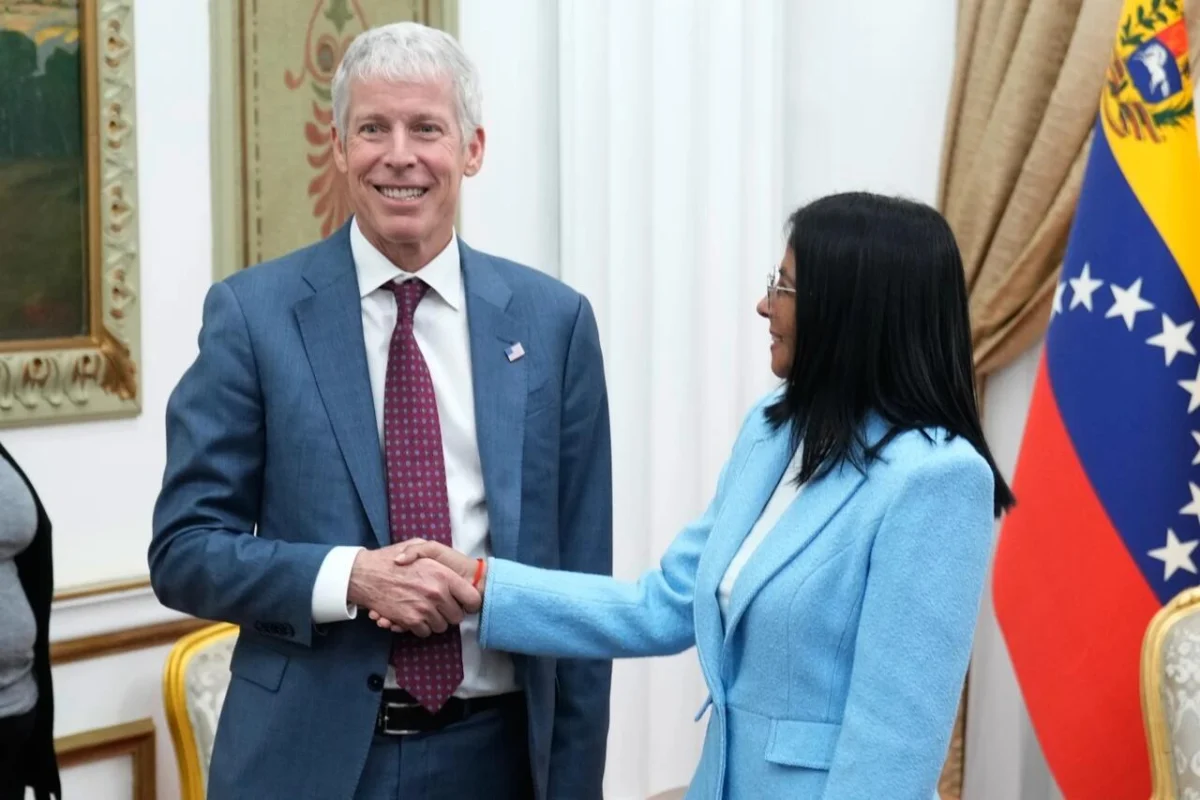
The United States, under the Trump administration, is reportedly on the cusp of a landmark agreement to secure long-term crude oil supplies from Venezuela, a move that could fundamentally reshape global energy geopolitics and significantly impact the Organization of the Petroleum Exporting Countries (OPEC). This potential deal involves placing 17 Venezuelan oil fields under 100-year leases, to be operated by U.S. oil companies, and comes amidst broader discussions that could see Venezuela, a founding OPEC member, withdraw from the cartel.
The negotiations, first reported by Bloomberg and further elaborated by Axios, represent a strategic pivot for U.S. energy security, particularly in the wake of escalating global oil supply concerns stemming from conflicts in the Middle East and Eastern Europe. With the Strait of Hormuz remaining a critical chokepoint for Gulf oil exports and ongoing disruptions to Russian oil refining and export infrastructure due to the conflict in Ukraine, the Trump administration has been actively seeking new, reliable, and substantial energy sources. This initiative aims to fortify American energy independence and secure a massive reserve base in the Western Hemisphere.
A Strategic Shift in Global Energy Dynamics
Sources familiar with the discussions indicate that Caracas has engaged U.S. officials regarding a possible exit from OPEC. While no final decision has been announced, these discussions coincide with the proposed 100-year leases, which necessitate billions of dollars in investment from U.S. companies to revitalize Venezuela’s long-neglected oil infrastructure. Such a withdrawal would carry significant symbolic weight, given Venezuela’s status as one of OPEC’s five founding members in 1960 and its instrumental role in establishing the expanded OPEC+ alliance with Russia in 2016.
The prospect of Venezuela leaving OPEC follows a recent precedent set by the United Arab Emirates, which also announced its departure, reportedly amid a surge in Chinese oil purchasing. Iraq, another key OPEC producer, has also expressed frustration with its quota obligations but has yet to formalize an exit. A Venezuelan departure, while symbolic, would not immediately translate into a surge in crude production due to decades of underinvestment and mismanagement, a key reason why the U.S. is seeking a substantial stake in the nation’s oil fields. Venezuela currently produces approximately 1.16 million barrels per day (bpd), according to a Bloomberg survey, and is not subject to an active OPEC quota.
For President Trump, a U.S.-Venezuela energy alliance offers multifaceted benefits. It could strategically weaken OPEC’s global influence, diversify crude supplies away from the volatile Middle East, potentially exert downward pressure on oil prices, and, crucially, lock down access to the world’s largest proven oil reserves situated in America’s immediate vicinity.
The Genesis of the Deal: Post-Maduro Venezuela
The reported negotiations unfold nearly eight months after a significant political upheaval in Venezuela, which, according to the original report, involved a U.S. military raid on Caracas that removed and captured socialist President Nicolás Maduro. Following this intervention, a new administration, led by interim president Delcy Rodríguez (formerly Maduro’s Vice President), was established. This transition, while installing a new regime, has been viewed by some observers as retaining elements of the chavista socialism system, with the new leadership effectively operating as a client state of Washington.
Axios reports that this "historic deal" could "more than double U.S. oil reserves" by leveraging Venezuela’s immense crude wealth. An unnamed official cited by Axios described the deal as "massive," stating, "Calling this deal huge would be an understatement." The urgency of these talks has been amplified by the ongoing conflicts in Iran and Ukraine, particularly the imperative to ensure the free flow of international crude through the Strait of Hormuz and the precarious state of the U.S. Strategic Petroleum Reserve (SPR), which has reportedly reached a 40-year low. This depletion underscores America’s heightened need for diversified and secure energy sources.
Details of the Proposed Energy Alliance
At the heart of the proposed agreement are over a dozen productive oil fields in Venezuela. Trump administration officials are reportedly pushing for a swift breakthrough, aligning with what has been dubbed the "Donroe Doctrine"—a concept emphasizing American energy independence and security through strategic regional partnerships and resource control. Critics, however, argue that these "negotiations" are less about traditional diplomacy and more about dictating terms to a new, U.S.-backed government in South America.
The scope of the deal with Caracas, as detailed by Axios, is immense, yet it also highlights significant challenges. Despite possessing the world’s largest proven oil reserves, Venezuela’s oil industry has suffered from years of severe underinvestment, corruption, and a dilapidated infrastructure, severely hindering its capacity to extract and refine crude efficiently. The proposed long-term leases are designed to inject the necessary capital and expertise from U.S. oil majors to revive this dormant potential.
However, a crucial hurdle remains: convincing American oil companies that they can operate in Venezuela with sufficient security and stability, not just for a few months, but for decades. The volatile political landscape and past nationalizations under previous administrations have made international investors wary. Nevertheless, if a comprehensive deal is struck with Caracas, these operational and security concerns are expected to be addressed, likely through robust guarantees and protective measures.
Transparency and Accountability: Lingering Questions
The proposed deal also reopens questions regarding transparency and accountability surrounding Venezuelan oil exports managed by Washington since Maduro’s ouster. The Council on Foreign Relations (CFR) raised concerns earlier this summer, asking "where has all the money gone?" regarding the estimated $8 billion worth of Venezuelan oil—almost one hundred million barrels—that flowed through a process marked by minimal oversight in the first four months of U.S. control.
The CFR report highlighted a lack of public disclosure from the Trump administration concerning how much Venezuelan oil was sold, the revenue collected, or how these funds were utilized. While the administration framed its control as mutually beneficial, details remained scarce.
Specific statements from U.S. officials have provided fragmented insights:
- In January, Secretary of State Marco Rubio testified that $300 million had passed through a "short-term" account in Qatar and was disbursed to Venezuela, with another $200 million "still sitting" there. He indicated that a retroactive audit of these funds would be conducted.
- The following month, Secretary of Energy Chris Wright stated in a press interview that the full $500 million had been transferred to Venezuela and that future transactions would use U.S. Treasury accounts.
- By April, a State Department witness informed Congress that about $3 billion had been authorized for disbursement to Venezuela, though the witness was unaware of the remaining balance in U.S. Treasury accounts.
The administration has yet to provide a public accounting of the Qatar account, including expenditure details or safeguards against corruption. The most recent public update came from President Trump himself in late July, where he indicated that the U.S. had collected "more than $13 billion" from the sale of Venezuelan crude. He notably remarked, "We’ve paid for that war many times over," implying that the revenue generated offset the costs of the intervention.
Broader Implications and Future Outlook
The White House maintains that this new plan, combined with its existing control over Venezuelan oil exports, is squarely focused on securing America’s energy future for generations. An official told Axios that President Trump is "close to securing America’s energy future not just in the U.S. but in the hemisphere."
However, the future for the Venezuelan people under this new arrangement remains a subject of intense debate and concern. Despite the change in leadership, some analysts argue that the underlying structures of chavista socialism persist, with the new ruling regime largely serving Washington’s strategic interests. This perspective suggests that the "new" post-Maduro state is effectively a puppet of U.S. policy.
Early actions under the compliant Rodríguez administration included cutting off Venezuela’s oil supply to Cuba, a long-standing ally. This move, along with the impending grand deal for American companies to control Venezuelan oil fields, is seen by many observers as a direct fulfillment of Washington’s long-term regime change objectives in the country. Critics argue that while mainstream Western media outlets like Axios frame these developments within a "rules-based order," the reality reflects a strategic acquisition of vital resources.
Economist Francisco Rodríguez, as cited by Drop Site News, has highlighted that Washington has charged Venezuela $4.7 billion, or 32% of its oil revenue, effectively making Venezuela "pay for its own occupation." Such observations underscore the complex and often contentious nature of U.S. engagement in Venezuela, where the pursuit of energy security intersects with profound geopolitical and humanitarian implications. The long-term impact on Venezuela’s sovereignty, its economy, and the welfare of its citizens will undoubtedly remain a focal point of international scrutiny as these deals progress.

