
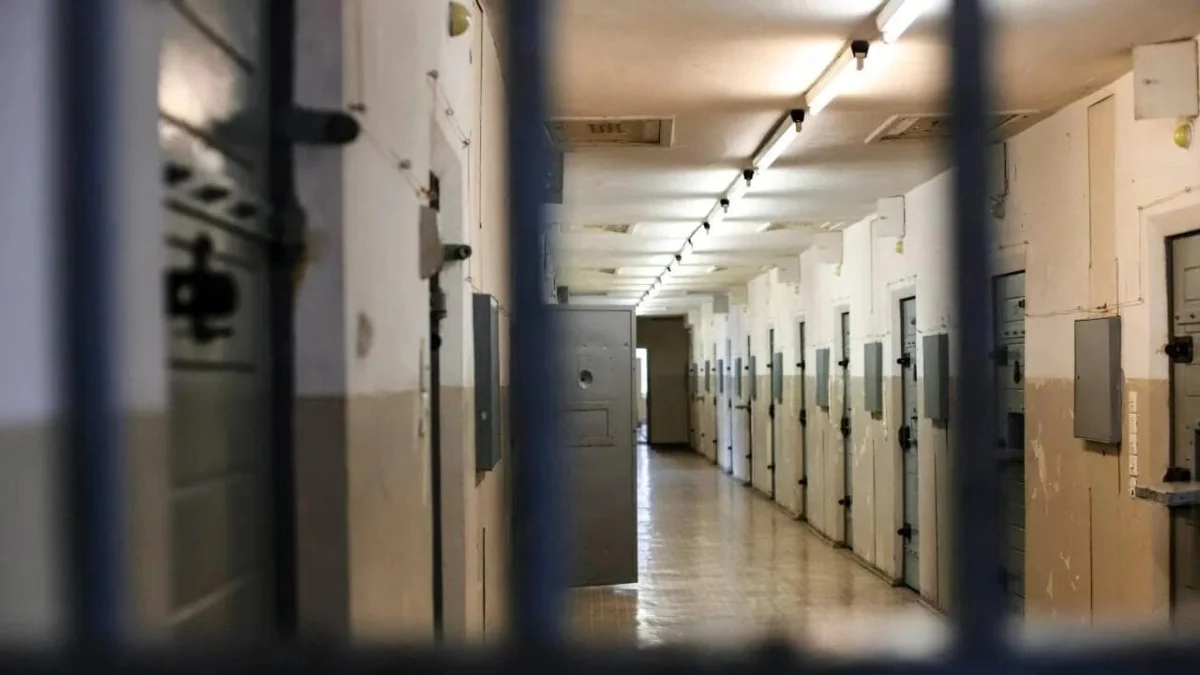
Britain’s prison system is facing an unprecedented crisis, characterized by a worrying surge in radicalization, allegations of forced conversions to Islam among white inmates, and a broader breakdown in judicial priorities that sees foreign national offenders retained at immense cost while terrorists are released early and protesters receive disproportionately harsh sentences. New figures from the Ministry of Justice (MoJ) have brought into sharp relief the severe challenges plaguing England and Wales’ correctional facilities, prompting urgent calls for reform and a thorough investigation into the systemic issues at play.
The Alarming Trend of Forced Conversions and Rising Muslim Inmate Population
At the heart of the emerging crisis is the alarming increase in white prisoners converting to Islam under duress from powerful Islamic gangs. Ministry of Justice statistics reveal a stark demographic shift within the prison population. The number of white Muslim prisoners has climbed significantly, from 2,767 in 2022 to 3,218 by the end of June 2025 – a 16 percent rise in just three years. This figure is particularly striking when juxtaposed with the general population: one in five Muslims behind bars is white, nearly four times the 5.8 percent rate observed in the wider UK populace.
Overall, the Muslim inmate population has seen a substantial increase, rising 14 percent from 14,037 in 2022 to 16,051 by June 2025. Muslims now constitute roughly 18 percent of the total prison population, despite comprising only 6.5 percent of the country’s general population. This disproportionate representation, especially concerning the white convert demographic, has ignited serious questions about the dynamics of power and influence within correctional facilities.
Shadow Justice Secretary Nick Timothy, responding to these figures, voiced profound concerns. "The percentage of Muslims who are white in our prisons is so vastly higher than in the general population it raises serious questions," he stated. Timothy underscored the long-standing warnings from experts regarding forced conversions driven by Islamic gangs. "We need to be honest that something is not right here – Labour must urgently investigate and stamp out forced conversions in prison," he urged, emphasizing the critical need for immediate governmental intervention.
Expert Warnings and Mechanisms of Coercion
The phenomenon of Islamist radicalization and coercion within British prisons is not a novel concern; it has been meticulously documented by various government-commissioned reviews and independent experts over several years. These reports consistently highlight the sophisticated methods employed by extremist elements to exert control and recruit new members.
Jonathan Hall KC, the independent reviewer of terrorism legislation, previously described how Islamist terrorists operate as "self-styled emirs" within the prison system. These figures establish control over other prisoners through a combination of "leadership and recruitment," often targeting "vulnerable or lonely prisoners" through "guidance, sharing of food or material gifts." Crucially, Hall’s review explicitly mentioned "conversion backed by implicit or actual violence" as a key tactic. This systematic approach allows radical elements to consolidate power, creating an environment where adherence to their ideology becomes a matter of survival for some inmates.
A poignant example of such influence is the case of Usman Khan, the London Bridge attacker, who, while incarcerated, actively encouraged fellow prisoners to adopt Muslim names and wear Muslim attire, persistently attempting to convert others. Such efforts illustrate the proactive nature of radicalization behind bars.
Ian Acheson, who conducted a comprehensive review of Islamist extremism in prisons, observed that conversions frequently occur "as a pragmatic response to who controls power and space in our prisons." He noted that in high-security jails, where safety is a paramount concern, a significant number of violent young men seek a sense of belonging and protection. In this context, Acheson concluded, "Islam in this case has gang characteristics," highlighting how religious identity can be co-opted and exploited by organized criminal and extremist factions.
Further corroborating these findings, a 2023 government-commissioned review led by Colin Bloom detailed how gangs explicitly order new arrivals to convert to Islam or face severe consequences. Bloom’s report stated: "Failure to identify as a Muslim meant that at best the new prisoner would be denied ‘protection’ from the dominant Muslim gang on that wing, or at worst the new prisoner would be subjected to violence and intimidation from that same gang." This stark choice leaves vulnerable inmates with little alternative but to comply, underscoring the pervasive climate of fear and coercion.
A lawyer who frequently visits top-security prisons provided a chilling account of this process, noting that it commences almost immediately upon an inmate’s arrival. "This is something which will happen hours after arriving on a wing. Immediately they arrive in prison they slot into the gang hierarchy. In some cases, there are entire floors dominated by Muslim gangs." This rapid integration into a pre-existing gang structure means that new prisoners are instantly exposed to the pressures and demands of the dominant group, with Qurans reportedly being left on beds as a clear, unspoken message. While some conversions might be opportunistic – "convenience Muslims" seeking benefits like extra prayer time or better halal food – many are undeniably coerced.
Fiyaz Mughal, founder of Muslims Against Antisemitism, articulated the severity of the situation, warning that the UK prison system is "failing to control violent Muslim gangs, leaving staff and inmates powerless." This sentiment reflects a broader concern about the erosion of institutional authority within correctional facilities, allowing extremist and criminal elements to dictate terms.
Official Responses and Resource Disparities
In response to these grave concerns, the Ministry of Justice maintains that it "does not tolerate intimidation or faith-based coercion" and asserts that prisons "act swiftly" to address such incidents. However, the persistent rise in the number of white Muslim prisoners and the overall Muslim inmate population challenges the efficacy of these measures. Critics argue that despite official assurances, the underlying issues enabling forced conversions and radicalization remain unaddressed.

Further highlighting a potential imbalance in religious provision, figures indicate there are now 140 Muslim chaplains employed within the prison system, compared to 87 for the Church of England. While chaplaincy services are vital for inmate welfare, this disparity raises questions about resource allocation and the broader religious landscape within prisons, particularly in the context of growing concerns about radicalization.
The Enormous Burden of Foreign National Offenders
Adding another layer to the complex challenges facing the UK prison system is the substantial financial and logistical burden posed by foreign national offenders (FNOs). The system currently houses 10,487 FNOs, incurring an staggering cost of £629 million per year to the British taxpayer. This colossal sum, critics argue, could be far better utilized elsewhere, for instance, by funding approximately 16,500 police officers or 15,000 NHS nurses, significantly bolstering public services.
Albania consistently tops the list of countries for FNOs, followed by Ireland and Poland. The deportation process for these individuals remains painstakingly slow and fraught with complications. These challenges include missing documentation, uncooperative origin countries, and the frequent invocation of Article 8 "right to family life" claims under the European Convention on Human Rights (ECHR), which often tie up cases in lengthy legal battles.
Vanessa Frake, Reform UK’s prisons adviser, described the financial bill as "staggering." She highlighted the drawn-out administrative process: discarded passports, slow diplomatic correspondence, refusals by origin countries to accept their nationals, and the pervasive Article 8 claims. Even a recent deal to return 200 Albanian prisoners came with significant conditions and lower daily payments to Albania than the UK currently expends to house them, underscoring the complexities and costs involved in managing this segment of the prison population.
Contrasting Justice: Early Releases and Disproportionate Sentencing
While the prison system grapples with internal radicalization and the financial strain of FNOs, authorities have demonstrated a distinct urgency in implementing early release schemes, particularly for serious offenders. This approach stands in stark contrast to the handling of other cases, further fueling public debate about fairness and judicial priorities.
A notable instance is the case of Zahid Iqbal, who was convicted in 2013 for plotting to bomb an Army base using an Al-Qaeda manual. Despite previous non-compliance and explicit warnings from prison and community managers about his risk, Iqbal was approved for release three years early. Colin Sutton, Reform UK’s crime adviser, lambasted the decision as "baffling," stressing the severity of Iqbal’s crimes: "This wasn’t a guy in his bedroom cooking something up. This was somebody who arranged training. He had links with al-Qaeda. He was a proper terrorist." The early release of such high-risk individuals raises profound national security concerns and questions about the prioritization of public safety.
Labour’s broader early-release schemes, implemented to manage severe overcrowding in prisons, have further accelerated the emptying of cells. Thousands of offenders, including those convicted of violence, have been freed earlier than their original tariffs allowed. Even with partial pauses and exclusions for certain sex offenses, the prevailing direction of travel indicates that capacity management is taking precedence over consistent public protection and the full serving of justice.
This perceived leniency towards serious offenders is sharply contrasted by the treatment of British citizens who engage in protest or express dissent online. Lucy Connolly, for example, found herself in prison for a single post on X (formerly Twitter) following the Southport attacks. She subsequently faced the threat of recall to prison for reposting a satirical comment about Donald Trump and Keir Starmer. Probation officials deemed the joke "inciting violence" after an anonymous complaint, illustrating an aggressive interpretation of public order laws for online speech.
Even more striking are the sentencing disparities observed in cases of public disorder following serious crimes. In Essex, protests erupted outside an asylum hotel housing Ethiopian migrant Hadush Kebatu after he sexually assaulted a 14-year-old girl and a woman. Kebatu received a sentence of 12 months. However, British protesters involved in the subsequent disorder received significantly longer terms. Charlie Land was sentenced to 32 months, Jonathan Glover to 30 months, and Lee Gower, a local father and youth football coach, received two years and nine months. Other locals drew sentences ranging from 22 to 33 months. The combined custodial terms for several of these individuals exceeded 17 years – a duration substantially longer than the perpetrator who triggered the entire unrest.
While judges emphasized that violence against police is unacceptable, the unmistakable disparity in sentencing has ignited public outrage and fueled accusations of a two-tiered justice system. Locals reacting to a sexual assault on a child by a small-boat arrival found themselves facing more time behind bars than the man who committed the initial assault. This perceived injustice erodes public trust in the impartiality and fairness of the legal system.
Systemic Failures and Broader Implications
The cumulative evidence paints a picture of a prison system under immense strain, reflecting broader failures in governance and policy. The proliferation of gangs and extremist networks within prisons exploits a vacuum created by overcrowding, understaffing, and potentially misaligned priorities. Vulnerable inmates are forced to adapt or suffer, while taxpayers are left to foot an exorbitant bill for foreign national offenders who are difficult to deport.
The confluence of these issues – forced conversions, rising extremism, the financial burden of FNOs, early release of terrorists, and perceived selective enforcement against ordinary citizens – represents a significant challenge to national security, social cohesion, and the integrity of the justice system. The figures concerning white Muslim prisoners are not merely a statistical anomaly; they are a measurable indicator of an institution struggling to maintain control and uphold its fundamental mandate of rehabilitation and public protection.
Urgent, comprehensive reform is needed to address the root causes of radicalization, streamline deportation processes, re-evaluate sentencing guidelines to ensure consistency and fairness, and restore order and authority within correctional facilities. Failure to confront these systemic issues risks further erosion of public trust, increased radicalization, and a justice system that is increasingly perceived as dysfunctional and inequitable. The future stability and security of British society depend on a robust and impartial justice system that effectively manages its institutions and protects all its citizens.

