
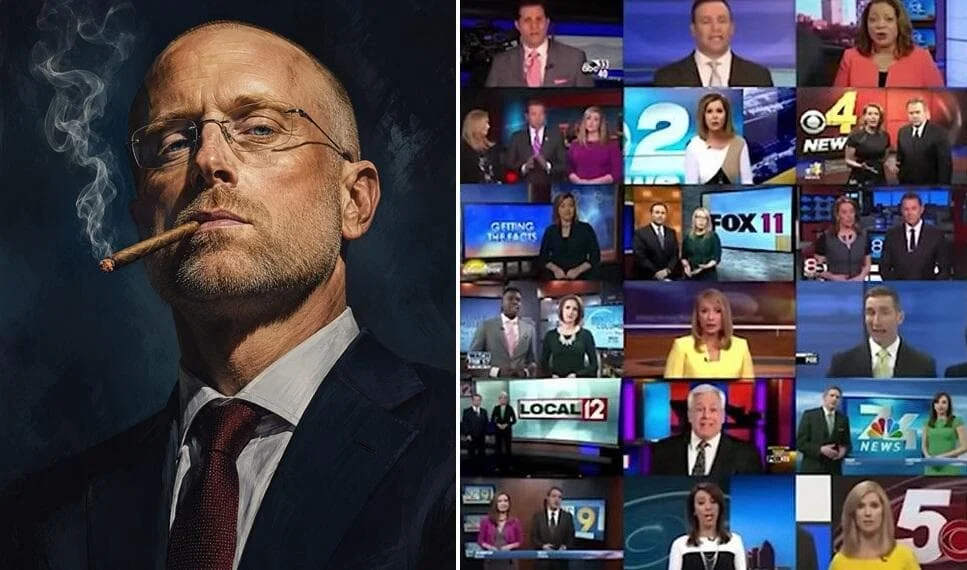
The Federal Communications Commission (FCC) is poised to enact a monumental regulatory overhaul, preparing to scrap longstanding national limits on television station ownership. This proposed change, championed by Chairman Brendan Carr, aims to provide local broadcast outlets with what he describes as crucial breathing room, enabling them to better compete, attract investment, and bolster community journalism, rather than serving merely as "Hollywood mouthpieces." The agency is scheduled to vote on August 6 to eliminate the current ownership caps, moving towards a more flexible, case-by-case approach for reviewing media deals. This shift represents a significant departure from regulatory principles that have governed American broadcasting for generations, raising both hopes for a revitalized local media landscape and concerns about further consolidation and reduced diversity of voices.
The Rationale for Deregulation: Strengthening Local Broadcasters
Chairman Carr detailed the administration’s rationale for this profound policy shift in a recent op-ed, articulating a vision where local broadcasters, freed from restrictive ownership caps, can achieve the scale necessary to thrive in an increasingly competitive and fragmented media environment. "Repealing the national cap will provide essential relief for local broadcasters by restoring a healthy counterbalance to the growing leverage of national programmers," Carr wrote. He emphasized that increased scale would empower broadcasters to attract the vital capital and advertising revenue needed to sustain and produce trusted, community-focused news and programming, thereby reversing a trend that he argues has seen many local stations become little more than conduits for content produced in major media hubs like New York and Hollywood.
Carr’s argument posits that the current regulatory framework, which has limited the percentage of the national television audience that any single entity can reach (traditionally around 39% for VHF stations), is an outdated relic that no longer serves the public interest in the digital age. He contends that these limits hinder local stations from consolidating resources, innovating, and competing effectively against monolithic national media conglomerates, streaming services, and tech giants that operate without similar restrictions. In his view, the existing caps inadvertently push local broadcasters into a financially precarious position, making it difficult for them to invest in the high-quality local reporting that communities desperately need.
A Dire Warning: Learning from the Decline of Local Newspapers
Central to Chairman Carr’s argument is a stark warning drawn from the precipitous decline of local newspapers across the United States. He cautioned that inaction by the FCC risked repeating past mistakes, leading to a "bleak media future" akin to the one witnessed in print journalism. "If the FCC does not act, we do not need to imagine the bleak media future ahead. Just look at local newspapers," Carr stated, highlighting how the FCC maintained an outdated rule for over 40 years that limited investment in local newspapers. This rule, he noted, remained in place until 2017, long after the fundamental economics of local journalism had drastically shifted.
The consequences of this regulatory inertia, Carr argued, were devastating: "local newspapers shut down by the dozen, and many Americans are now left to choose from a small number of national papers." This erosion of local news infrastructure has left vast swathes of the country as "news deserts," where communities lack reliable, locally-sourced information crucial for civic engagement and democratic accountability. Carr’s analogy serves as a powerful call to action, urging the FCC to prevent local broadcast television from following a similar path into irrelevance and financial distress. He frames the stakes as a straightforward choice about the character of American news, advocating for "a little less Hollywood and a little more local reporting."
Historical Context of Media Ownership Rules: A Legacy of Public Interest
The roots of the FCC’s media ownership rules stretch back to the early days of radio and television broadcasting, firmly established under the Communications Act of 1934. The fundamental principle guiding these regulations has always been the "public interest, convenience, and necessity." Historically, the primary objectives of ownership limits were to promote localism, competition, and diversity of viewpoints in broadcasting. The finite nature of the broadcast spectrum, then considered a public trust, led policymakers to believe that preventing excessive concentration of media power was essential for a healthy democracy.
Over the decades, these rules have been periodically reviewed and adjusted, often amidst intense debate. The FCC’s authority to review its media ownership rules at least every four years (the "quadrennial review") was mandated by the Telecommunications Act of 1996. These reviews have consistently pitted advocates for deregulation, who argue for market-based efficiencies and adaptability to new technologies, against public interest groups and smaller broadcasters, who warn of the dangers of consolidation, reduced local content, and diminished journalistic diversity.
Key moments in this history include:

- 1940s-1950s: Early limits on the number of stations a single entity could own, focusing on preventing regional monopolies.
- 1970s: Introduction of cross-ownership rules, limiting ownership of newspapers and broadcast stations in the same market, aimed at promoting diversity.
- 1980s: A period of significant deregulation under the Reagan administration, increasing the number of stations a single owner could hold.
- 1996 Telecommunications Act: While largely deregulatory in other areas, it codified the national television ownership cap at 35% of the national audience, later adjusted to 39% following court challenges and congressional action. It also mandated the quadrennial review process.
- 2003: A controversial attempt by the FCC under Chairman Michael Powell to significantly relax ownership rules, which faced widespread public backlash and was largely overturned by federal courts.
- 2017: The FCC, under Chairman Ajit Pai, voted to eliminate several long-standing media ownership rules, including the newspaper-broadcast cross-ownership ban and the local television ownership rule that prevented one company from owning two top-four rated stations in a market. This decision, which Carr references, was upheld by the Supreme Court in 2021, albeit after years of legal challenges.
The impending August 6 vote, therefore, is not an isolated event but the latest chapter in a long-running saga of regulatory battles over the future of American media.
The Broader Media Landscape: Financial Pressures and the Rise of Digital
The context for the FCC’s proposed changes is a media landscape dramatically transformed by technological innovation and shifting consumer habits. Local broadcast television stations, once dominant sources of news and entertainment, now face unprecedented competition from a multitude of platforms:
- Streaming Services: Netflix, Disney+, Amazon Prime Video, Hulu, and a host of others offer vast libraries of on-demand content, drawing viewers away from traditional linear television.
- Social Media: Platforms like Facebook, X (formerly Twitter), and TikTok have become primary news sources for many, often disseminating information (and misinformation) at lightning speed.
- Digital News Outlets: A proliferation of online-only news sites, blogs, and aggregators compete for attention and advertising dollars.
- National News Organizations: Major national networks and digital publications have expanded their reach and often have significantly larger budgets for investigative journalism and high-production-value content.
Compounding this competitive pressure is a challenging financial environment. Local advertising revenue, a traditional lifeblood for broadcasters, has been siphoned off by digital platforms and national advertisers. The cost of producing high-quality local news, including maintaining newsrooms, hiring journalists, and investing in equipment, continues to rise. This confluence of factors has led to significant financial strain for many local stations, with some reducing news staff, cutting back on original programming, or becoming acquisition targets for larger groups.
Arguments for and Against the Proposed Deregulation
The FCC’s proposal has ignited a fierce debate, with proponents and critics outlining vastly different potential outcomes:
Arguments in favor (from proponents like Chairman Carr and large broadcasters):
- Economic Viability and Investment: Lifting ownership caps would allow broadcasters to achieve greater economies of scale, enabling them to attract more capital, consolidate back-office functions, and invest more heavily in local news gathering, investigative journalism, and advanced broadcasting technology.
- Increased Competition with National Giants: Larger broadcast groups would be better positioned to negotiate with content providers and compete more effectively with national streaming services and tech companies for audience attention and advertising revenue.
- Innovation: More resources could lead to greater innovation in content delivery, digital platforms, and interactive programming, keeping local TV relevant in a rapidly evolving media ecosystem.
- Counterbalance to National Programmers: Consolidating ownership could give broadcasters greater leverage against national programmers (e.g., major networks), potentially leading to more favorable terms for local stations and more localized content choices.
Arguments against (from consumer advocacy groups, public interest organizations, and some smaller broadcasters):
- Reduced Localism: Critics fear that larger, often absentee, owners will prioritize profit margins over local community needs. This could lead to fewer local news hours, less investigative journalism focused on local issues, and an increase in syndicated or network-produced content, effectively turning local stations into "retransmission towers" for national programming.
- Decreased Diversity of Viewpoints: Fewer independent owners mean fewer distinct editorial voices. This concentration of media power could lead to a homogenization of news coverage, reducing the variety of perspectives available to the public and potentially limiting the critical examination of local issues and politics.
- Anti-Competitive Effects: Removing caps could trigger a wave of mergers and acquisitions, further consolidating the market. This could squeeze out smaller, independent broadcasters, reduce competition for advertising, and potentially lead to higher prices for consumers (e.g., retransmission fees) or fewer programming choices.
- Public Interest Dilution: Opponents argue that the original "public interest" mandate of broadcasting could be undermined if the focus shifts overwhelmingly to maximizing shareholder value rather than serving local communities. They contend that local ownership and accountability are crucial for fulfilling this mandate.
- Lack of Empirical Evidence: Some critics argue that there is insufficient evidence to suggest that previous deregulatory moves have consistently led to increased local news investment or improved service. They point to the ongoing decline in local journalism jobs even after some previous rule changes.
The Path Forward and Potential Implications
If the FCC votes to eliminate the national ownership caps on August 6, the immediate implications could be significant. The move would likely be challenged in federal court, potentially delaying implementation. However, if upheld, it could open the floodgates for a new era of consolidation in the broadcast television industry. Major media companies that currently own extensive portfolios of stations would have the opportunity to expand their reach dramatically, acquiring more stations in more markets.
For consumers, the impact remains uncertain. Proponents hope for a renaissance of local news, with well-funded stations delivering robust, high-quality reporting. Critics, however, envision a future with fewer distinct local voices, more generic content, and a further erosion of the unique role local television has historically played in communities. The ability of a handful of large conglomerates to control a dominant share of the national television landscape could profoundly reshape the information ecosystem, influencing everything from local politics to cultural narratives.
Ultimately, the FCC’s impending decision on national television ownership limits represents a pivotal moment for American media policy. It reflects a fundamental tension between the desire to support the economic viability of traditional media in a rapidly changing world and the enduring commitment to fostering localism, competition, and diversity in the public airwaves. The outcome of this vote, and any subsequent legal battles, will undoubtedly shape the future of local journalism and the broader media landscape for years to come.

