

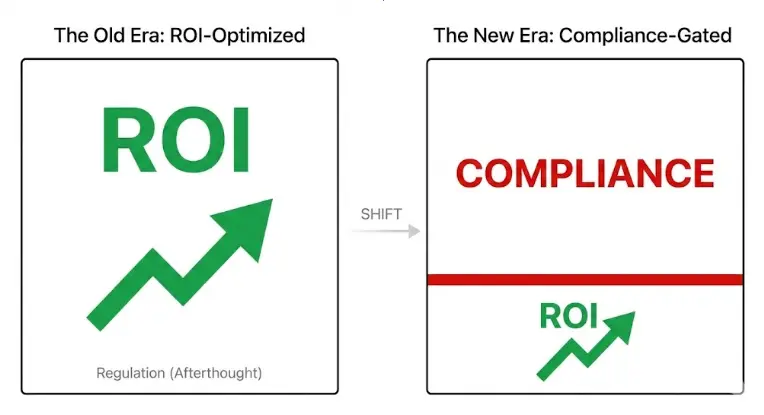
For nearly a decade, the short-term rental (STR) investment landscape operated under a paradigm of rapid growth and algorithmic optimization. Investors meticulously analyzed nightly rates, occupancy curves, and platform-specific algorithms, with regulatory compliance often relegated to a secondary concern, a mere checklist item after financing and furnishing. This era of unchecked expansion, often likened to a digital gold rush, is definitively over. Today, STR regulation has evolved from a minor legal hurdle into a terminal underwriting risk, capable of fundamentally altering the viability of investments overnight. A single municipal council vote can eliminate non-owner-occupied rentals, a new permit cap can instantly freeze new supply, and aggressive enforcement cycles can quietly decimate occupancy rates across entire zip codes. In this environment, projected yield without explicit legality is a precarious illusion. This paradigm shift necessitates a fundamental reevaluation for PropTech platforms, including marketplaces, analytics dashboards, and STR lending engines. Compliance can no longer be addressed through ad-hoc blog posts or manual research; it must be an integrated, programmatic input into the underwriting process.
The API as a Policy Enforcement Engine
In the realm of real estate compliance, an Application Programming Interface (API) transcends its role as a mere data conduit. It becomes the foundational infrastructure for automated policy enforcement. The concept of "staying compliant by city" translates into the ability to transform thousands of diverse local municipal codes into a single, executable logic gate within a digital system. This programmatic approach is crucial for navigating the increasingly complex and fragmented regulatory environment of short-term rentals.
Deterministic vs. Probabilistic Data: The Compliance Threshold
A critical distinction in real estate technology lies between probabilistic modeling and deterministic data. Historically, most PropTech platforms have relied on probabilistic data—estimations, inferred classifications, and Automated Valuation Models (AVMs). While estimations are often acceptable for return on investment (ROI) calculations, they represent a significant liability when it comes to compliance. Probabilistic data operates on "likelihoods." For instance, a platform might infer a property is a single-family home based on its square footage or neighborhood profile. However, if a city ordinance explicitly bans STRs in multi-family units but permits them in single-family homes, a "likely" classification is insufficient and potentially damaging.
Deterministic data, conversely, is anchored in authoritative records such as tax assessments, deed filings, and official land-use codes. For a platform to function as a genuine underwriting tool, its API must provide these deterministic metadata points. Compliance, by its nature, demands a binary "Yes" or "No" answer, grounded in legal truth. When a platform utilizes inferred data for compliance decisions, it exposes its users to catastrophic capital risk. Consider an institutional investor deploying $50 million into a market based on "probable" eligibility; if that metadata proves incorrect, the entire portfolio’s cash flow could be wiped out by a single enforcement letter. The market for STRs has seen significant investment, with some estimates suggesting the global market could reach upwards of $100 billion by 2027, underscoring the magnitude of potential financial exposure.
The "Ghost Listing" Problem and Enforcement Signals
Standard real estate APIs also falter when addressing the "Ghost Listing" problem. In markets undergoing stringent regulatory crackdowns, thousands of listings may remain technically "active" on booking platforms even after their legal permits have been revoked. If a platform solely tracks active listings, it might present a misleading picture of a healthy, thriving market. In reality, that market could be experiencing a significant "supply contraction." A compliance-aware API must offer more than a static snapshot; it needs to provide historical performance trends. By cross-referencing a sudden decline in supply with sustained demand, platforms can detect an "enforcement signal." For example, if the number of active rentals in a specific zip code plummets by 40% within a single quarter while nightly rates remain high, it is seldom a sign of market failure; rather, it indicates a regulatory "clean sweep." Platforms equipped to programmatically identify these signals empower their users to steer clear of markets where the "door is closing," even if the immediate ROI appears attractive. This trend has become increasingly prevalent, with cities like New York implementing strict regulations that have led to a significant reduction in available STR units.
Turning Ordinances Into Logic
To automate compliance effectively, platforms must translate complex legal language into structured, queryable data. At a practical level, most STR regulations fall into three key operational "guardrails":

Zoning & Property-Type Restrictions
Many municipalities enforce STR restrictions based on building classification. By leveraging property-level metadata, a platform can automatically flag ineligible property classes or exclude restricted asset types from search results. This ensures that users are presented only with legally viable inventory, preventing investment in properties that would immediately fall foul of local ordinances. For instance, a city might allow STRs in single-family homes but prohibit them in duplexes or apartment buildings.
Residency & Ownership Mandates
A growing number of cities are implementing regulations that permit STRs only if the property is owner-occupied. By utilizing ownership indicators within the property dataset, a platform can transition from simple "ROI modeling" to "operational viability modeling." This shift is fundamental: it distinguishes between a tool that indicates what a property could earn and a tool that accurately reflects what it is legally allowed to earn. This is particularly relevant in markets like California, where local ordinances frequently mandate owner-occupancy for STRs.
Market Saturation & Permit Caps
Some cities regulate STRs by imposing hard permit caps. While ordinance databases define the official limits, performance trends can reveal real-world enforcement patterns. This is where a platform evolves from presenting static data to performing predictive risk modeling. For example, a city might have a cap of 1,000 STR permits. A platform can not only identify this cap but also monitor permit application backlogs and the rate at which existing permits are being renewed or revoked, offering a dynamic view of market accessibility. The number of permits issued in popular tourist destinations has been a point of contention, with many cities actively working to limit the proliferation of STRs to manage housing availability and local impact.
Technical Architecture: Building the Compliance Layer with Mashvisor
If compliance is to be an integral underwriting input, it must be embedded within the platform’s technical architecture. By leveraging structured data, such as that provided by Mashvisor’s API, platforms can feed their own validation frameworks. A compliance-aware underwriting engine can be constructed by integrating various API endpoints that expose deterministic property metadata and historical rental performance data.
Phase 1: The Eligibility Filter (Property Info)
The foundational data retrieval occurs through an API endpoint like GET /v1.1/client/property. When a user selects a listing, the platform retrieves the comprehensive Property Object. This object contains crucial information such as property_type (e.g., single-family, multi-family, condo), occupancy_status (e.g., primary residence, second home, vacant), and zoning classifications directly linked to the property. This initial query is paramount for immediately filtering out properties that do not meet fundamental zoning or property-type restrictions.
Phase 2: Ownership & Residency Screening (Property Ownership)
Where cities mandate primary residence status for STR operations, the platform must evaluate ownership indicators. An API endpoint such as GET /v1.1/client/owner/contact can provide the owner’s mailing address. By cross-referencing this with the property’s address, platforms can programmatically determine if the owner is an absentee landlord, a common disqualifier in many regulated markets. This moves beyond mere property classification to verifying the operational legality based on ownership structure.
Phase 3: Regulatory Pressure Detection (Rental Activity Data)
Static rules capture what is written in ordinances, but trend data captures what is actively happening on the ground. An API endpoint like GET /v1.1/client/rento-calculator/historical-performance is vital for identifying "enforcement signals." This endpoint can provide historical data on active listing counts, average daily rates, and occupancy trends within a specific geographic area. A sharp, unexplained decline in active listings, particularly when coupled with sustained demand and high rates, is a strong indicator of increased regulatory enforcement or a significant policy shift. This allows platforms to provide a forward-looking risk assessment, signaling potential future regulatory tightening even if current operational metrics appear strong.
Case Study: Institutional Underwriting for a Multi-Market REIT
Consider a Real Estate Investment Trust (REIT) targeting the Florida market, specifically Miami, where city-level ordinances are dynamic and carry heavy fiduciary implications. For a REIT, compliance isn’t merely a legal objective; it’s a capital markets requirement. Their investment committee (IC) mandates an audit-traceable risk framework before any institutional capital is deployed.
Step 1: The Metadata "Gateway"
The system initiates by querying GET /v1.1/client/property to retrieve the high-fidelity Property Object. In a traditional workflow, an analyst might spend hours sifting through a city’s GIS website. Programmatically, however, the system checks property_type and occupancy_status in milliseconds. If the property is flagged as a "Second Home" in a zone requiring primary residency, the potential investment is immediately disqualified, preventing it from reaching the analyst’s desk. This exemplifies how deterministic data can significantly streamline the due diligence process.
Step 2: Ownership & Residency Verification
The platform then verifies the owner’s details via GET /v1.1/client/owner/contact. The engine extracts the owner’s mailing address and cross-references it with the subject property’s address. For a REIT, this programmatic check is crucial for scale. Evaluating a 50-property portfolio manually is logistically impossible. The API provides the deterministic proof required for the IC memo, ensuring consistency and accuracy across numerous assets.
Step 3: Market Contraction & Enforcement Analysis
The system queries GET /v1.1/client/rento-calculator/historical-performance. If the data reveals a sharp decline in active listing counts—a common occurrence following regulatory crackdowns in markets like Miami Beach, which has seen significant shifts in its STR regulations over the past few years—the REIT identifies a "Regulatory Pressure" signal. This insight enables the REIT to pivot its capital allocation towards more stable micro-markets, thereby preserving capital in the face of municipal volatility.
Step 4: Output – The Unified Underwriting Score
The platform aggregates these Mashvisor data points into its own decision engine, generating a comprehensive underwriting score. This score might look like this:
| Metric | Mashvisor API Source | Value |
|---|---|---|
| Projected ROI | Investment Analysis | 8.2% |
| Zoning Match | Property Info (property_type) |
Pass (Single Family) |
| Residency Match | Property Ownership (mailing_address) |
Fail (Absentee Owner) |
| Market Pressure | Historical Performance Trends | High (Supply contraction) |
The Result: The system generates a "No-Buy" signal. This programmatic workflow ensures that every potential deal in the pipeline adheres to the REIT’s stringent fiduciary standards for operational certainty. This level of data-driven decision-making is becoming a prerequisite for institutional capital.
Compliance as a Fiduciary Guardrail
As short-term rentals mature from opportunistic retail plays into a recognized institutional asset class, the demand for repeatable risk frameworks has shifted from a "nice-to-have" to a capital markets imperative. For institutional funds, compliance represents the ultimate fiduciary guardrail. Lenders and capital partners are increasingly sensitive to "regulatory drift"—the phenomenon where an asset is acquired under one legal framework but subsequently becomes "orphaned" by another. In this high-stakes environment, a platform’s reliance on manual research or generalized "best-effort" disclaimers is no longer tenable. Institutional underwriting demands an audit-traceable data lineage. By leveraging deterministic property metadata, platforms can provide a digital paper trail for every investment decision. When a lender inquires about the rationale behind approving a specific asset for a high-leverage loan, the platform can point to specific Mashvisor-backed occupancy_status and property_type indicators that aligned with the city’s ordinance at the time of underwriting. This transformation turns compliance from a legal burden into a liquidity feature, making assets demonstrably more attractive to risk-averse institutional buyers. The ability to provide this level of transparency and auditability is becoming a key differentiator in the PropTech space.
Conclusion: From ROI to Operational Viability
The short-term rental market has moved decisively beyond its "growth at all costs" phase. In this new landscape, the most sophisticated calculation is no longer how much a property could generate in revenue, but whether it is legally allowed to exist and operate. For PropTech platforms, this shift signifies a fundamental change in their product category. By integrating deterministic property metadata and real-time performance signals directly into the underwriting workflow, platforms transcend their role as simple ROI calculators. They evolve into essential risk infrastructure—tools that protect capital, ensure fiduciary compliance, and provide the operational certainty that institutional investors demand. As regulatory scrutiny continues to intensify, the platforms that encode legality into their technical architecture will not merely survive; they will define the next era of real estate investing. The ability to proactively manage regulatory risk is becoming as critical as identifying market opportunities.
Scaling Compliance in Your Real Estate Data Stack?
If you are evaluating how to integrate structured property metadata into your underwriting engine or transition from manual research to a programmatic compliance workflow, we invite you to pressure-test your architecture. Booking a brief introductory call with our data team allows for a detailed discussion of your specific use case, technical requirements, and how to leverage Mashvisor’s API to build a compliance-aware roadmap for your platform.

