
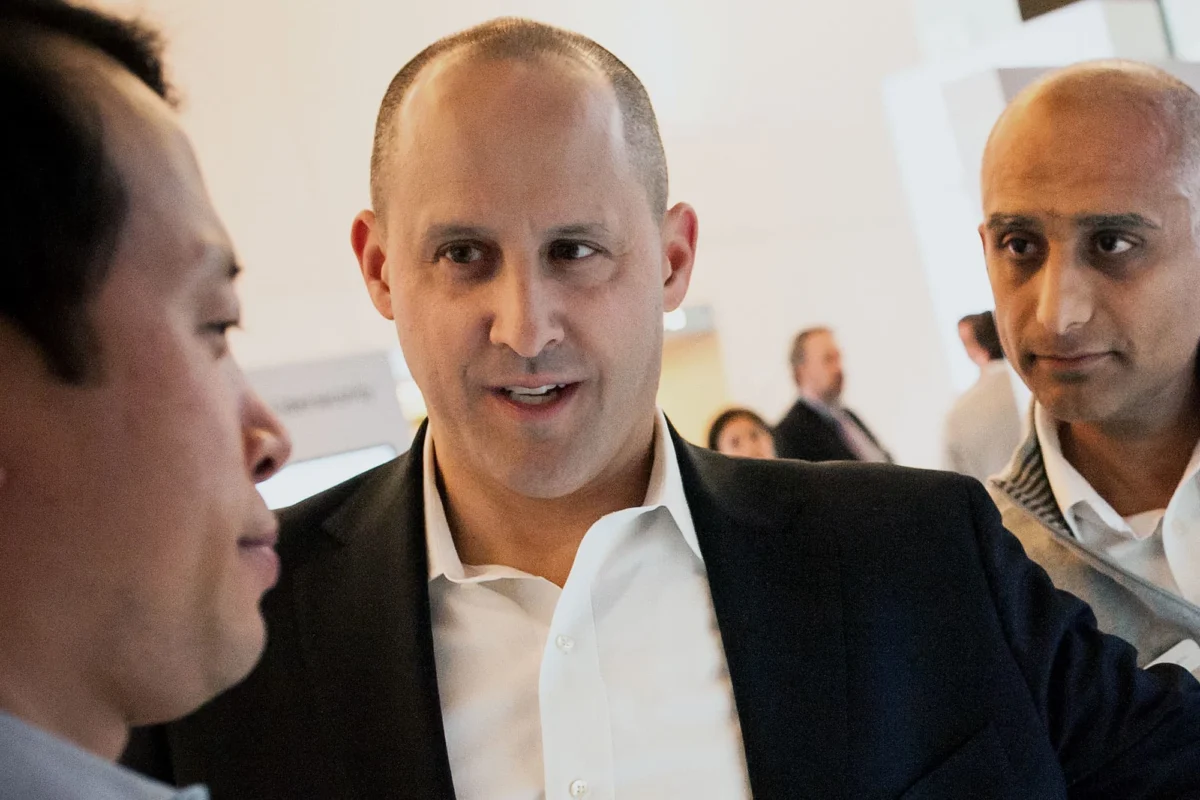
Matt Zames, a highly respected former chief operating officer of JPMorgan Chase, is set to embark on a new chapter of public service, joining the Trump administration as an unpaid advisor to the Social Security Administration (SSA). This strategic appointment, exclusively learned by CNBC, signals a concerted effort to tackle the deep-seated modernization challenges plaguing one of the nation’s most critical federal agencies. Zames’s arrival is particularly notable given his distinguished career in the financial sector, where he earned a reputation for navigating complex operational overhauls and spearheading technological advancements.
His move to the SSA headquarters in Baltimore, Maryland, commencing Monday, underscores a deliberate strategy by Social Security Commissioner Frank Bisignano to leverage private sector expertise. Bisignano, himself a former JPMorgan colleague of Zames, assumed the commissioner role last year with a clear mandate to revitalize the agency’s operational framework. Sources familiar with the appointment, who requested anonymity due to the sensitive nature of internal discussions, confirmed that an office placard bearing Zames’s name has already been installed, indicating the immediacy and seriousness of his new role. This collaboration between two seasoned financial executives suggests a shared vision for injecting modern efficiency into an organization grappling with decades-old infrastructure and burgeoning demands.
A Career Defined by Crisis Management and Innovation
Matt Zames’s professional trajectory is marked by high-stakes challenges and transformative leadership. His journey began in the fast-paced world of hedge funds, where he honed his skills as a trader before transitioning to the institutional banking sector. It was at JPMorgan Chase that Zames truly ascended to prominence, particularly through his pivotal role in managing the fallout from the infamous "London Whale" trading scandal in 2012. This event saw the bank incur over $6 billion in trading losses and face intense regulatory scrutiny, casting a long shadow over its operational controls.
Zames, then a rising executive, was instrumental in the arduous task of unwinding the massive, complex trades that led to the losses and implementing stringent new risk management protocols. His adept handling of this crisis not only helped restore investor confidence but also solidified his reputation as a capable and decisive leader under pressure. Following this, he was promoted to chief operating officer, a position he held for approximately five years. In this critical role, Zames was responsible for overseeing vast segments of the bank’s operations, including technology infrastructure, global operations, and critical cost-cutting initiatives. He was widely regarded within the industry as a potential successor to the iconic CEO Jamie Dimon, a testament to his influence and perceived capabilities. However, Zames ultimately departed JPMorgan in 2017, seeking new challenges outside the behemoth financial institution.
His career post-JPMorgan continued to underscore his expertise in large-scale operational and technological transformation. In 2018, Zames took on the presidency of Cerberus Capital Management, a prominent private equity firm known for its focus on distressed assets and operational turnarounds. At Cerberus, he applied his strategic acumen to overseeing technology investments and notably played a key role in orchestrating the turnaround of the firm’s significant stake in Deutsche Bank. This experience further broadened his portfolio in revitalizing complex organizational structures and leveraging technology for strategic advantage. After a successful tenure, Zames left Cerberus in 2021 to establish his own advisory and restructuring firm, continuing to provide high-level strategic counsel to various entities. Beyond his corporate roles, Zames has also lent his expertise to the public sector, serving on key advisory groups for the Treasury and Federal Reserve, particularly those focused on debt markets, giving him an existing, albeit limited, familiarity with federal financial mechanisms and challenges.
The Social Security Administration: A Crucial Juncture
The SSA is an indispensable pillar of American society, providing vital financial security to tens of millions of retirees, disabled individuals, and survivors. With over 67 million Americans currently receiving benefits, and millions more relying on its future solvency, the agency’s operational health directly impacts a significant portion of the U.S. population. However, the SSA finds itself at a critical juncture, facing a dual challenge of technological obsolescence and long-term financial uncertainty.
Technological Debt: A Legacy Burden
One of the most immediate and pressing issues Zames is tasked with addressing is the SSA’s formidable technological debt. The agency, established in 1935, operates on an IT infrastructure that in many areas dates back decades. Many of its core systems are still built on archaic programming languages like COBOL, running on mainframe computers that, while robust, are increasingly difficult and expensive to maintain, update, and integrate with modern digital platforms. This reliance on legacy systems presents numerous obstacles:
- Inefficiency and Cost: Maintaining outdated systems is inherently inefficient, requiring specialized expertise that is becoming increasingly scarce. Furthermore, the inability to rapidly automate processes or integrate new features translates into higher operational costs and slower service delivery.
- Security Vulnerabilities: Older systems can be more susceptible to cyber threats, requiring constant vigilance and costly patches. Modernization is crucial for bolstering the security of sensitive personal and financial data.
- Limited Adaptability: The agility required to adapt to new legislative mandates, changing public expectations, or emerging technological standards is severely hampered by rigid, antiquated infrastructure. This impacts everything from processing new applications to delivering updated information to beneficiaries.
- Customer Experience: In an era where digital self-service and seamless online interactions are standard, the SSA’s often cumbersome digital presence and reliance on manual processes can be frustrating for beneficiaries and their families. Modernization aims to improve accessibility and user experience, making it easier for individuals to manage their benefits and access information.
- Data Analytics Limitations: Extracting meaningful insights from vast datasets is crucial for efficient policymaking and operational improvements. Legacy systems often lack the sophisticated analytics capabilities of modern platforms, hindering the agency’s ability to optimize its services and identify trends.
The sheer scale of the SSA’s operations—processing millions of claims annually, managing trillions of dollars in benefits, and maintaining records for nearly every American citizen—makes this technological overhaul a monumental undertaking. Experts estimate that government-wide IT modernization efforts could run into hundreds of billions of dollars over several years, highlighting the immense financial and logistical commitment required. Zames’s background in spearheading technology and cost-cutting projects at a global financial institution like JPMorgan Chase, which itself undergoes continuous technological evolution, positions him uniquely to advise on such a large-scale transformation.
Financial Solvency: The Looming Trust Fund Depletion
Beyond the technological hurdles, the SSA faces a more existential challenge: the projected depletion of its retirement trust fund. According to the latest Trustees’ Report, the Old-Age and Survivors Insurance (OASI) Trust Fund, which pays retirement and survivor benefits, is projected to be able to pay 100 percent of scheduled benefits until the mid-2030s, likely around 2033 or 2034. After that point, if Congress does not act, it would only be able to pay approximately 80% of promised benefits, necessitating automatic benefit cuts for millions of Americans. When combined with the Disability Insurance (DI) Trust Fund, the combined reserves are projected to be depleted around 2033.
This looming shortfall is primarily driven by fundamental demographic shifts: the aging of the baby-boomer generation, which is moving into retirement and increasing the number of beneficiaries, coupled with declining birth rates and increased longevity. This imbalance means fewer workers are contributing payroll taxes for each beneficiary, straining the system. While Zames’s immediate focus is on operational modernization, an efficient, technologically advanced SSA can certainly contribute to better administration and potentially identify areas for administrative cost savings. However, it is crucial to understand that technological upgrades alone cannot solve the fundamental actuarial imbalance of the trust fund. That requires legislative action, whether through adjustments to payroll taxes, changes to the benefit formula, or a combination of measures—a politically charged debate that has eluded resolution for decades. Nevertheless, a more efficient agency is better positioned to manage any future changes and deliver services effectively.
The Commissioner’s Vision: A Call for Private Sector Acumen
Frank Bisignano, appointed Social Security Commissioner in 2023, arrived with a reputation as a turnaround specialist. Prior to leading the SSA, he served as the CEO of Fiserv, a global financial technology company, and held various senior leadership roles at JPMorgan Chase, including Chief Administrative Officer and head of Mortgage Banking. His shared history with Zames at JPMorgan Chase is not merely a coincidence; it reflects a deliberate strategy to bring in trusted, proven talent with a deep understanding of large-scale financial operations and technological integration.
Bisignano’s vision for the SSA extends beyond mere incremental improvements; he aims for a comprehensive modernization that transforms how the agency operates and interacts with the public. This includes enhancing online services, streamlining application processes, improving data security, and fostering a more agile and responsive organizational culture. The appointment of Zames is a clear signal that Bisignano intends to draw heavily on the private sector’s best practices in technology and operational efficiency. Their prior collaboration at JPMorgan suggests a synergy and mutual understanding that could accelerate the pace of change within the federal bureaucracy.
The Unpaid Advisor Role: Special Government Employee (SGE)
Matt Zames is joining the SSA as a Special Government Employee (SGE), an unpaid position. This designation allows individuals with specialized expertise from outside the government to contribute their skills for specific periods without becoming full-time federal employees. The SGE role comes with specific ethical guidelines and limitations designed to prevent conflicts of interest.
According to sources familiar with the arrangement, Zames’s appointment is for a maximum of 130 days, which can be spread out over a longer period since he will not be working full-time. This flexibility is characteristic of SGE roles, enabling high-profile individuals to offer their strategic guidance without fully disengaging from their private sector commitments. The decision to take an unpaid position is often viewed as an act of public service, allowing experts to contribute their knowledge to critical government functions without the financial incentives that might raise questions of undue influence. It also bypasses some of the more rigorous hiring and vetting processes associated with permanent federal appointments, allowing for a quicker deployment of specialized talent.
While SGEs bring invaluable expertise, their limited tenure and advisory nature mean their impact largely depends on their ability to influence long-term strategy and empower career civil servants to implement change. Zames’s role will likely involve strategic counsel, identifying priority areas for technology investment, streamlining operational workflows, and perhaps advising on vendor selection and project management methodologies.
Broader Implications and Expert Perspectives
The appointment of Matt Zames to the Social Security Administration carries significant implications, both for the agency itself and for the broader narrative of public sector modernization.
Potential for Transformative Impact: Zames’s track record suggests he brings a deep understanding of how to manage vast, complex organizations, implement large-scale technological upgrades, and achieve cost efficiencies. His experience in crisis management and operational turnarounds, particularly from the "London Whale" episode, indicates a capacity to identify systemic weaknesses and drive impactful solutions. For an agency like the SSA, which has struggled with technological inertia, such expertise is invaluable. His ability to bridge the gap between legacy systems and modern capabilities, as demonstrated at JPMorgan and Cerberus, could provide a much-needed roadmap for the SSA.
Challenges of Government Bureaucracy: However, the transition from the fast-paced, profit-driven private sector to the often-slower, politically constrained environment of government bureaucracy presents its own unique challenges. Government agencies operate under different incentives, procurement rules, and oversight mechanisms. The pace of decision-making, the complexities of federal budgeting, and the necessity of navigating various stakeholder interests (including Congress, unions, and beneficiary advocacy groups) can be daunting. Even the most capable private sector executive must adapt to these realities to be truly effective. Experts in public administration often point out that successful modernization requires not just technical prowess but also strong change management skills within a political context.
Symbolism and Expectations: Zames’s appointment is highly symbolic. It signals a serious commitment from the Trump administration and Commissioner Bisignano to address the SSA’s operational challenges proactively. It also raises public expectations for tangible improvements in efficiency and service delivery. For beneficiaries, a modernized SSA could mean faster processing times, clearer communication, and more accessible services. For taxpayers, it could mean a more cost-effective administration of vital programs.
The Path Forward: While Zames’s immediate focus will be on technology and operations, his appointment subtly intertwines with the larger debate on Social Security’s financial health. A more efficient SSA, capable of administering benefits and managing data with greater precision, could potentially contribute to better fiscal management, even if it doesn’t directly solve the long-term solvency issue. His advisory role will likely be crucial in establishing a strategic vision and a practical roadmap for the agency’s technological future. The success of this endeavor will depend not only on Zames’s expertise but also on the SSA’s capacity for internal change and the sustained political will to support these ambitious modernization efforts.
In conclusion, Matt Zames’s entry into the Social Security Administration marks a significant development in the ongoing efforts to revitalize a cornerstone of American social welfare. His proven leadership in navigating complex financial landscapes and driving technological innovation positions him as a critical asset in the SSA’s quest for modernization. As he embarks on this challenging new role, the millions of Americans who rely on Social Security, and indeed the entire nation, will be closely watching the impact of this high-profile partnership on the agency’s future trajectory.

