

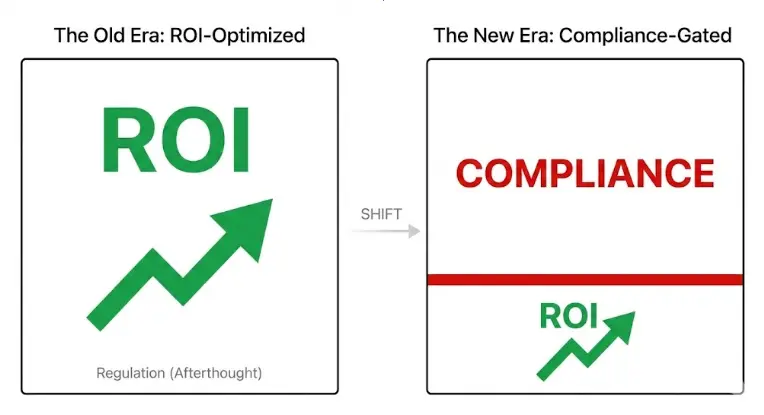
For nearly a decade, the short-term rental (STR) investment landscape was characterized by rapid growth and a focus on maximizing returns through nightly rates, occupancy forecasts, and algorithmic optimization. Regulatory compliance was often treated as a secondary concern, a procedural checkbox rather than a fundamental aspect of the investment strategy. This era, however, has definitively concluded. Today, STR regulation has evolved from a minor legal hurdle into a significant underwriting risk, capable of fundamentally altering the viability of investments overnight. A single municipal ordinance change, such as a ban on non-owner-occupied rentals or the imposition of strict permit caps, can instantly halt new supply and drastically reduce occupancy rates, rendering previously lucrative ventures financially unfeasible. In this evolving environment, profitability divorced from legality is an illusion. For PropTech platforms—including marketplaces, analytics dashboards, and lending engines—this paradigm shift necessitates a re-evaluation of how compliance is integrated into their core functionalities. Rather than relying on manual research or static informational resources, compliance must be embedded as a programmatic underwriting input.
The API as an Automated Policy Enforcement Engine
In the realm of real estate compliance, an Application Programming Interface (API) transcends its role as a mere data conduit. It becomes the foundational infrastructure for automated policy enforcement. The concept of "staying compliant by city" translates into the ability to programmatically interpret thousands of complex local municipal codes and translate them into executable logic gates that inform investment decisions. This transformation is critical for platforms aiming to provide accurate and actionable insights to their users, especially in an increasingly regulated market.
Deterministic vs. Probabilistic Data: The Compliance Threshold
A crucial distinction within real estate technology lies between probabilistic modeling and deterministic data. Historically, most PropTech platforms have relied on probabilistic data—estimations, inferred classifications, and Automated Valuation Models (AVMs). While such data may be sufficient for estimating potential return on investment (ROI), it presents a significant liability when applied to compliance. Probabilistic data operates on "likelihoods." For instance, a platform might infer a property is a single-family home based on its size and neighborhood characteristics. However, if a city ordinance explicitly prohibits STRs in multi-family units while permitting them in single-family homes, a probabilistic assessment of "likely" status is insufficient and potentially disastrous.
Deterministic data, conversely, is grounded in authoritative records, including tax assessments, deed filings, and official land-use codes. For a platform to function as a genuine underwriting tool, its API must provide these deterministic metadata points. Compliance, in its truest sense, demands a binary "Yes" or "No" answer, rooted in legal truth. When platforms depend on inferred data for compliance, they expose their users to catastrophic capital risk. Consider an institutional investor deploying substantial capital into a market based on "probable" eligibility. If this metadata proves inaccurate, a single enforcement letter from a municipality can obliterate the entire portfolio’s cash flow. This underscores the imperative for platforms to integrate APIs that offer verifiable, deterministic compliance data.
The "Ghost Listing" Problem and Detecting Enforcement Signals
Standard real estate APIs often falter when confronting the "ghost listing" phenomenon. In markets experiencing stringent regulatory crackdowns, numerous listings may remain technically "active" on booking platforms even after their legal permits have been revoked or suspended. A platform relying solely on active listing counts might present a misleading picture of a thriving market. In reality, such a market could be undergoing a severe "supply contraction." A compliance-aware API must offer more than a static snapshot; it needs to provide historical performance trends.
By cross-referencing a sudden decline in supply with sustained demand, platforms can detect subtle "enforcement signals." For example, a 40% drop in active rentals within a specific zip code over a single quarter, while nightly rates remain high, is rarely indicative of market failure. Instead, it typically signals a regulatory "clean sweep." Platforms equipped to programmatically identify these signals empower their users to avoid entering markets where regulatory doors are closing, even if the immediate ROI appears attractive. This proactive identification of regulatory shifts is paramount for capital preservation and strategic market entry.
Transforming Ordinances into Executable Logic
To automate compliance effectively, PropTech platforms must translate the often convoluted language of legal ordinances into structured, queryable data. At a practical level, most STR regulations can be categorized into three primary operational "guardrails":
1. Zoning and Property-Type Restrictions
Many municipalities impose STR restrictions based on building classification. By leveraging property-level metadata, a platform can automatically flag ineligible property classes or exclude restricted asset types from search results. This ensures that users are presented only with inventory that is legally viable for STR operations, streamlining the initial screening process and mitigating compliance risks. This granular level of data allows for precise filtering, preventing investment in properties that would be non-compliant from the outset due to their fundamental classification.

2. Residency and Ownership Mandates
A growing number of cities now permit STRs only if the property is owner-occupied. By utilizing ownership indicators embedded within property datasets, a platform can transition its focus from mere "ROI modeling" to "operational viability modeling." This represents a critical shift: from a tool that merely indicates what a user could earn, to one that clarifies what they are legally allowed to earn. This distinction is fundamental for investors, particularly those operating at scale, who need to understand not just the revenue potential but also the legal framework governing their operations. For instance, identifying an absentee owner in a jurisdiction requiring primary residency immediately disqualifies a property, saving significant time and resources.
3. Market Saturation and Permit Caps
Some cities regulate STRs through strict permit caps. While official ordinance databases define these limits, performance trends often reveal the real-world enforcement patterns. This is where a platform can move beyond static data analysis to predictive risk modeling. By monitoring the issuance and expiration of permits, and correlating this with market occupancy and pricing, platforms can provide early warnings of potential regulatory tightening or market saturation that could impact future investment opportunities. This forward-looking analysis is crucial for long-term investment planning in dynamic regulatory environments.
Technical Architecture: Building the Compliance Layer with Mashvisor
For compliance to be a true underwriting input, it must be seamlessly integrated into a platform’s technical architecture. By leveraging structured data from sources like Mashvisor’s API, platforms can feed their internal validation frameworks with deterministic and timely information. A compliance-aware underwriting engine can be constructed by combining various API endpoints that expose essential property metadata and historical rental performance.
Phase 1: The Eligibility Filter (Property Information)
The foundational data pull typically involves an API endpoint such as GET /v1.1/client/property. This retrieves the comprehensive "Property Object" when a user selects a specific listing. This object contains critical attributes like property_type (e.g., single-family, multi-family, condo), occupancy_status (e.g., primary residence, second home, vacant), and zoning information. This initial data serves as the first line of defense, immediately filtering out properties that violate fundamental zoning or property-type restrictions.
Phase 2: Ownership and Residency Screening (Property Ownership)
When city ordinances stipulate primary residency requirements, platforms can utilize the GET /v1.1/client/owner/contact endpoint. This API call provides ownership indicators, including the owner’s mailing address. By cross-referencing the owner’s mailing address with the property’s address, platforms can programmatically determine if the owner resides at the property, thereby assessing compliance with residency mandates. This is vital for accurately distinguishing between owner-occupied and absentee-owned properties, a key differentiator in many regulatory frameworks.
Phase 3: Regulatory Pressure Detection (Rental Activity Data)
Static rules capture what is legally written, but trend data captures what is actually happening in the market. The GET /v1.1/client/rento-calculator/historical-performance endpoint is crucial here. This endpoint provides historical data on active listing counts, occupancy rates, and pricing trends. By analyzing this data, platforms can identify "enforcement signals"—such as a sudden, sharp decline in active listings that is not correlated with a drop in demand. This indicates a regulatory crackdown or a significant shift in market dynamics due to enforcement actions. This historical perspective allows for predictive risk modeling, alerting investors to markets that may be becoming less hospitable for STRs, even if current performance metrics appear strong.
Case Study: Institutional Underwriting for a Multi-Market REIT
Consider a Real Estate Investment Trust (REIT) targeting the Florida market, specifically Miami. In such a dynamic regulatory environment, city-level ordinances carry substantial fiduciary implications. For a REIT, compliance is not merely a legal objective but a critical capital markets requirement. Their investment committee (IC) demands an audit-traceable risk framework before deploying institutional capital.
Step 1: The Metadata "Gateway"
The REIT’s system initiates by querying GET /v1.1/client/property to retrieve the high-fidelity Property Object. In a traditional workflow, an analyst might spend hours navigating a city’s GIS website. Programmatically, however, the system can check property_type and occupancy_status within milliseconds. If the property is flagged as a "Second Home" in a zone that requires primary residency for STRs, the investment opportunity is immediately disqualified, preventing further analysis and saving valuable analyst time.
Step 2: Ownership and Residency Verification
The platform then verifies owner details via GET /v1.1/client/owner/contact. The engine extracts the owner’s mailing address and cross-references it with the subject property’s address. For a REIT evaluating a 50-property portfolio, manual verification is logistically impossible. The API provides the deterministic proof required for the IC memo, ensuring that each investment meets stringent residency criteria. This programmatic check is essential for achieving the necessary scale and due diligence.
Step 3: Market Contraction and Enforcement Analysis
Utilizing GET /v1.1/client/rento-calculator/historical-performance, the platform analyzes market trends. If the data reveals a sharp decline in active listing counts, indicating a potential "Regulatory Pressure" signal, the REIT can pivot its capital allocation to more stable micro-markets. This proactive approach helps preserve capital by avoiding investments in areas undergoing significant municipal volatility or enforcement actions.
Step 4: Output – The Unified Underwriting Score
The platform aggregates these Mashvisor data points into its internal decision engine, generating a comprehensive underwriting score. For example:
| Metric | Mashvisor API Source | Value |
|---|---|---|
| Projected ROI | Investment Analysis | 8.2% |
| Zoning Match | Property Info (property_type) |
Pass (Single Family) |
| Residency Match | Property Ownership (mailing_address) |
Fail (Absentee Owner) |
| Market Pressure | Historical Performance Trends | High (Supply contraction) |
The resulting output is a clear "No-Buy" signal. This automated workflow ensures that every deal pipeline meets the REIT’s rigorous fiduciary standards for operational certainty and regulatory compliance.
Compliance as a Fiduciary Guardrail
As the short-term rental market matures from an opportunistic retail play into a recognized institutional asset class, the demand for repeatable risk frameworks has shifted from a "nice-to-have" to a capital markets imperative. For institutional funds, compliance serves as the ultimate fiduciary guardrail. Lenders and capital partners are increasingly sensitive to "regulatory drift"—the phenomenon where an asset, legally acquired under one framework, becomes orphaned by subsequent regulatory changes.
In this high-stakes environment, a platform’s reliance on manual research or vague "best-effort" disclaimers is no longer tenable. Institutional underwriting demands an audit-traceable data lineage. By leveraging deterministic property metadata, platforms can provide a digital paper trail for every investment decision. When a lender inquires about the rationale behind approving a specific asset for a high-leverage loan, the platform can reference the specific occupancy_status and property_type indicators, sourced from Mashvisor, that aligned with the city’s ordinances at the time of underwriting. This capability transforms compliance from a legal burden into a liquidity feature, making assets more attractive to risk-averse institutional buyers and enhancing market access.
Conclusion: From ROI to Operational Viability
The short-term rental market has decisively moved beyond its "growth at all costs" phase. In this new landscape, the most sophisticated calculation is no longer how much a property could generate in revenue, but whether it is legally allowed to operate. For PropTech platforms, this represents a fundamental evolution in their product category.
By integrating deterministic property metadata and real-time performance signals directly into the underwriting workflow, platforms transcend their role as simple ROI calculators. They become essential risk infrastructure, providing tools that protect capital, ensure fiduciary compliance, and deliver the operational certainty that institutional investors demand. As regulatory scrutiny intensifies, the platforms that embed legality into their technical architecture will not merely survive; they will define the next era of real estate investing, setting new standards for due diligence, risk management, and sustainable growth in the short-term rental sector.
Scaling compliance within your real estate data stack requires a strategic approach. If you are evaluating how to integrate structured property metadata into your underwriting engine or transition from manual research to a programmatic compliance workflow, consider seeking expert guidance. Engaging with data providers and consulting with technical architects can help pressure-test your existing architecture and identify the most effective solutions.
To explore how to integrate deterministic property metadata into your underwriting engine and transition from manual research to a programmatic compliance workflow, consider booking an introductory call with a data team specializing in real estate data APIs. Discussing your specific use case, technical requirements, and how to leverage available APIs to build a compliance-aware roadmap can provide invaluable insights and accelerate your platform’s adaptation to the evolving regulatory landscape.

