
The traditional pillars of the lending industry—risk assessment, capital allocation, and operational efficiency—are undergoing a fundamental transformation as financial institutions move away from fragmented, manual processes toward integrated, AI-driven ecosystems. For decades, commercial lending remained a labor-intensive endeavor, often requiring bank staff to spend days or weeks manually gathering documentation, spreading financials from tax returns, and drafting credit memos. However, the expectations of the modern borrower, ranging from the individual consumer to the small business owner, have shifted toward a demand for instantaneous decisions, seamless digital interfaces, and highly flexible repayment structures. As the financial sector gathers for FinovateFall 2026 in New York City from September 9 through 11, the focus has moved beyond mere digitization toward the implementation of "intelligent lending."
The five companies selected to demo at this year’s event—ALoan, Clockout, equipifi, OptimaFI, and QuickFi—represent a cross-section of the most pressing challenges and opportunities in the current credit environment. Their technologies suggest a future where the friction of the "back office" is invisible to the borrower and where financial institutions can leverage deep data insights to compete with agile, non-bank fintech challengers. This evolution comes at a critical time for the banking industry, as rising operational costs and increased competition for deposits have made efficiency and customer retention more vital than ever before.
The Evolution of Lending Technology: A Chronological Context
To understand the significance of the innovations presented at FinovateFall 2026, it is necessary to examine the trajectory of lending technology over the past decade. The industry has moved through three distinct phases of evolution:

- The Digitization Phase (2010–2018): This era was defined by the transition from physical paper to digital files. Banks began adopting loan origination systems (LOS) that allowed for online applications, but the "under-the-hood" processes remained largely manual. Borrowers could apply online, but the internal "spreading" of financials still required human data entry.
- The Integration Phase (2019–2023): Prompted largely by the global pandemic and the need for remote services, financial institutions accelerated the integration of third-party APIs. This allowed for better data pulling from credit bureaus and accounting software, but systems remained siloed, and "speed to lead" was still measured in days.
- The Intelligence Phase (2024–Present): We are currently in the era of generative AI and machine learning. The focus has shifted from merely moving data to interpreting it. The 2026 cohort at Finovate illustrates this phase, where AI handles the heavy lifting of underwriting, and embedded finance allows lending to happen at the exact moment of need.
Market data supports this shift. According to industry reports from early 2026, banks that have implemented AI-driven underwriting have seen a 40% reduction in operational costs related to loan processing. Furthermore, small business borrowers now cite "speed of funding" as their primary factor when choosing a lender, surpassing "interest rate" for the first time in history.
ALoan: Automating the Commercial Credit Memo
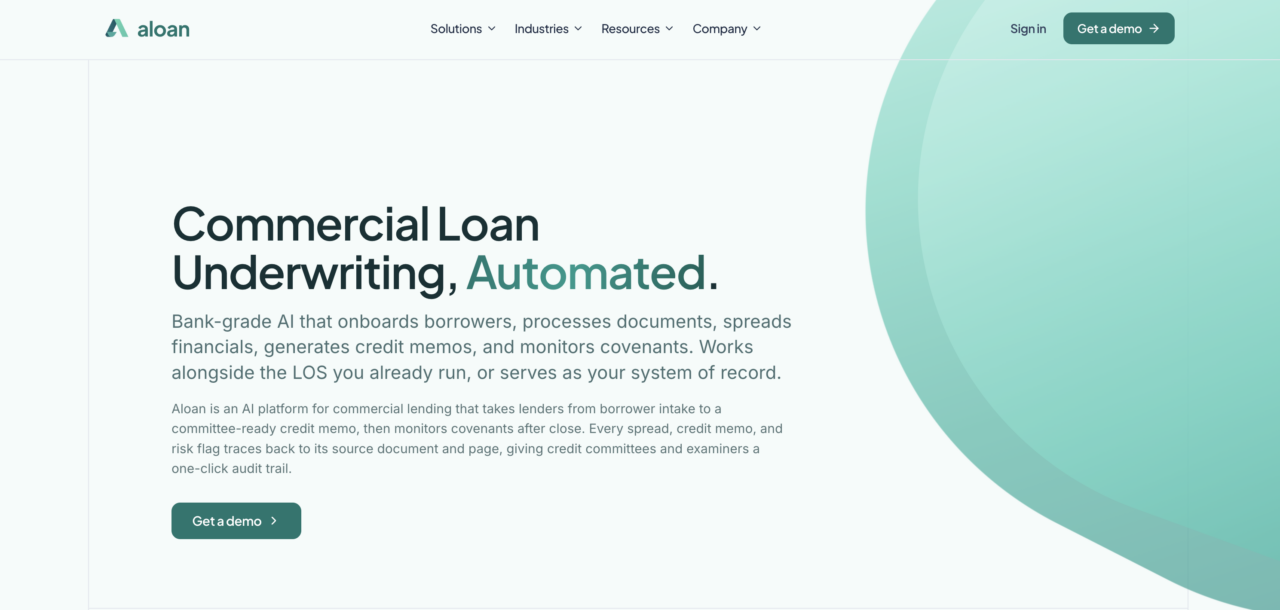
Commercial lending has long been the "final frontier" of automation due to the complexity of business tax returns and the nuances of various industries. ALoan is addressing this bottleneck by using advanced AI to automate the entire commercial underwriting workflow. The platform is designed to take a lender from raw borrower documents—such as complex multi-year tax returns and bank statements—to a fully prepared credit memo in under 30 minutes.
The technical innovation lies in ALoan’s ability to "spread" financials with high precision. In traditional settings, a credit analyst might spend eight to twelve hours manually entering data from a PDF into a spreadsheet. ALoan’s engine not only extracts this data but applies the specific credit policies of the lending institution. Critically for regulatory and audit purposes, the platform maintains a "digital thread," linking every figure in the final memo back to the specific line item in the source document. This transparency addresses one of the primary concerns of bank examiners regarding the "black box" nature of some AI tools. By increasing throughput without expanding headcount, ALoan allows community and regional banks to compete for larger loan volumes that were previously the sole domain of national "megabanks."
Clockout: Strengthening the Primary Account Relationship
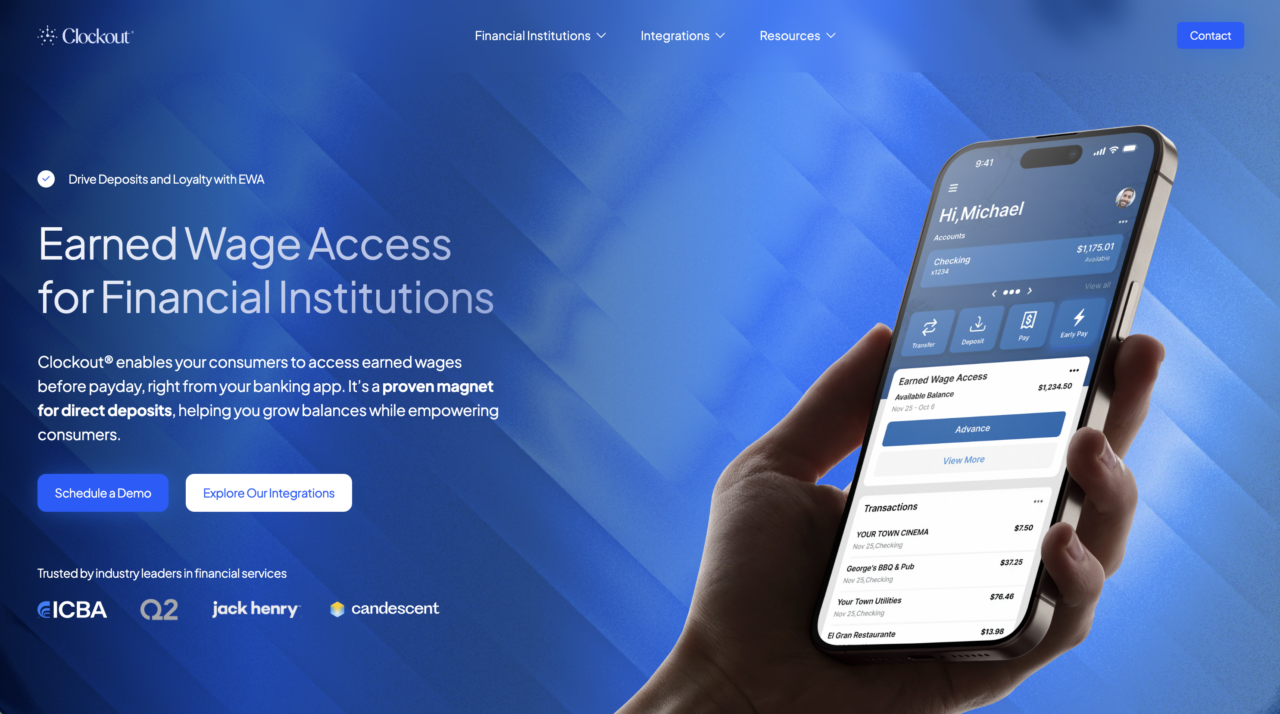
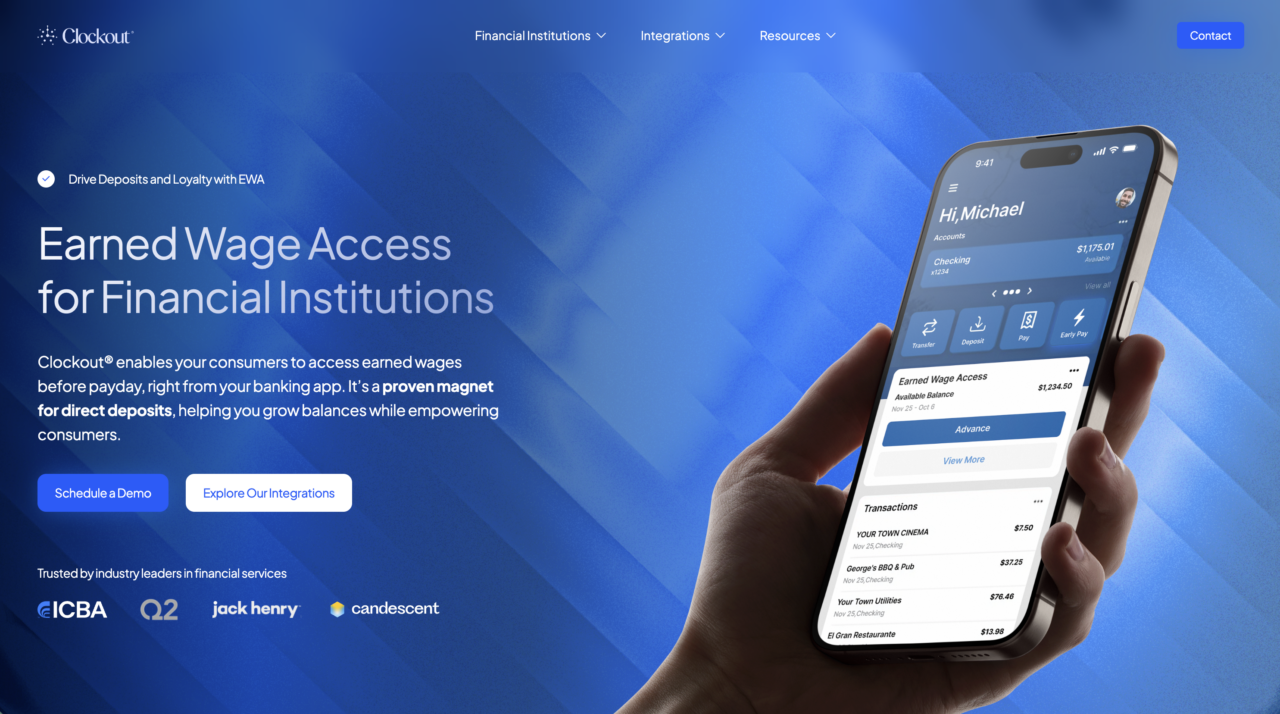
As the cost of customer acquisition continues to rise, banks and credit unions are increasingly focused on "stickiness"—the ability to remain the consumer’s primary financial institution. Clockout enters the market with a platform designed to embed financial wellness and liquidity tools directly into the banking experience.
Clockout’s model focuses on providing users with flexible ways to manage short-term financial needs, such as early access to earned wages or bridge financing, without the predatory nature of traditional payday loans. For the financial institution, this serves a dual purpose: it generates new fee-based revenue streams and, more importantly, incentivizes the customer to maintain their direct deposit with the bank. Industry analysts note that consumers who utilize liquidity tools within their primary banking app are 60% less likely to switch banks within a 24-month period. By integrating these tools, banks can provide a safety net that strengthens the overall health of their deposit base.
equipifi: Bringing BNPL Inside the Banking Perimeter
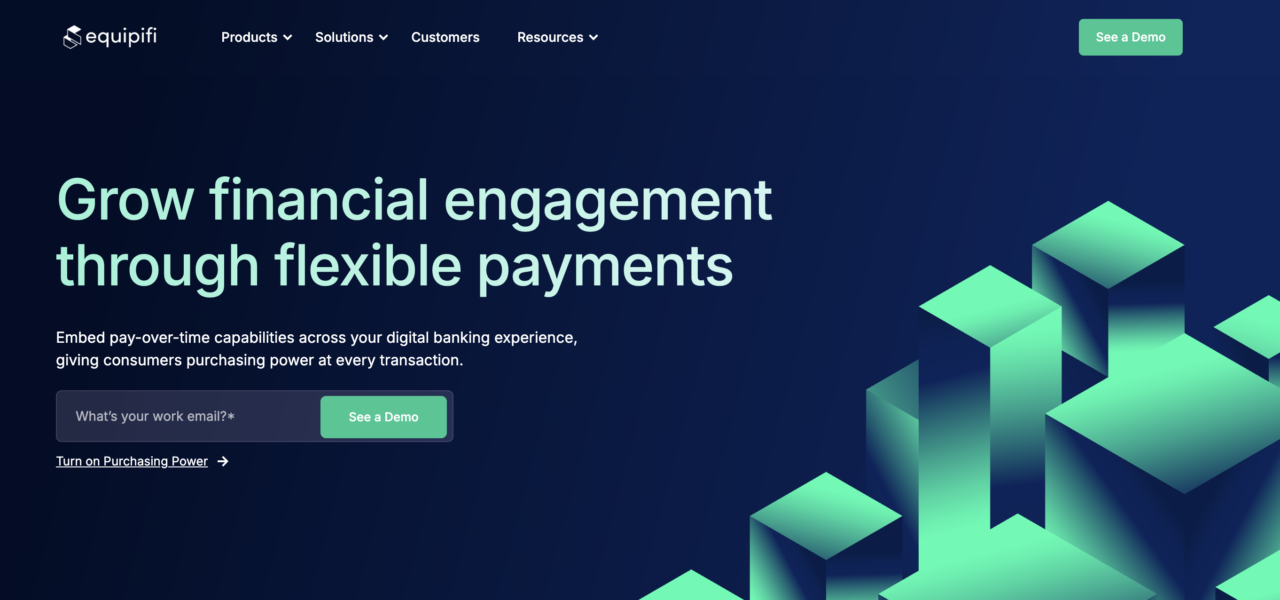
The rise of Buy Now, Pay Later (BNPL) providers like Klarna and Affirm initially took banks by surprise, siphoning off billions in transaction volume and valuable consumer data. equipifi is helping banks reclaim this territory by integrating BNPL capabilities directly into existing digital banking platforms.
The equipifi solution allows a bank to offer personalized financing options based on a customer’s actual purchase history and intent. For example, if a customer makes a large purchase at a home improvement store using their debit card, the bank can send a real-time mobile notification offering to convert that transaction into a low-interest installment plan. This "post-purchase" financing model leverages the bank’s existing trust and data, offering a more seamless experience than third-party apps. By keeping these transactions within the bank’s ecosystem, institutions can better manage risk and maintain a holistic view of the consumer’s total debt obligations.
OptimaFI: Household-Level Insights for Strategic Growth
One of the greatest challenges for community banks is the "data silo." While a bank may know a customer’s checking balance, they often lack visibility into the broader household’s financial health or the competitive landscape. OptimaFI’s Household Insights platform aims to solve this by providing a macro-view of customer relationships.
The platform benchmarks an institution’s internal data against a massive repository of over 14 billion private peer data points. This allows bank leadership to identify "opportunity gaps"—for instance, a household that has a high deposit balance but holds its mortgage or auto loan with a competitor. Because OptimaFI does not require a complex integration with the bank’s core processing system, it can be deployed rapidly. This speed to implementation is a significant advantage for smaller institutions that lack the massive IT budgets of global firms. The platform provides segment-level recommendations that allow banks to target their marketing and lending efforts with surgical precision, reducing "scattergun" advertising costs.
QuickFi: The Self-Service Model for Equipment Financing
Commercial equipment financing—covering everything from medical devices to construction machinery—has traditionally been a paper-heavy, slow-moving sector. QuickFi is disrupting this model with an end-to-end digital platform that empowers the borrower to self-serve.
Through QuickFi, a business owner can complete the entire financing process—application, credit approval, and document signing—on a mobile device in a matter of minutes. The platform is available 24/7, acknowledging that business owners often handle administrative tasks outside of traditional banking hours. For banks and equipment manufacturers, QuickFi reduces the "cost to serve" by eliminating the need for manual document handling and back-and-forth communications. This efficiency is particularly valuable for small-ticket equipment loans, where the thin margins often make traditional manual underwriting unprofitable.
Broader Implications and Industry Reactions
The innovations showcased at FinovateFall 2026 suggest a permanent shift in the power dynamics of the lending industry. The "speed-to-decision" has become the new benchmark for excellence. As one industry consultant remarked during a pre-event briefing, "In 2026, a bank that takes two weeks to approve a small business loan is essentially out of the market. The technology exists to do it in two hours; if you aren’t using it, you are ceding your best customers to those who are."
There is also a significant regulatory component to these developments. As AI becomes more central to lending, the Consumer Financial Protection Bureau (CFPB) and other regulators have increased their scrutiny of algorithmic bias. The companies demoing in New York have responded by emphasizing "explainable AI"—systems that can justify a credit decision based on objective data points rather than opaque "black box" logic. This focus on transparency is expected to be a major theme throughout the three-day event.
Conclusion: The Strategic Path Forward
The convergence of AI, embedded finance, and household data analytics is creating a more efficient and accessible lending landscape. However, for financial institutions, the challenge lies in integration. Adopting these technologies is no longer about "checking a box" for digital transformation; it is about fundamentally retooling the business model to prioritize the borrower’s time and financial health.
The five companies featured at FinovateFall 2026 provide a roadmap for this transition. By automating the mundane tasks of underwriting, offering liquidity at the point of need, and leveraging deep data for strategic growth, banks and credit unions can move beyond being mere "utilities" and become proactive financial partners. As the event in New York unfolds, the industry will be watching closely to see which of these technologies will become the new standard for the next decade of lending.

