
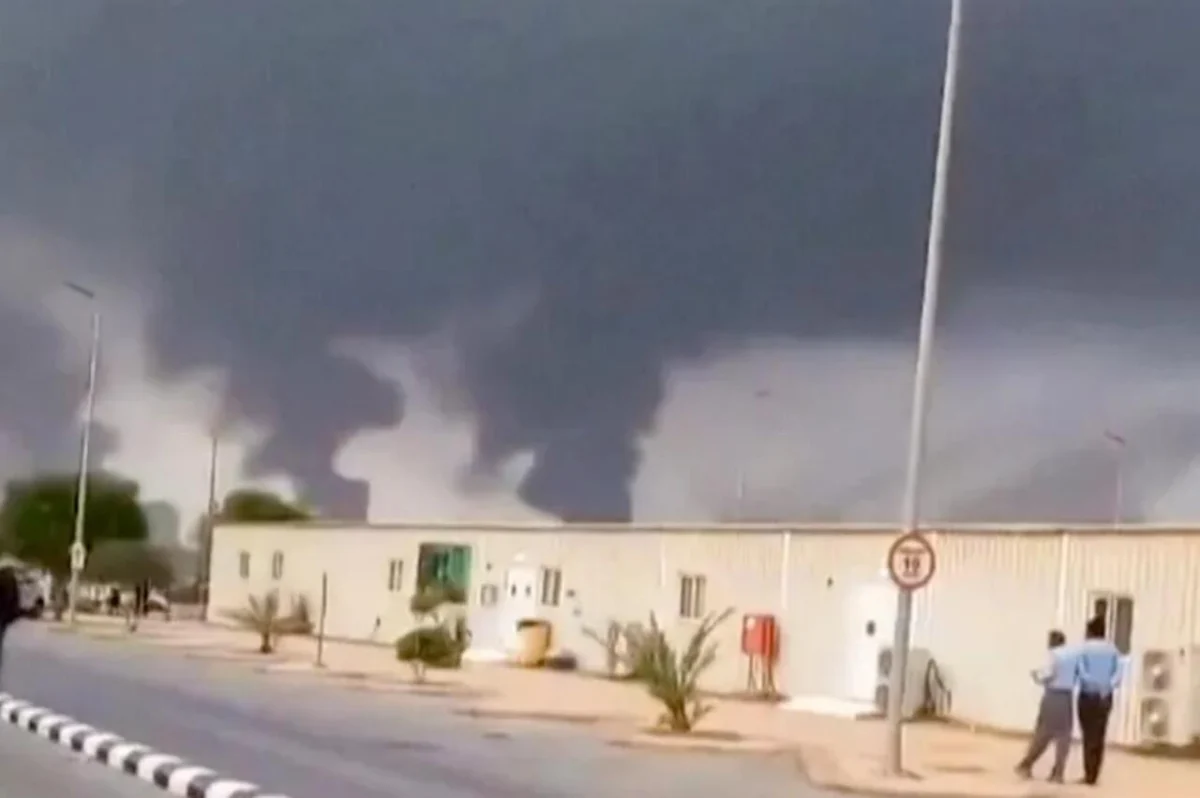
The fleeting period of calm that settled over the Middle East last weekend, offering a brief respite from escalating tensions, has definitively shattered. A renewed cycle of tit-for-tat attacks between the United States and Iran, now overtly involving Saudi Arabia and various proxy militant groups in Iraq and Yemen, has plunged the region back into acute instability. This latest flare-up marks a significant expansion of the conflict’s scope, challenging the fragile regional security architecture and sending ripples through global energy markets.
The Return of Tit-for-Tat: A New Wave of Hostilities
The current escalation was ignited in the overnight and early hours of Wednesday, local time, when Iran launched several missiles targeting a U.S. base situated in Jordan. Jordanian armed forces swiftly reported the interception of five projectiles, preventing potential casualties or significant damage. Tehran immediately framed this aggressive action as a direct response to perceived U.S. military activities aimed at enforcing a blockade of Iranian ports within the strategically vital Strait of Hormuz. This Iranian assertion indicates a clear intent to link its military actions to economic grievances and maritime control, a long-standing point of contention between the two nations.
Concurrently with the Iranian missile barrage on Jordan, reports emerged of launches from Iraqi territory targeting Saudi energy sites. These simultaneous attacks underscore a coordinated regional strategy, leveraging Iran’s network of allied militias to exert pressure across multiple fronts. This multi-pronged offensive immediately extinguished any lingering hopes for de-escalation that had been circulating in international headlines just hours prior. Those reports had optimistically suggested that mediators were on the verge of restoring a defunct Memorandum of Understanding (MoU), a framework that had previously aimed to manage regional tensions. The timing of the attacks served as a stark repudiation of these diplomatic overtures.
Further cementing the breakdown of any potential dialogue, Iran’s Deputy Foreign Minister Kazem Gharibabadi publicly rebuffed claims of impending negotiations. Referencing past statements by President Trump, who had asserted Tehran was "dying for a negotiation," Gharibabadi unequivocally stated, "We have sent no request for negotiation with the US during the past 16–17 days." This declaration from a senior Iranian official underscored Tehran’s firm stance against immediate diplomatic engagement under perceived duress, emphasizing its resolve to pursue its objectives through other means.
Strategic Flashpoints and Historical Context
The Strait of Hormuz remains a critical flashpoint in this enduring conflict. Situated at the mouth of the Persian Gulf, it is the world’s most important oil transit choke point, through which approximately one-fifth of global petroleum consumption passes daily. Iran has long asserted its right to control or levy fees for passage through the strait, a claim vehemently opposed by international maritime law and global powers. The Iranian diplomat reiterated this stance, stating, "If the Strait of Hormuz returns to its previous state, our success in this war is not complete," adding that this would include Iran’s right to charge fees for safe passage. This demand signals a fundamental challenge to the established international order of free navigation and is a significant escalation of Iran’s long-term strategic goals.
The broader context of US-Iran relations is steeped in decades of mistrust and proxy conflicts. Following the U.S. withdrawal from the Joint Comprehensive Plan of Action (JCPOA), commonly known as the Iran nuclear deal, tensions dramatically escalated. The Trump administration’s "maximum pressure" campaign, involving stringent sanctions, has severely crippled Iran’s economy, leading Tehran to seek leverage through regional influence and military posturing. Iran’s support for various Shia paramilitary groups in Iraq, the Houthi rebels in Yemen, and other non-state actors across the Middle East is central to its foreign policy, often used as a means to project power and deter external threats.
Escalation Timeline and Retaliatory Strikes
The recent wave of aggression quickly prompted a robust response. President Trump, in a statement to Fox News, issued a stark warning, declaring, "we’ll be hitting Iran hard" in retaliation for the attacks on American targets in Jordan. This promise of a forceful counter-response materialized rapidly, marking a significant expansion in the nature and scope of the conflict.
Saudi Arabia, a long-standing regional rival of Iran and a key U.S. ally, explicitly entered the fray. The Kingdom launched direct strikes against Iran-backed Shia paramilitary groups in Iraq, as well as against the Shia Houthis in Yemen. This marks a new phase where Saudi Arabia is not just a target of proxy attacks but an active participant in direct military action against Iranian-aligned forces outside its borders, signaling a more aggressive stance in its regional power struggle with Tehran.
CENTCOM, the U.S. Central Command, subsequently acknowledged a joint U.S.-Saudi operation in Iraq. This coordinated response was explicitly stated as a retaliation for this week’s attacks on Saudi infrastructure. The strikes resulted in significant casualties, with Iraq’s Popular Mobilization Forces (PMF) reporting at least 20 militants killed and 32 wounded. This action represents the first major U.S. military engagement in the Middle East since President Trump had declared a temporary pause in fighting just last Friday, following 13 consecutive days of prior confrontations. Trump confirmed that these recent U.S. and Saudi attacks were coordinated with the Iraqi government, adding another layer of complexity to the already volatile situation.
Official Reactions and Diplomatic Standoff
The Iraqi Popular Mobilization Forces (PMF), an umbrella organization for various Iraqi militias, many of which are backed and loyal to Iran, issued a strong condemnation of the U.S.-Saudi strikes. They labeled the attacks a "highly dangerous escalation" and a "violation of Iraq’s sovereignty and official security institutions." Despite this, the Islamic Resistance in Iraq, a self-proclaimed armed group often associated with attacks on U.S. and Saudi targets, denied any involvement in the recent attacks on Saudi Arabia, dismissing Saudi claims as "fabrications" and threatening "a harsh response" to any "foolish Saudi action." This denial, juxtaposed with the PMF’s condemnation, highlights the fractured and often contradictory landscape of Iraqi militant groups.
The Saudi Ministry of Defense issued its own statement, confirming the offensive was "in response to recent drone attacks" on the kingdom. The statement detailed the interception and destruction of "several drones that attempted to target petroleum facilities in the Eastern Province and Riyadh regions… launched from Iraqi territory and carried out by Iran-aligned terrorist militias." While asserting that "The Kingdom emphasizes that it does not seek escalation but will respond to any aggression it faces," the direct retaliatory strikes indicate a definitive shift in Riyadh’s engagement strategy.
Tehran, for its part, swiftly condemned the U.S.-Saudi joint action as "clear aggression against the national sovereignty and territorial integrity of Iraq." The Iranian Foreign Ministry further asserted that these new operations were "in line with the aspirations of the United States and the Zionist regime to expand the scope of war," directly implicating Israel in the broader regional conflict. Iran pledged "full support and solidarity of the Islamic Republic of Iran with the government and people of Iraq," extending condolences for the "martyrdom of a group of honorable Iraqi people" and holding "the warmongering US regime and its accomplices in the region responsible for the dangerous consequences of these criminal, inhumane, and provocative actions."
The Iraqi Frontline: A Complex Battleground

The renewed military action in Iraq creates a particularly challenging predicament for the Iraqi government. Ironically, these strikes occurred at a time when Baghdad had been actively attempting to appease Washington by overseeing a voluntary disarmament program for its Shia factions. The extent to which this program could genuinely be implemented and whether it would effectively curb the influence of Iran-backed militias has always been an open question. The U.S.-Saudi strikes not only complicate these efforts but also risk alienating elements within Iraq, potentially fueling anti-American sentiment and strengthening the hand of those who advocate for closer ties with Iran. The fragile balance of power within Iraq, delicately poised between various political and paramilitary factions, is now under severe strain.
Economic Repercussions and Global Markets
As a direct consequence of this intensified geopolitical volatility, global oil prices have continued their upward trajectory. The Middle East, being the world’s largest oil-producing region, makes any significant escalation a direct threat to global energy supplies. The attacks on Saudi energy infrastructure, even if intercepted, and the broader threat to maritime shipping in the Strait of Hormuz, inject substantial risk premiums into oil markets. Investors and traders react swiftly to headlines suggesting disruption, pushing prices higher and signaling broader economic anxiety about the conflict’s potential to impact global supply chains and economic stability.
Broader Regional Dynamics and Future Outlook
Beyond the immediate tit-for-tat, the conflict’s expansion raises concerns about its potential to draw in other regional actors. President Trump’s continued discussions about targeting Iran’s "highly fortified Pickaxe Mountain nuclear facility," as reportedly discussed with Israeli Prime Minister Netanyahu, add another dangerous dimension. Any strike on a nuclear facility, regardless of its purpose, would be an unprecedented escalation, risking a full-scale war. The mention of Netanyahu’s desire for Trump to "Stay Involved" in the Iran campaign underscores Israel’s deep-seated concerns about Iran’s nuclear program and its regional influence.
University of Chicago political scientist and foreign policy realist author Robert Pape offered a sobering assessment of the conflict’s trajectory. He remarked that "The victory rhetoric [from Trump] doesn’t match escalation reality," describing the situation as "out of sync." Pape, while refraining from predicting a years-long conflict, suggested that meaningful policy changes or a resolution are unlikely to emerge before the political landscape shifts following the upcoming midterm elections. His prediction that "Between now and January, this is not going to be over" highlights the entrenched nature of the conflict and the profound challenges to achieving a swift diplomatic resolution. The interplay between domestic politics in the U.S. and the ongoing military confrontation in the Middle East suggests a prolonged period of instability.
In conclusion, the Middle East is currently navigating a highly perilous phase of escalating conflict. The direct engagement of Saudi Arabia, the renewed assaults on U.S. assets, and Iran’s unwavering stance on maritime control and negotiations signal a dangerous shift. The intricate web of proxy warfare, direct military actions, and diplomatic standoffs creates an environment ripe for miscalculation, with potentially severe implications for regional stability and global security. The immediate future appears to hold further confrontations rather than a return to the fragile calm that briefly prevailed.

