
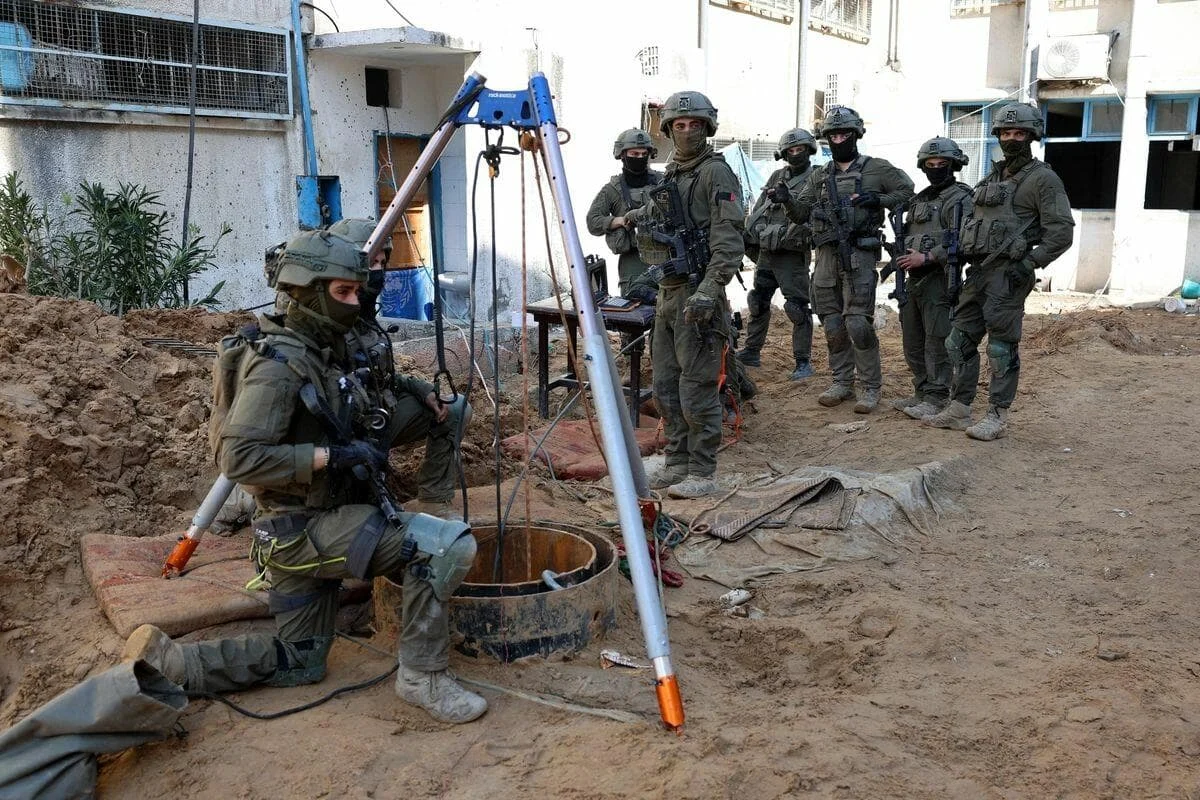
Institutions designed to prevent atrocities are ultimately judged by their effectiveness in achieving that core mission. For the United Nations, a critical examination of its voting patterns, internal investigations, and operational decisions reveals a growing challenge to its long-held claim of neutrality. Recent revelations, particularly concerning the United Nations Relief and Works Agency for Palestine Refugees in the Near East (UNRWA) in Gaza, have intensified scrutiny, exposing alleged connections between humanitarian infrastructure and militant activities.
UNRWA Under Scrutiny: Allegations and Investigations
The credibility of UNRWA, a key UN agency providing vital services to Palestinian refugees, has been severely tested by allegations of staff involvement in the October 7, 2023, attacks on Israel. A UNRWA school in Gaza was reportedly situated above a Hamas tunnel shaft and three anti-tank positions, with its principal allegedly on the payroll of both the school and a militant organization – a fact reportedly brought to light by American investigators rather than the UN’s internal mechanisms.
Following the October 7 attacks, UNRWA’s own internal review initially indicated that nine employees might have participated in the massacre. However, subsequent investigations by external bodies have painted a significantly more extensive picture. The U.S. Agency for International Development (USAID) Office of Inspector General (USAID OIG), an independent oversight entity, referred 101 current or former UNRWA staff members for suspension or debarment consideration. These referrals were based on alleged participation in the October 7 attacks and/or affiliation with the al-Qassam Brigades, the military wing of Hamas.
The USAID OIG report detailed alarming roles held by these individuals within UNRWA, including:
- A deputy school principal allegedly serving as an al-Qassam deputy company commander in an infantry battalion.
- Another deputy school principal accused of being a squad leader for a brigade’s infantry battalion.
- A teacher reportedly serving as a squad leader in Hamas’s military security department/intelligence unit, tasked with tracking explosive device assignments.
- A teacher identified as a platoon commander in a different brigade.
- A math and computer teacher with alleged ties to an al-Qassam intelligence squad.
- A teacher with reported expertise as a sniper for Hamas.
- A teacher and Hamas soldier allegedly given orders to deliver anti-tank missiles to a specific location during the October 7 attacks.
- A deputy school principal accused of serving as a platoon commander in Hamas’s Nuseirat battalion with communications responsibilities on October 7.
- A school principal allegedly assigned to the chemical department of a Hamas military manufacturing unit, whose school facility reportedly housed three anti-tank positions and a tunnel shaft beneath it.
One specific individual, Hafez Mousa Mohammed Mousa, an UNRWA school principal, was alleged to have coordinated with fellow operatives during the October 7 massacre. He subsequently became the first person affiliated with a UN humanitarian agency to be debarred by the U.S. government for terrorism-related activities.
Under mounting international pressure, UNRWA itself reportedly dismissed 70 staff members linked to terrorist organizations in Gaza in the weeks preceding the USAID OIG referral’s publication. This action, following the release of evidence rather than resulting from the agency’s own proactive vetting processes, raised further questions about UNRWA’s internal controls and oversight. Independent groups monitoring UNRWA’s personnel have suggested that the actual scale of Hamas penetration within the agency could be considerably higher, potentially involving closer to 1,500 employees still receiving UN salaries.
Historical Context and Mandate of UNRWA
UNRWA was established by the UN General Assembly in December 1949 to provide humanitarian assistance and protection to Palestine refugees registered with the agency. Its mandate initially covered relief, health, education, and social services for those displaced by the 1948 Arab-Israeli War. Unlike the broader UN High Commissioner for Refugees (UNHCR), UNRWA’s mandate is specific to Palestinian refugees in its five areas of operation: Jordan, Lebanon, Syria, the West Bank, and the Gaza Strip.
For decades, UNRWA has been the primary provider of essential services in Gaza, running schools, health clinics, and food distribution programs. Its operations are critical for the survival of a significant portion of the Gaza Strip’s population, which has faced protracted conflict, blockade, and humanitarian crises. The allegations of staff involvement in terrorism have, therefore, not only jeopardized the agency’s funding and operational capacity but also raised profound questions about the politicization of humanitarian aid and the challenges of operating in conflict zones where governance is fragmented.
Projected Future of UNRWA and Reactions
According to projections presented in the original article, the reckoning with UNRWA’s future came into public view on July 1, 2026, when the "Board of Peace," a hypothetical body envisioned to oversee Gaza’s postwar administration, announced that UNRWA "has no place in the new Gaza." This statement reportedly described continued dependence on the agency as an obstacle to recovery rather than a form of relief. On the same day, Washington’s ambassador for UN reform, Jeff Bartos, speaking at the annual pledging conference, reportedly criticized member states for years of choosing "incitement, terrorism, and stagnation" over alternatives in their funding of UNRWA.
Within hours of this projected announcement, the Palestinian Authority and the Arab League reportedly rejected the statement, insisting that UNRWA’s mandate cannot be dissolved by an administrative declaration. This projected dispute highlights the deep political and humanitarian complexities surrounding UNRWA, an institution long perceived as irreplaceable by many, yet facing dismantling in real-time by a projected coalition managing the territory it was established to serve.
The Broader Pattern: UN General Assembly Voting Records
Beyond UNRWA, the UN’s perceived lack of neutrality is starkly illustrated by the voting patterns within the UN General Assembly (UNGA). According to the original analysis, by 2025, the UNGA was projected to adopt 15 resolutions specifically targeting Israel, while only 11 resolutions addressed all other nations combined, including North Korea, Iran, Myanmar, Russia, and the United States. This disproportionate focus is not a new phenomenon; from 2015 through 2024, the cumulative total of resolutions against Israel reportedly reached 173, compared to 80 for all other member states combined.
The UN Human Rights Council (UNHRC) has displayed a similar pattern. Since its inception in 2006, the UNHRC has reportedly adopted 112 resolutions against Israel, in contrast to 45 against Syria, despite a brutal civil war in Syria that has claimed hundreds of thousands of lives and displaced millions.
Further exemplifying this perceived imbalance, the original article notes that on November 20, 2025, the UNGA’s Fourth Committee was projected to pass six resolutions condemning Israel, while not a single resolution was produced concerning Sudan, where fighting had reportedly killed over 150,000 people and driven 12 million from their homes. This voting behavior is largely driven by a bloc of member states that commands an automatic majority within the UNGA, leading to accusations that geopolitical priorities and bloc alignments, rather than the actual scale of human suffering, dictate the UN’s agenda.
Historical Precedents: Corruption and Accountability Failures
The challenges facing the UN are not confined to recent events or specific regions. A long history of systemic issues involving corruption and a lack of accountability for senior officials has plagued the organization.
The "Oil-for-Food Program" in Iraq stands as the UN’s largest financial scandal. Initiated in 1996 to allow Iraq to sell oil to buy humanitarian goods despite international sanctions, the program was exploited by then-Iraqi President Saddam Hussein, who extracted an estimated $1.8 billion in kickbacks with the alleged complicity of over 2,000 companies. The subsequent Volcker inquiry, an independent investigation commissioned by the UN, found that weak UN oversight and Security Council paralysis had created an environment ripe for corruption. While the program’s director was later indicted in the United States for bribery, many senior UN officials implicated in the scandal largely remained untouched, absorbing little to no public exposure or legal consequences.
The Crisis of Peacekeeping: Misconduct and Missed Opportunities
UN peacekeeping missions, deployed globally to maintain peace and protect civilians, have also been marred by recurring patterns of misconduct and failures to protect populations.
A UN Procurement Task Force, established to investigate corruption within peacekeeping operations, documented over $630 million in tainted contracts and uncovered two dozen confirmed corruption schemes. However, this task force was reportedly shut down in 2008 after member states whose nationals were implicated in the schemes refused to renew its mandate, effectively stifling further investigations and accountability efforts.
Allegations of sexual exploitation and abuse by peacekeepers represent another dark chapter. Over a 12-year period, nearly 2,000 such allegations accumulated, yet only a fraction of the accused ever faced prison time. Despite the repeated announcement of "zero-tolerance" policies, critics argue that these measures often failed to significantly alter how missions were run or how misconduct was punished, perpetuating a culture of impunity.
Even more tragically, UN peacekeeping missions have been criticized for their failures to prevent mass atrocities. In 1994, UN representatives and peacekeepers in Rwanda observed as over 800,000 people were systematically murdered within approximately 100 days. Despite urgent pleas for reinforcements from the UN’s commander on the ground, his requests were denied, leaving a small contingent unable to intervene effectively. A year later, in Bosnia, the UN declared the town of Srebrenica a protected "safe zone." However, when Bosnian Serb forces attacked, the UN peacekeepers’ requests for air support were denied, leading to the massacre of 8,000 men and boys under the very flag meant to protect them.
In Haiti, UN peacekeepers inadvertently introduced cholera into a country that had been free of the disease for a century. The resulting outbreak led to the deaths of nearly 10,000 people before the organization finally admitted any responsibility, six years after the epidemic began.
Analysis: The Organizational Reflex and Its Consequences
The common thread linking the situations in Rwanda, Bosnia, Haiti, and the recent allegations concerning UNRWA in Gaza is a discernible organizational reflex within the UN: a tendency to investigate quietly, discipline only the lowest-ranking staff members available, and leave the individuals responsible for setting policy largely untouched. This pattern suggests a systemic inability or unwillingness to hold high-level officials accountable for organizational failures or misconduct.
UN Secretary-General António Guterres’s statement to the Security Council after October 7, that the Hamas attacks "did not happen in a vacuum," a formulation he has reportedly echoed regarding UNRWA’s failures, is seen by critics as careful language designed to avoid directly naming the agency’s own culpability. Such statements, while attempting to provide context, can also be interpreted as deflecting responsibility from internal organizational shortcomings.
The United Nations was founded on the noble principle of making atrocities costly for those who commit or enable them. However, the historical record and recent events suggest it has, in some instances, constructed an internal mechanism that absorbs these costs, protecting those responsible within the institution or representing the member states that control its votes.
Implications for Global Governance and Humanitarian Aid
The projected verdict from the "Board of Peace" – that UNRWA "has no place in the new Gaza" – represents a significant challenge to the UN’s operational model and its perceived indispensability. This assessment, emanating from a body tasked with postwar administration rather than from the UN’s traditional critics, underscores the depth of the crisis of confidence.
The continued allegations against UNRWA, coupled with the long history of UN failures in peacekeeping and corruption, raise fundamental questions about the future of international humanitarian aid and global governance. The implications are far-reaching:
- Funding and Trust: Donor countries may increasingly condition or withdraw funding, demanding greater transparency, accountability, and robust vetting processes from UN agencies.
- Effectiveness of Aid: The alleged infiltration of humanitarian organizations by militant groups compromises the neutrality and effectiveness of aid delivery, potentially endangering both aid workers and beneficiaries.
- Reform Demands: Calls for comprehensive UN reform, extending beyond rhetoric to structural changes in accountability mechanisms, oversight, and decision-making, are likely to intensify.
- Alternative Mechanisms: The potential dismantling or significant restructuring of UNRWA could lead to the exploration of alternative mechanisms for delivering aid and services to Palestinian refugees, potentially involving non-UN entities or new international coalitions.
- Erosion of International Law: A perceived lack of neutrality and consistent application of international law undermines the very foundations of the UN system, weakening its moral authority and its capacity to act as a credible arbiter in global conflicts.
The record, as presented, speaks plainly enough. What remains open is how much longer the international community, particularly the funding member states, intends to continue supporting a system perceived by some as having lost its way and absorbed the costs of its own failings internally. The ongoing scrutiny of UNRWA and the broader historical context challenge the world to reconsider the future of an institution originally envisioned as a beacon of peace and justice.

