
A significant and often contentious debate in contemporary cultural discourse revolves around the portrayal and reinterpretation of historical narratives and iconic cultural works in modern media. This discussion frequently touches upon questions of cultural identity, historical accuracy, and the evolving standards of representation in film and television. Critics from various perspectives have voiced concerns regarding adaptations that they perceive as altering foundational elements of established historical or mythological works, particularly those rooted in Western civilization.
The recent discourse surrounding a hypothetical adaptation of Homer’s epic poem, The Odyssey, as described by some commentators, exemplifies this ongoing cultural tension. Authored by Brandon Smith via Alt-Market.us, a prominent critique highlights what he characterizes as a "woke war against white culture," using this speculative film as a central case study. This perspective argues that there is a societal double standard in how different cultures’ histories and mythologies are treated, suggesting that while the reinterpretation or critique of Western heritage is often applauded, similar approaches to other cultures would be met with accusations of cultural insensitivity or bigotry.
The Perceived Diminishment of Western Culture
At the core of this critique is the assertion that a narrative exists in popular culture which actively seeks to diminish or deny the existence of a distinct "white culture." Commentators like Smith contend that this narrative creates an environment where questioning the validity or historical accuracy of adaptations of Western classics, particularly concerning casting or thematic shifts, is immediately labeled as discriminatory. This alleged double standard is seen by these critics as particularly pronounced when compared to the rigorous defense often mounted for the integrity of non-Western cultural narratives.
Furthermore, critics argue that the simultaneous dismissal of "white culture" while actively reinterpreting or appropriating aspects of Western history and accomplishments for new narratives suggests an underlying agenda. They cite instances where historical figures or events traditionally associated with Western heritage are, in their view, "hijacked" or "deconstructed" to fit contemporary ideological frameworks. This tension between denying a culture’s existence and actively engaging with its historical artifacts forms a central pillar of the critique.
A Hypothetical Odyssey Adaptation: A Case Study in Cultural Reinterpretation
The speculative film adaptation of Homer’s The Odyssey serves as a focal point for these concerns. According to the critique, this hypothetical Hollywood production, allegedly helmed by a director known for major cinematic successes, is presented as a deliberate attempt to infuse a classic Western epic with contemporary "woke" ideologies. The article suggests that Hollywood’s intense focus and resource allocation for this film stem from a desperation for a "woke win" after a series of perceived commercial failures of ideologically driven projects.
The described tactics to ensure the film’s success include leveraging established directorial talent, focusing on premium viewing formats like IMAX to inflate box office numbers, extensive pre-release media promotion, and alleged manipulation of audience review scores on platforms like Rotten Tomatoes. These measures are interpreted by critics as an acknowledgement by industry players that the "Get Woke, Go Broke" phenomenon—the idea that ideologically driven content alienates mainstream audiences and leads to financial losses—is a significant force in public discourse, and that this film is intended to counter that narrative.
The "Get Woke, Go Broke" Debate in Hollywood
The phrase "Get Woke, Go Broke" has become a popular rallying cry among critics of certain modern cultural trends in entertainment. It posits a direct correlation between the inclusion of progressive political or social messaging ("woke" content) and a decline in commercial viability for films, television shows, and other media. Proponents of this view often point to numerous high-profile projects that have underperformed at the box office or in viewership ratings, attributing their failure to perceived ideological alienation of broader audiences. Examples frequently cited include various reboots or sequels that diverge significantly from established characterizations or narratives to incorporate diverse casting or modern social commentary.
Conversely, supporters of "woke" content argue that such projects are vital for promoting diversity, inclusivity, and contemporary relevance in storytelling. They contend that financial underperformance is often due to poor execution, lack of genuine audience interest, or simply the inherent risks of the entertainment industry, rather than the "woke" elements themselves. They also highlight successes of diverse and socially conscious films, arguing that modern audiences increasingly demand content that reflects a wider range of experiences and perspectives.
The article’s assertion that "activist journalists" are already declaring the hypothetical Odyssey film as "proof" that "Get Woke, Go Broke" is a fallacy, even before significant profit generation, underscores the highly polarized nature of this debate. Critics interpret this as an admission of an agenda, suggesting that the film’s success is not merely a commercial goal but a symbolic victory in a broader cultural struggle.
Deconstruction of Heroism and Character Archetypes
A central point of contention for critics is the alleged thematic reinterpretation within the hypothetical Odyssey film. The article claims that the adaptation "explicitly undermines the heroism of the story and makes Odysseus a broken man, suffering from ‘trauma’ and PTSD over his regrets of the war and his ‘colonist’ behavior." This is contrasted with the traditional portrayal of Odysseus as a cunning, resilient, and heroic figure.
This narrative shift is paralleled with other perceived instances of "deconstruction" in popular culture, such as the portrayal of Luke Skywalker in certain Star Wars sequels, where a traditionally courageous and moral hero was depicted as disillusioned and nihilistic. Critics argue that this pattern reflects a deliberate effort to prevent "white people" from having "bold, wise and confident heroes," instead promoting narratives of regret and shame regarding historical accomplishments. The implication is that such portrayals serve to deter contemporary audiences from embodying similar qualities, unless those qualities are aligned with "progressive ideals."
Casting and Cultural Appropriation Debates
Beyond thematic changes, the hypothetical Odyssey film’s casting choices are highlighted as another flashpoint. The article describes a "race swapped cast" featuring actors of Black, Hispanic, Asian, and other backgrounds, including a transgender actor portraying a male Greek warrior, which critics argue is historically inaccurate for Homer’s era. While diverse casting is often celebrated for promoting inclusivity, critics in this context view it as a form of "woke propaganda" rather than genuine artistic choice.
The critique centers on the perceived double standard regarding "cultural appropriation." Commentators argue that if a film were to replace Swahili characters in an African epic with white actors, it would provoke outrage and accusations of cultural appropriation from progressive circles. However, similar alterations to Western narratives, they contend, are often defended or applauded under the guise of modernization or diversity. This perceived inconsistency fuels the argument that the goal is not merely diversity but a targeted re-shaping of Western heritage.
Historical Demographics of the Ancient Mediterranean
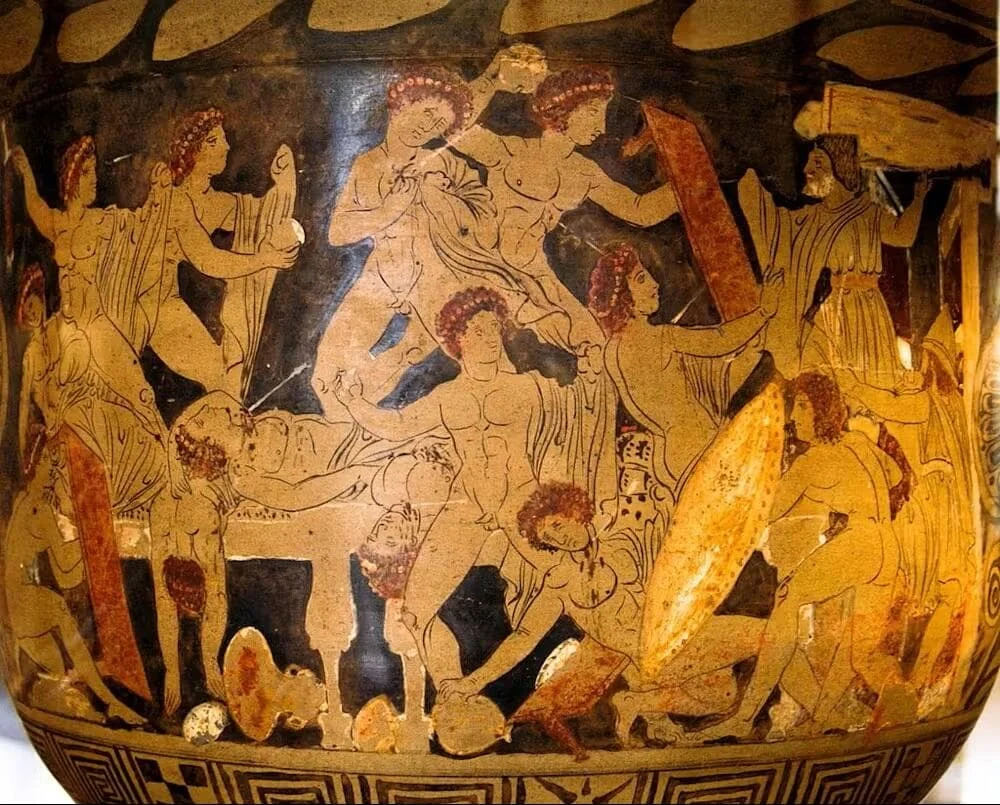
To bolster arguments for historical accuracy, critics often reference historical and genetic records concerning the demographics of the ancient Mediterranean. Homer’s Odyssey was composed around 2800 years ago, and historical evidence suggests that the populations of the Mediterranean region, including parts of North Africa, were predominantly Caucasian during that period. Archaeological findings, ancient art (pottery, murals), and genetic studies depict people with characteristics such as fair skin, blue eyes, and blonde hair, consistent with populations broadly categorized as "white" by modern standards.
It is important to note that significant demographic shifts in the region, such as the substantial migration of Sub-Saharan African populations northward or the large-scale Arab presence, occurred many centuries after Homer’s time, primarily during the Middle Ages. These historical facts are central to the argument that re-imagining ancient Greek narratives with diverse modern demographics represents a significant departure from historical reality, and is done with a specific agenda rather than historical fidelity. Critics lament that attempts to articulate these historical facts are often met with accusations of racism or dismissed through "mental gymnastics" by those who advocate for contemporary reinterpretations.
The Broader Implications and Alleged "Marxist March"
The critique extends beyond individual film projects, interpreting them as components of a larger "Marxist march towards a multicultural west and the end of white history as we know it." This perspective views Hollywood’s "woke" reboots, mass immigration policies in some Western nations, and the alleged deconstruction of history in educational institutions as interconnected elements of a coordinated agenda.
According to this view, the ultimate objective is to make "white people forget who we are, or at the very least, make us ashamed of who we are." The article warns that if these trends continue, core tenets of Western civilization—such as meritocracy, republicanism, Christianity, critical thinking, innovation, individual liberty, and free markets—could be replaced by what it calls a "socialist purgatory." The term "colonialism" itself is redefined in the critique, not as exploitation, but as "the act of improving third world hellholes where people are incapable of improving their own surroundings so they don’t turn into pillagers trying to invade our countries," reflecting a highly specific and controversial interpretation of historical events.
Concluding Analysis of the Cultural Crossroads
The debate surrounding projects like the hypothetical Odyssey film highlights a significant cultural crossroads in Western societies. On one side are those who advocate for historical authenticity, the preservation of traditional narratives, and a strong defense of what they define as Western cultural identity. They perceive modern reinterpretations as a systematic undermining of their heritage, driven by ideological rather than artistic motivations. They are concerned about what they see as a forced historical revisionism that erases or denigrates the past.
On the other side are those who champion diversity, inclusivity, and the re-contextualization of historical narratives to reflect contemporary values and global perspectives. They argue that culture is dynamic, and adaptations offer opportunities to engage new audiences, correct past exclusions, and challenge outdated perspectives. They often view traditional narratives as potentially exclusionary or reflective of problematic historical power structures that need to be re-examined.
This ongoing tension shapes not only the entertainment industry but also broader public discourse on history, education, and national identity. The commercial performance of films caught in this debate, regardless of actual profitability, often becomes a symbolic battleground, with each side eager to claim victory as validation for their respective cultural viewpoints. The discussion reflects deep divisions in how societies interpret their past, construct their present, and envision their future.

