
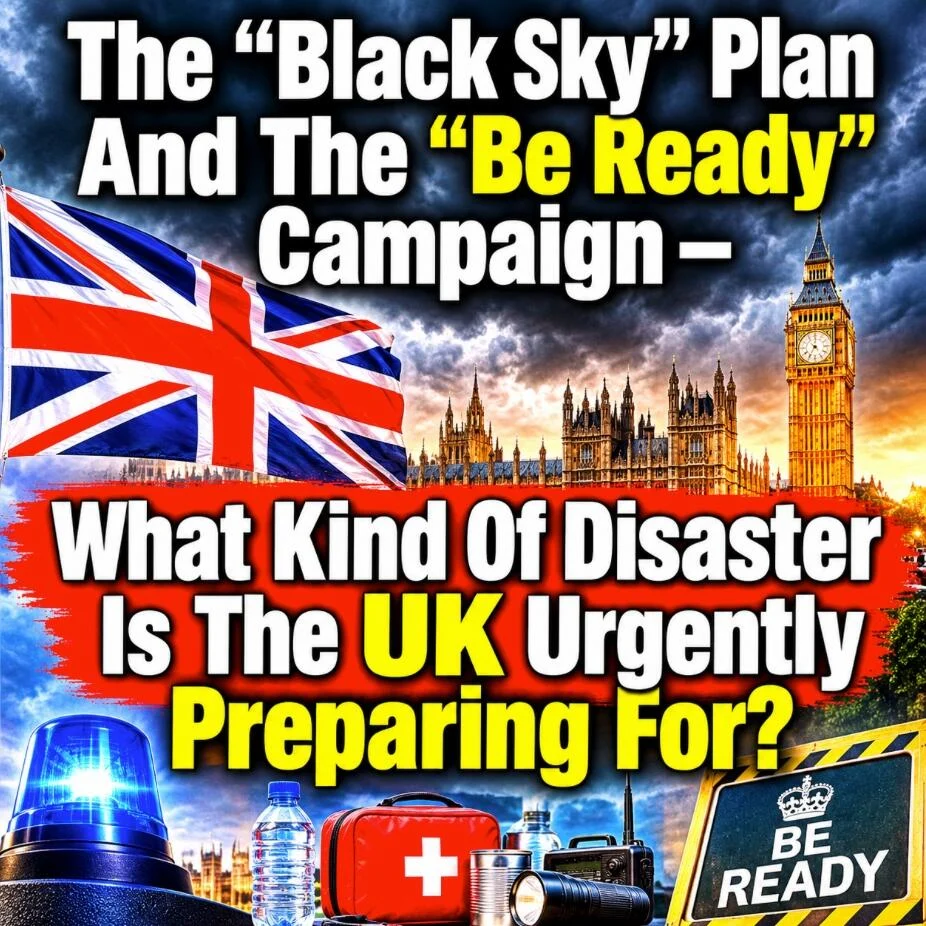
Governments worldwide are increasingly emphasizing civil preparedness and national resilience, with campaigns like the United Kingdom’s "Be Ready" and its confidential "Black Sky" plan drawing significant attention. These initiatives, particularly prominent in late 2026, underscore a shifting global landscape characterized by escalating geopolitical tensions, profound environmental shifts, and heightened economic vulnerabilities. While official communications frame these efforts as proactive measures for national safety and stability, their concurrent rollout across multiple nations has prompted public and analytical inquiry into the specific nature of anticipated future challenges.
The UK’s Dual Approach: "Be Ready" and "Black Sky"
The United Kingdom has been at the forefront of this intensified preparedness drive. In October 2026, the government launched its "Be Ready" campaign, a public information initiative advising citizens to stockpile essential supplies. This campaign recommends that households maintain a three-day supply of bottled water, non-perishable food, a torch with spare batteries, a wind-up FM radio, a first-aid kit, and copies of important documents like passports. The guidance explicitly suggested building up these provisions gradually during regular shopping trips to prevent panic buying and ensure steady supply chains. Officials stated the campaign aims to empower citizens to cope with immediate aftermaths of severe weather events or cyber-attacks, allowing emergency services to prioritize the most vulnerable populations.
Shortly after the "Be Ready" campaign’s introduction, details emerged about the UK’s more secretive "Black Sky" contingency plan. Authored by the BBC, this plan outlines a comprehensive strategy for maintaining essential public information services in the event of a catastrophic national emergency, specifically one involving widespread power outages and internet failure. The "Black Sky" plan mandates a dedicated emergency radio studio, staffed by approximately 100 personnel, equipped with secure communication lines independent of the internet, and sufficient fuel, water, and food to operate autonomously for at least three days. Broadcasts are designed to be transmitted via isolated radio towers, powered by substantial diesel generators capable of sustaining operations for a minimum of 72 hours. The reliance on FM radio, accessible almost universally even in blackouts, highlights the perceived threat of a digital communications collapse. Satellite phones and pre-agreed meet-up points form additional layers of communication redundancy.
Rationale Behind Heightened Preparedness
The stated rationale for these campaigns from UK authorities centers on bolstering national resilience against a diverse array of modern threats. These include:
- Cyberattacks: The increasing sophistication and frequency of cyber warfare pose a significant threat to critical national infrastructure, including power grids, financial systems, and communication networks. A "Black Sky" scenario directly addresses the potential for a large-scale cyberattack to cripple digital infrastructure.
- Severe Weather Events: Climate change is contributing to more frequent and intense extreme weather phenomena, leading to localized power outages, flooding, and disruption of supply chains. The "Be Ready" campaign provides practical advice for citizens to navigate such immediate disruptions.
- Geopolitical Instability: Global conflicts and tensions can have far-reaching effects, including potential disruptions to international trade, energy supplies, and even the threat of direct or indirect attacks on national infrastructure.
These publicly articulated reasons align with broader international trends in disaster preparedness, where governments are increasingly recognizing the need for both top-down infrastructural resilience and bottom-up community readiness.
Public Response and Economic Implications
The "Be Ready" campaign quickly resonated with the British public. Reports from prepping and survival gear retailers indicated a substantial surge in demand for emergency supplies. For instance, one co-owner of a UK prepping store reported receiving a month’s worth of orders within the first 24 hours of the campaign’s launch, suggesting a widespread, albeit measured, public response. While official sources emphasized that the campaign was not intended to trigger panic, the immediate uplift in sales demonstrates a significant public engagement with the concept of personal preparedness. This response highlights the public’s receptiveness to official guidance during periods of perceived instability, and the economic ripple effect such campaigns can have on specific retail sectors.
A Complex Global Backdrop: Intersecting Crises
The UK’s intensified preparedness efforts are unfolding against a backdrop of complex and interconnected global crises, which some analysts suggest are contributing to a pervasive sense of urgency among governments worldwide.

1. Geopolitical Tensions and Conflict Escalation:
- Middle East Instability: The conflict involving Iran and its proxies continues to escalate, creating significant regional instability. Concerns persist regarding potential disruptions to critical maritime routes, particularly in the Strait of Hormuz, a vital artery for global oil shipments. Furthermore, reports in late 2026 indicated unusual maritime activity near undersea internet cables in the Gulf of Oman, with vessels linked to Iran allegedly exhibiting behaviors consistent with mapping or tampering. Undersea cables are the backbone of global communication and finance, and any disruption could have profound implications for the global financial system and internet connectivity.
- Ukraine Conflict Intensification: The war between Russia and Ukraine has continued to intensify, with ongoing discussions among NATO member states regarding enhanced military readiness and potential direct involvement. Major European powers, including the UK, have engaged in strategic assessments of their defense capabilities and public readiness for potential wider conflicts. Discussions within British defense circles, for example, have included scenarios contemplating national conscription within the next six years, reflecting a heightened awareness of potential large-scale conventional warfare. These considerations, while hypothetical, underscore the gravity of the geopolitical climate.
- European Civil Unrest: Several European cities have experienced periods of prolonged and intense civil unrest, fueled by various socio-economic factors, immigration debates, and perceived government failures. These riots, often leading to property damage, public disorder, and demands for enhanced security measures, serve as a stark reminder of the fragility of social cohesion and the potential for domestic instability to compound external threats.
2. Economic Vulnerabilities and Resource Crises:
- Global Energy Crisis: The world continues to grapple with an energy crisis, driven by geopolitical disruptions, supply chain bottlenecks, and the ongoing transition away from fossil fuels. Fluctuations in oil and gas prices have ripple effects across all sectors, impacting manufacturing, transportation, and household budgets. Energy security remains a paramount concern for nations, influencing foreign policy and domestic infrastructure investments.
- Global Fertilizer Crisis: Linked to the energy crisis and geopolitical events, a severe global fertilizer crisis threatens agricultural output. Russia, a major producer of fertilizers and their raw materials, has seen its exports impacted by sanctions and trade disruptions. The scarcity and soaring cost of fertilizers translate directly into higher food production costs, exacerbating food insecurity worldwide.
- Global Food Crisis: The confluence of climate change impacts, conflict-induced supply chain disruptions, and the fertilizer crisis has pushed the world towards a significant food crisis. Rising food prices disproportionately affect vulnerable populations, potentially leading to increased malnutrition, migration, and social unrest in affected regions. The United Nations and other international bodies have repeatedly warned about the escalating scale of global hunger.
3. Environmental Extremes:
- Super El Niño Event: A particularly strong "Super El Niño" phenomenon has been observed in late 2026, leading to significant disruptions in global weather patterns. This includes prolonged droughts in some regions, intense rainfall and flooding in others, and an increase in the frequency and severity of extreme weather events. These climate anomalies have direct consequences for agriculture, water resources, infrastructure, and public health, further stressing global resilience.
4. Evolving Cybersecurity Threats:
- Advanced Cyber Warfare: The digital landscape is under constant assault from increasingly sophisticated state-sponsored actors, organized criminal groups, and independent hackers. The development of advanced artificial intelligence (AI) tools has empowered these malicious actors, making cyberattacks more potent and harder to detect. Financial institutions, critical infrastructure, and government systems are prime targets.
- High-Profile Breaches: A recent incident in France, where hackers successfully perpetrated a $133 million fraud against the cooperative bank Crédit Mutuel Arkéa, serves as a stark reminder of the persistent vulnerability of financial systems. While customer assets were reportedly unaffected in this particular case, such breaches erode public trust and highlight the need for continuous investment in cybersecurity defenses. These incidents underscore the plausibility of scenarios like those envisioned by the "Black Sky" plan, where digital systems could be severely compromised.
Broader Implications and the Path Forward
The convergence of these multifaceted challenges has undoubtedly prompted a re-evaluation of national resilience strategies. The global trend towards enhanced civil preparedness, exemplified by the UK’s campaigns, signifies a proactive governmental acknowledgment of an increasingly uncertain future.
National Resilience Strategies: Governments are moving beyond traditional disaster response planning to integrate comprehensive resilience strategies. This involves not only preparing for natural disasters but also accounting for man-made threats like cyber warfare, economic shocks, and geopolitical conflicts. The emphasis is shifting from reactive recovery to proactive prevention and mitigation.
Public Education and Engagement: Campaigns like "Be Ready" are crucial for fostering a culture of preparedness among citizens. By providing clear, actionable advice, governments aim to empower individuals to take responsibility for their immediate safety, thereby reducing the burden on emergency services during large-scale incidents. This also contributes to social cohesion and community resilience, as prepared individuals are better positioned to assist neighbors and contribute to collective recovery efforts.
International Cooperation: The interconnected nature of modern threats—be they climate change, cyberattacks, or pandemics—necessitates robust international cooperation. Sharing intelligence, best practices in cybersecurity, coordinated responses to global health crises, and collaborative efforts to stabilize geopolitical flashpoints are essential components of a truly resilient global system.
Economic and Social Stability: Ultimately, enhanced preparedness measures are aimed at safeguarding economic and social stability. Disruptions, whether from natural disasters or cyberattacks, carry immense economic costs and can profoundly impact societal well-being. By investing in resilience, nations seek to minimize these costs, protect livelihoods, and maintain public confidence in governmental capacity to manage crises.
As the world progresses into 2027, the intricate web of geopolitical tensions, economic vulnerabilities, and environmental challenges is expected to persist and potentially intensify. The proactive measures taken by nations like the UK reflect a growing consensus that resilience is not merely a desirable attribute but an absolute necessity in an era defined by rapid change and unpredictable events. While the specific nature of future crises remains uncertain, the commitment to robust preparedness—from critical infrastructure protection to individual household readiness—underscores a global pivot towards adaptive governance in the face of escalating complexity.

