
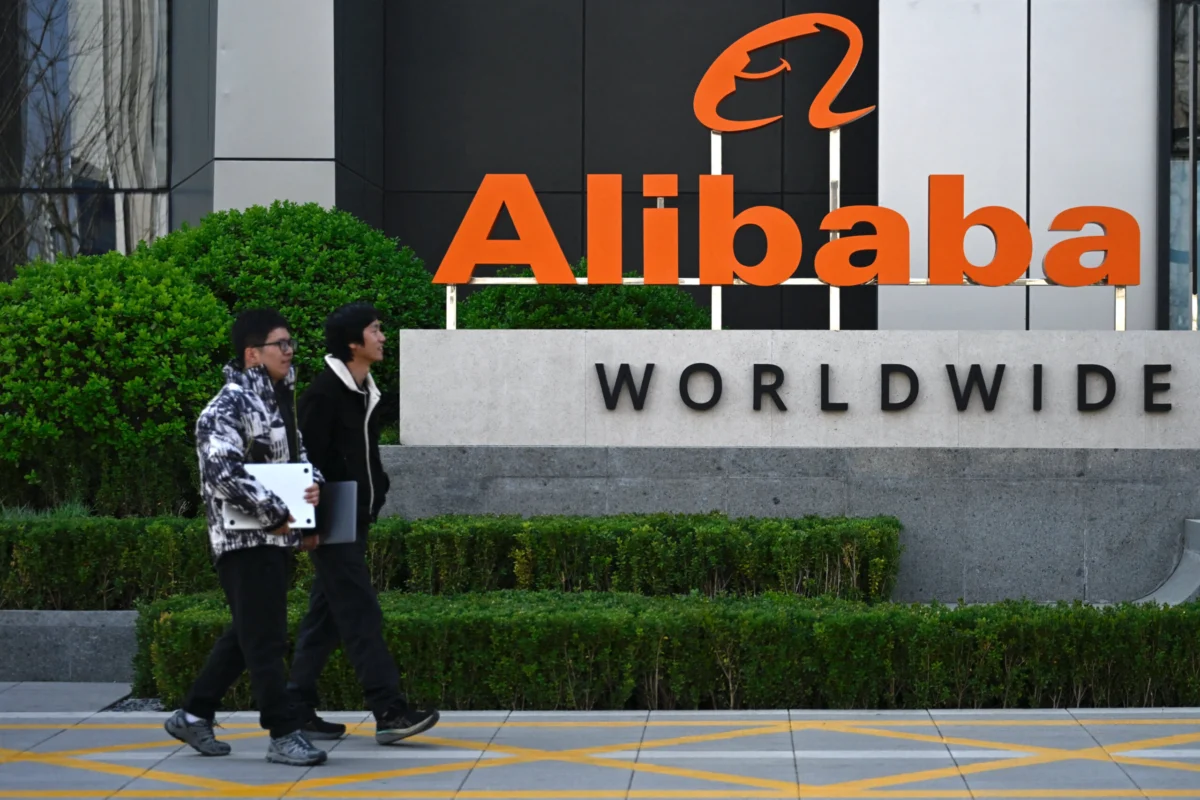
Chinese tech and e-commerce behemoth Alibaba Group Holding Ltd. has officially announced its intention to spin off its advanced semiconductor subsidiary, T-Head, through a public offering on the Hong Kong Stock Exchange. The move, disclosed late Tuesday, marks a significant step in Alibaba’s broader corporate restructuring strategy and underscores China’s persistent drive for technological self-reliance amidst escalating global tech competition and U.S. export restrictions. The proposed initial public offering (IPO) for T-Head shares is contingent upon receiving final approvals from both the Hong Kong Stock Exchange (HKEX) and the China Securities Regulatory Commission (CSRC), with Alibaba having already filed confidentially on September 11, 2026. The filing did not specify a listing date or the anticipated size of the offering, leaving market observers to speculate on the valuation of one of China’s most prominent indigenous chip developers.
Alibaba’s Strategic Reorientation and the Genesis of T-Head
The decision to spin off T-Head is a critical component of Alibaba’s "1+6+N" restructuring initiative, unveiled in March 2023. This ambitious overhaul aims to decentralize the sprawling conglomerate into six distinct business groups and several independent entities, each capable of pursuing its own financing and market strategies. The primary goal is to unlock shareholder value by giving investors clearer visibility into the performance and potential of individual business units, which have historically been overshadowed by the core e-commerce operations.
T-Head (PingTouGe Semiconductor Co. Ltd.), established in 2019, was born out of Alibaba’s ambition to develop proprietary chips for its vast cloud computing infrastructure (Alibaba Cloud) and burgeoning artificial intelligence (AI) initiatives. Its creation consolidated Alibaba’s existing chip development efforts, including DAMO Academy’s AI chip team and the IoT chip division of C-SKY Microsystems. The subsidiary’s mandate is clear: design and develop high-performance, custom-built chips tailored for cloud, AI, and edge computing applications, reducing Alibaba’s reliance on foreign semiconductor technology. This strategy aligns perfectly with Beijing’s national imperative to achieve self-sufficiency in critical technologies, particularly semiconductors, which are seen as the backbone of modern digital economies and national security.
T-Head’s Technological Prowess and Market Context
T-Head has rapidly emerged as a key player in China’s domestic semiconductor landscape, achieving several significant milestones. In 2021, it unveiled the Yitian 710, a cloud-native processor based on the ARM architecture, designed specifically for Alibaba Cloud’s data centers. This was followed by a series of AI-specific chips, including the Hanguang series for inference and the XuanTie series of RISC-V based embedded CPUs. Most recently, T-Head announced its next-generation AI chip, the Zhenwu V900, in late September 2026, claiming a threefold performance improvement over its predecessor, the Zhenwu M890, which was released just five months prior in May 2026. These chips are crucial for powering Alibaba Cloud’s AI services and enhancing its competitive edge against global rivals like Amazon Web Services and Microsoft Azure.
The timing of T-Head’s IPO plans comes amidst a complex global semiconductor market characterized by intense innovation, geopolitical tensions, and supply chain vulnerabilities. The global semiconductor market is projected to reach over $700 billion by 2027, driven largely by demand for AI, IoT, and high-performance computing. China, despite being the world’s largest consumer of semiconductors, still imports a significant portion of its advanced chips, making indigenous development a strategic priority. The U.S. government has, since 2022, progressively tightened export controls on advanced semiconductor technology and manufacturing equipment to China, aiming to curb Beijing’s military and technological advancements. These restrictions have spurred Chinese tech giants, including Huawei (with its HiSilicon unit) and Baidu (with Kunlunxin), to accelerate their homegrown chip development efforts, transforming a competitive landscape into a battleground for technological sovereignty.
Market Reaction and Broader Implications
Following the announcement, Alibaba’s Hong Kong-listed shares experienced a modest decline, trading 1% lower on Wednesday morning. The stock has faced a challenging year, down approximately 29% year-to-date, reflecting broader investor concerns about China’s economic slowdown, regulatory uncertainties, and the intensifying U.S.-China tech rivalry. The spin-off is intended to provide T-Head with direct access to capital markets, enabling it to fund its intensive research and development (R&D) without solely relying on Alibaba’s balance sheet. This independence could also foster greater agility and partnerships, potentially attracting a diverse investor base keen on China’s burgeoning AI and semiconductor sectors.
However, the path to a successful IPO for T-Head is not without hurdles. The Hong Kong IPO market has seen increased scrutiny from Chinese financial regulators in recent months, particularly concerning tech listings and the "rush of capital" into the sector. This heightened oversight aims to ensure market stability and the quality of listed companies, potentially leading to more rigorous vetting processes. This environment has already led to delays for other prominent Chinese AI chip entities, such as Baidu’s Kunlunxin, which reportedly postponed its Hong Kong IPO until 2027, and memory chip producer YMTC, which also put its listing on hold due to weaker market conditions, according to reports earlier this month. These delays underscore a more cautious approach by regulators and a more discerning investor appetite.
Geopolitical Undercurrents and Allegations
The backdrop to T-Head’s listing is heavily influenced by the ongoing U.S.-China tech rivalry. U.S. restrictions aim to prevent China from acquiring advanced chips and chip-making equipment that could be used for military modernization or to gain a strategic advantage in AI. These measures have created a complex environment for companies operating across both jurisdictions.
A recent controversy further highlighted these tensions. In May 2026, short seller Culper Research alleged that Alibaba was able to obtain restricted Nvidia chips by indirectly financing entities in Southeast Asia. The report, which Alibaba did not immediately comment on, claimed a circuitous route designed to circumvent U.S. export controls. Adding to the intrigue, news of an alleged affair involving Nvidia CEO Jensen Huang and a Chinese spy associated with one of these entities has reportedly "dragged down" Nvidia’s stock, pushing it to its lowest valuation since late March and contributing to broader volatility in the U.S. tech market. While the specific impact on Alibaba’s or T-Head’s operations remains to be fully elucidated, such allegations underscore the heightened scrutiny and risks associated with global semiconductor supply chains and cross-border tech collaborations.
Contrasting IPO Landscapes: Hong Kong vs. Nasdaq
The narrative around T-Head’s planned IPO also contrasts sharply with the activity in the U.S. tech market. On the same Tuesday that Alibaba made its announcement, U.S.-based AI giant Anthropic, a prominent competitor in the generative AI space, filed an updated prospectus for its upcoming IPO on Nasdaq. Anthropic plans to offer 825 million shares at a price range of $70 to $78 per share, with trading expected to commence on November 19. This suggests a more robust and less constrained environment for AI tech listings in the U.S., despite recent volatility linked to broader economic concerns and specific corporate controversies like Nvidia’s.
Chinese tech stocks have generally underperformed their U.S. counterparts over the past year, even with significant investor excitement generated by breakthroughs from domestic AI firms like DeepSeek. The divergence in market performance and regulatory approaches highlights the distinct challenges and opportunities facing tech companies in both regions. For Alibaba, spinning off T-Head represents a strategic play to maximize value and agility within a challenging domestic and international landscape, while also signaling China’s enduring commitment to building its indigenous technological capabilities from the ground up.
Analyst Perspectives and Future Outlook
Market analysts are closely watching T-Head’s proposed listing, viewing it as a bellwether for China’s semiconductor industry and the Hong Kong IPO market. "The spin-off of T-Head is a logical step for Alibaba to streamline its operations and allow a pure-play semiconductor entity to attract specialized investors," commented Dr. Chen Wei, a senior tech analyst at Beijing Capital Securities. "It also aligns with the national strategic objective of achieving chip independence. However, its success will depend heavily on the market’s appetite for Chinese tech given the current geopolitical climate and domestic regulatory environment."
Another analyst, Sarah Lee from Horizon Research, noted, "T-Head’s valuation will be a key indicator. Given its cutting-edge AI chip development, it could command a premium, but the regulatory hurdles and the ongoing competition with established global players, even amidst sanctions, will temper expectations. The alleged Nvidia links, while not directly tied to T-Head’s specific products, add another layer of complexity to investor sentiment towards Chinese chip firms."
The successful listing of T-Head could inject much-needed capital into China’s semiconductor ecosystem, fostering further innovation and reducing reliance on foreign technology. It would also reaffirm Hong Kong’s role as a vital financial hub, capable of attracting significant tech listings despite intense global competition. However, the intertwined challenges of geopolitical tensions, stringent domestic regulation, and the inherent capital intensity of semiconductor R&D mean that T-Head’s journey as an independent public entity will be closely scrutinized and fraught with both immense potential and considerable risks. The world watches as Alibaba navigates this complex strategic maneuver, one that could redefine its future and significantly impact the trajectory of China’s technological ambitions.

