
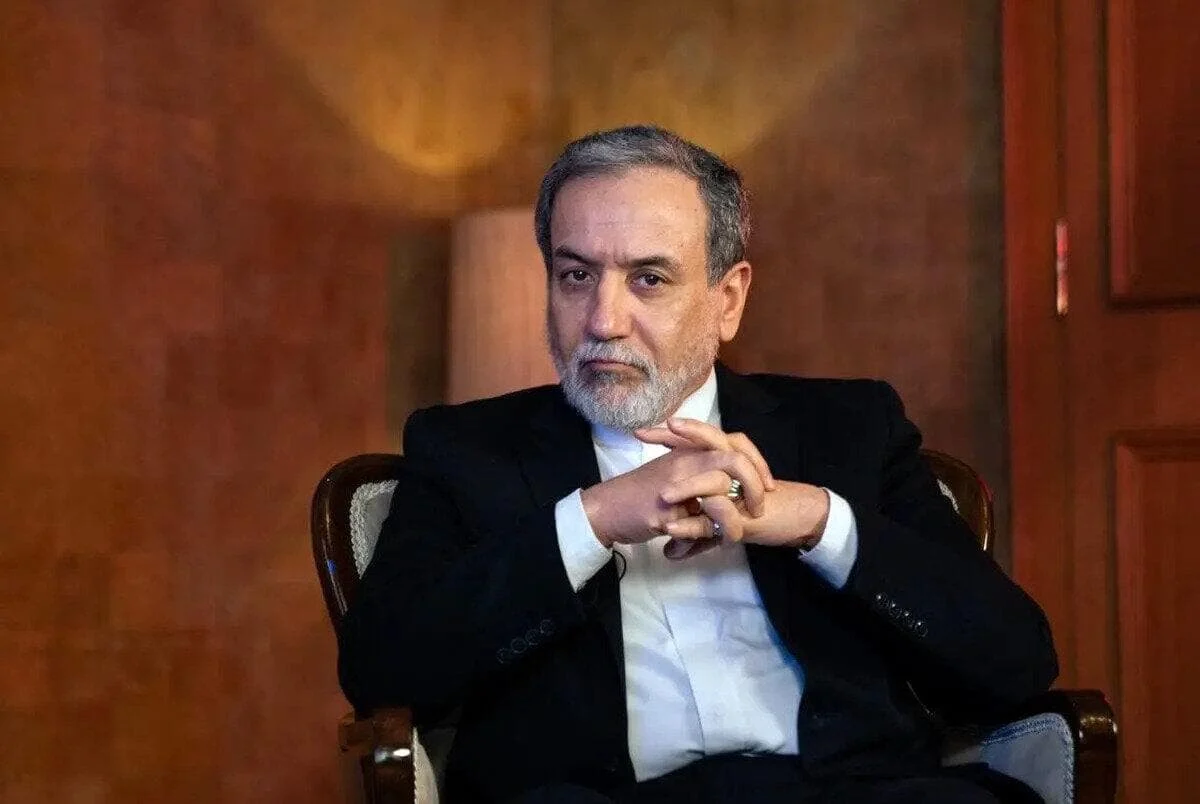
Tehran, Iran – Iran’s Foreign Minister, Abbas Araghchi, publicly affirmed on Sunday that the Islamic Republic is prepared to engage in serious diplomatic efforts to de-escalate tensions with the United States, contingent on what he termed "rationality" from the American side. His statements came as Qatar continues to mediate crucial peace discussions, presenting a draft framework for consideration, even as reports circulate regarding potential significant military actions by the Trump administration in the wake of upcoming midterm elections. This delicate balance of diplomatic overtures and military posturing underscores the precarious geopolitical landscape of the Middle East.
Diplomatic Overtures Amidst Escalation Fears
Foreign Minister Araghchi articulated Tehran’s commitment to finding a peaceful resolution, stating, "We are making our efforts in this direction and hope that there is rationality on the other side to prefer diplomacy to other paths." This appeal for reason and preference for diplomatic solutions highlights Iran’s public stance of readiness for engagement. The ongoing, albeit indirect, negotiations facilitated by Qatar represent a critical lifeline for communication between two nations with deeply entrenched adversarial positions. The proposed draft framework, the specifics of which remain undisclosed, is reportedly under examination by both parties, signaling a potential, albeit fragile, pathway toward a breakthrough. However, the optimism for diplomacy is heavily tempered by persistent reports suggesting that the Trump White House might authorize a major bombing campaign shortly after Tuesday’s midterm elections, adding a layer of urgency and potential volatility to the diplomatic landscape. Such a move, if realized, would represent a significant escalation and could derail any progress made through current mediation efforts.
Araghchi’s emphasis on "rationality" from the US side can be interpreted as a call for a shift away from maximalist demands and a return to a more pragmatic and reciprocal approach to negotiations. It implicitly criticizes what Iran perceives as an unpredictable and confrontational US foreign policy, particularly since the American withdrawal from the Joint Comprehensive Plan of Action (JCPOA), commonly known as the Iran nuclear deal. For Tehran, rationality would entail recognizing Iran’s legitimate security interests and engaging in discussions based on mutual respect rather than coercion.
Iran’s Unambiguous Military Posture
Parallel to his diplomatic remarks, Foreign Minister Araghchi issued a potent warning, alluding to fresh directives from Iran’s supreme commander-in-chief, Ayatollah Mojtaba Khamenei, to senior military officials. The Foreign Minister declared, "Our armed forces also have a very clear mission and, drawing on the experiences of the past two wars, are much stronger than before." This statement serves as a clear signal of Iran’s enhanced military readiness and its intent to defend its interests vigorously.
The explicit orders from Supreme Leader Mojtaba Khamenei, delivered on Saturday, placed the Iranian military on a heightened state of alert. Khamenei instructed military commanders to ensure an immediate, devastating, and, notably, "geographically unrestricted" response to any threat. His exact words conveyed the gravity of the directive: "Any level or type of threat must be met with an immediate, impactful, and geographically unrestricted response." The phrase "geographically unrestricted" is particularly significant, indicating a potential willingness to strike targets beyond traditional regional conflict zones, including potentially against US assets or allies further afield. This directive reportedly stemmed from a rare meeting with senior military commanders, an event made even more unusual by the Supreme Leader’s limited public appearances since the assassination of his father. Al Jazeera further underscored the gravity of this shift, reporting that "Iranians have been emphasising that if a new wave of war comes, Iran is going to go beyond the locations that it has hit in the previous rounds." This suggests a strategic recalibration aimed at deterring aggression by demonstrating a readiness for a broader and more impactful retaliatory campaign than previously witnessed. The public release of alarming videos over the weekend, purportedly showing the results of recent Iranian attacks on tankers, further solidifies this message of military capability and resolve.
A Chronology of Heightened Tensions
The current climate of strained diplomacy and military alerts is the culmination of a protracted period of escalating tensions between Washington and Tehran, largely catalyzed by the US withdrawal from the JCPOA in May 2018. This pivotal decision by the Trump administration effectively dismantled the multilateral agreement that had sought to limit Iran’s nuclear program in exchange for sanctions relief.
Following the withdrawal, the US reimposed and significantly expanded sanctions targeting Iran’s vital oil exports, banking sector, and key industries, initiating what it termed a "maximum pressure" campaign. The stated goal was to compel Iran to negotiate a new, more comprehensive agreement that would address not only its nuclear activities but also its ballistic missile program and regional influence. However, Tehran viewed these actions as economic warfare and a violation of international commitments, refusing to engage in direct talks under duress.
The situation further deteriorated in 2019 and 2020 (referencing the historical context implied by the article’s events), marked by a series of dramatic escalations in the Persian Gulf. These included:
- May-June 2019: Several attacks on oil tankers in the Gulf of Oman and near the Strait of Hormuz, which the US and its allies attributed to Iran. Iran denied responsibility but suggested its actions were defensive.
- June 2019: Iran shot down a US RQ-4 Global Hawk surveillance drone over the Strait of Hormuz, claiming it had violated Iranian airspace. The US asserted the drone was in international airspace.
- September 2019: A major drone and missile attack on Saudi Arabia’s Abqaiq and Khurais oil facilities temporarily halved the kingdom’s oil output. The US and Saudi Arabia blamed Iran, which again denied direct involvement, though Houthi rebels in Yemen, backed by Iran, claimed responsibility.
- January 2020: The US assassinated Iranian Major General Qassem Soleimani, head of the Quds Force, in Baghdad, dramatically escalating tensions. Iran retaliated with missile strikes on US bases in Iraq.
Throughout this period, regional actors like Qatar have consistently sought to play a mediating role, leveraging their diplomatic channels with both Washington and Tehran to prevent open conflict. The current indirect negotiations represent a continuation of these efforts, seeking to bridge the chasm of distrust and differing objectives.
The Strategic Importance of the Strait of Hormuz
Central to the ongoing geopolitical friction is the Strait of Hormuz, a narrow waterway connecting the Persian Gulf to the Arabian Sea. It is arguably the world’s most critical oil chokepoint, through which approximately 20% of the world’s total petroleum liquids and a significant portion of liquefied natural gas (LNG) transit daily. Any sustained disruption to shipping through this strait would have immediate and profound global economic repercussions, triggering spikes in oil prices, impacting international trade, and potentially leading to a global recession.
Iran has historically leveraged the threat of closing or disrupting the Strait of Hormuz as a deterrent against perceived aggression or economic pressure. Foreign Minister Araghchi’s statement that "Hormuz could be reopened within two days if conditions met" is a double-edged message. It simultaneously signals Iran’s capability to disrupt global energy flows and its willingness to de-escalate if its demands or conditions are met, implying that the current state of tension and restriction is a consequence of external pressures. The recent videos showing attacks on tankers in the region serve as a stark reminder of Iran’s capacity to interfere with maritime traffic, underscoring the severe risks associated with any military confrontation in this vital corridor.
Understanding the Military Landscape
The military dynamic in the Middle East is characterized by a stark asymmetry. The United States maintains a formidable military presence in the region, including naval forces in the Persian Gulf, airbases in allied countries, and advanced intelligence, surveillance, and reconnaissance (ISR) capabilities. Its conventional military power far exceeds that of Iran, possessing advanced fighter jets, long-range bombers, aircraft carriers, and precision-guided munitions.
In contrast, Iran has developed an asymmetric warfare doctrine designed to counter a technologically superior adversary. This includes a substantial ballistic missile program, a large force of fast attack craft and patrol boats for naval harassment, naval mines, and a sophisticated network of proxy forces across the region (such as Hezbollah in Lebanon, various militias in Iraq, and the Houthis in Yemen). Iran’s strategy aims to inflict unacceptable costs on any aggressor, making conventional military engagement prohibitively expensive. Araghchi’s reference to "drawing on the experiences of the past two wars" likely alludes to the Iran-Iraq War (1980-1988) and possibly the subsequent conflicts in the region where Iran has observed and adapted its defense strategies, emphasizing resilience, self-sufficiency, and unconventional tactics. The Supreme Leader’s order for a "geographically unrestricted response" further underscores this doctrine, indicating a willingness to take the fight beyond Iran’s borders and beyond the immediate Gulf region, potentially leveraging its proxy network or long-range missile capabilities against regional adversaries or US interests.
The Nuances of Indirect Diplomacy
Foreign Minister Araghchi confirmed that while "consultations are ongoing," a "definitive conclusion" has not yet been reached. This impasse, he noted, "depends on the answers the other side gives to our questions." Crucially, he reiterated, "There was no plan to negotiate with the American side during this trip," emphasizing that "the talks are still not yet ‘direct’ and it’s unclear on if there are plans to engage in such."
This highlights a significant hurdle in the current diplomatic efforts: the lack of direct communication between Washington and Tehran. Indirect talks, while valuable for conveying messages and exploring possibilities, inherently involve slower processes, potential misinterpretations through intermediaries, and reduced flexibility for real-time negotiation. The "questions" Iran has posed to the US likely pertain to the framework for de-escalation, sanctions relief, and security guarantees, reflecting Tehran’s preconditions for a more substantive engagement. The absence of direct channels also makes it challenging to build the necessary trust for a comprehensive resolution, particularly given the deep-seated animosity and history of broken agreements between the two nations.
Regional and International Reactions
The current standoff elicits a range of reactions from key international and regional players.
- United States: The Trump administration’s "maximum pressure" campaign has been predicated on the belief that economic sanctions and military deterrence would force Iran to capitulate to its demands for a new, more restrictive nuclear deal and an end to its regional destabilizing activities. While some within the administration might favor a more confrontational approach, including military options, others might see the value in continued indirect diplomacy to avoid a costly conflict. The upcoming midterm elections could influence the timing and nature of any US action, as political considerations often weigh heavily on foreign policy decisions.
- Qatar: As the primary mediator, Qatar continues to advocate for dialogue and de-escalation. Its consistent engagement underscores a broader regional desire to prevent a full-blown conflict, which would have devastating consequences for all Gulf states.
- European Allies: European signatories to the JCPOA (France, Germany, UK) have consistently expressed concerns over the US withdrawal and its implications for regional stability. They have sought to preserve the deal, albeit in a weakened form, and have repeatedly called for both sides to exercise restraint and engage in diplomacy. They view a military confrontation as catastrophic for international security and energy markets.
- Regional Actors (e.g., Saudi Arabia, UAE, Israel): These countries largely share US concerns about Iran’s nuclear ambitions and regional influence. While they welcome US pressure on Iran, they also harbor anxieties about the potential for conflict to spill over into their territories. They often call for strong international action against Iran but would also seek assurances against direct attacks should hostilities escalate. Their positions are complex, balancing a desire for Iranian containment with the imperative of regional stability.
Implications for Geopolitical Stability and Energy Markets
The current trajectory of US-Iran relations carries profound implications for global geopolitical stability and energy markets. The risk of miscalculation remains exceptionally high. A potential US military strike, as reported, or an Iranian retaliatory action could quickly spiral into a wider regional conflict, drawing in other actors and causing widespread devastation. Such a scenario would not only destabilize the Middle East but also have far-reaching effects on the global economy.
Specifically, the threat to the Strait of Hormuz directly impacts global oil prices. Even the threat of disruption can trigger market volatility, leading to higher crude oil prices and increased insurance premiums for shipping, ultimately affecting consumers worldwide. A sustained closure or significant impediment to transit would lead to an energy crisis.
The future of US-Iran relations hangs in a delicate balance between diplomatic efforts, however indirect, and the ever-present threat of military confrontation. The outcome will depend on whether "rationality," as called for by Iran, prevails, leading to genuine de-escalation and a framework for constructive dialogue, or whether hardline positions and political pressures push the region toward further instability. The international community watches anxiously as these critical developments unfold, understanding that the stakes extend far beyond the immediate protagonists.

