
The Middle East finds itself once again at a critical juncture, with conflicting signals emanating from diplomatic channels and the battlefield, leaving observers to question the veracity of yet another proposed ceasefire or resolution between the United States and Iran. Despite a discernible lack of tangible evidence on the ground—no immediate cessation of hostilities, no clear indication of direct negotiations—Tuesday’s headlines were dominated by an unexpected declaration from the Qatari Foreign Ministry. This statement asserted that "language" for a potential US-Iran resolution "has been drafted" and "is being circulated between the parties," sparking a cautious flicker of optimism in an otherwise volatile geopolitical landscape.
This sudden announcement arrives amidst persistent skepticism regarding the durability of such agreements, particularly given a history punctuated by short-lived truces and escalating rhetoric. The inherent contradiction between the quiet diplomatic progress touted by Qatar and the continued absence of direct engagement between Washington and Tehran underscores the delicate and often opaque nature of these high-stakes negotiations. Markets, however, reacted swiftly to the prospect of de-escalation, with Brent crude oil notably falling below $80 for the first time since mid-July, signaling a nascent "relief trade" across broader financial sectors.
The Qatari Diplomatic Offensive and its Immediate Impact
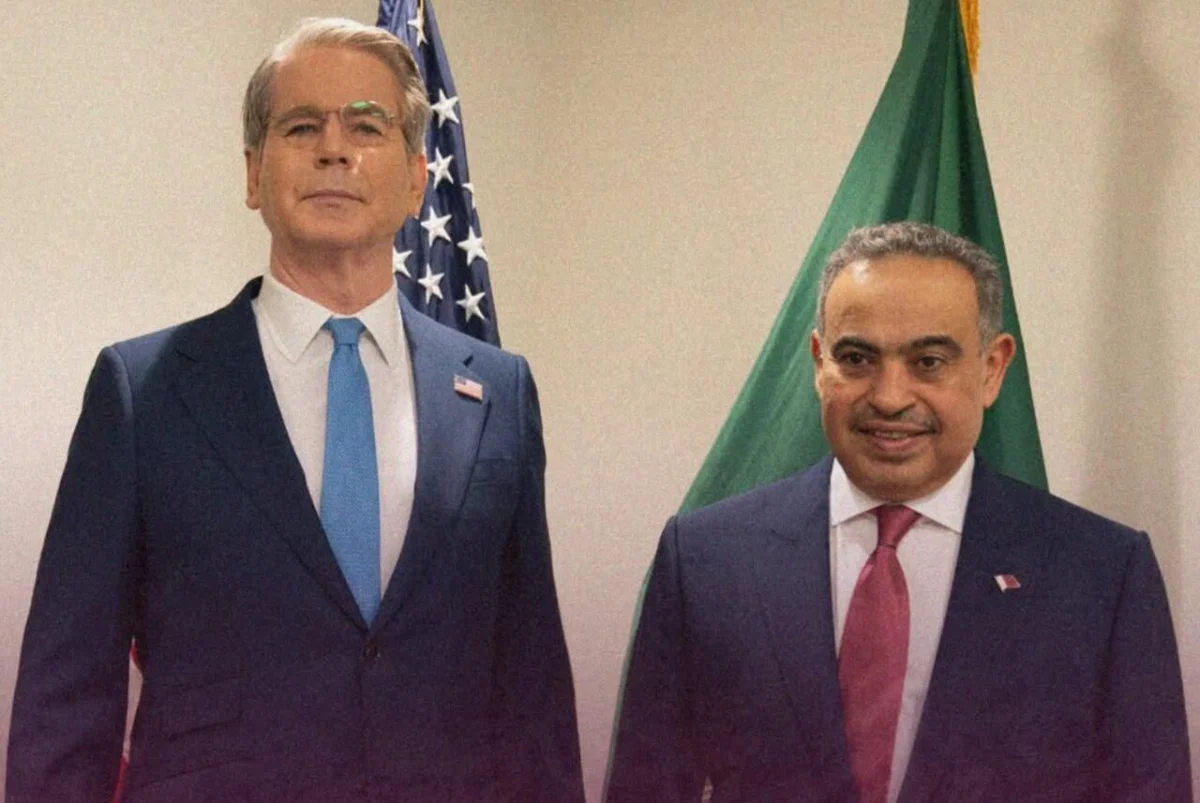
Majed Al-Ansari, spokesman for the Qatari Foreign Ministry, delivered the pivotal statement, though he refrained from offering a concrete timeline for a potential deal. His briefing emphasized that current diplomatic efforts are acutely focused on preventing further regional escalation, facilitating the reopening of the strategically vital Strait of Hormuz, and creating an environment conducive to resuming broader talks. Al-Ansari clarified that the immediate goal is a short-term resolution aimed at restarting US-Iran discussions and bringing the adversarial sides back to a mediation framework. Critically, he acknowledged that "there’s nothing in the books when it comes to direct talks," highlighting the indirect nature of the current engagement.
This diplomatic push from Doha, a significant regional mediator with strong ties to both Washington and Tehran, is seen as a crucial attempt to bridge the deep chasm of mistrust. Qatar has historically played a constructive role in facilitating communication between the US and Iran, often acting as a neutral conduit for sensitive messages. The choice of Qatar to disseminate this news lends a certain credibility to the announcement, even as the specifics remain shrouded in diplomatic ambiguity.
The Strait of Hormuz: A Global Chokepoint
The Strait of Hormuz, a narrow waterway connecting the Persian Gulf with the Arabian Sea and the open ocean, is arguably the world’s most critical oil transit chokepoint. Approximately one-fifth of the world’s total oil consumption, and a substantial portion of global liquefied natural gas (LNG) shipments, pass through this strait daily. Any disruption to its free passage sends immediate shockwaves through global energy markets, impacting prices, supply chains, and economic stability worldwide. Iran’s historical threats to close the strait, often in response to international sanctions or perceived aggression, have consistently underscored its immense strategic leverage.
The current tensions, which have seen increased naval presence from various global powers and a heightened risk of maritime incidents, have significantly elevated shipping insurance costs and created considerable uncertainty for global trade. The prospect of reopening the Strait of Hormuz to unfettered navigation, as a core component of the proposed resolution, therefore holds immense economic and geopolitical significance, promising a potential easing of energy price pressures and a reduction in global supply chain vulnerabilities.
Conflicting Narratives: Washington’s Optimism vs. Tehran’s Caution
The Qatari statement was quickly echoed and amplified by Washington. Treasury Secretary Scott Bessent made a carefully timed appearance on CNBC, where he declared, "We may have an Iran deal tomorrow to open Hormuz," signaling an administration narrative eager to assure markets of an imminent diplomatic breakthrough. Bessent went further, claiming that physical maritime traffic was "quietly resuming" despite headline volatility, stating, "We are in talks with the Iranians, and I think there is a chance we may have a deal today or tomorrow to open the Strait and move towards a more normalized position in this conflict." He emphasized that any deal would guarantee "freedom of movement" in the strait, dispelling concerns about potential Iranian tolls or restrictions.
Bessent’s optimistic pronouncements, however, stood in stark contrast to Tehran’s public stance. Iranian President Masoud Pezeshkian, while insisting that Iran would defend its borders and not seek to expand the ongoing conflict, maintained that Iran was not engaged in formal talks with Washington. This denial was further reinforced by a senior military advisor to the Supreme Leader, Mohsen Rezaei, who warned that US vessels and forces would "face serious risks and casualties" if the Hormuz blockade continued. Such contradictory statements highlight the deep trust deficit and the intricate dance of public posturing versus private diplomacy that often characterizes US-Iran relations.
President Trump, just the day prior to Bessent’s remarks, had continued his strategy of combining threats with calls for negotiation. In a press briefing, he stated, "I want to give them every last chance before decapitation. Very tough to do what we have planned, still planned. We’ll see what happens, but it’s very very tough thing to do. I think I’m very proud of the fact that I will give people a chance." This "good cop, bad cop" approach, where stern warnings are immediately followed by overtures for dialogue, has been a hallmark of his administration’s foreign policy towards Iran. Trump himself, despite Tehran’s denials, has consistently insisted that the Iranians have been engaging in discussions, albeit indirectly.
The Proposed Hormuz Blueprint: A Glimpse into the Details
Amidst the conflicting public statements, details of a proposed "Hormuz blueprint" began to emerge through Omani mediation channels, as reported by Reuters. This temporary plan, under discussion with Oman, suggests that Iran would gain significant oversight over vessels entering the Strait of Hormuz. Specifically, outbound vessels would utilize a route between Iran and Oman, with Oman approving their exit only after notifying Tehran. This arrangement would grant Iran "full visibility over outbound traffic and the ability to intervene if needed," and the report noted that Iran is "unlikely to accept any other proposal to open the strait."
Such a framework suggests a complex compromise where Iran’s security concerns and desire for oversight are addressed, while still theoretically allowing for the passage of international shipping. The role of Oman as a key mediator in these discussions is crucial, given its long-standing policy of neutrality and its geographical proximity to the Strait. However, the operational specifics of such a plan, particularly regarding the "ability to intervene," would undoubtedly be subject to intense scrutiny and potential points of contention.

A History of High-Stakes Brinkmanship: Trump’s Iran Strike Threats Timeline
The current diplomatic flurry is set against a backdrop of repeated escalations and de-escalations, a pattern that has characterized the Trump administration’s approach to Iran. The original article’s timeline vividly illustrates this cycle of threats followed by diplomatic openings:
- March 21: President Trump threatened to "hit and obliterate" Iranian power plants unless the Strait of Hormuz was reopened within 48 hours.
- March 23: Strikes were reportedly delayed for five days, with the administration citing "productive conversations" with Iran.
- April 7: Trump warned, "a whole civilization will die tonight," only for a two-week ceasefire to be announced hours later.
- April 21: He stated he expected "to be bombing" if talks failed, but later that day, the ceasefire was extended.
- May 17: The President issued a stark warning, "the Clock is Ticking."
- May 18: Planned strikes were paused following requests from Qatar, Saudi Arabia, and the UAE, highlighting the regional diplomatic efforts to de-escalate.
- June 11: Trump declared the U.S. would hit Iran "VERY HARD TONIGHT," only to cancel the operation hours later, claiming a deal was near.
- August 1: He stated the U.S. was "locked and loaded," before calling off the attack to pursue a deal with Tehran.
This chronological sequence underscores a deliberate strategy: applying extreme pressure and issuing severe threats, then swiftly pivoting to diplomatic engagement when a perceived opening emerges. This approach, while unsettling to many, has arguably created a dynamic where both sides are constantly evaluating the costs of escalation versus the potential benefits of de-escalation, even if temporary.
Broader Implications and the Road Ahead
The mere suggestion of a US-Iran resolution, however tentative, has had an immediate and palpable impact on global markets, particularly in the energy sector. The dip in Brent crude oil prices reflects the market’s innate desire for stability and predictability. A sustained opening of the Strait of Hormuz would likely lead to a more significant "relief trade," potentially driving down energy prices further and alleviating inflationary pressures in many economies. Shipping companies, which have faced soaring insurance premiums and rerouting costs, would also welcome a return to normalcy.
Beyond economic considerations, the diplomatic efforts have profound geopolitical implications. A successful, even if temporary, resolution could pave the way for broader de-escalation in the region, potentially reducing proxy conflicts and fostering greater regional dialogue. It could also provide a blueprint for future engagement between the US and Iran on other contentious issues, such as Iran’s nuclear program or its regional influence.
However, the path forward remains fraught with challenges. The fundamental disagreement over whether direct talks are even occurring, the deep-seated mistrust between Washington and Tehran, and the complex web of regional alliances and rivalries all pose significant hurdles. The "Hormuz blueprint," while offering a potential compromise, would require meticulous negotiation and robust verification mechanisms to ensure compliance and prevent future disputes.
The international community, including European powers and the United Nations, has consistently called for diplomatic solutions to the US-Iran standoff. While not explicitly mentioned in the initial reports, these entities are undoubtedly monitoring developments closely, ready to support any genuine efforts towards de-escalation and a lasting resolution. The current situation thus represents a critical test of diplomatic ingenuity and the willingness of all parties to prioritize stability over confrontation. Whether this latest diplomatic overture will prove to be another "fake ceasefire" or a genuine step towards a more normalized relationship remains to be seen, but the stakes for regional and global stability could not be higher.

