
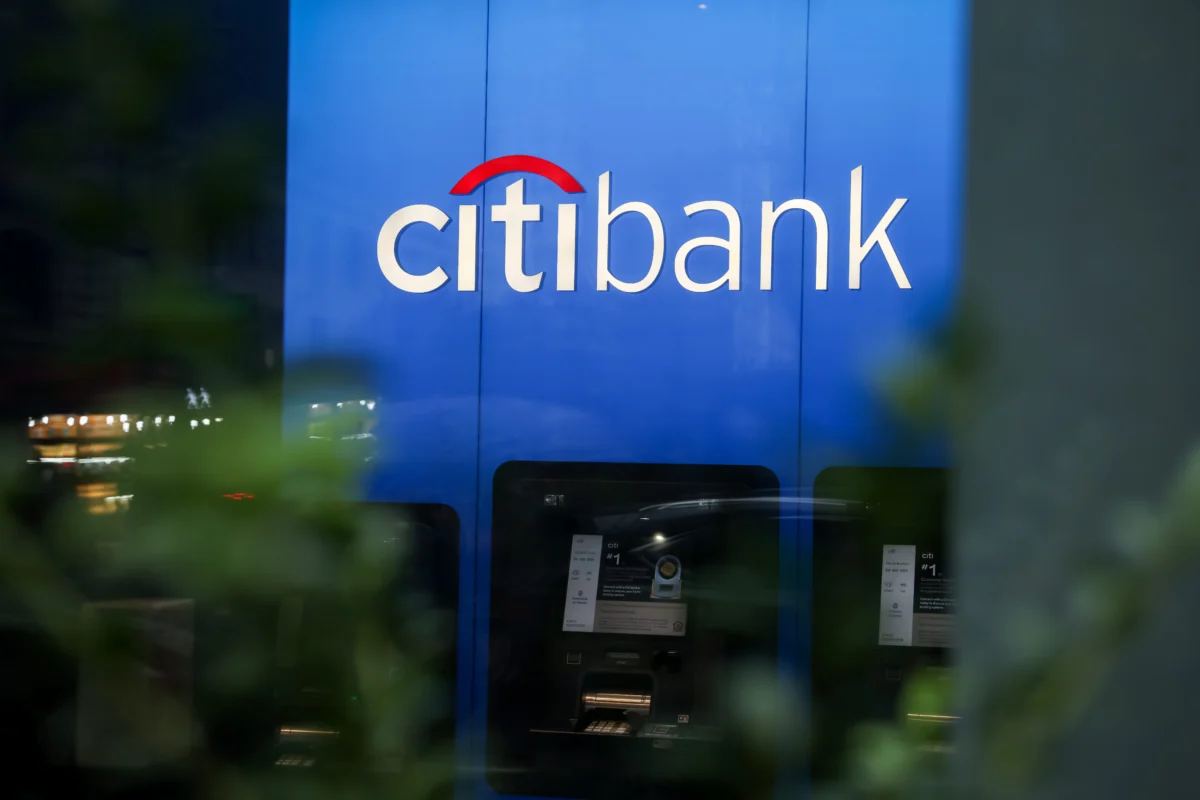
U.S. officials intensified their diplomatic engagement with Beijing this week in Bangkok, pressing Chinese counterparts on critical market access issues for prominent American financial services giants, Mastercard Inc. and Citigroup Inc. These discussions, held on the sidelines of the Group of 20 (G20) finance meetings and the annual International Monetary Fund (IMF)-World Bank gathering, underscore Washington’s sustained push for a more level playing field for its companies within China’s vast and increasingly open financial sector. The strategic dialogues, led by Deputy Secretary Francis Brooke of the U.S. Treasury, involved key Chinese financial regulators and policymakers, including officials from the People’s Bank of China (PBOC) and the finance ministry.
The closed-door meetings, disclosed by a U.S. Treasury official speaking anonymously to provide insight into the sensitive discussions, focused on ensuring that U.S. firms, specifically Mastercard, Visa, and Citigroup, receive the necessary regulatory approvals to expand their operations in the Chinese market. These efforts are a direct continuation of agreements reportedly forged during a high-profile state visit last month, where Presidents Donald Trump and Xi Jinping met in Washington. The ongoing dialogues in Bangkok serve as a crucial follow-up, aiming to solidify the implementation of these high-level commitments and translate them into tangible market access for American enterprises.
A Precedent Set: Visa’s Breakthrough and the Path for Others
The current discussions gain significant momentum following a notable development earlier this month: China’s October 13 approval for Visa Inc. to commence preparations for establishing a wholly owned domestic card-clearing business. This landmark decision marks a critical step forward for Visa, which now has up to a year to finalize its preparations before formally applying for an operating license. The PBOC’s announcement of Visa’s approval signals Beijing’s readiness to progressively open its payments landscape, a move long awaited by international card networks. This development not only provides a tangible blueprint for other foreign players but also reinforces the U.S. Treasury’s optimistic stance regarding further market liberalization.
For years, global payment processing giants like Visa and Mastercard have sought direct access to China’s colossal domestic yuan-denominated card-clearing market, a sector traditionally dominated by China UnionPay, the state-backed behemoth. While both companies have had limited presences, typically through partnerships or catering to international transactions, the ability to operate an independent, wholly owned domestic clearing business represents a transformative opportunity. It allows them to compete directly for the hundreds of millions of Chinese consumers and businesses, tapping into a payments ecosystem that is rapidly evolving and increasingly digital.
Mastercard’s Ambition for Independent Operations
Mastercard’s current operational model in China involves a local joint venture with NetsUnion Clearing Corp., which commenced operations in 2024. This partnership has allowed Mastercard to process yuan card payments within China, albeit through a shared infrastructure. However, the pressing issue during the Bangkok meetings, as indicated by the U.S. official, revolves around Mastercard’s aspiration to transition from this joint venture model to operating as an independent entity. Such a shift would grant Mastercard greater autonomy, allowing it to fully leverage its global technology, brand, and service offerings without the constraints often associated with joint ventures in highly regulated markets.
The Chinese payments market is the largest in the world, with mobile payments alone reportedly exceeding tens of trillions of dollars annually. While mobile payment apps like Alipay and WeChat Pay dominate, bank cards remain a significant component of the financial infrastructure. For Mastercard, achieving independent operational status is not merely about market share; it’s about strategic control, direct engagement with Chinese banks and merchants, and the ability to innovate and compete on its own terms. The regulatory approval for independent operation would signify a deeper commitment from China to integrate foreign payment networks fully into its domestic financial architecture, potentially fostering greater competition, improving service quality, and expanding choice for Chinese consumers and businesses.
Citigroup’s Pursuit of a Wholly Owned Securities License
Beyond payment networks, Citigroup’s ambitions in China represent another critical facet of the U.S. push for market access. The banking giant is actively pursuing a wholly owned securities license, a move that would enable it to engage directly in a comprehensive suite of onshore market activities. These include A-share brokerage, underwriting, research, and principal trading businesses. To support this significant expansion, Citigroup has already invested substantially, hiring several dozen employees for its China unit. Industry insiders, speaking anonymously due to the private nature of the discussions, suggest the bank plans to further increase its China securities staff to approximately 100, underscoring its long-term commitment to the market.
Citigroup’s application for this license dates back to late 2021, and recent reports in September indicated that approval could be imminent. The ability to establish a wholly owned securities business is a game-changer for foreign banks, allowing them to participate directly in China’s burgeoning capital markets. This includes underwriting initial public offerings (IPOs) and bond issuances for Chinese companies, offering brokerage services to institutional and high-net-worth investors, and conducting proprietary trading. Such an expansion would not only enhance Citigroup’s revenue streams but also deepen its footprint in one of the world’s most dynamic financial landscapes, allowing it to compete more effectively with domestic securities firms.
Chronology of China’s Financial Opening and Bilateral Engagements
China’s journey toward opening its financial sector has been gradual but significant, particularly since 2018. Prior to this, foreign firms faced stringent restrictions, including strict foreign ownership caps (often limited to 49% or less) and extensive regulatory hurdles that favored state-backed domestic players. The reforms initiated in 2018 marked a turning point, with Beijing gradually lifting these caps across various financial services, including securities, futures, and fund management. This liberalization was partly driven by China’s commitments made upon joining the World Trade Organization (WTO) in 2001, though the pace of opening had often been a point of contention with trading partners.
- 2001: China joins the WTO, pledging to gradually open its financial sector. Progress remains slow for many years, particularly in areas like payments and securities.
- 2018: Beijing announces a significant acceleration of financial market opening, lifting foreign ownership caps for various financial institutions, including banks, insurers, and fund managers, from 49% to 51%.
- 2019-2020: China commits to fully removing foreign ownership limits across several financial sectors, allowing foreign firms to take full control of their joint ventures or establish wholly owned entities. This includes securities, fund management, and futures companies.
- Late 2021: Citigroup applies for its wholly owned securities license in China, signaling its intent to fully capitalize on the new regulatory environment.
- 2024: Mastercard’s joint venture with NetsUnion Clearing Corp. begins operations for yuan card payments.
- September 2026: Presidents Donald Trump and Xi Jinping hold a state visit in Washington, where market access issues for U.S. companies, including financial firms, are reportedly part of the agreement. Reuters reports that approval for Citi’s brokerage unit license could come soon.
- October 13, 2026: China approves Visa Inc. to begin preparations for a wholly owned domestic card-clearing business, setting a significant precedent.
- This Week (October 2026): U.S. Treasury delegation, led by Deputy Secretary Francis Brooke, meets with Chinese counterparts in Bangkok on the sidelines of the G20 and IMF-World Bank meetings, pressing specifically on market access for Mastercard and Citigroup, building on the Trump-Xi agreements.
- November 2026: Presidents Trump and Xi are expected to meet again in Shenzhen, China, for the Asia-Pacific Economic Cooperation (APEC) summit, where further discussions on economic cooperation and market access are anticipated.
Despite these liberalizations, China continues to maintain strict controls over cross-border capital flows and has historically nurtured a dominant position for state-backed domestic players, especially in critical sectors like payments. This duality of opening while retaining control underscores the delicate balance Beijing seeks to strike between attracting foreign investment and maintaining financial stability and national security.
Official Responses and Industry Silence
In response to inquiries regarding the Bangkok meetings, the U.S. Treasury Department press office did not immediately provide a comment. Similarly, the People’s Bank of China (PBOC), China’s National Financial Regulatory Administration (NFRA), China Securities Regulatory Commission (CSRC), and the Chinese embassies in Singapore and Thailand also did not immediately respond to requests for comment. Visa, having recently received its approval, also declined immediate comment. Both Citigroup and Mastercard, whose market access issues were central to the discussions, also declined to comment, reflecting the sensitive nature of ongoing regulatory processes and diplomatic negotiations.
This reticence is typical in high-stakes financial diplomacy, where premature statements could jeopardize ongoing talks or regulatory approvals. The silence from Chinese regulators also aligns with their practice of making official announcements only after decisions are finalized and formally approved.
Broader Impact and Implications for US-China Relations
The recent developments and ongoing discussions carry significant implications for the broader U.S.-China economic relationship. Dan Wang, China director at Eurasia Group, commented on the situation, stating that "The move suggests the US-China trade environment remains benign, and Beijing is keen to keep up the momentum." This perspective highlights a potential de-escalation or at least a stabilization of trade tensions, which have characterized bilateral relations for several years. The willingness of Beijing to grant market access, particularly in sensitive financial sectors, could be interpreted as a goodwill gesture aimed at fostering greater economic cooperation and mitigating some of the friction points.
Wang further characterized the licensing of U.S. financial firms as a "limited concession" on market access, while emphasizing that it signals China’s continued commitment to opening up. This incremental approach, she noted, "should marginally bolster investor confidence in Chinese assets." For foreign investors, greater access to China’s financial sector reduces perceived risks and enhances the attractiveness of Chinese markets, potentially leading to increased foreign direct investment (FDI) and portfolio inflows.
The implications extend beyond mere economics:
- For US Financial Firms: Direct market access in China represents a colossal growth opportunity. Mastercard and Visa stand to gain access to hundreds of millions of new cardholders and merchants, while Citigroup could tap into a rapidly expanding capital market. This diversification of revenue streams and geographical reach is crucial for global financial institutions.
- For China’s Financial Sector: Increased foreign competition can drive innovation, improve service efficiency, and introduce global best practices in areas like risk management, compliance, and technology. It could also benefit Chinese consumers and businesses through more competitive pricing and a wider array of financial products and services.
- For US-China Economic Relations: The successful resolution of market access issues builds trust and demonstrates a pathway for managing other complex bilateral economic challenges. It could pave the way for progress on other trade and investment issues, fostering a more stable and predictable relationship.
- Geopolitical Context: In an era marked by strategic competition, economic interdependence, particularly in financial services, can act as a stabilizing force. Allowing U.S. financial giants deeper roots in China’s economy creates shared stakes, potentially mitigating risks of outright decoupling.
Challenges and Future Outlook
Despite the positive momentum, challenges remain. The regulatory environment in China, while opening, is still complex and subject to policy shifts. Foreign firms must navigate intricate licensing procedures, adhere to evolving data security and privacy regulations, and contend with robust domestic competition. Moreover, the broader geopolitical landscape, including ongoing debates around technology transfer, human rights, and regional security, could always influence the pace and scope of financial liberalization.
The upcoming APEC summit in Shenzhen, where Presidents Trump and Xi are expected to meet for the third time this year, will be another critical juncture. These high-level dialogues are essential for maintaining the momentum generated in Bangkok and ensuring that commitments are translated into concrete actions. The U.S. strategy appears to be one of persistent engagement, leveraging diplomatic channels to secure tangible gains for its companies while advocating for a more open, transparent, and rules-based global financial system. The degree to which China continues to open its financial gates will not only shape the future profitability of global financial giants but also serve as a crucial barometer for the health and direction of the world’s most significant bilateral economic relationship.

