
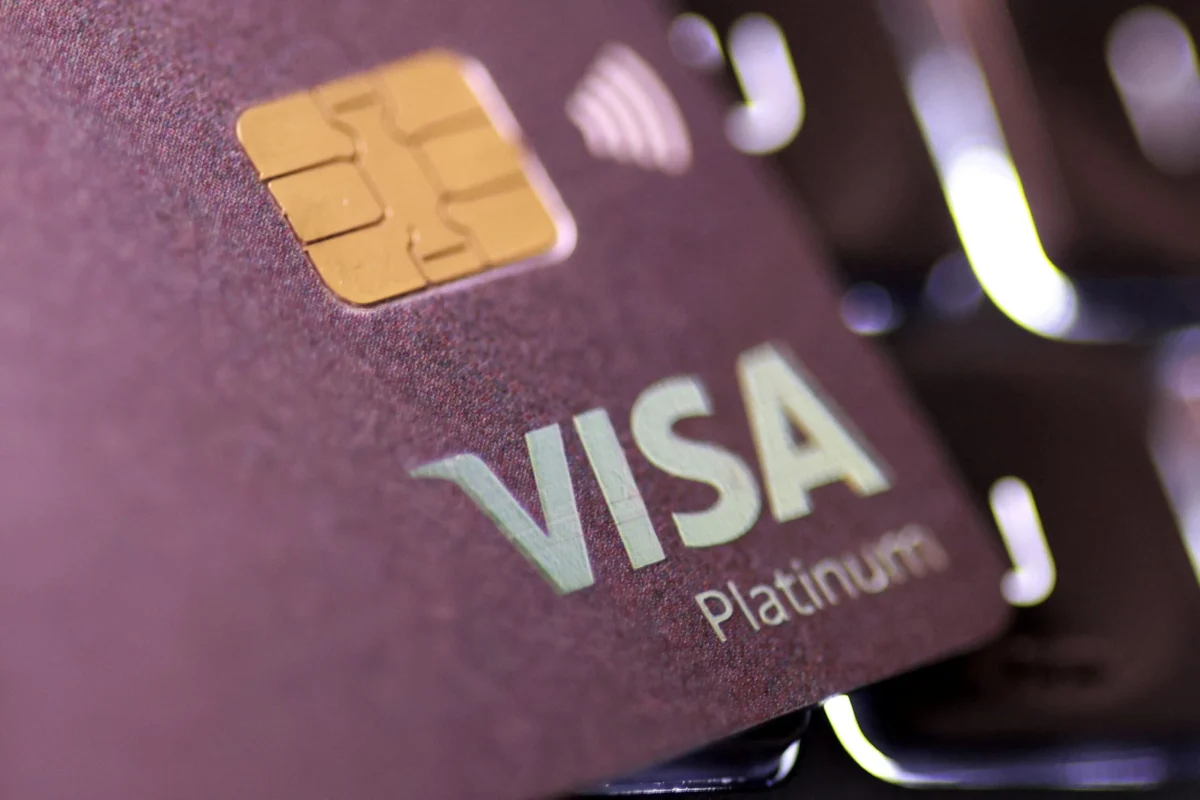
BEIJING – Global credit card powerhouse Visa announced on Tuesday that it has received official approval from the People’s Bank of China (PBOC) to establish a domestic bank card clearing business in mainland China. This long-awaited regulatory nod marks a significant milestone, paving the way for Visa to directly process renminbi-denominated transactions within the world’s second-largest economy, a market historically dominated by state-backed UnionPay and, more recently, by mobile payment behemoths. The announcement arrives amidst a backdrop of complex U.S.-China trade relations and just ahead of anticipated high-level diplomatic engagements between the two nations’ leaders, underscoring the broader geopolitical and economic significance of the development.
The approval, which Visa confirmed in an official statement, represents the culmination of years of persistent effort and negotiations, positioning the company to compete more directly for a share of China’s vast and rapidly evolving payments landscape. "This marks an important milestone toward the company serving China’s domestic payments market," Visa stated, emphasizing its commitment to the region. Ryan McInerney, CEO of Visa, reiterated this sentiment, stating, "For more than 40 years, Visa has been an active contributor to China’s dynamic payments landscape. We look forward to taking the necessary steps in the process, pursuant to the PBOC’s regulations, to begin operating domestically in China."
A Decade-Long Pursuit: The Road to Market Entry
The journey for foreign card networks to fully enter China’s domestic clearing market has been protracted and fraught with regulatory hurdles, stretching back to commitments made during China’s accession to the World Trade Organization (WTO) in 2001. Under WTO rules, China was expected to open its financial services sector, including electronic payment services. However, the domestic market largely remained exclusive to China UnionPay, established in 2002 as the country’s sole interbank network. UnionPay rapidly grew to become the largest card payment organization globally by transaction volume and card issuance, a testament to China’s immense consumer base and state support.
For years, international card companies like Visa, Mastercard, and American Express operated primarily in China through partnerships, facilitating cross-border transactions for cards co-branded with UnionPay. These arrangements meant that while Chinese consumers could use their Visa or Mastercard co-branded cards for international purchases, domestic transactions were routed exclusively through UnionPay’s network. This bifurcated system limited foreign players’ revenue potential and their ability to innovate and compete directly within the lucrative domestic market.
Visa initially applied with the PBOC in May 2020 to operate a bank card clearing institution, signaling its firm intent to establish a direct presence. This application followed a series of policy pronouncements from Beijing indicating a gradual, albeit cautious, opening of its financial sector. The U.S. government, through various administrations, consistently pressed China to fulfill its WTO commitments and provide a level playing field for American financial services companies.
Diplomatic Undercurrents and Strategic Timing
The timing of Visa’s approval is particularly noteworthy, coinciding with a period of intensified diplomatic activity between Washington and Beijing. Visa CEO Ryan McInerney has been a prominent figure in these discussions, joining U.S. President Donald Trump’s business delegation to Beijing in May. Subsequently, in June, McInerney was elected chair of the U.S.-China Business Council, an influential organization advocating for American businesses in China. He also led a council delegation trip to Beijing in early September, engaging directly with Chinese officials.
George Chen, a partner and chair of digital practice at The Asia Group, highlighted the strategic timing. "Beijing chose to approve Visa’s license just ahead of the APEC Leaders’ Meeting in Shenzhen next month, where Xi [Jinping] and Trump are expected to meet again," Chen observed. "The move suggests that Beijing is keen to demonstrate tangible progress for American businesses before Trump’s next visit to China." This perspective aligns with broader efforts by Beijing to project an image of market liberalization, potentially as a goodwill gesture amid ongoing trade tensions and tariff disputes. After a summit in September, China’s Ministry of Commerce had publicly stated that it would approve applications from all foreign financial institutions to operate in the country, a pledge that Visa’s approval now concretely reinforces.
President Trump himself had reportedly brought up Visa’s request for market access during his Beijing trip in May, as he later told Fox News. This direct intervention from the highest levels of the U.S. government underscores the strategic importance attached to this market opening for American enterprises.
A Phased Opening: Precedents and Competition
While Visa’s approval is a significant development, it is not the first for a foreign player. The Chinese market has seen a gradual, phased opening over the past few years, indicating a carefully managed process by Beijing.
American Express was the first international card network to receive a processing license for local transactions in mainland China. After securing the PBOC’s initial nod back in 2018, its joint venture with LianLian Group received its official processing license in June 2020. This allowed American Express to begin clearing yuan-denominated transactions through its network, a landmark achievement after years of lobbying.
Mastercard followed suit, with its joint venture with NetsUnion Clearing Corporation receiving PBOC approval to begin bank card clearing preparations in February 2020. The joint venture, known as Mastercard NUCC, subsequently announced in 2024 that it had started processing payments in China, marking its full operational entry into the domestic clearing market. These earlier entries provided a blueprint and a competitive landscape that Visa must now navigate.
The experience of these early entrants suggests that while regulatory approval is a critical first step, establishing a robust and competitive domestic clearing business in China presents its own set of formidable challenges.
China’s Dynamic Payments Landscape: Opportunities and Hurdles
China’s payments market is unique, characterized by its immense scale, rapid technological adoption, and the entrenched dominance of domestic players. With a population exceeding 1.4 billion and a burgeoning middle class, the potential for growth in card payments, even against the backdrop of mobile payment dominance, remains substantial. In 2023, China’s total retail sales of consumer goods exceeded 47 trillion yuan (approximately $6.5 trillion USD), much of which flows through various payment channels.
However, the primary challenge for Visa will be competing in a market where mobile payments, primarily facilitated by Tencent’s WeChat Pay and Alibaba-affiliate Ant Group’s Alipay, have achieved near-ubiquitous penetration. These platforms have fundamentally reshaped consumer behavior, allowing users to make payments, transfer money, and access a host of other services directly from their smartphones. According to industry reports, mobile payment transactions in China exceeded 400 trillion yuan (approximately $55 trillion USD) annually, with Alipay and WeChat Pay collectively holding over 90% of the mobile payments market share. This dominance has relegated traditional bank cards, to some extent, to a secondary role for daily consumer transactions, especially in urban areas.
Despite the mobile payment surge, bank cards, and particularly UnionPay, remain crucial for larger transactions, specific merchant categories, and for integrating with the traditional banking system. UnionPay boasts an unparalleled network of ATMs and point-of-sale (POS) terminals across China, and its cards are issued by virtually all Chinese banks. Visa’s current operations in China have largely involved working with Chinese banks to issue dual-branded cards, where UnionPay handles domestic processing and Visa handles overseas payments. In January, Visa also announced support for mainland China-issued cards to be linked to Apple Pay for use overseas, indicating its efforts to integrate with the digital ecosystem.
For Visa to succeed, it will need to offer compelling value propositions to both consumers and merchants. This could include enhanced security features, loyalty programs, innovative digital payment solutions that integrate with existing mobile ecosystems, and seamless cross-border capabilities. Furthermore, Visa will need to build out its own domestic clearing infrastructure, establish robust partnerships with Chinese banks, and navigate complex data localization and cybersecurity regulations.
Broader Implications: Economic Liberalization and Global Competition
Visa’s approval carries significant implications beyond the immediate commercial gains for the company. From Beijing’s perspective, this move reinforces its narrative of gradually opening its financial markets to foreign competition, a narrative that has been crucial in international forums and trade negotiations. It signals a continued commitment to financial sector liberalization, albeit on China’s own terms and at its own pace. This strategic opening could attract further foreign investment and potentially foster greater innovation within China’s financial technology sector, as domestic players are spurred to enhance their services in response to increased competition.
For the global payments industry, Visa’s deeper entry into China intensifies the battle for market share in the world’s most dynamic payments arena. It will likely lead to greater competition among the international card networks and between them and domestic giants like UnionPay, Alipay, and WeChat Pay. This competition could ultimately benefit Chinese consumers through more diverse payment options, potentially lower transaction fees, and improved service quality.
Moreover, the successful integration of global card networks into China’s domestic clearing system could facilitate smoother cross-border capital flows and enhance the convenience of international travel and commerce. As China’s economy continues to internationalize, having globally recognized payment systems operating domestically could support its Belt and Road Initiative and its broader integration into the global financial system.
However, challenges remain. The regulatory environment in China can be complex and subject to change. Foreign companies often face scrutiny over data handling, cybersecurity, and market access rules. Visa will need to navigate these intricacies carefully, ensuring compliance while striving for operational efficiency and market penetration. The inherent preference for domestic brands among Chinese consumers, coupled with the deeply embedded habits of mobile payment usage, also represents a significant hurdle that will require substantial investment in marketing, partnerships, and localized product development.
In conclusion, Visa’s long-sought approval to establish a domestic bank card clearing business in China marks a pivotal moment. It signifies a tangible step forward in China’s financial market liberalization, offers a massive opportunity for Visa, and sets the stage for intensified competition and innovation in one of the world’s most critical payment ecosystems. While the path ahead is undoubtedly challenging, the door is now fully open for Visa to directly engage with the vast potential of the Chinese consumer market, potentially reshaping the future of payments both domestically and globally.

