
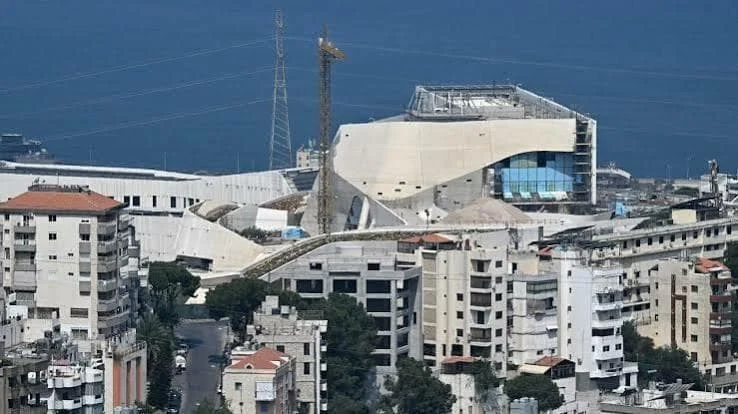
The United States Embassy in Beirut has announced a significant funding opportunity, revealing that the State Department is offering grants of up to $250,000 to local organizations in Lebanon. These grants, part of a larger allocation expected to reach $500,000 for at least two selected groups, are earmarked for programs commencing in 2026, specifically designed to enhance the American image, strengthen bilateral ties, and counter what the U.S. government terms "false, adversarial narratives." This initiative comes at a critical juncture for Lebanon, a nation grappling with profound economic, political, and social instability, and amidst ongoing, complex regional geopolitical maneuvering involving Israel, Iran, and various non-state actors.
Understanding the Grant Initiative and its Objectives
The Notice of Funding Opportunity (NOFO) was published recently, outlining the specific objectives for prospective partners. According to a statement released by the U.S. Embassy in Beirut, the program seeks to "implement programs that strengthen ties between the US and Lebanon, with a focus on highlighting US-led peace and stabilization efforts, and advancing digital literacy to help people identify and push back on false, adversarial narratives." The State Department’s official grants website further elaborates that the overarching goal is to "strengthen local public understanding of US-led peace and stabilization efforts, and its role as a partner committed to security, economic opportunity, and responsible regional leadership."
This initiative is a clear manifestation of American public diplomacy, a strategic effort to promote national interests by understanding, informing, and influencing foreign publics. In Lebanon’s highly polarized and information-saturated environment, the emphasis on "digital literacy" and countering "false, adversarial narratives" underscores a concern about the spread of disinformation and propaganda that may undermine U.S. foreign policy objectives and regional stability. Such narratives often originate from actors hostile to U.S. interests, including state-sponsored media and non-state groups like Hezbollah, which wield significant influence within Lebanon’s media landscape and public discourse. The grants aim to empower local groups to articulate and amplify messages consistent with U.S. perspectives on peace, security, and economic development, thereby fostering a more favorable perception of American engagement.
Lebanon’s Volatile Geopolitical Landscape: A Backdrop to U.S. Diplomacy
Lebanon’s strategic location and its intricate sectarian political system have long made it a nexus for regional and international power struggles. The nation has been mired in a severe economic crisis since 2019, characterized by hyperinflation, widespread poverty, and the collapse of public services. This has been exacerbated by political paralysis, deep-seated corruption, and the devastating Beirut port explosion in August 2020, which further eroded public trust in state institutions. Against this backdrop, external actors frequently vie for influence, making the information environment particularly susceptible to manipulation.
The United States has historically been a significant donor to Lebanon, providing substantial humanitarian, economic, and security assistance. This aid aims to support Lebanese state institutions, particularly the Lebanese Armed Forces (LAF), and to alleviate humanitarian suffering. However, the pervasive influence of Hezbollah, a powerful Shiite political party and militant group backed by Iran, presents a continuous challenge to U.S. policy, which designates Hezbollah as a terrorist organization. Hezbollah operates as a state-within-a-state, maintaining a formidable military wing independent of government control and wielding considerable political sway, especially in southern Lebanon and parts of Beirut.
The Intricate Web of Regional Conflicts: Israel, Hezbollah, and Iran
The grant announcement also arrives amid heightened tensions and ongoing efforts by Washington to broker a peace agreement between Lebanon and Israel. These two nations technically remain in a state of war, though a ceasefire has largely held since the 2006 conflict. The unresolved maritime border dispute and the presence of Hezbollah along the shared border have been perpetual sources of friction.
Recent U.S.-mediated talks in Rome, referenced in the original reports, have aimed at de-escalating tensions and implementing "pilot zones" in southern Lebanon. These proposed zones would see Israeli forces withdraw from certain areas, handing over control to the Lebanese army, an initiative intended to build confidence and pave the way for broader peace. However, these efforts are complicated by the entrenched conflict dynamics.
A crucial point of contention is Hezbollah’s stance. The group vehemently opposes direct negotiations with Israel, viewing any concessions as a betrayal of Lebanese sovereignty and resistance. An earlier, purportedly "last month" deal between Beirut and Tel Aviv was reportedly rejected by Hezbollah precisely because it stipulated the dismantling of the militia as a prerequisite for Israeli withdrawal from occupied Lebanese territory. This highlights the profound internal divisions within Lebanon regarding its relationship with Israel and the role of non-state actors in national security decisions.
Further complicating the scenario is the broader regional rivalry between the U.S. and Iran. The article refers to a "war on Iran" initiated by Israel and the U.S. on February 28, which reportedly triggered a new round of conflict between Israel and Hezbollah. While a full-scale direct military conflict between the U.S. and Iran has not been publicly declared, the term likely refers to the ongoing shadow war, proxy conflicts, and significant geopolitical tensions, particularly regarding Iran’s nuclear program and its regional influence through proxies like Hezbollah. The article notes that Iran has linked any ceasefire or peace agreement with Israel to an end to its conflict with Lebanon, a demand Israel has consistently rejected, refusing to link the two distinct theaters of conflict. This demonstrates how deeply intertwined the various regional disputes are, with Lebanon often serving as a critical arena for these proxy battles.
Chronology of Recent Events Shaping the Context:
- 2019-Present: Lebanon’s severe economic crisis deepens, leading to widespread protests and governmental instability.
- August 4, 2020: The catastrophic Beirut port explosion devastates the capital, exacerbating humanitarian needs and further undermining public trust.
- Ongoing: Political deadlock prevents crucial reforms, with successive governments struggling to address the nation’s myriad challenges.
- February 28 (Year not specified, assumed recent): Reports of an escalation in the "war on Iran" by Israel and the U.S., which reportedly triggers renewed hostilities between Israel and Hezbollah.
- Recent Months (preceding grant announcement): U.S.-mediated talks intensify, including discussions in Rome, aimed at de-escalating tensions between Lebanon and Israel and establishing "pilot zones" in southern Lebanon.
- "Last Month" (preceding grant announcement): An agreement between Beirut and Tel Aviv is reportedly reached but subsequently rejected by Hezbollah due to conditions related to its disarmament and Israeli occupation.
- Mid-July 2026 (as per original article’s tweet date, implying future event or typo): Reports emerge of Israeli army actively paving roads and modifying routes inside the occupied town of Odeisseh, Lebanon, despite agreements for withdrawal, further illustrating the contested nature of the border region.
- Current Announcement: The U.S. Embassy in Beirut announces the Notice of Funding Opportunity for grants up to $250,000 to promote U.S. image and counter adversarial narratives, for programs commencing in 2026.
Official Responses and Inferred Reactions
The U.S. State Department and Embassy in Beirut frame this grant initiative as a standard component of public diplomacy, aimed at fostering mutual understanding and supporting stability. Their official statements emphasize partnership, peace, and economic opportunity, presenting the U.S. as a responsible regional leader. They would likely highlight the transparency of the grants process and the focus on empowering local civil society.
For the Lebanese government, which is often caught between competing external influences and internal factions, such grants represent a double-edged sword. While desperately in need of financial assistance and support for development, the government must also navigate domestic sensitivities regarding foreign interference. Official reactions would likely be cautiously welcoming, emphasizing the importance of international partnership for stability and recovery, while reiterating Lebanon’s commitment to sovereignty.
Hezbollah and its allies, however, are expected to react with strong condemnation. They would likely characterize the grants as thinly veiled "propaganda" and an attempt by the U.S. to manipulate Lebanese public opinion, undermine resistance movements, and sow discord. The emphasis on countering "adversarial narratives" would likely be interpreted as a direct attack on their own media and political messaging, which often frames the U.S. and Israel as imperialist adversaries. This would feed into their existing narrative of external interference in Lebanese affairs.
Independent analysts and experts would likely offer a nuanced perspective. They might acknowledge the legitimate goals of public diplomacy, such as promoting peace and digital literacy, but also highlight the inherent challenges and risks. The term "propaganda" itself is loaded; while the U.S. government would prefer "public diplomacy," critics often apply "propaganda" to any state-sponsored communication aimed at influencing foreign publics. Experts would likely point out the difficulty of shifting public opinion in a country as complex and politically charged as Lebanon, where trust in foreign powers is often low, and where deep-seated ideological divides exist. They might also question the effectiveness of such programs in truly countering deeply ingrained narratives, particularly those supported by powerful local actors like Hezbollah.
Broader Impact and Implications
The U.S. State Department’s grant initiative in Lebanon carries significant implications for regional stability, U.S. foreign policy, and the internal dynamics of Lebanon itself.
1. Soft Power Projection: This program represents a direct investment in U.S. soft power, aiming to win hearts and minds by promoting American values, policies, and assistance. In a region where anti-American sentiment can be prevalent, and where rival powers like Iran and Russia also engage in extensive information campaigns, such initiatives are deemed crucial for maintaining influence. The focus on digital literacy is particularly relevant in an age of pervasive social media and rapid information dissemination, where narratives can be shaped and reshaped quickly.
2. Countering Disinformation: The emphasis on countering "false, adversarial narratives" highlights a growing global concern for the impact of disinformation on democratic processes and international relations. In Lebanon, where a diverse media landscape exists alongside heavily partisan outlets, the battle for information dominance is fierce. The grants seek to equip Lebanese civil society with tools to discern and challenge narratives that the U.S. views as destabilizing or hostile.
3. Challenges to Sovereignty and Neutrality: While framed as beneficial for Lebanon, the initiative inevitably raises questions about national sovereignty and neutrality. For some Lebanese factions, particularly Hezbollah, any foreign funding aimed at influencing public opinion will be seen as an infringement on national independence and an attempt to dictate internal affairs. This could exacerbate internal political tensions and deepen existing divisions within Lebanese society.
4. Intertwined Regional Conflicts: The program cannot be viewed in isolation from the broader regional chessboard. Its success or failure will be intimately linked to the progress, or lack thereof, in U.S.-led peace efforts between Lebanon and Israel, and the overarching U.S.-Iran rivalry. If tensions escalate further, or if peace efforts falter, the effectiveness of public diplomacy initiatives could be severely hampered, potentially leading to accusations of bias or ineffectiveness. The mention of the "war against Iran" by the U.S. and Israel underscores the high stakes involved and the interconnectedness of these conflicts.
5. Long-Term Effectiveness: The long-term impact of such grant programs is often difficult to measure. While short-term projects may yield tangible results, sustained changes in public perception require consistent engagement, cultural sensitivity, and genuine partnership. The fragmented nature of Lebanese society, combined with deep-seated historical grievances and geopolitical complexities, presents a formidable challenge for any external actor attempting to shape public opinion. The grants will need to demonstrate tangible benefits to Lebanese communities beyond just narrative shifting to gain genuine traction and avoid being dismissed as mere propaganda.
In conclusion, the U.S. State Department’s new grant program in Lebanon is a multifaceted initiative reflective of America’s ongoing commitment to stability and influence in a volatile region. While officially aimed at strengthening ties and promoting peace, its focus on countering "adversarial narratives" positions it squarely within the complex information warfare that defines modern geopolitics. Its reception and ultimate effectiveness will be a critical barometer of the intricate balance between international aid, national sovereignty, and the persistent struggle for narrative control in the Middle East.

