
A groundbreaking initiative in Utah is currently underway, aiming to transform a previously niche segment of the clean-energy market into a globally significant power source. At a government-backed research site, engineers are rigorously testing whether the advanced equipment and specialized expertise honed during America’s shale gas boom can be successfully repurposed to convert deeply buried geothermal heat into a reliable and constant supply of electricity. This ambitious endeavor, first highlighted by Bloomberg in late August 2026, represents a potentially decisive trial for Enhanced Geothermal Systems (EGS), a technology that promises to unlock vast reserves of renewable energy previously deemed inaccessible.
The Limitations of Conventional Geothermal and the Promise of EGS
Conventional geothermal power generation has long been lauded for its baseload capabilities, offering a continuous supply of electricity irrespective of weather conditions, unlike solar or wind power. However, its widespread adoption has historically been constrained by stringent geological requirements. Traditional geothermal plants are only viable in locations where a trifecta of conditions naturally converge: intense subterranean heat, highly permeable rock formations, and abundant underground water. These "hot spots" are typically found along tectonic plate boundaries, limiting geothermal development to a relatively small number of regions globally, such as Iceland, New Zealand, and parts of California.
Enhanced Geothermal Systems (EGS) seek to overcome these natural limitations by artificially creating the necessary conditions. The process involves drilling wells several miles deep into hot, dry rock formations that lack natural permeability or sufficient water. Once the target depth is reached, water is injected under high pressure to create or enlarge a network of tiny fractures within the hot rock, a technique drawing direct parallels to hydraulic fracturing used in the oil and gas industry. This engineered reservoir allows injected water to circulate, absorbing heat from the surrounding rock. The superheated fluid is then brought back to the surface through a second well, where its thermal energy is converted into electricity using established power generation technologies, often a binary cycle plant. The cooled water is then reinjected, creating a closed-loop system that minimizes water consumption and environmental impact.
The Frontier Observatory for Research in Geothermal Energy (FORGE) Project
At the heart of this transformative effort is the Frontier Observatory for Research in Geothermal Energy (FORGE) project, located near Milford, Utah. This site was selected by the U.S. Department of Energy (DOE) after a rigorous competitive process, chosen for its ideal geological characteristics for EGS research – hot, relatively impermeable granite at depths accessible with current drilling technology. FORGE is not intended to be a commercial power plant, but rather a dedicated underground laboratory designed to address the fundamental scientific and engineering challenges that have historically hindered EGS deployment.
The project, which began receiving significant federal commitments since 2020, totaling $328 million, represents a sustained, bipartisan commitment to advancing geothermal technology. Initiated during the Obama administration, it continued to receive strong support under the Trump administration and remains a priority under the current energy agenda. This consistent political backing underscores the perceived strategic importance of EGS as a reliable, low-emission power source that can operate day and night, providing a crucial complement to intermittent renewable energy sources.

Drawing on the Shale Revolution’s Expertise
A pivotal aspect of the FORGE project and the broader EGS development is the strategic leveraging of expertise and technology from the mature oil and gas industry, particularly the shale revolution. The techniques for drilling deep wells, often horizontally, and for hydraulically fracturing rock to enhance permeability, are directly transferable. The shale industry has perfected methods for navigating complex subterranean geology, managing high pressures, and deploying sophisticated downhole tools – skills that are proving invaluable for EGS developers.
Companies like Fervo Energy, which is developing a commercial EGS project near the Utah research site, are explicitly built on this premise. They recruit engineers and geoscientists from the oil and gas sector, adapting their knowledge of reservoir engineering, seismic monitoring, and drilling efficiency to the unique demands of geothermal. This cross-industry pollination not only accelerates technological progress but also offers a potential career transition path for a skilled workforce as the global energy landscape shifts towards decarbonization. The advanced seismic imaging and microseismic monitoring techniques used to map underground fractures in shale plays are now being employed to precisely control and understand the creation of geothermal reservoirs, mitigating risks like induced seismicity.
Expanding Geothermal’s Geographic Footprint and Market Potential
The success of EGS in Utah would dramatically expand the industry’s geographic reach. Instead of being restricted to the rare geological formations required for conventional geothermal, EGS projects could spread across vast regions, particularly in the western United States, where sufficiently hot rock lies within drilling distance. Experts estimate that EGS could unlock up to 5,000 GW of geothermal resources in the U.S. alone, a figure that dwarfs the country’s current electricity generation capacity and represents a significant portion of the global geothermal potential.
This expansion would usher in a new era of "always-on" clean power plants, capable of providing consistent, baseload electricity regardless of sunlight or wind conditions. The consistency of EGS power has become increasingly valuable in an era of escalating electricity demand, driven significantly by the proliferation of data centers and the burgeoning artificial intelligence (AI) infrastructure. AI applications, in particular, require enormous quantities of uninterrupted, high-quality power, making them ideal customers for EGS developers. These energy-intensive operations are often willing to sign long-term supply contracts, providing the stable revenue streams necessary to de-risk and finance large-scale EGS projects. Fervo Energy, for instance, has already secured a significant deal with Alphabet, the parent company of Google, for power from its Nevada project, with commercial output anticipated later this year (2026). This signals a strong market appetite for reliable, clean baseload power.
Key Research Questions and Challenges
The Utah experiment is designed to provide definitive answers to several critical questions regarding the long-term viability and operational characteristics of EGS outside a controlled demonstration. Researchers at FORGE are closely monitoring several key parameters:

- Heat Loss: How quickly does the underground system lose heat over extended periods of operation? Sustaining high temperatures in the engineered reservoir is crucial for efficient power generation.
- Water Loss: How much injected water is permanently lost into the surrounding rock formations? While EGS is designed as a closed-loop system, some water loss is inevitable, and understanding its extent is vital for resource management.
- Induced Seismicity: Does repeated pumping and hydraulic fracturing produce problematic seismic activity? This is a major public concern and a significant technical challenge. The FORGE project employs advanced seismic monitoring networks to detect and analyze even minute tremors, aiming to develop robust protocols for managing and mitigating this risk. Lessons learned from previous EGS projects, such as the Basel, Switzerland project which was shut down due due to induced seismicity, are being carefully considered and integrated into current research.
- Reservoir Longevity: Can the engineered fracture network maintain its hydraulic and thermal properties over decades of operation? The long-term stability and productivity of the reservoir are paramount for economic viability.
Even if the technical results from FORGE are overwhelmingly encouraging, the path to widespread commercial deployment will still require significant effort. The successful results will need to be replicated at other geological locations with varying characteristics and, crucially, translated into commercially viable projects that can compete on cost and scale.
Economic Considerations and Risk Mitigation
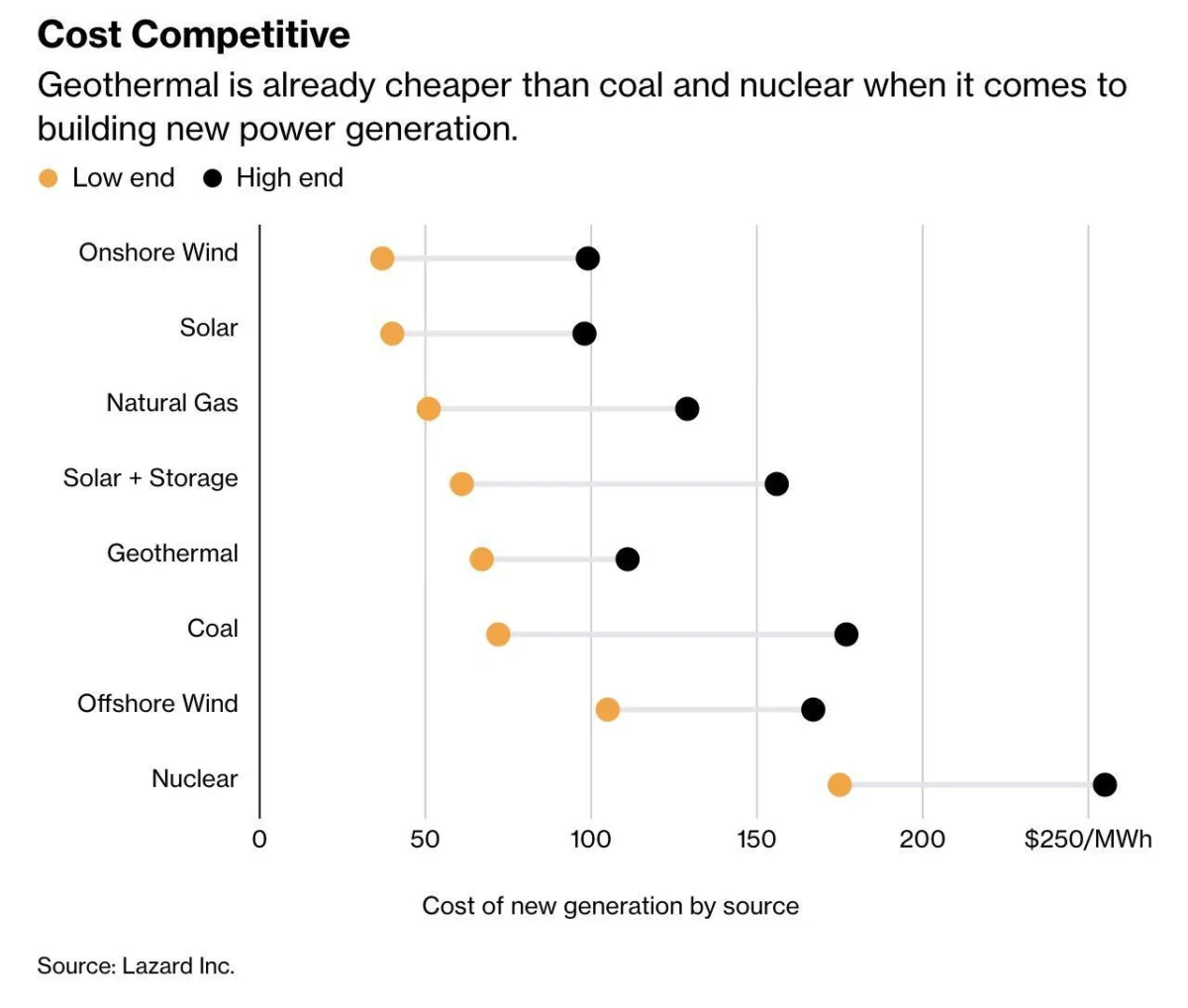
While industry cost estimates suggest that new EGS facilities could already compete with several other forms of electricity generation, the economics remain challenging. Drilling deep wells is inherently expensive, with costs escalating rapidly with depth and geological complexity. Project development also carries substantial geological risk, as the precise characteristics of the subsurface can only be fully understood through drilling and testing.
However, the consistent political support for geothermal, contrasting with recent political headwinds faced by wind and solar in some regions, provides a stable policy environment for investment. The federal commitments, such as those made to FORGE, play a crucial role in de-risking early-stage development and attracting private capital. As technology matures and drilling techniques become more efficient, the costs are expected to decline, mirroring the trajectory observed in the shale gas industry. Furthermore, the ability to secure long-term power purchase agreements (PPAs) with large industrial consumers like data centers offers financial stability, making EGS projects more attractive to investors.
Broader Impact and Future Outlook
The outcome of the Utah experiment holds profound implications, potentially determining whether EGS evolves into a meaningful national and global energy source or remains a promising but niche technology. If developers can consistently drill deeper, effectively preserve underground heat, minimize water loss, and repeat the process at declining costs, the technology inherited and adapted from the oil and gas industry could fundamentally alter the clean energy landscape.
The broader impact of successful EGS deployment would be multifaceted:
- Energy Security: EGS offers a domestic, dispatchable energy source, enhancing national energy independence and reducing reliance on volatile fossil fuel markets.
- Decarbonization: As a low-emission, baseload power source, EGS can play a critical role in achieving ambitious decarbonization targets and combating climate change, providing a steady foundation for grids increasingly reliant on intermittent renewables.
- Economic Development: The expansion of the EGS industry would create new jobs, leveraging and repurposing the skills of the existing energy workforce. It could also stimulate investment in manufacturing and services related to drilling, power generation, and subsurface engineering.
- Grid Stability: EGS provides essential grid stability services, such as frequency regulation and voltage support, which become more critical as larger shares of intermittent renewable energy sources are integrated.
In conclusion, the Frontier Observatory for Research in Geothermal Energy in Utah is more than just a scientific endeavor; it is a critical proving ground for a technology with the potential to fundamentally reshape our energy future. By applying the ingenuity of the shale revolution to the challenge of harnessing Earth’s internal heat, engineers are striving to create a new class of always-available clean power plants. The world watches as the data from Utah begins to tell the story of whether enhanced geothermal systems will truly become a cornerstone of the global energy transition.

