
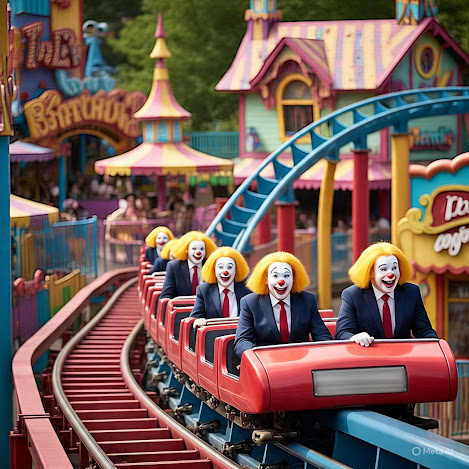
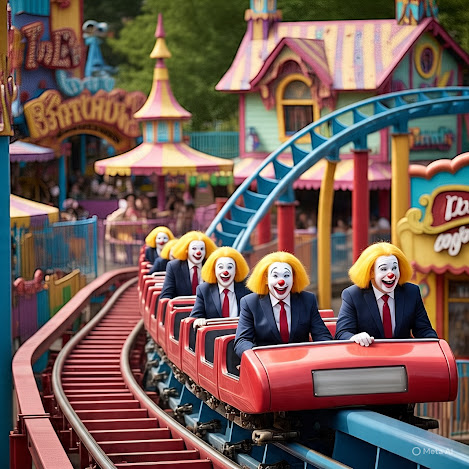
The global financial markets have experienced a period of unprecedented volatility in recent months, largely attributed to an aggressive reorientation of international trade policies, primarily centered on the implementation of tariffs. Following a multi-year bull run that culminated in February 2025, the stock market embarked on a tumultuous journey, witnessing some of its steepest drops and most remarkable recoveries in recorded history. At its nadir, the market shed a full 20% of its value, only to rebound dramatically, approaching its previous peak as of this writing. This rollercoaster trajectory has left investors and businesses alike grappling with profound uncertainty regarding future economic stability and growth prospects.
The Mechanism of Tariffs and Their Immediate Impact
At its core, a tariff is a customs duty or a sales tax levied by a government on imported goods. While technically paid by the importer—whether an individual purchasing an e-bike directly from an overseas manufacturer or a multinational corporation like Amazon, Walmart, or Apple importing vast quantities of products—the ultimate burden invariably falls on the end consumer. Importers, facing increased costs, naturally adjust their pricing strategies to maintain profitability, passing these additional expenses onto the public. This ripple effect extends beyond consumer goods, impacting large-scale projects; for instance, construction costs for new infrastructure or housing rise due to tariffs on essential materials such as steel, copper, and lumber, many of which are globally sourced.
Economically, tariffs function much like any broad-based sales tax, leading to higher prices across various sectors. This inflationary pressure generally slows down economic activity and reduces overall consumer purchasing power. While the revenue generated from tariffs flows into government coffers, potentially aiding national budgets or reducing deficits, the prevailing consensus among economists is that such benefits are often outweighed by the broader economic inefficiencies and distortions created. For an economy to thrive, tax policies, including tariffs, are ideally kept as low, fair, and predictable as possible, fostering an environment conducive to business investment, innovation, and long-term planning. The current regime, characterized by frequently changing and unpredictably high tariff rates, significantly deviates from these principles, introducing considerable instability.
A Historical Perspective on Trade Policy and Volatility
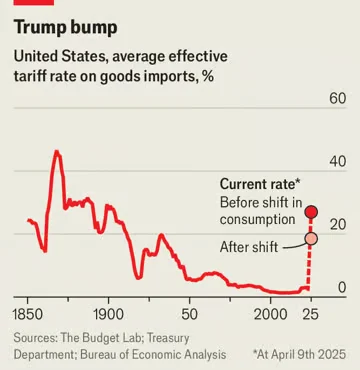
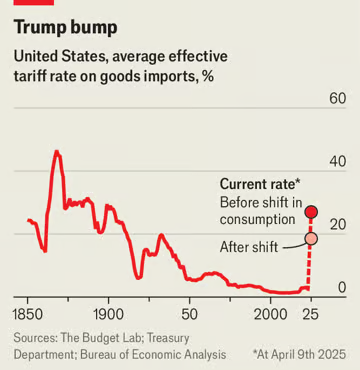
The recent market fluctuations are not entirely without precedent, though their intensity and the explicit cause are notable. Historical data, such as that compiled by The Economist charting 175 years of tariff history, illustrates a long-term trend towards lower tariffs, particularly since the mid-20th century. This era of reduced trade barriers, facilitated by agreements like the General Agreement on Tariffs and Trade (GATT) and the World Trade Organization (WTO), coincided with unprecedented global economic growth and interconnectedness. The current environment, however, sees tariff rates significantly higher than those observed over the past 75 years, representing a stark departure from the free-trade principles that underpinned the modern global economy.
The immediate trigger for the latest wave of market instability can be traced back to February 2025, when the market’s multi-year climb concluded. Subsequent announcements regarding new and increased tariffs, particularly those issued by former President Donald Trump, including his "Liberation Day" declaration on April 2nd, have directly correlated with significant market downturns. For instance, the April 2nd announcement reportedly led to the largest single-day stock market drop since 1932. Conversely, instances where tariff threats were walked back or reduced have typically spurred market recoveries, indicating a clear inverse relationship between tariff escalation and investor confidence.
The Rationale Behind Tariff Implementation and Economic Perspectives
Governments often employ tariffs with specific objectives, such as protecting domestic industries from foreign competition. By imposing a tax on imported goods, domestic alternatives gain a competitive edge. For example, a substantial tariff on imported automobiles could boost sales and employment for domestic car manufacturers. This protectionist strategy can be motivated by national security concerns, ensuring the viability of critical industries like aerospace or defense, or by political considerations, aiming to appease specific constituencies or industries. Both the Trump and Biden administrations have utilized tariffs, albeit with varying degrees of intensity and stated rationales. President Biden, for instance, implemented tariffs on certain solar panel components, a move that critics argued hindered the adoption of cheaper renewable energy while ostensibly supporting domestic manufacturing. Such policies, while potentially benefiting specific sectors, often result in higher prices and reduced consumer choice across the broader economy.
While tariffs can ostensibly create jobs in protected sectors, the broader economic impact is generally negative. Increased costs for consumers and businesses cascade throughout the economy, reducing overall efficiency and innovation. If a domestic industry is shielded from international competition, it may lose the incentive to innovate and streamline its operations, potentially leading to stagnation in the long run. Most economists concur that tariffs should be used sparingly and strategically, primarily when significant national interests, such as food security or defense, are at stake. The current approach, perceived by many as arbitrary and excessively high, has sparked widespread concern among economic experts and international bodies like the IMF and WTO, which generally advocate for open trade to foster global prosperity.
The Role of Presidential Authority and Constitutional Checks
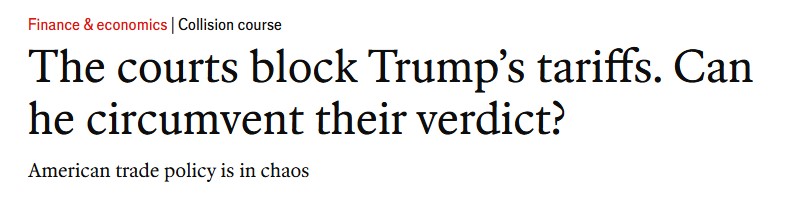
The current trade policy landscape highlights the immense power vested in the executive branch concerning tariffs. The ability of a single individual to unilaterally impose and adjust tariff rates has raised questions about the balance of power and the mechanisms of democratic governance. Critics argue that this concentration of authority, allowing for rapid and unpredictable shifts in economic policy, deviates from the constitutional design intended to ensure checks and balances. The judicial system is already witnessing challenges to these tariff impositions, as illustrated by recent reports from The Economist detailing efforts to block certain tariffs through legal means. The long-term stability of the U.S. economic system may hinge on whether these constitutional mechanisms can effectively reassert balance and predictability in trade policy.
Supply Chain Dynamics and Emerging Shortages
Despite the significant tariff increases, the immediate impact on consumer prices has not been universally felt across all sectors. This delay can be attributed to several factors. The U.S. economy, often likened to a massive cargo ship, possesses considerable inertia and substantial existing inventory. In anticipation of tariffs, many importers strategically stockpiled goods, creating a temporary buffer. However, data from sources like the Freightwaves Ocean Shipping Index (OSI) indicates a significant drop in new imports, suggesting that these stockpiles are being depleted without being fully replenished.
If this trend of reduced imports continues, the U.S. could face widespread shortages and corresponding price increases later this summer or fall. While the absence of certain non-essential "plastic party trinkets" might be manageable, a scarcity of critical tools, machinery, and essential components could have more severe economic consequences, potentially impacting productivity and industrial output. Businesses are already recalibrating their supply chains, with some exploring options for reshoring production or diversifying sourcing to less tariff-affected regions, though such transitions are costly and time-consuming.
Future Scenarios and Investor Sentiment
The future trajectory of trade policy and its economic repercussions remains uncertain, but two primary scenarios are widely discussed:
1. Sustained High Tariffs: This scenario posits that the current high tariffs become a long-term fixture.
- Economic Contraction: The U.S. economy would likely experience a significant slowdown, potentially entering a recession, as higher costs reduce consumer spending and business investment.
- Inflationary Pressures: Prices for most goods would continue to rise, eroding purchasing power and real wages.
- Trade Wars and Retaliation: Other nations would likely impose retaliatory tariffs on U.S. exports, severely harming American industries that rely on international markets.
- Supply Chain Overhaul: Companies would accelerate efforts to move production out of tariff-hit countries, leading to costly and disruptive restructuring of global supply chains.
- Job Market Shifts: While some domestic industries might see a temporary boost, overall employment could decline due to reduced economic activity and increased automation in response to higher labor costs.
- Reduced Innovation: Shielded from global competition, domestic industries might become less innovative and efficient.
- Global Fragmentation: The global economic system, built on interconnectedness, could fragment into regional trading blocs, diminishing overall global wealth and cooperation.
2. De-escalation and Return to Lower Tariffs: This scenario, widely hoped for by investors and many economists, suggests that tariffs are primarily a negotiating tactic that will eventually lead to a truce.
- Market Rebound: A clear de-escalation of trade tensions would likely trigger a strong, sustained rally in stock markets as uncertainty diminishes and business confidence returns.
- Economic Relief: Businesses and consumers would benefit from lower import costs, potentially easing inflationary pressures and stimulating spending.
- Supply Chain Normalization: While some diversification efforts might persist, the pressure to completely overhaul supply chains would ease, allowing for more efficient global sourcing.
- Renewed Global Cooperation: A return to more predictable trade policies would foster greater international collaboration and reduce geopolitical friction.
Investor behavior during this period provides a fascinating insight. Despite the significant drops, the market’s rapid recovery to near all-time highs suggests that a substantial portion of investors are betting on the latter scenario—that current tariffs are temporary and a return to free-ish international trade is inevitable. This resilience underscores a deep-seated belief in the long-term strength and adaptability of the global economic system, as well as the inherent advantages of open borders and collaborative international relations. As history suggests, the "best way to win the tariff game is not to play it," favoring the free exchange of goods and services to foster mutual prosperity.
Navigating Information in a Volatile Landscape
The current economic climate also highlights the critical importance of discerning information from reliable sources. In an era where news headlines are increasingly optimized for attention rather than factual accuracy, the public is often bombarded with conflicting and sensationalized narratives. The stark differences in reporting on economic events across various media outlets—from those emphasizing doom and gloom to those portraying unbridled optimism—underscore a systemic bias towards generating outrage and fear, which often translates into increased engagement and revenue for publishers.
For individuals and investors, this environment necessitates a disciplined approach to information consumption. Rather than reacting impulsively to sensational headlines, a deeper engagement with original data, expert analyses, and a critical evaluation of diverse perspectives is paramount. Understanding fundamental economic principles and historical patterns can provide a valuable framework for interpreting events, fostering resilience against market noise, and making informed decisions. Ultimately, while economic and political landscapes may shift, the long-term trajectory of progress often prevails, particularly when underpinned by sound economic principles and a commitment to collaborative global engagement.

