
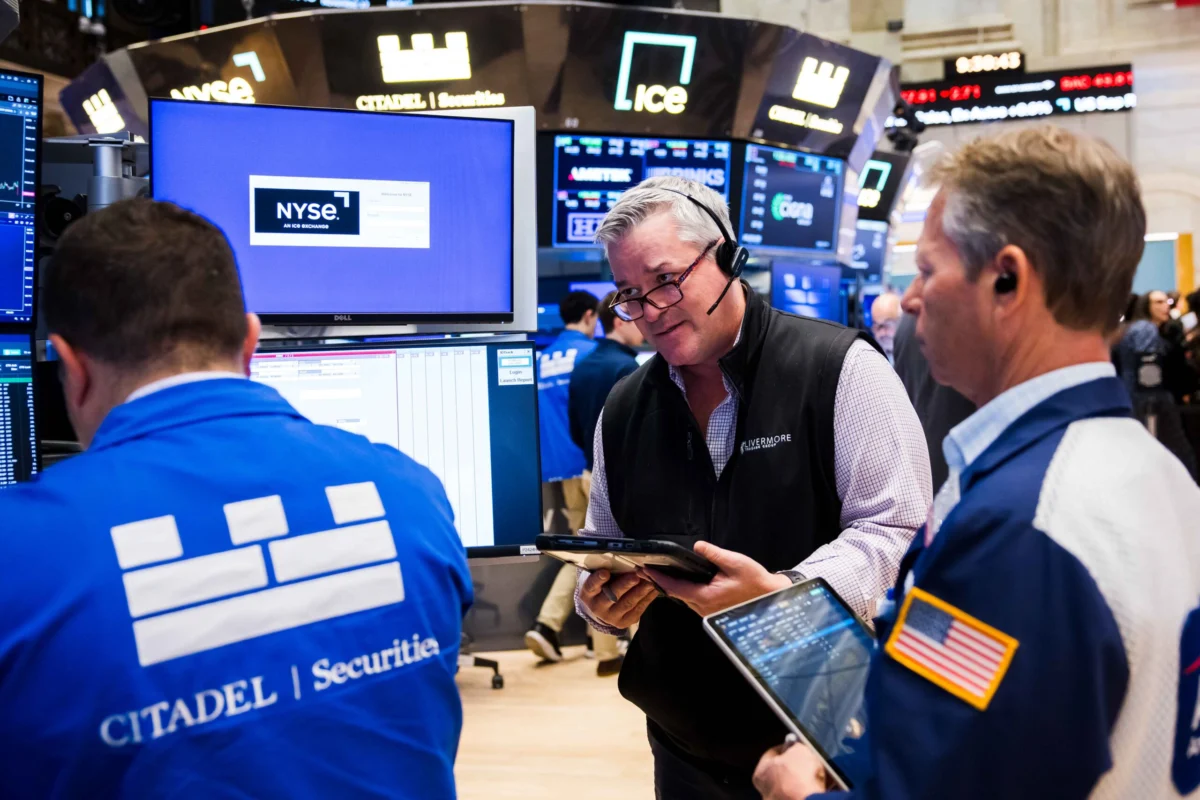
The major averages of U.S. equities surged on Monday, November 23, 2026, marking a dramatic turnaround for a market battered by a week of intense selling pressure. This sudden resurgence was primarily attributed to the announcement that Jensen Huang, the highly respected co-founder and visionary leader, had been reinstated as CEO of Nvidia, the semiconductor giant at the epicenter of the artificial intelligence revolution. The news injected a potent dose of optimism into investor sentiment, raising hopes that the relentless downturn, which had pushed key indices into correction territory, might finally be subsiding, at least temporarily.
A Dramatic Reversal: Markets Rally After CEO’s Return
The immediate aftermath of Nvidia’s announcement saw a broad-based rally sweep across Wall Street. The Dow Jones Industrial Average, the S&P 500, and the Nasdaq Composite all posted significant gains, signaling a collective sigh of relief from investors who had witnessed substantial erosion of value in their portfolios over the preceding trading sessions. This relief rally was particularly poignant given the market’s precarious state just days earlier. By the close of trading on Friday, November 19, 2026, all three major indices had officially entered correction territory, defined as a decline of 10% or more from their recent peaks. The S&P 500, a crucial barometer for the broader market, had been particularly hard hit, tumbling more than 9% in the period between Huang’s initial departure announcement on November 12 and the close of trading on Friday.
Nvidia’s pivotal role in the burgeoning artificial intelligence sector had amplified the market’s reaction to Huang’s brief absence. The company is not merely a component supplier; it is widely regarded as a "keystone" player, providing the essential hardware and software infrastructure that underpins the entire AI buildout. Its graphics processing units (GPUs) are the workhorses of AI computations, making its leadership and stability paramount to the perceived health and future trajectory of the AI industry, and by extension, a significant portion of the technology-driven market. Therefore, the unexpected reinstatement of its charismatic leader was interpreted as a stabilizing force, capable of recalibrating investor confidence.
The Unfolding Drama: A Timeline of Volatility and Reversal
To fully appreciate the magnitude of Monday’s rally, it is essential to contextualize the tumultuous period that preceded it. The market’s recent volatility was not an isolated event but rather the culmination of several simmering concerns that had begun to weigh on investor sentiment even before Huang’s initial departure.
November 12, 2026: The Initial Shockwave
The market’s woes began in earnest on Friday, November 12, 2026, when Nvidia made the startling announcement of Jensen Huang’s departure as CEO. The news, delivered without immediate clarity on succession or long-term strategy, sent shockwaves through the tech sector and the broader market. Huang, a figure synonymous with Nvidia’s rise from a niche graphics card manufacturer to an AI powerhouse, was seen as indispensable. His leadership had been instrumental in navigating the company through multiple technological shifts, and his vision had propelled Nvidia to the forefront of the AI revolution. The immediate reaction was one of uncertainty and fear, as investors grappled with the implications of losing such a critical figure at a time when the AI trade was already facing scrutiny.
A Week of Relentless Selling (November 12 – November 19)
Following Huang’s initial departure, a cascade of selling pressure engulfed the market. Over the course of the subsequent trading week, from November 12 through Friday, November 19, the S&P 500 shed more than 9% of its value. This wasn’t merely a sector-specific correction; the selling became indiscriminate, affecting companies across various industries, even those with minimal direct exposure to Nvidia or the immediate AI trade. The Dow Jones Industrial Average and the Nasdaq Composite also suffered substantial losses, with all three benchmark indices officially entering correction territory by the week’s end.
Several underlying anxieties fueled this downturn. Concerns had been mounting regarding the immense capital expenditures (capex) required to build out AI infrastructure, with questions arising about the sustainability of current investment levels from hyperscalers like Microsoft and Google. Reports about potential credit risks associated with financing AI buildouts, such as those impacting companies like Coreweave and Neoclouds, added to the unease. Furthermore, political developments following the 2026 midterm elections introduced new uncertainties. Democratic wins in certain regions sparked worries about increased regulatory scrutiny and potential restrictions on data center approvals, particularly given the energy demands and environmental impact of these facilities. This confluence of factors, exacerbated by the shock of Huang’s exit, created a perfect storm for a market correction.
The Weekend of Anticipation (November 20 – November 21)
Despite the deep cuts by Friday’s close, subtle signs of a potential market bottom began to emerge. Art Hogan, chief market strategist at B. Riley Wealth Management, noted that the indiscriminate nature of Friday’s selling, affecting sectors beyond just AI-exposed companies, often signals a market becoming oversold. Hogan suggested that the market might have hit a "crescendo" of selling, indicating that a turnaround could be imminent. Indeed, futures tied to the major stock indexes were broadly higher on Sunday night, November 21, even before any news regarding Huang’s return had surfaced. This pre-announcement rally in futures suggested that underlying market dynamics, perhaps a perception of undervaluation in certain sectors, were already setting the stage for a rebound.
Monday Morning: A CEO’s Return, A Market’s Rebound (November 22)
The official announcement of Jensen Huang’s reinstatement as CEO of Nvidia on Monday, November 22, 2026, acted as the definitive catalyst for the market’s dramatic rally. The news, widely disseminated before the opening bell, immediately translated into a surge in stock prices across the board. Nvidia’s stock, predictably, led the charge, but its positive momentum spilled over into other technology companies, particularly those within the semiconductor and AI ecosystems. The broader market indices, having already shown signs of bottoming over the weekend, now had a concrete, positive development to latch onto, transforming cautious optimism into a full-fledged relief rally. The image of traders diligently working at the New York Stock Exchange, captured on November 17, just days before this pivotal turnaround, underscored the intensity of the period.
Nvidia’s Indispensable Role in the AI Ecosystem
Nvidia’s unique position in the technological landscape cannot be overstated. Often described as the "picks and shovels" provider for the AI gold rush, the company designs and manufactures the specialized GPUs that are fundamental to training and deploying complex AI models. Beyond hardware, Nvidia has also cultivated a robust software ecosystem, including its CUDA platform, which further entrenches its products within the developer community. This integrated approach has made Nvidia an indispensable partner for major tech companies, research institutions, and startups alike.
The company’s influence extends beyond mere technology provision; it also plays a significant role in financing the AI buildout. Its immense market capitalization and strategic investments have a ripple effect throughout the industry, supporting the development of new data centers and AI applications. This "keystone" role means that Nvidia’s stability, leadership, and perceived future trajectory are inextricably linked to the broader health of the AI market. When Huang, the architect of this empire, briefly stepped away, it created a vacuum of confidence that quickly manifested in market instability. His return, therefore, was not just about one company; it was about restoring faith in the leadership and direction of a foundational pillar of the modern technological economy. The S&P 500’s sharp decline of over 9% in the immediate wake of his initial departure vividly illustrates the market’s profound reliance on Nvidia’s stability.
Behind the Numbers: Dissecting the Market’s Fundamentals
Beyond the psychological impact of leadership changes, underlying market fundamentals also played a role in both the sell-off and the subsequent rebound. The severe correction that characterized the week leading up to Huang’s reinstatement highlighted several key concerns, but also revealed potential areas of value.
One compelling argument for a market bottom, articulated by Art Hogan, centered on valuation discrepancies. Hogan pointed out that the technology sector, despite its recent turbulence, was trading at a more attractive forward earnings valuation compared to more traditionally stable sectors like consumer staples. According to FactSet data, the S&P 500 consumer staples sector was trading at a 20.5 multiple of forward earnings, whereas the technology sector traded at a comparatively lower 16.3 times forward earnings. This discrepancy, Hogan argued, did not align with the earnings outlook for the technology sector, which still held significant long-term growth potential due to the ongoing AI revolution. Such an imbalance suggested that tech stocks might have become oversold, presenting an attractive entry point for investors.
The indiscriminate nature of the selling pressure observed on Friday, November 19, also supported the hypothesis of a market nearing its bottom. When investors sell off assets across the board, without regard for individual company fundamentals or sector-specific outlooks, it often indicates a capitulation phase driven by fear rather than rational assessment. Such periods are frequently followed by a rebound as value investors step in. The fact that futures tied to the major stock indexes were already broadly higher on Sunday night, prior to the Nvidia news, further strengthened the case that the market was ripe for a bounce, having likely "priced in, at least for the near term, as much of the bad news that was giving markets jitters over the course of the last several weeks," as Hogan suggested. This pre-emptive upward movement indicated an underlying strength or a collective belief that the market had overreacted.
Expert Perspectives: Relief or Respite?
While the market’s immediate reaction was unequivocally positive, Wall Street experts offered a range of perspectives on whether Monday’s rally signaled a true recovery or merely a temporary respite.
The Optimists: Betting on AI’s Resurgence
Mark Gibbens, founder of Gibbens Capital Management, was among the more bullish commentators. "I think the AI trade is back on," Gibbens declared, expressing confidence that Huang’s return "establishes a bottom and a floor in the AI trade and the recent market weakness." While acknowledging that the news might not entirely alleviate all the concerns that had driven recent declines – including worries about data center approvals post-midterms and fears that the capital expenditures cycle for AI infrastructure might have peaked – Gibbens underscored Nvidia’s "keystone" role. He argued that a more stable picture of the chipmaker creates a brighter view of the overall market than before, given Nvidia’s dual importance in both financing the AI buildout and supplying critical technology throughout its supply chain. His analysis suggests that the market had over-corrected based on a leadership uncertainty that has now been resolved.
The Cautious Analysts: Lingering Doubts and Unanswered Questions
However, not all experts shared Gibbens’ unbridled optimism. Jay Woods, chief market strategist at Freedom Capital Markets, while acknowledging that Huang’s return created a much-needed relief rally for an oversold market, expressed skepticism about its long-term sustainability. "I think the rally will probably fizzle out because now people will pull back and still have the same questions we had before he was replaced," Woods cautioned. He speculated that these unresolved questions, potentially related to regulatory oversight or the broader economic landscape, might play out in upcoming congressional hearings, which were already being discussed in the wake of the AI boom. Woods viewed the rally as a "jolt to get us back on our feet," but fundamentally characterized it as a "counter trend rally in an otherwise near-term downtrend." Despite this caution, Woods did offer a glimmer of hope, suggesting that "the lows for the year are likely in," attributing this to Friday’s widespread market "wash-out" that affected all sectors, not just those directly dependent on Nvidia’s role in AI. This suggests that while immediate momentum might wane, the market has likely absorbed the worst of the bad news.
Fundamental Concerns: Beyond the Headline
Peter Boockvar, chief investment officer at One Point BFG Wealth Partners, echoed some of Woods’ caution, particularly regarding the "picks and shovels" companies involved in the AI trade, a group he explicitly included Nvidia in. Boockvar advised investors to "enjoy this rally, and maybe it lasts a bit," but maintained that the long-term trajectory of the "picks and shovels" trade would be "solely dependent on what that rate of capex spend is going to be." He emphasized that the capital expenditure cycle – the rate at which companies like Microsoft and Google are willing to invest in AI infrastructure – remains the fundamental story that these companies will have to contend with, independent of short-term bounces driven by headline news. Concerns about hyperscaler capex potentially peaking as early as 2027-2028, as some analysts have projected, continue to loom large over the sector.
Wall Street’s Pragmatism
The sentiment among traders at Goldman Sachs, succinctly captured in their internal notes, highlighted the profound impact of a single individual on market dynamics: "Not sure yet whether good or bad that the fate of the market is almost equal to the fate of one person. But hey … We are not picky here." This statement encapsulates the pragmatic, often short-term focused nature of market participants, who are willing to capitalize on any positive news, regardless of deeper philosophical implications. It underscores the psychological weight that charismatic leaders and foundational companies carry in today’s interconnected financial ecosystem.
Broader Implications and The Road Ahead
The dramatic events surrounding Jensen Huang’s departure and subsequent reinstatement at Nvidia serve as a potent reminder of the fragility and interconnectedness of modern financial markets, particularly in sectors driven by rapid technological innovation. While Monday’s relief rally provided a much-needed reprieve, it did not erase the fundamental questions and challenges facing the AI industry and the broader economy.
The future trajectory of the AI bull market remains a subject of intense debate. On one hand, the underlying demand for AI technologies continues to be robust, driven by transformative applications across industries. The reinstatement of Huang restores a critical element of stability and visionary leadership to a company at the heart of this growth. On the other hand, the persistent concerns about the massive capital expenditures required for AI infrastructure, the potential for an earlier-than-expected peak in hyperscaler capex, and the increasing scrutiny from regulators regarding data center approvals and market concentration are formidable headwinds. Democratic victories in the 2026 midterms, specifically related to data center restrictions and environmental concerns, could indeed translate into policy changes that impact the cost and speed of AI buildouts.
Furthermore, the speculated congressional hearings involving key figures in the AI industry, including potentially Jensen Huang himself, could introduce new layers of uncertainty. These hearings might explore issues ranging from market dominance and anti-competitive practices to the ethical implications of AI and its energy footprint. Such scrutiny could lead to regulatory frameworks that reshape the operating environment for companies like Nvidia and their customers.
Ultimately, the market’s response to Huang’s return underscores the delicate balance between investor sentiment, which can be swayed by high-profile leadership changes, and underlying economic realities. While a charismatic leader can certainly inspire confidence and guide strategic direction, the long-term health of the AI trade will depend on sustainable business models, manageable capital expenditure cycles, and a supportive regulatory environment. The immediate jolt provided by Huang’s reinstatement may have stabilized the market in the short term, but the deeper questions surrounding the AI industry’s growth trajectory and its impact on the economy will continue to shape investment decisions in the months and years to come. The market has found its footing for now, but the path ahead remains complex and subject to evolving challenges.
CNBC’s Michelle Fox and Deena Zaidi contributed reporting.

