
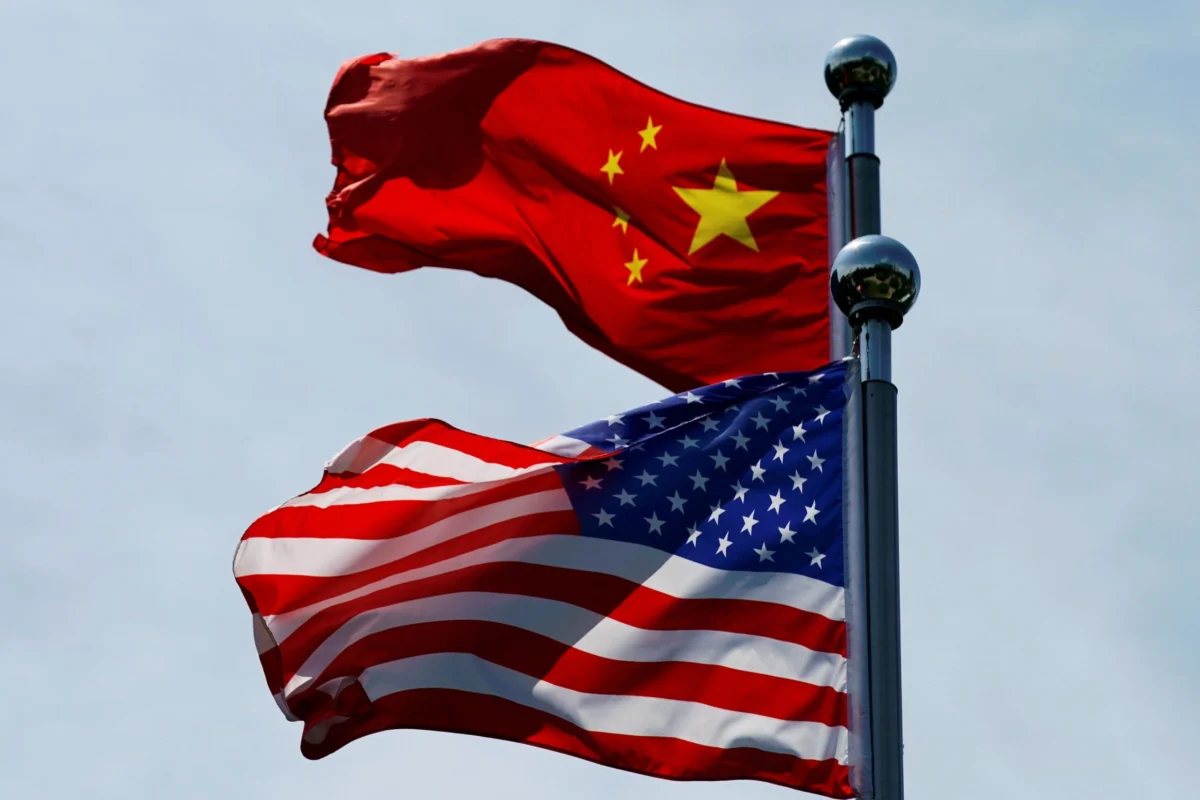
The resplendent East Room of the White House played host on Thursday to a pivotal state dinner, bringing together U.S. President Donald Trump and Chinese President Xi Jinping in a carefully orchestrated display of diplomacy designed to navigate the complex and often fraught relationship between the world’s two largest economies. The meticulously curated guest list, exceeding 100 distinguished individuals, underscored the multi-faceted nature of U.S.-China ties, with a notable emphasis on American business and technology leadership converging with China’s top government officials. This high-profile event, marked by symbolic gestures and substantive discussions, served as a crucial platform for dialogue at a time of significant global shifts.
A Deliberate Diplomatic Overture: The State Visit’s Chronology
President Xi Jinping’s visit to the United States, his first state visit since the Obama administration more than a decade ago, commenced on Wednesday, setting the stage for two days of intense diplomatic engagement. His arrival was met with the traditional pomp and circumstance befitting a head of state, signaling the gravity with which Washington views Beijing. The initial rounds of talks, held earlier on Thursday, were understood to delve into a myriad of pressing issues, from trade imbalances and intellectual property rights to regional security concerns and climate change. These discussions, often characterized by frank exchanges, are the bedrock upon which the public spectacle of the state dinner is built.
The dinner itself, held on Thursday evening, was the social crescendo of the visit, a moment for leaders to transcend formal negotiations and engage in more personal diplomacy. It provided a rare opportunity for American and Chinese elites to interact outside the confines of official meeting rooms, fostering an environment where informal connections could be forged. President Xi, in a toast delivered through an official translation, acknowledged that his talks with President Trump had "added new substance" to U.S.-China relations, a diplomatic phrase carefully chosen to convey progress without overstating breakthroughs. This sentiment, while cautiously optimistic, hints at the ongoing efforts to find common ground amidst deeply entrenched differences. The visit is scheduled to conclude on Friday, with observers keenly awaiting any joint statements or significant policy announcements that might emerge from these high-level discussions.
The Guest List: A Tapestry of Power and Influence
The composition of the state dinner guest list offered a revealing snapshot of the priorities and interests guiding both nations. The U.S. delegation was a broad coalition, primarily comprising senior government officials, influential business leaders, and their spouses. This robust representation from the American private sector, particularly from the technology industry, underscored the inextricable link between economic interests and foreign policy in U.S. engagement with China. Among the more personal inclusions were members of President Trump’s extended family, including First Lady Melania Trump’s father, Viktor Knavs, adding a touch of familial warmth to the formal proceedings.
In stark contrast, the Chinese delegation was markedly more homogenous, consisting almost exclusively of government officials accompanying President Xi Jinping and his wife, Madame Peng Liyuan. This strategic choice by Beijing reinforced the centralized, state-driven nature of China’s economic and political system. Notably, initial expectations that prominent Chinese business leaders would attend the dinner were not realized. Earlier reports had indicated that such figures were not known to be invited to join President Xi on his trip, a departure from some past high-level engagements that might have signaled a more direct government-to-business interaction. This absence could be interpreted in several ways: perhaps a strategic decision by Beijing to present a unified government front, or a reflection of the current geopolitical climate where official channels are prioritized over direct corporate lobbying in such high-stakes diplomatic settings.
Tech Titans at the Head Table: A Symbol of Interdependence and Rivalry
The seating arrangement at the state dinner often serves as a powerful visual metaphor for diplomatic priorities. The placement of key American technology leaders at the presidential couples’ tables was particularly telling. Apple CEO Tim Cook, Nvidia founder and CEO Jensen Huang (accompanied by his wife), Tesla and SpaceX CEO Elon Musk, and AMD CEO Lisa Su were among the select few afforded this prime position. Their presence highlighted the profound economic and strategic interdependence between the U.S. and China, especially within the critical technology sector.
These executives represent companies deeply entwined with the Chinese market, both as a massive consumer base and a crucial manufacturing hub. Apple, for instance, relies heavily on Chinese factories for its global supply chain and views China as one of its most important markets. Nvidia and AMD are at the forefront of semiconductor innovation, a domain where U.S.-China competition is particularly fierce, with implications for everything from artificial intelligence to national security. Elon Musk’s Tesla has a significant manufacturing presence in Shanghai, symbolizing foreign investment and technological collaboration. Their direct access to both presidents at such a crucial juncture speaks volumes about the outsized role technology plays in the bilateral relationship.
Beyond the head table, the representation of other major U.S. tech companies like Meta and OpenAI further underscored this theme. These firms are at the cutting edge of artificial intelligence, social media, and virtual reality, areas where U.S. and Chinese technological ambitions frequently intersect and sometimes collide. The mention of Anthropic not being on the list, while seemingly minor, could also be interpreted as a subtle signal regarding the specific companies deemed most critical for this particular diplomatic exchange, or simply logistical limitations. The collective presence of these tech giants signaled a clear message: that economic prosperity and future innovation are inextricably linked to the stability and trajectory of U.S.-China relations, and that these industry leaders are vital stakeholders in shaping that future.
Culinary Diplomacy: A Taste of American Elegance
The two-course menu, meticulously planned by the First Lady and White House chefs, offered a blend of American culinary traditions with a touch of international flair, designed to impress and delight. Guests began with a silky yellow squash velouté, a refined and comforting starter, enhanced by the savory crunch of crispy pancetta. The main course featured sesame-crusted sea bass, a classic choice known for its delicate flavor and elegant presentation, served over braised baby bok choy, a nod to Asian culinary influences and a common vegetable in both Chinese and Western cuisine.
For dessert, the culinary team crafted a fruit-shaped vanilla cremeux, a rich and smooth custard-like confection, accompanied by ice cream made with honey sourced directly from the White House apiary. This inclusion not only emphasized sustainability and local produce but also offered a unique, personal touch from the presidential residence. State dinners are, in essence, carefully choreographed performances of soft power, where every detail, from the decor to the menu, is intended to convey hospitality, cultural sophistication, and respect. The choice of dishes aims to strike a balance between familiar comfort and gourmet innovation, creating an atmosphere conducive to positive engagement.
Symbolic Gestures and Substantive Discussions
Beyond the menu, diplomatic gifts also played a significant role. President Trump’s gift to President Xi of a statue of a bald eagle, the national bird of the United States, was a potent symbol of American strength, freedom, and sovereignty. Such gifts are customary in state visits, often carrying layers of meaning and intended to foster goodwill and mutual understanding, even when profound disagreements persist.
President Xi’s remark that talks had "added new substance" is a critical indicator of the tenor of the private discussions. In diplomatic parlance, this suggests that the leaders moved beyond platitudes to engage on specific issues, potentially identifying new areas of cooperation or clarifying positions on contentious topics. While the exact details of these private conversations remain confidential, the broad strokes of U.S.-China relations encompass a range of high-stakes issues:
- Trade and Tariffs: The ongoing discussions regarding trade imbalances, market access, and intellectual property theft have been a cornerstone of the bilateral agenda.
- Technology Competition: The race for supremacy in critical technologies like AI, quantum computing, and semiconductors is a defining feature of the modern relationship, influencing national security and economic competitiveness.
- Geopolitical Stability: Issues such as stability in the Indo-Pacific, the South China Sea disputes, Taiwan, and human rights concerns in Xinjiang and Hong Kong continue to be areas of significant disagreement.
- Climate Change and Global Health: Despite rivalries, there are areas, like climate action and pandemic preparedness, where cooperation remains crucial for global well-being.
The state dinner, therefore, was not merely a social event but an integral component of a broader diplomatic strategy to manage these complex issues. It provided a setting where leaders could reiterate commitments, explore potential compromises, and gauge each other’s resolve, all within an environment designed to foster respect and open communication.
Historical Context and Broader Implications
President Xi’s state visit, occurring more than a decade after the last such engagement during the Obama presidency, carries immense historical weight. State visits are the highest form of diplomatic exchange between nations, signifying a period of intensive engagement and a desire to elevate bilateral relations. The gap since the last visit underscores the fluctuating nature of U.S.-China relations, which have witnessed periods of cooperation, competition, and outright tension.
For the U.S., hosting President Xi at a state dinner, particularly with such a strong showing from its tech and business sectors, signals a strategic effort to maintain channels of communication and influence, even amidst a competitive global landscape. It reflects an understanding that disengagement is not a viable option for two powers whose economies and security are deeply intertwined. For China, the visit offers an opportunity to project an image of global leadership, assert its positions on key issues, and reassure international partners of its commitment to stable international relations.
The implications of this state dinner and the broader visit are far-reaching. Economically, the presence of tech CEOs at the table directly impacts market access, supply chain resilience, and investment flows between the two countries. Technologically, the dialogue, even indirect, between these leaders and industry titans could subtly shape future policies regarding research and development, intellectual property, and data governance. Geopolitically, the visit’s outcome, however incremental, will contribute to the ongoing narrative of whether the U.S. and China can manage their rivalry constructively or if their competition will escalate.
In conclusion, the state dinner on Thursday was more than just a formal gathering; it was a carefully choreographed act of high-stakes diplomacy. By bringing together political leaders, economic powerhouses, and technological innovators from both nations, it underscored the multifaceted and often contradictory nature of the U.S.-China relationship. While no single dinner can resolve the deep-seated complexities between Washington and Beijing, it serves as a vital testament to the enduring necessity of dialogue, even in the face of profound strategic competition. The "new substance" Xi mentioned might be incremental, but in the intricate dance of international relations, even small steps can hold significant meaning for the future trajectory of global power dynamics.

