
The US-Israel war on Iran, now in its sixth month, is being widely assessed as a profound strategic miscalculation, with far-reaching consequences that extend beyond the immediate conflict zone. This protracted engagement, initiated under the Trump administration, has not only failed to achieve its stated objectives but has, according to analysts, inadvertently strengthened the Iranian government, diminished American geopolitical influence, and severely eroded global trust in US diplomatic commitments. The conflict has also incurred significant human and economic costs, raising questions about the future trajectory of American foreign policy and international relations.
The Genesis of Conflict: The JCPOA’s Demise
The roots of the current conflagration are frequently traced back to May 2018, when the Trump administration unilaterally withdrew the United States from the Joint Comprehensive Plan Of Action (JCPOA). This landmark nuclear agreement, negotiated over nearly two years by the P5+1 nations (the United States, China, France, Germany, Russia, and the United Kingdom) plus the European Union and Iran, was signed in July 2015. Under the JCPOA, Iran committed to substantial restrictions on its nuclear program—including eliminating medium-enriched uranium, reducing low-enriched uranium stockpiles by 98%, capping future enrichment at 3.67%, and accepting enhanced international monitoring—in exchange for relief from debilitating economic sanctions. For instance, Iran was required to render its heavy-water reactor at Arak inoperable by filling its core with concrete, a significant physical commitment to non-proliferation.
The deal was hailed by proponents as a diplomatic triumph that averted a potential military conflict and ensured the peaceful nature of Iran’s nuclear activities. However, throughout his 2016 presidential campaign, Donald Trump vehemently criticized the JCPOA, vowing to "dismantle the disastrous deal with Iran." This commitment materialized shortly after John Bolton, a known proponent of military action against Iran, was appointed National Security Advisor in April 2018. Despite reports from the International Atomic Energy Agency (IAEA) confirming Iran’s full compliance with the agreement, the US withdrawal was executed.
The decision was met with international criticism. Martin Malin of the Belfer Center commented at the time, "Trump’s move demonstrates that the United States cannot be trusted to keep its promises. It will heighten tensions in an already smoldering Middle East while giving fodder to hardliners and nuclear bomb advocates in Iran." Indeed, following the reinstatement of US sanctions, Iran waited a year before gradually scaling back its own commitments, resuming higher levels of uranium enrichment as a bargaining chip for sanctions relief.
A Chronology of Escalation and Diplomatic Breaches
The path from the JCPOA withdrawal to open conflict was marked by a series of diplomatic failures and military escalations. Even as tensions mounted, attempts at negotiation continued, often punctuated by military actions that analysts contend undermined trust and exacerbated the crisis.
-
June 2025: Early Strikes Amidst Dialogue: The Trump administration engaged in five rounds of negotiations with Iran, with a sixth scheduled for June 15, 2025. However, on June 13, Israel launched an attack on Iran. Then-President Trump reportedly confirmed that the US was informed of Israel’s plans in advance. This was swiftly followed by "Operation Midnight Hammer" on June 22, wherein the US joined the conflict by bombing Iranian nuclear facilities. This sequence of events, where military action closely followed or preceded diplomatic overtures, set a concerning precedent.
-
February 2026: The Onset of Full-Scale War: Despite the prior escalations, diplomatic channels remained open. On February 26, 2026, the US and Iran held a third round of talks in Geneva, with technical-level discussions anticipated for the following week. However, on February 28, the United States, in conjunction with Israeli Prime Minister Benjamin Netanyahu, launched a "massive war" on Iran. The initial assault reportedly resulted in thousands of casualties, including more than 100 elementary-age schoolgirls and numerous other civilians and military conscripts. Critically, the attack also claimed the lives of Iran’s Supreme Leader Ali Khamenei, his daughter, son-in-law, and 14-month-old granddaughter.

-
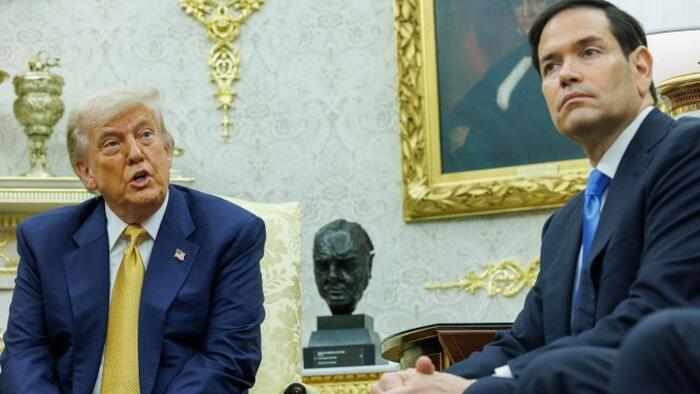
Rubio’s Justification and International Skepticism: Senator Marco Rubio attempted to frame the surprise attack as "defensive," stating, "We knew there was going to be Israeli action which would precipitate an attack against American forces, and we knew if we didn’t preemptively go after them before they launched those attacks, we would suffer higher casualties." This rationale was quickly challenged by observers, who pointed out that Washington’s significant leverage over Israel meant the US held de facto veto power over any Israeli strike, rendering the "preemptive defense" argument questionable.
-
June 2026: The Versailles Memorandum of Understanding: Amidst the ongoing conflict, diplomatic efforts resumed, leading to the signing of a Memorandum of Understanding (MOU) between the United States and Iran on June 17, 2026, at the Palace of Versailles. Primarily brokered by Pakistan with assistance from several Middle Eastern states, the MOU outlined 14 points for an immediate ceasefire and 60 days of negotiations for a lasting peace.
Breaching Commitments: The MOU’s Short Shelf Life
The Versailles MOU, intended to de-escalate the conflict, quickly encountered challenges due to perceived non-compliance by the US. University of Chicago international relations scholar John Mearsheimer noted in July that "the Iranians believe that the United States has not lived up to its part of the bargain." Several key points of contention emerged:
-
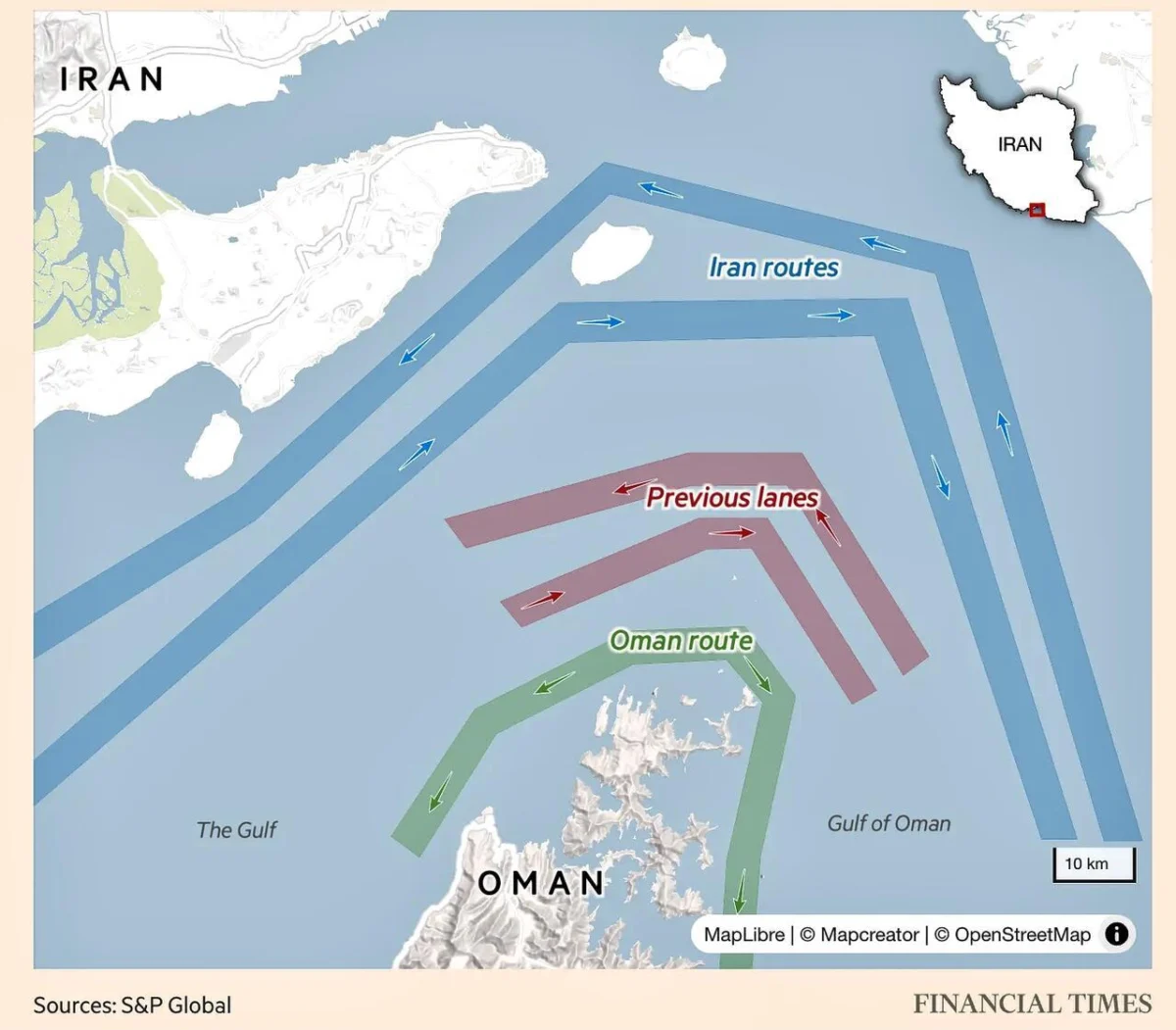
Strait of Hormuz Navigation (Point 5): The MOU stipulated that Iran would facilitate the "safe passage of commercial vessels with no charge, for 60 days only, from the Persian Gulf to the Sea of Oman and vice versa," and engage with Oman to define future maritime services in the Strait of Hormuz. This was broadly understood to mean Iran would lift its blockade while still overseeing traffic, guiding ships along its coast. However, the Trump administration subsequently instructed ships to use a different route passing through Omani territorial waters. Retired US Army Colonel Daniel Davis, known for blowing the whistle on misrepresentations during the Afghanistan war, stated on his "Deep Dive" podcast, "We violated [the MOU] by setting up a southern corridor… There’s nothing in the MOU that we signed that authorizes a southern corridor or America to enter into it and decide on our own how that’s going to be done." This move, whether deliberate or not, was highly provocative. Iran responded by issuing radio warnings and firing disabling shots at vessels attempting the southern route, prompting renewed US bombing and subsequent Iranian retaliation.

-
Sanctions Relief (Point 10): The MOU included a commitment from the Trump administration to issue sanctions waivers to allow unfettered Iranian oil and petroleum exports. However, on July 7, Trump revoked these waivers, citing Iranian attacks on ships that did not submit to Iranian control of the Strait of Hormuz – control that, as argued, the US had implicitly agreed to under Point 5.
-
Military Operations in Lebanon (Point 1): Point 1 of the MOU called for the "immediate and permanent termination of military operations on all fronts in Lebanon," specifically targeting the Iranian-allied Hezbollah militia and the US-allied State of Israel. Despite this, Israel continued extensive operations in Southern Lebanon, causing widespread destruction mirroring the devastation in Gaza. While some argue the US lacked the capacity to impose MOU terms on Israel, critics suggest that signing such an agreement without ensuring compliance from an ally indicated a lack of foresight or genuine commitment. Former US ambassador to Saudi Arabia Chas Freeman highlighted this, noting, "The MOU said we had to get the Israelis out of Lebanon. We made no effort to do that… In fact, we turned around and Marco Rubio went and… brokered an agreement between the Lebanese government and Israel that they will jointly go after Hezbollah. So what is this? At a minimum, it’s not very smart."
The Broader Impact: Erosion of Global Trust
The cumulative effect of these actions—the unilateral withdrawal from the JCPOA, the use of negotiations as a prelude to military strikes, and the subsequent reneging on commitments within the Versailles MOU—has profoundly damaged US diplomatic credibility on a global scale. Washburn University law professor Ali Khan articulated the consequences of such perceived treachery, writing that "The breach of good faith signals worldwide that it is pointless to make any deal with someone who would do the opposite after creating an expectation or reliance for the other party. Iran or any other state would be highly reluctant to trust the Trump administration again in future negotiations."
This distrust is unlikely to be confined solely to the Trump administration. The article points out that potential successors, including figures like Marco Rubio and JD Vance, have supported these policies, suggesting a potential continuity of approaches that could further entrench global skepticism. Furthermore, the article cautions that even Democrats, regardless of their criticisms of Republican foreign policy, are not immune to adopting unhealthy presidential precedents.

Undermining Moderates, Empowering Hardliners
A significant consequence of these diplomatic failures has been the bolstering of hardline factions within the Iranian government. Moderates, such as President Pezeshkian, who campaigned on a platform of engagement with the West, had repeatedly prevailed over skeptical hardliners to enter into agreements like the JCPOA and the Versailles MOU. Each instance of US non-compliance or surprise attack, however, validated the hardliners’ long-held assertion that the United States cannot be trusted and should not be negotiated with. As John Mearsheimer explained to Chris Hedges, "The hardliners said ‘don’t sign it, you can’t trust the Americans’… But the moderates prevailed, and then the hardliners proved to be correct, so they’re now in the driver’s seat… and those hardliners will push forward a tougher deal for Trump to swallow" in any future negotiations. This shift in internal Iranian political dynamics suggests a more challenging diplomatic landscape for the US moving forward.
Damage to Alliances: The Saudi Nuclear Deal Fiasco
The pattern of sudden reversals on agreements extended even to close US allies. On July 22, US Energy Secretary Chris Wright and Saudi Energy Minister Prince Abdulaziz bin Salman signed an agreement that would allow Saudi Arabia to build nuclear reactors and enrich uranium using US technology. This was widely seen as a significant achievement for Saudi Crown Prince Mohammed bin Salman, with both governments issuing official announcements.
However, the very next morning, President Trump blindsided both the Saudis and his own subordinates via a social media post. He retroactively imposed a major new condition: no nuclear deal would proceed unless Saudi Arabia joined the Abraham Accords, which entail recognizing Israel and establishing official diplomatic relations. This demand directly contradicted Saudi Arabia’s longstanding policy that recognition of Israel is contingent on a firm plan for Palestinian statehood. Furthermore, the timing was highly sensitive, as the ongoing destruction in Gaza and southern Lebanon had incited widespread outrage among Muslims in the kingdom and across the region, making such a move politically perilous for the Saudi monarchy. Trump also unilaterally declared that no nuclear material would be enriched inside Saudi Arabia, further altering the terms of the signed agreement.

Trita Parsi of the Quincy Institute observed on the "Deep Dive" podcast, "You strike a deal, you sign it, you announce it, you brag about it, and within 24 hours you’re changing the terms in a fundamental way. If that’s what you do to Saudi Arabia – a country that the United States has a very close relationship with… then what are you going to do with Iran? What is the shelf life of any American commitment under Trump to the Iranians in any agreement?"
The Enduring Legacy on Diplomacy
The cumulative effect of these actions—the initiation of a costly and seemingly counterproductive war, the repeated breaches of diplomatic trust, and the capricious reversals of even signed agreements—has led many to conclude that the US has inflicted profound and potentially irreparable damage on its ability to conduct effective foreign policy. Former ambassador Chas Freeman succinctly summarized the sentiment: "We’ve convinced the entire world that we don’t know what we’re doing, and we can’t be trusted, and we don’t keep our word, and we don’t even stay consistent from one day to the next. So how can you deal with us? That’s the question everybody has out there."
Alastair Crooke, a former British intelligence agent, diplomat, and founder of the Beirut-based Conflicts Forum, told Glenn Diesen that "The American ability to negotiate in the old-fashioned diplomatic idea, I think, is gone. I mean, we’re in a new era." This assessment suggests that the current administration’s approach has not merely created temporary setbacks but has fundamentally altered the global perception of US reliability and the very nature of international engagement with Washington. The long-term implications for global stability, alliance structures, and the efficacy of multilateral diplomacy remain a significant concern as the US grapples with the fallout of these policies.
This article is based on reporting by Brian McGlinchey via Stark Realities.

