

The simple act of writing down goals, a practice supported by extensive psychological research, significantly amplifies the likelihood of their attainment. This methodology, rooted in clarifying objectives, fostering accountability, and reinforcing commitment, finds its most potent ally in the bullet journal. Whether one favors minimalist designs, vibrant aesthetics, or structured trackers, the bullet journal offers a versatile platform for motivation and progress monitoring. This exploration delves into 14 creative and practical bullet journal goal page ideas, designed to inspire comprehensive planning, from sweeping annual visions to granular monthly breakdowns, ensuring focus and organization are paramount.

The Foundation of Goal Achievement: The Written Word
The efficacy of writing down goals is not merely anecdotal; it is a principle substantiated by studies in cognitive psychology and behavioral science. Research consistently demonstrates that the cognitive process of translating abstract aspirations into concrete written statements solidifies intentions and increases commitment. This act transforms a fleeting thought into a tangible objective, subject to review and action. A 2015 study published in the Journal of Social and Clinical Psychology highlighted that individuals who write down their goals are substantially more likely to achieve them, with the success rate increasing by as much as 42% compared to those who do not. This phenomenon can be attributed to several factors:
- Clarity and Specificity: The act of writing forces a refinement of vague desires into specific, measurable, achievable, relevant, and time-bound (SMART) goals.
- Accountability: A written goal serves as a public or private declaration, creating an internal or external pressure to follow through.
- Commitment Reinforcement: The physical act of writing engages motor memory and reinforces the psychological commitment to the goal.
- Progress Tracking: Written goals provide a benchmark against which progress can be measured, allowing for adjustments and a sense of accomplishment.
The Bullet Journal as an Ideal Tool
The bullet journal, a customizable analog system created by Ryder Carroll, has emerged as a powerful tool for personal organization and productivity. Its inherent flexibility allows users to adapt it to their unique needs and preferences. For goal setting, this adaptability is particularly advantageous. Unlike rigid planners, a bullet journal can be molded to accommodate various goal-setting philosophies, from the macro-level annual vision to the micro-level daily tasks that contribute to larger objectives. The system’s core components—indexing, rapid logging, collections, and migration—facilitate a dynamic approach to planning and execution.

Creative and Practical Bullet Journal Goal Page Ideas
To illustrate the diverse applications of bullet journaling for goal achievement, we present 14 distinct page ideas, categorized by their design philosophy and functional focus.
Goals Bullet Journal Page Ideas For The Minimalist
For those who appreciate a clean, uncluttered aesthetic, minimalist goal pages offer a focused and distraction-free approach to planning. These layouts prioritize white space, clean lines, and intentional design to facilitate effortless goal setting and tracking. Whether a single-page spread or a structured grid, these minimalist options ensure organization and visual appeal without overwhelming the user.

1. Black, White, And Functional
This approach emphasizes utility above all else. Using a simple black pen on white paper, this layout might feature clear headings for different goal categories such as "Personal Development," "Career Advancement," "Health & Wellness," and "Financial Stability." Each category would have a designated space for listing specific goals, potentially with checkboxes for tracking completion. The strength of this method lies in its directness and lack of visual noise, allowing the user to concentrate solely on the goals themselves.
2. Soft Colors With New Spring Buds
Introducing subtle, muted color palettes can add a touch of gentle motivation without compromising minimalism. Imagine a page with soft pastel accents, perhaps a pale green border or a light blue heading. This could be paired with a small, hand-drawn botanical element, like a sprig of flowers or a budding leaf, to symbolize growth and new beginnings. The goals themselves would be clearly written, perhaps with a slightly different colored pen for key action items. This approach offers a calming visual experience while maintaining a clear focus on objectives.

3. Pastels On A Blank Slate
This design leverages the power of negative space, using pastel colors sparingly to highlight key sections. A page might be predominantly white, with title blocks or small decorative elements in soft shades of pink, lavender, or mint. The goals are listed with ample spacing between them, making each item easily legible. This method creates an airy and sophisticated feel, encouraging a sense of calm contemplation of one’s aspirations.

4. Simple Quadrant Layout
Dividing a page into four equal quadrants offers a structured yet minimalist way to categorize goals. Each quadrant can represent a different area of life – for instance, Professional, Personal, Health, and Financial. Within each quadrant, users can list 1-3 key goals. This layout is highly efficient for a quick overview of priorities across different life domains, ensuring a balanced approach to personal development.

Annual Goal Planning: Setting the Big Picture
An annual goal spread serves as a high-level roadmap, consolidating overarching objectives for the entire year. This foundational spread allows for the articulation of long-term aspirations, which can then be broken down into more manageable monthly or weekly tasks.
5. Annual Goals By Major Category
This spread typically involves dividing the page into sections for major life categories such as "Career," "Personal Growth," "Health & Fitness," "Relationships," and "Financial." Each section is then used to list 1-3 significant goals for the year. The visual separation helps ensure that all key areas of life receive attention and that aspirations are balanced.
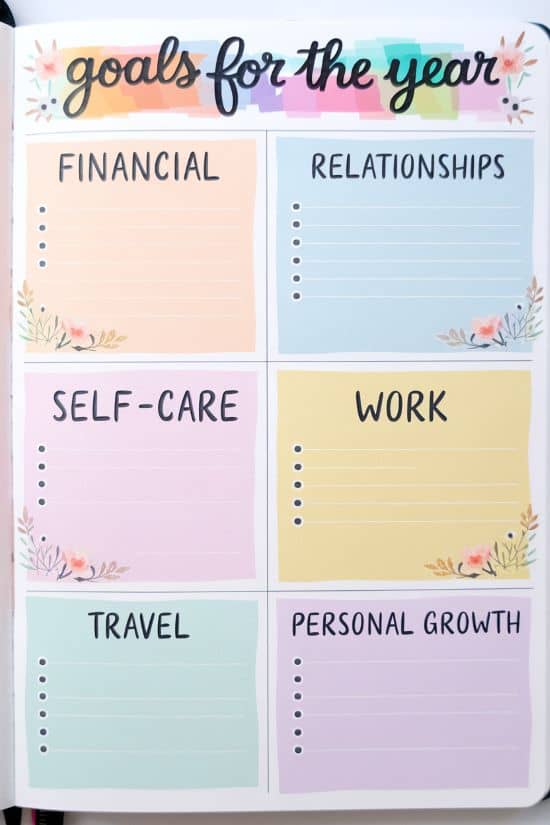
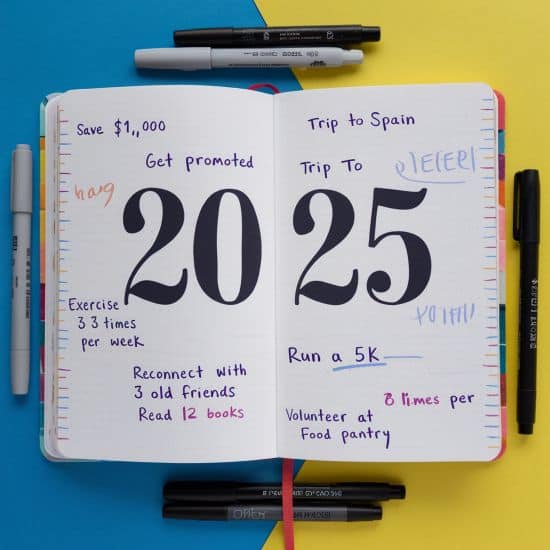
6. The Year In Bold
This design focuses on impactful typography. The year itself might be written in large, bold letters across the top of the spread, followed by distinct sections for different goal areas. Within each section, goals are listed using a clear, assertive font. This approach emphasizes the significance of the year ahead and the decisive nature of the goals being set.
7. Colorful Quadrants
Expanding on the quadrant concept, this layout utilizes vibrant colors to demarcate each goal category within the annual spread. For instance, one quadrant might be a bright blue for "Career Goals," another a cheerful yellow for "Personal Growth," and so on. This not only makes the page visually engaging but also helps to quickly identify and recall the focus of each section. The use of color can also be tied to themes or moods associated with each goal area.

Goals Bullet Journal Page Ideas For Monthly Goals
Breaking down large annual objectives into smaller, monthly targets is crucial for sustained progress and motivation. Monthly goal spreads allow for focused action planning and progress assessment on a more frequent basis.
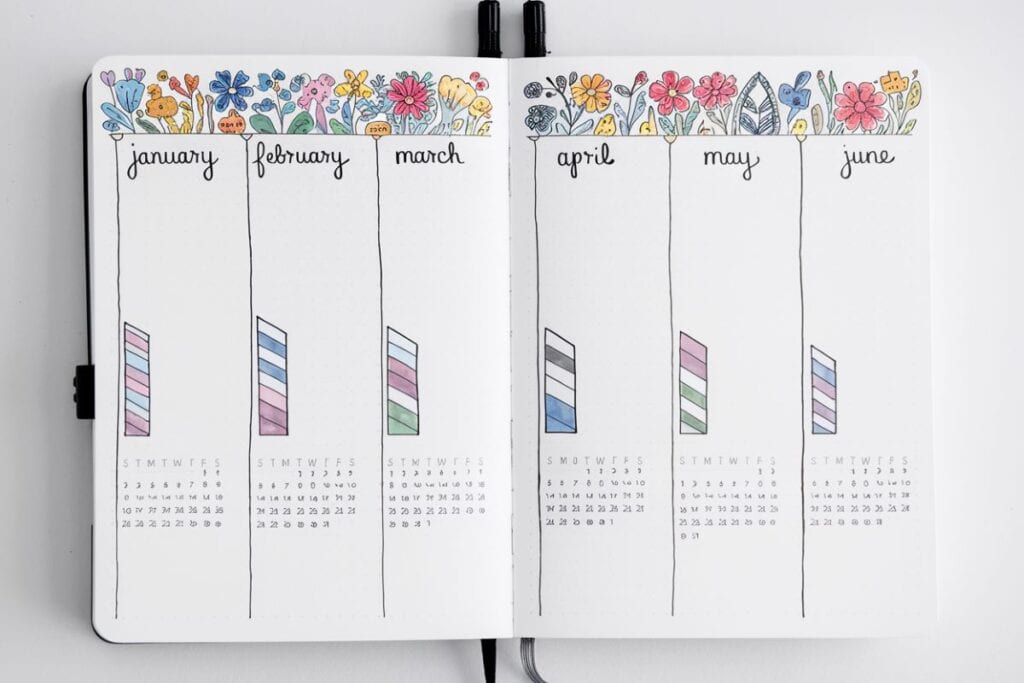
8. Goals By Month
This type of spread dedicates a section to each month of the year, allowing users to list specific goals for each period. This could be a simple list format or a more structured calendar view where goals are associated with specific dates or weeks. This method is excellent for planning seasonal projects or tracking progress on goals that have natural monthly milestones. For example, a fitness goal might involve increasing distance run each month, or a financial goal might focus on saving a specific amount by the end of each month.
Goals Bullet Journal Page Ideas For Thinking Big
Sometimes, the most impactful goals originate from broad, aspirational concepts. A "big ideas" spread provides an unrestricted space to brainstorm dreams, visions, and long-term aspirations, fostering creativity before the need for strict definition.
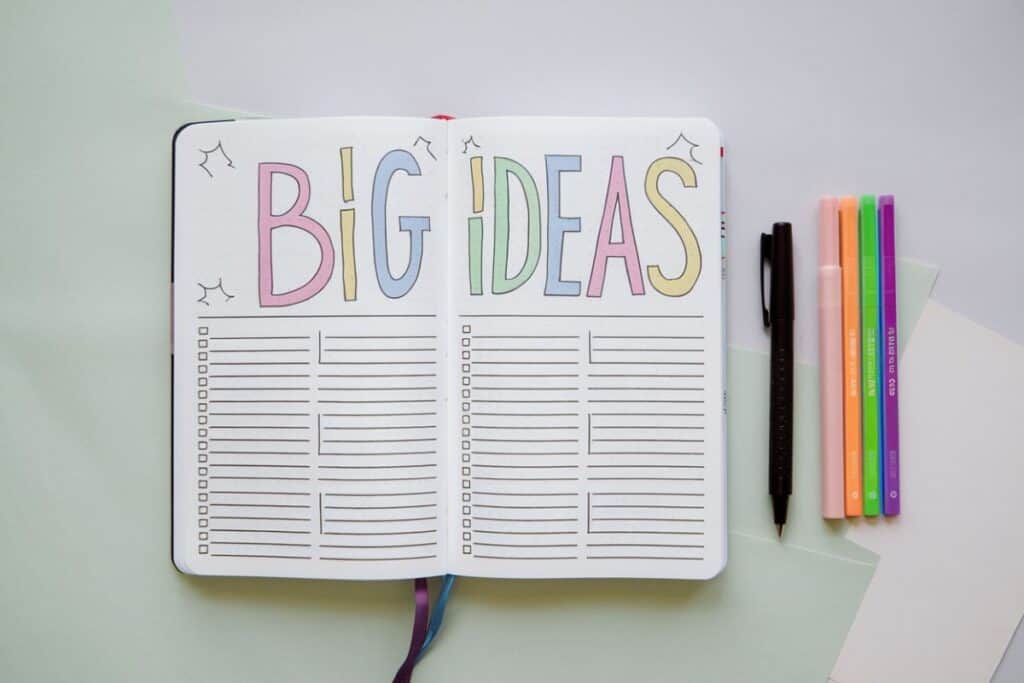
9. Big Ideas
This spread is designed for uninhibited brainstorming. It might feature a central prompt like "My Biggest Dreams" or "Future Aspirations" with ample space for mind-mapping, free association, or doodling. The aim is to capture nascent ideas and possibilities without the pressure of immediate actionability. This encourages a more expansive approach to goal setting, allowing for the exploration of diverse paths before committing to concrete objectives. This approach aligns with research on divergent thinking, which suggests that a period of broad ideation can lead to more innovative and comprehensive goal setting.
Goals Bullet Journal Page Ideas With Plenty Of Color
Injecting vibrancy and visual dynamism into goal-setting pages can significantly boost motivation and engagement. Colorful spreads transform the planning process into a more enjoyable and inspiring activity.
10. Blocks Of Goals
This layout uses distinct blocks of color to delineate different goal categories or individual goals. Each block can be a different vibrant hue, making the page visually stimulating. Within each block, goals are clearly written. This method not only categorizes information effectively but also creates an aesthetically pleasing spread that can serve as a constant, cheerful reminder of one’s objectives. The psychological impact of color on mood and motivation is well-documented, with bright colors often associated with energy and optimism.
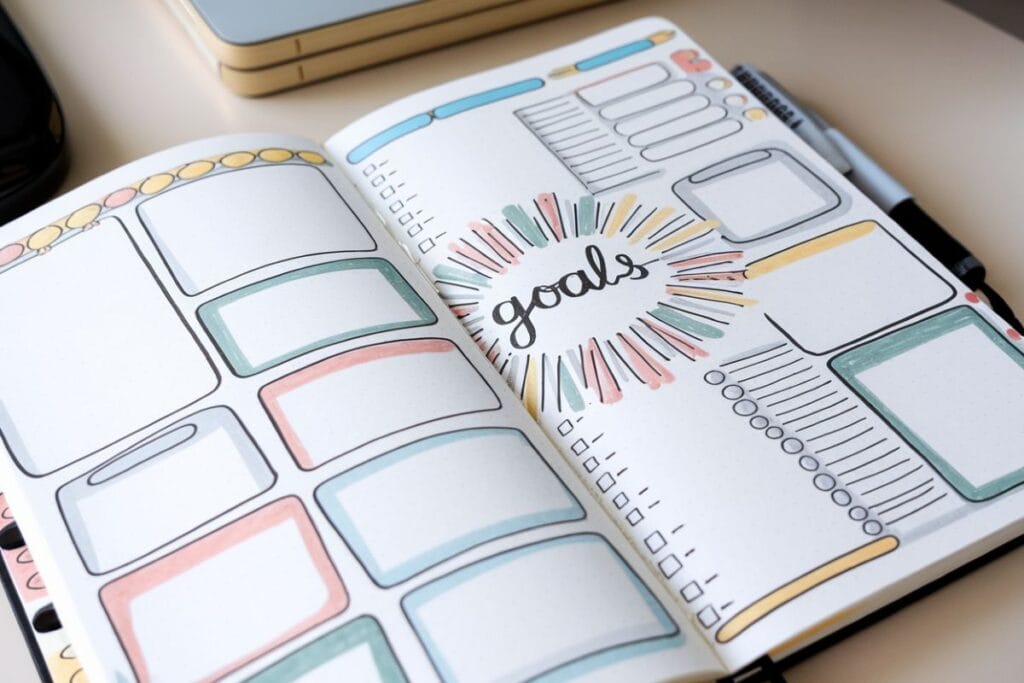
11. Crush Your Goals
This energetic spread often features bold lettering and dynamic design elements. A prominent title like "Crush Your Goals!" can set an assertive tone. The goals themselves might be written in strong, impactful fonts, possibly with underlines or bolding for emphasis. The use of bright, contrasting colors can further enhance the motivational aspect, creating a visual representation of determination and progress. This design philosophy taps into the power of positive affirmation and visual reinforcement to drive action.
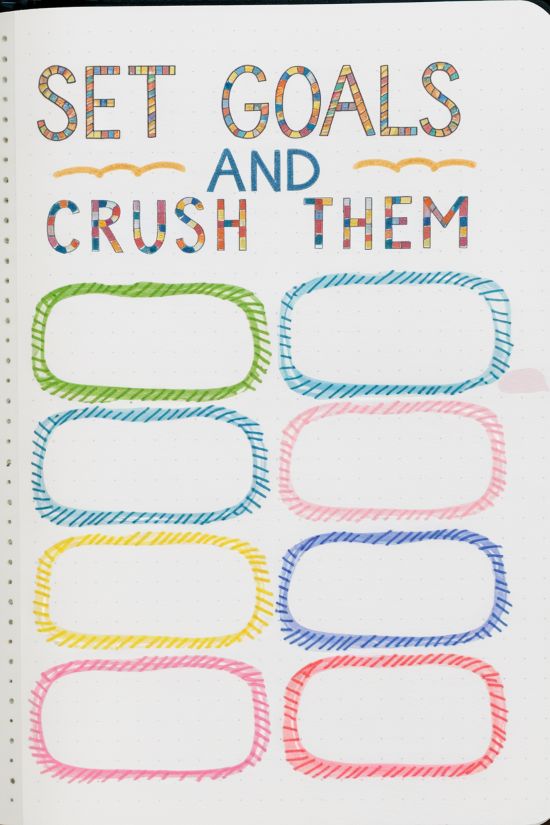
12. My Goals
This design focuses on personalization and a slightly more artistic approach. The title "My Goals" might be rendered in a decorative script or accompanied by hand-drawn elements. The goals themselves are listed, with ample opportunity for using a variety of colored pens, markers, or even washi tape to add visual interest. This spread is about making the goals feel personal and cherished, reflecting the individual’s unique journey and aspirations. The emphasis is on creating a space that feels like a personal sanctuary for ambitions.
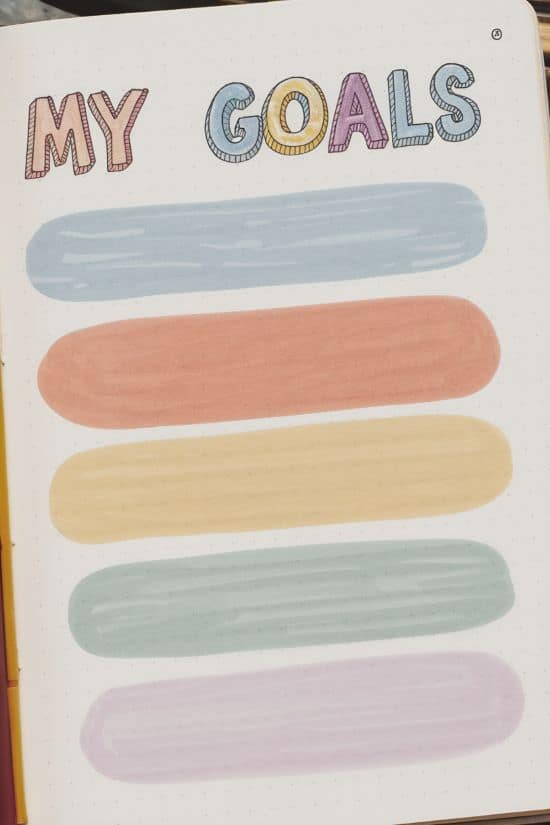
Goals Bullet Journal Page Ideas For Conquering Overwhelm
For individuals who find large lists of goals daunting, simplified and prioritized approaches can be more effective. These layouts focus on clarity and manageability, reducing anxiety and promoting consistent action.
13. Top 3 Goals
This strategy encourages users to identify and focus on their most critical priorities. A "Top 3 Goals" spread explicitly dedicates space for only three primary objectives. This constraint forces a deep consideration of what truly matters, preventing the paralysis that can come from an overwhelming number of tasks. Each of the top three goals can then be further broken down into actionable steps. This method aligns with the Pareto principle (80/20 rule), suggesting that focusing on the most impactful 20% of goals can yield 80% of the desired results.
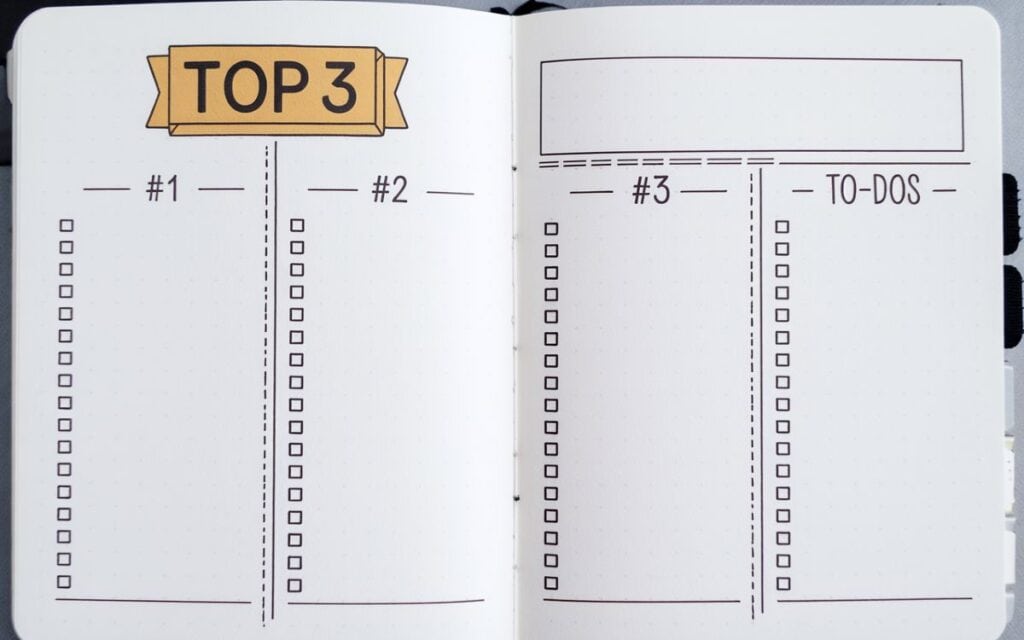
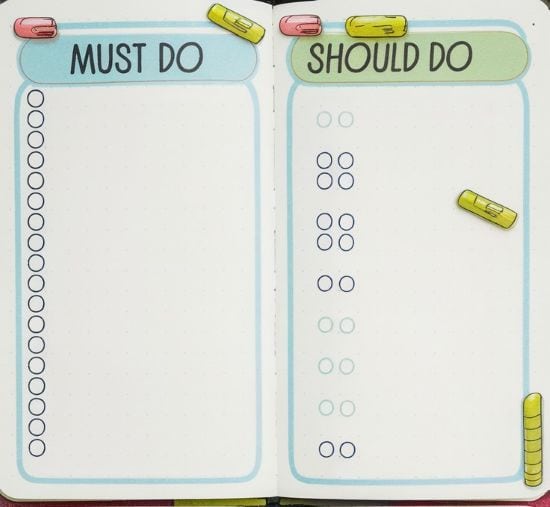
14. Must Do – Should Do Goal Spread
This organizational technique involves categorizing goals based on their urgency and importance. A "Must Do" section is reserved for essential, time-sensitive goals, while a "Should Do" section is for important but less immediate objectives. This distinction helps individuals prioritize their efforts effectively, ensuring that critical tasks are addressed first, while still acknowledging other important aspirations for later attention. This structured prioritization can significantly reduce feelings of being overwhelmed and increase productivity by directing focus to what requires immediate action.
Goals Bullet Journal Page Ideas – Wrap-Up
The journey of setting a goal is only the first step; active engagement and consistent effort are what truly drive success. A thoughtfully designed bullet journal goal spread transcends mere aesthetics; it functions as a vital instrument for keeping ambitions in clear view, meticulously tracking progress, and fostering unwavering motivation. Regardless of whether one gravitates towards structured, methodical layouts or more fluid, idea-generation pages, the paramount objective is to cultivate a system that resonates with individual needs and working styles.
The principle that small, consistent actions pave the way for significant achievements is fundamental. Therefore, dedicating time to reflection, strategic adjustment, and the celebration of milestones is paramount. With these insights, one can select a layout that sparks enthusiasm, and embark on the fulfilling process of transforming aspirations into tangible realities.
About the Author: Tom Scott founded the consulting and coaching firm Dividends Diversify, LLC. He leverages his expertise and decades of experience in goal setting, relocation assistance, and investing for long-term wealth to help clients reach their full potential.

