
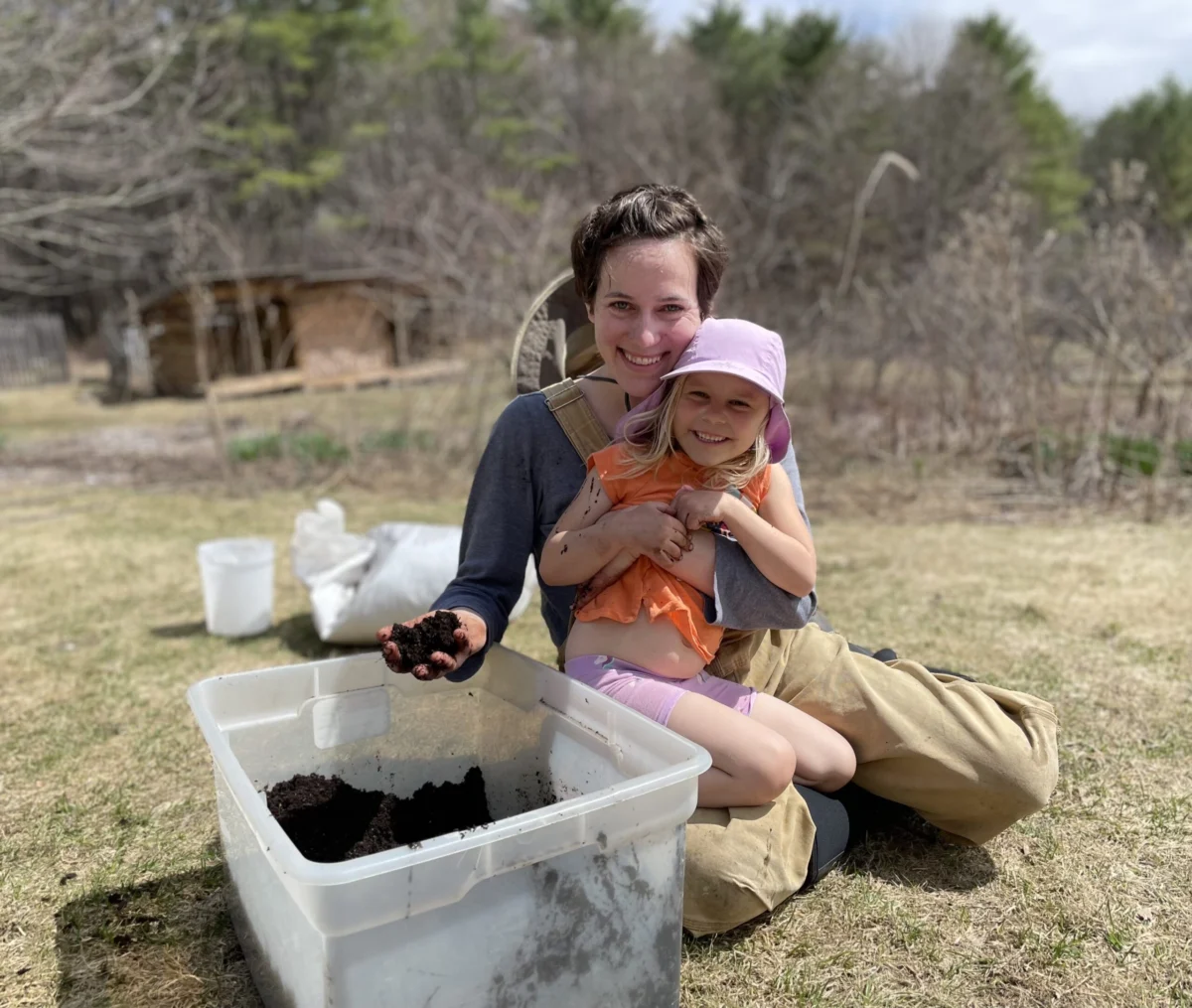
Following a seven-year tenure on a 66-acre estate in rural Vermont, the founders of the financial independence platform Frugalwoods have released a comprehensive reassessment of the "total self-sufficiency" model that frequently characterizes the modern back-to-the-land movement. The report, which serves as a longitudinal study of rural relocation, highlights a significant shift from the idealized goal of total food independence toward a more pragmatic, community-integrated agricultural model. This transition reflects broader trends in rural migration where urban professionals discover the high labor costs and logistical complexities associated with subsistence-level gardening and livestock management.
The Transition to Rural Agricultural Models
In May 2016, the Frugalwoods family transitioned from an urban environment to a 66-acre homestead in the Vermont woods. The primary objective was to exit the traditional "rat race" of city employment in favor of a sustainable, land-based lifestyle. Initial projections for the property included a "gargantuan assumption" that the residents would produce 100% of their own nutritional requirements. This vision encompassed not only a wide array of annual vegetables and fruits but also the potential for animal husbandry, including meat chickens, pigs, goats, and a dairy cow for the production of milk, butter, and cheese.
However, after seven years of direct experience, the residents have formally debunked the feasibility of total self-sufficiency for their specific demographic. The realization that intensive food production constitutes a full-time occupation during harvest seasons led to a strategic realignment. By 2023, the homestead has moved toward a "hybrid model," which prioritizes high-yield, manageable gardening while outsourcing more labor-intensive agricultural needs to professional local farmers. This shift is analyzed as a move toward economic efficiency and psychological sustainability.
A Chronology of Development and Realignment
The timeline of the Vermont homestead reveals a distinct evolution from infrastructure building to intensive experimentation, followed by a period of optimization.
2016–2017: Infrastructure and Establishment
The first two years were dedicated to staggering infrastructure development. This included clearing land, establishing the "big" vegetable garden, and installing fencing. During this phase, the residents operated under the "Little House on the Prairie" ideal, attempting to replicate historical subsistence methods while utilizing modern medical and technological advantages.

2018: The Peak of Intensive Cultivation
The 2018 growing season serves as a critical data point in the homestead’s history, referred to as the "Kale and Chard Apocalypse." During this cycle, the residents successfully cultivated 80 kale and chard plants from seed. While the yield was high, the labor required for processing—harvesting, washing, blanching, and freezing—proved to be unsustainable. The project required multiple days of continuous labor and the use of improvised industrial-scale cooling stations, including a children’s wading pool.
2019–2022: Optimization and Perennial Focus
Following the 2018 harvest, the homestead began prioritizing perennial crops over annuals. This included the planting of apple trees, plum trees, cherry trees, and blueberry bushes. These crops represent a long-term investment, as apple trees typically require approximately six years to reach production maturity.

2023: The Adoption of the Hybrid Model
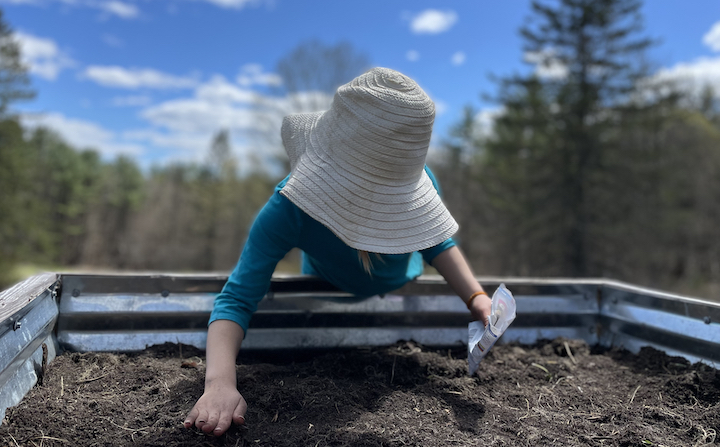
Current operations focus on four raised beds for high-rotation items (greens, herbs, and strawberries) and a fenced "big garden" for annual staples like tomatoes and squash. The residents have officially abandoned the goal of total self-sufficiency, opting instead to support the local agricultural economy by purchasing meat and dairy from neighboring professional farms.
The Logistics of Subsistence: Labor versus Output
Data collected over the seven-year period suggests that the labor-to-output ratio is a primary deterrent for amateur homesteaders seeking total independence. The processing of a single crop, such as kale, involves a multi-stage workflow:

- Manual harvest and transport.
- Multi-stage rinsing to remove debris and insects.
- Stem removal and leaf processing.
- Blanching in boiling water followed by immediate ice-bath immersion.
- Vacuum sealing and long-term freezing.
When scaled across dozens of vegetable varieties, this workflow mirrors an industrial food processing plant. The residents noted that without a professional kitchen and a dedicated labor crew, the time-bound pressures of a ripening garden can induce stress levels comparable to high-pressure corporate environments. This phenomenon, described as "transplanting the stress of an office job onto gardening," suggests that the pursuit of homesteading perfection can negate the original intent of rural relocation: the pursuit of time, freedom, and space.
Ecological and Environmental Constraints on Production
The Vermont homestead faces significant environmental challenges that impact food security and yield consistency. These variables make reliance on a single property for total nutrition a high-risk endeavor.

Wildlife Management (The Clever Varmint Patrol)
The residents identified the "Clever Varmint Patrol" (CVP)—a local collective of birds, turkeys, and small mammals—as a major factor in crop loss. Despite the use of netting and fencing, wildlife has successfully harvested 100% of the plum and cherry yields in recent years. The cost-benefit analysis of installing more sophisticated, view-obstructing deterrents often favors simply accepting the loss or purchasing fruit from larger-scale operations with better defense systems.
Meteorological Volatility
Production is further complicated by Vermont’s unpredictable weather patterns. Factors such as late spring frosts, early autumn freezes, and fluctuations in rainfall can decimate a harvest in a single 24-hour period. For residents who are not subsistence farmers by necessity, these losses represent a loss of labor and seed investment rather than a threat to survival, which allows for a more relaxed approach to crop failure.

Economic and Social Implications of the Hybrid Homesteading Model
The shift from total self-sufficiency to a hybrid model has broader implications for rural economies and personal well-being. By choosing to buy from local farmers, homesteaders like the Frugalwoods family contribute to the "circular economy" of rural communities.
Professional farmers possess the specialized equipment and economies of scale necessary to produce food more efficiently than a hobbyist. Supporting these neighbors ensures the survival of local agriculture while freeing the homesteader to focus on other forms of productivity or leisure. Furthermore, the residents noted that "over-gifting" preserved foods can lead to social friction, as neighbors and friends may not have the storage capacity or desire for a hundred quarts of home-canned pickles.

From a psychological perspective, the "acceptance phase" of gardening—acknowledging that one does not wish to spend 12 hours a day in the kitchen or the dirt—is vital for long-term retention of rural residents. The pressure to live up to "Instagram-ready" homesteading standards can lead to burnout. The 2023 Frugalwoods model prioritizes "balance and freedom," allowing for summer activities like hiking and community events that would otherwise be sacrificed to the demands of a large-scale garden.
Broader Impact and Implications for the Back-to-the-Land Movement
The Frugalwoods’ seven-year retrospective provides a valuable case study for the thousands of individuals who moved to rural areas during the 2020-2022 migration wave. It highlights a critical distinction between "homesteading" as a hobby and "subsistence farming" as a vocation.

The findings suggest that the most successful rural relocations are those that:
- Acknowledge the steep learning curve of agricultural production.
- Prioritize mental health and community integration over isolationist self-sufficiency.
- Invest in perennial crops that offer long-term yields with lower annual labor requirements.
- Support the existing local agricultural infrastructure rather than attempting to replace it.
Ultimately, the residents conclude that the value of rural life lies not in the quantity of food produced, but in the quality of the time spent on the land. While the "Kale Apocalypse" of 2018 served as a grueling lesson in the limits of human labor, the 2023 model of moderate gardening and community support represents a sustainable path forward for the modern homesteader. The pursuit of perfection in the garden, much like the pursuit of perfection in the corporate world, is often a recipe for exhaustion. Acceptance of a "little bit of this and a tidbit of that" may be the most radical and successful form of rural living.

