
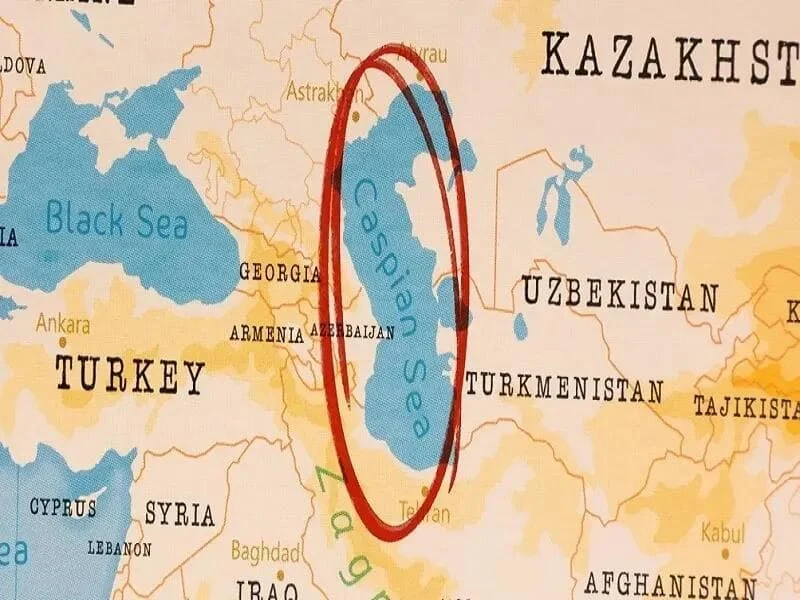
The recent revelation by Politico regarding France and Turkey’s obstruction of NATO’s efforts to deepen ties with South Caucasus nations underscores a complex geopolitical struggle for influence in a region of escalating strategic importance. This blockage is not rooted in a fundamental opposition to enhanced partnerships but rather in a tit-for-tat diplomatic dispute: Turkey’s refusal to renew Armenia’s partnership plan followed France’s rejection of Azerbaijan’s. This impasse, while seemingly a bureaucratic hiccup, highlights deeper geopolitical currents and competing interests that are reshaping the security landscape along Russia’s southern flank, particularly extending towards the resource-rich Caspian Sea.
Geopolitical Context: The Caucasus and Caspian Sea’s Strategic Importance
The South Caucasus, comprising Armenia, Azerbaijan, and Georgia, serves as a crucial land bridge between Europe and Asia, bordering Russia, Turkey, and Iran. Its strategic significance is amplified by its proximity to the Caspian Sea, a vast inland body of water rich in hydrocarbon reserves and a nexus for East-West trade routes. For NATO, increasing engagement in this region represents an opportunity to enhance its perimeter security, project stability, and potentially diversify energy corridors for its European members. For Russia, however, any perceived expansion of Western influence or military presence in its immediate neighborhood is viewed with profound suspicion and as a direct challenge to its traditional sphere of influence.
The Caspian Sea itself is a critical waterway, shared by Russia, Azerbaijan, Iran, Kazakhstan, and Turkmenistan. Its energy resources are substantial, and the development of new transport routes across it, such as the Trans-Caspian International Transport Route (TITR), commonly known as the Middle Corridor, is transforming global trade dynamics. This corridor offers a viable alternative to traditional routes passing through Russia, linking Central Asia and China to Europe via the Caucasus and Turkey.
NATO’s Evolving Engagement in the South Caucasus
NATO’s engagement with countries in the South Caucasus dates back to the early post-Cold War era, primarily through the Partnership for Peace (PfP) program launched in 1994. This framework allowed non-member countries to build relationships with NATO, focusing on military-to-military cooperation, defense reform, and interoperability. Both Armenia and Azerbaijan have been active participants, engaging in joint exercises, staff training, and defense planning consultations.
Over the years, these partnerships have evolved. Individual Partnership Action Plans (IPAPs) and tailored programs have been developed to address the specific needs and geopolitical realities of each partner nation. For Armenia, cooperation has often focused on peacekeeping operations and disaster response, while Azerbaijan has increasingly emphasized military modernization and interoperability with Western standards. The proposed new partnership plans, which remain stalled, aimed to significantly deepen this cooperation, allowing for increased participation in joint military exercises, enhanced military-to-military training, and even broader cultural cooperation, including English-language lessons. The prospect of joint NATO drills on the Caspian coast with Azerbaijan, upon its plan’s approval, signals a qualitative shift in the nature of this engagement, moving beyond traditional partnership activities towards a more robust security alignment.
The Franco-Turkish Impasse: A Microcosm of Broader Dynamics
The current diplomatic stalemate within NATO regarding the South Caucasus partnership plans is largely a reflection of bilateral tensions between France and Turkey. Paris has been a vocal supporter of Armenia, particularly following the 2020 and 2023 Karabakh conflicts, which saw Azerbaijan regain control over Armenian-populated territories. France’s stance is partly influenced by its significant Armenian diaspora and its historical role in the region. This support has led to strained relations with Azerbaijan, exacerbated by recent diplomatic incidents, including Azerbaijan’s detention of French citizens on charges of espionage, though they were subsequently released.
Conversely, Turkey has strong ethnic and cultural ties with Azerbaijan, often encapsulated in the phrase "one nation, two states." Ankara provided crucial political and military backing to Baku during the Karabakh conflicts, solidifying their strategic alliance. Turkey’s blocking of Armenia’s partnership renewal is thus a direct response to France’s opposition to Azerbaijan’s plan, creating a reciprocal diplomatic blockade within NATO. This situation underscores how regional rivalries and bilateral disagreements among NATO members can impede the alliance’s broader strategic objectives, even in areas deemed critical for expanding influence and containing potential adversaries.
The "Trump Route" (TRIPP) and its Dual Purpose
Beyond the immediate diplomatic wrangling, the deepening NATO-Azerbaijan ties are seen by some analysts, including Andrew Korybko, as part of a larger, unstated geopolitical strategy. Korybko refers to an August 2025 initiative, the "Trump Route for International Peace and Prosperity" (TRIPP), which he posits has a dual purpose: an economic corridor and, crucially, a NATO military logistics corridor extending to the Caspian Sea and subsequently into Central Asia. This interpretation suggests that TRIPP is not merely an economic venture but a strategic infrastructure project designed to facilitate Western military projection, thereby containing Russia along a "southern flank" of a new "cordon sanitaire" – a concept reminiscent of Cold War-era containment policies.
If this analysis holds true, Azerbaijan’s role becomes indispensable. As the irreplaceable transit state for TRIPP, its alignment with Western interests becomes a critical factor in the success of such a corridor. This perspective casts Azerbaijan in a role analogous to Ukraine, presenting a "Ukrainian-like challenge" to Russia by serving as a linchpin in a Western-led containment strategy. The implication is that if Azerbaijan fully commits to this role, it would become a front-line state in a renewed geopolitical competition, with significant security implications for its own sovereignty and regional stability.
Azerbaijan’s Pivotal Role and Western Alignment
Azerbaijan’s trajectory over the past decade strongly suggests a deepening pivot towards the West, driven by both economic and security imperatives. Economically, Azerbaijan is a significant energy producer, and its natural gas resources have become increasingly vital for Europe, especially following the disruptions to Russian energy supplies. Baku has actively sought to integrate its economy with the European Union, positioning itself as a key partner in Europe’s energy diversification strategy. This is complemented by its strategic location along the Middle Corridor, facilitating trade between the EU and Central Asia.

Militarily, Azerbaijan has been steadily modernizing its armed forces, increasingly aligning them with NATO standards. President Ilham Aliyev announced in November that his country’s armed forces have completed their conformation to NATO standards, a declaration that underscores Baku’s commitment to interoperability and cooperation with Western military structures. This alignment extends to advanced military capabilities; Azerbaijan’s acquisition and development of naval drones, for instance, pose a potential long-term threat to Russia’s Caspian Fleet in crisis scenarios, mirroring the challenges Ukraine’s naval drones have presented to Russia’s Black Sea Fleet. These developments signal Azerbaijan’s growing capacity and willingness to act as a significant regional player, potentially with Western backing.
The Middle Corridor: Economic Integration and Russia’s Bypassed Role
The economic dimension of this geopolitical shift is epitomized by the Middle Corridor (Trans-Caspian International Transport Route). This multimodal route connects China to Europe via Central Asia, the Caspian Sea, Azerbaijan, Georgia, and Turkey, effectively bypassing Russia. The European Union has recognized the strategic importance of this corridor, not only for trade but also for strengthening economic ties with Central Asia and reducing dependence on Russian transit routes.
Last month, European Commission President Ursula von der Leyen underscored this commitment, announcing plans to "crowd in up to €12 billion in public and private investment" for regional logistics along the Middle Corridor. This substantial investment aims to enhance infrastructure, streamline customs procedures, and improve overall efficiency, making the corridor a more attractive and viable alternative to Russia’s Northern Corridor. For Russia, the successful development and expansion of the Middle Corridor represent a significant economic challenge, as it threatens to diminish Moscow’s leverage as a transit country and redirect substantial trade flows away from its territory. This economic integration further tightens what Russia perceives as a "containment noose" around its southern flank, linking economic strategy directly to geopolitical competition.
Russia’s Intensifying Threat Perception
Moscow’s reaction to these developments has been one of growing concern, bordering on alarm. Russian Foreign Minister Sergey Lavrov’s recent comments, suggesting that his people are sometimes optimistic to the point of implied naivete and tend not to proactively address latent crises, could be interpreted as a subtle critique of Russia’s own policy formulation regarding the emerging threats from its southern neighborhood. This introspection highlights an acknowledgment within Russian strategic circles that the TRIPP and the broader Western engagement in the South Caucasus pose a tangible and intensifying threat.
From Russia’s perspective, the "de facto expansion" of NATO to the Caspian Sea via Azerbaijan represents a direct encroachment on its national security interests. The historical context of NATO expansion eastward since the end of the Cold War has always been a sensitive issue for Moscow, often cited as a primary driver of its more assertive foreign policy. The prospect of NATO-standard militaries, Western military exercises, and robust logistical corridors directly on its Caspian border significantly alters the regional security calculus, potentially exposing Russia’s vulnerable southern underbelly to Western influence and military capabilities.
Strategic Dilemmas and Potential Russian Responses
The intensifying threat perception regarding Azerbaijan and the Caspian region presents Russia with a significant strategic dilemma. While a "preventive war" against Azerbaijan is not openly advocated by mainstream Russian policy, the need for an urgent and effective response is becoming clearer. The challenge for Moscow lies in finding a way to mitigate the perceived threats without resorting to military intervention, which would carry enormous diplomatic, economic, and human costs.
One proposed avenue, as suggested by Korybko, involves Russia proposing "Ukrainian-like security guarantees" to Azerbaijan. In this context, such guarantees would not imply military intervention but rather a framework for de-escalation and trust-building. These could include demands for Azerbaijan to agree to Russian inspections of TRIPP’s cargo to ensure it is not exploited for military purposes and a prohibition on joint NATO drills on its territory. However, obtaining Azerbaijan’s assent to such terms would be a monumental diplomatic challenge, requiring significant leverage from Moscow. President Aliyev, having successfully navigated a complex geopolitical landscape to advance Azerbaijan’s interests, is unlikely to concede easily without considerable pressure from Russian President Vladimir Putin.
The strategic goal for Russia would be to prevent Azerbaijan from becoming a full-fledged military platform for Western powers, thus maintaining a buffer zone and preserving its influence in the Caspian Sea. This could involve a combination of diplomatic pressure, economic incentives, and perhaps even subtle security signaling, reminiscent of Russia’s broader foreign policy toolkit.
Broader Regional and International Implications
The evolving situation in the South Caucasus and Caspian Sea region carries profound implications for regional stability and the broader international order. The competition for influence between Russia and the West, manifested through economic corridors, military partnerships, and diplomatic maneuvering, risks exacerbating existing tensions and creating new flashpoints.
For NATO, deepening ties with Azerbaijan, even if indirectly, offers a pathway to project influence into Central Asia, diversify energy supplies, and enhance regional security. However, it also brings the alliance closer to Russia’s perceived red lines, potentially increasing the risk of miscalculation. For the European Union, the Middle Corridor represents a vital economic artery and a strategic tool for geopolitical engagement, but its success hinges on regional stability and effective cooperation among diverse actors.
Ultimately, the future of the Caspian region will be a critical test of diplomatic skill and strategic foresight. The "de facto expansion" of NATO, whether intended or not, is intensifying Russia’s threat perception, compelling Moscow to reassess its security posture and potentially formulate a robust response. The delicate balance of power in this pivotal region is shifting, promising a new era of geopolitical competition and strategic maneuvering that will shape the Eurasian landscape for decades to come.

