
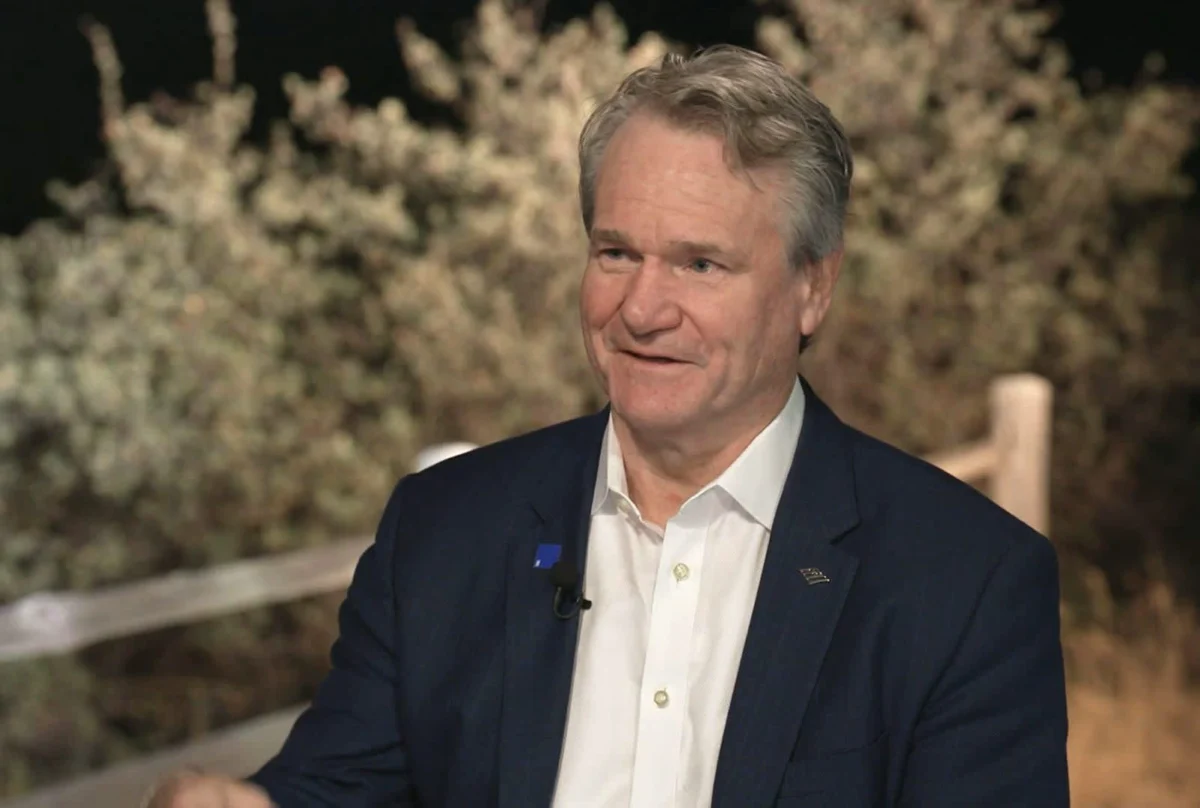
Bank of America, one of the largest financial institutions in the United States, has undertaken a massive, proactive cybersecurity initiative, deploying an "army" of external contractors and substantial financial resources to address software vulnerabilities exacerbated by advanced artificial intelligence models, including Anthropic’s Mythos. This unprecedented defensive maneuver, detailed by CEO Brian Moynihan, underscores the escalating cyber risks posed by cutting-edge AI and heralds a new era of vigilance and investment within the global financial sector. The bank’s swift response highlights the dual-edged nature of AI, which simultaneously offers immense potential for efficiency gains while presenting sophisticated new avenues for cyber exploitation.
The Genesis of a Cyber Scramble: AI’s Dual-Edged Sword
The impetus for Bank of America’s rapid mobilization stems from the emergence of what Moynihan referred to as "frontier-type models." Among these, Anthropic’s Mythos, a sophisticated AI model, gained particular notoriety after its release to a select group of banks, technology firms, and government agencies in April of the preceding year. Unlike conventional penetration testing tools, these advanced AI systems possess the capability to rapidly analyze vast swathes of code, identify complex logical flaws, and even predict potential exploit pathways that might elude human security analysts or less advanced automated tools. This ability to uncover and potentially exploit decades-old software flaws within legacy systems, intricate vendor integrations, and internal applications across the banking infrastructure prompted an immediate and decisive reaction from Bank of America’s leadership.
"That risk is real risk, and that’s why when the frontier-type models came out… A lot of us sat down and said, ‘How do we figure out how to get through this quickly?’" Moynihan explained in an interview following the bank’s third-quarter earnings release. This candid assessment reveals the urgency with which the financial industry, particularly major players like Bank of America, is grappling with the profound implications of generative AI beyond its often-touted productivity benefits. The capacity of AI to act as a potent offensive cyber weapon has forced companies into a costly defensive scramble, re-evaluating their entire digital perimeter and internal security protocols.
A Multi-Million Dollar Investment in Digital Fortification
To counter this evolving threat landscape, Bank of America moved with remarkable speed. Earlier this year, the company initiated a comprehensive effort to bolster a wide spectrum of its internal and vendor code. This massive undertaking involved not only thousands of existing employees but also a significant influx of external expertise. "We put on 1,000 contractors to help us do the patching work in the second quarter, and those people remain here today, helping us, on top of the 3,000 people we have in that area," Moynihan elaborated, emphasizing the scale of human capital deployed. This commitment represents a substantial augmentation of the bank’s already robust cybersecurity workforce, underscoring the severity of the perceived threat.
The financial outlay associated with this remediation effort has been considerable. Moynihan informed analysts that the bank spent "a couple hundred million plus" on software remediation and addressing regulatory issues related to anti-money laundering (AML) compliance in the third quarter alone. While a precise breakdown of the "couple hundred million plus" figure was not provided, industry analysts estimate that the cybersecurity component of this expenditure likely accounted for a significant portion, potentially ranging from $150 million to $250 million, reflecting the cost of specialized contractors, new security tools, and internal resource reallocation. This figure does not include the ongoing operational costs of maintaining and evolving these enhanced defenses, which are expected to continue well into the future. The concurrent spending on AML compliance remediation, a separate but equally critical regulatory concern, further highlights the increasing financial burden on banks to meet stringent operational and compliance standards.
Chronology of a Proactive Defense
The timeline of Bank of America’s response illustrates a rapid, calculated reaction to an emergent threat:
- Early 2026 (Pre-April): Initial reports and internal assessments regarding the capabilities of advanced AI models in identifying software vulnerabilities begin to circulate within top-tier financial institutions and cybersecurity circles. Bank of America’s internal security teams likely start evaluating the potential impact on their vast digital infrastructure.
- April 2026: Anthropic officially releases its Mythos AI model to a limited cohort of strategic partners, including several banks. This release serves as a critical catalyst, providing concrete evidence of AI’s advanced capabilities in vulnerability discovery.
- Late Q1/Early Q2 2026: Bank of America’s leadership, including CEO Brian Moynihan, convenes to formulate a rapid-response strategy. The decision is made to significantly escalate cybersecurity efforts and onboard external specialists.
- Q2 2026: The bank begins onboarding approximately 1,000 external contractors dedicated to "patching work." This period sees a surge in vulnerability assessments, code reviews, and the implementation of immediate security fixes across internal and vendor-supplied software. This intensive effort runs parallel to the bank’s regular operational activities.
- Q3 2026: The remediation efforts continue at full throttle, with contractors remaining on board, working alongside Bank of America’s 3,000-strong in-house cybersecurity team. This quarter sees the "couple hundred million plus" expenditure reflected in the bank’s financial statements, encompassing both the AI-related remediation and ongoing AML compliance costs.
- October 2026: Moynihan publicly discloses the details of these efforts during the bank’s third-quarter earnings call, providing one of the first specific accounts from a major U.S. corporation regarding the manpower and capital deployed to protect against AI-driven cyber threats.
Broader Implications for the Financial Sector and Regulatory Landscape

Bank of America’s experience is not an isolated incident but a harbinger of challenges facing the entire financial industry. The comments from Moynihan are among the first from a major U.S. corporation to quantify the specific resources dedicated to combating AI-enhanced cyber threats, effectively putting other institutions on notice. Cybersecurity experts have long warned about the potential for AI to democratize sophisticated cyberattacks, making advanced exploits accessible to a wider range of threat actors. Financial institutions, with their vast stores of sensitive data and critical infrastructure, are prime targets.
The regulatory environment is also intensifying. Global financial regulators, including the U.S. Treasury, the Federal Reserve, and the European Central Bank, have consistently emphasized the critical importance of robust cybersecurity defenses. Recent high-profile data breaches and ransomware attacks across various sectors have heightened scrutiny, leading to stricter guidelines and increased expectations for banks to maintain resilient systems. While Moynihan’s comments about AML compliance costs were distinct from AI remediation, they underscore a broader trend of significant regulatory pressure and associated spending in critical operational areas. Regulators are likely to view Bank of America’s proactive measures favorably, but they will also expect similar levels of commitment from other institutions.
Industry analysts, while noting the short-term impact on profitability, generally view such proactive investments as essential for long-term stability and maintaining investor confidence. During the earnings call, Bank of America’s shares initially slumped as much as 8%, reflecting investor concerns over increased operational costs. However, Moynihan sought to reassure investors that this spending surge was temporary. "Once you patch, you don’t have to patch as much… The pipeline moves through," he asserted, adding that the bank expects remediation costs to decline over time as vulnerabilities are systematically addressed and new, more secure development practices are implemented.
AI as a Strategic Asset: Balancing Defense with Innovation
Despite the significant defensive costs, Bank of America is simultaneously harnessing AI’s potential to drive efficiency and innovation. Moynihan highlighted the dual role of AI within the bank, noting that while it presents new security challenges, it also offers substantial opportunities for cost reduction and productivity enhancement. The bank currently has approximately 130 internal AI projects underway, spanning various departments from customer service and fraud detection to risk management and operational automation. Savings from these internal AI initiatives are projected to rise significantly, from an estimated $300 million this year to a substantial $700 million in 2027. This ambitious target underscores the bank’s long-term commitment to integrating AI into its core operations, despite the immediate cybersecurity outlays.
Furthermore, AI is contributing to workforce optimization. Bank of America’s overall headcount decreased by approximately 3,400 employees over the past year, a reduction achieved through the elimination of roughly 5% of managerial positions. While it is unclear how much of this workforce reduction is directly attributable to AI-driven automation, the trend suggests a strategic reallocation of human capital, with AI taking over routine tasks and allowing human employees to focus on more complex, value-added activities. This strategic pivot reflects a broader industry movement towards leveraging technology to streamline operations and enhance competitiveness.
The Path Forward: Continuous Vigilance and Adaptive Strategies
Bank of America’s response to AI-driven cyber threats provides a crucial case study for the financial industry and beyond. It demonstrates that the advent of sophisticated AI models necessitates a paradigm shift in cybersecurity strategy, moving from reactive measures to proactive, large-scale fortification. The challenge is not merely to patch existing vulnerabilities but to embed security deeply into the development lifecycle, ensuring that new systems are designed with AI-resilience in mind.
Moynihan’s closing remarks on the subject underscore the ongoing nature of this battle: "We’ve got to stay ahead of them, and we’ve got to be mindful that the people doing the software development are the people trying to sell us the services." This statement alludes to the complex ecosystem of third-party vendors and the continuous need for vigilance not just over internal code, but also over the software supply chain.
As AI technology continues to evolve at an accelerated pace, financial institutions will be required to maintain continuous investment in advanced cybersecurity measures, adapt their defensive strategies, and foster a culture of perpetual vigilance. The "army" of contractors deployed by Bank of America may be a temporary measure for specific remediation, but the underlying commitment to fortifying digital defenses against an increasingly intelligent adversary is undoubtedly a permanent fixture of modern banking. The race between AI for innovation and AI for exploitation has truly begun, and Bank of America is at the forefront of this critical cybersecurity evolution.

