
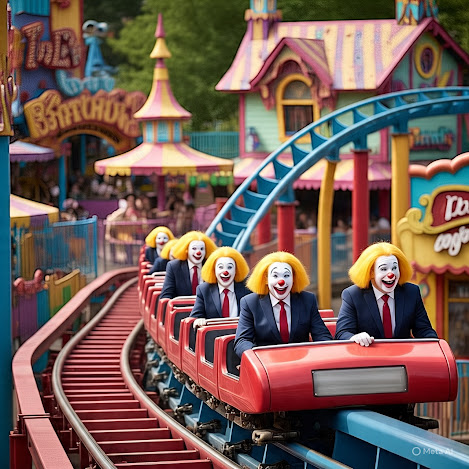
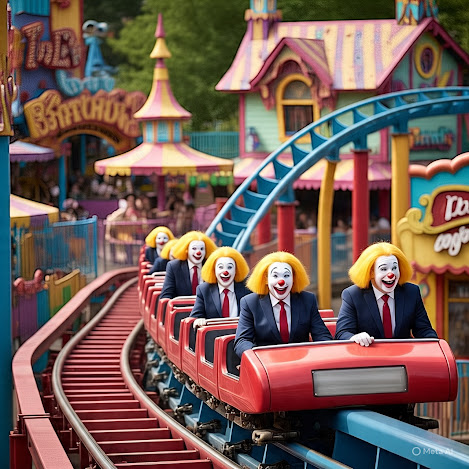
The global financial markets experienced a period of extreme volatility in early 2025, culminating in sharp drops and subsequent recoveries that left investors and analysts questioning the future. Following a multi-year bull run that peaked in February 2025, the stock market embarked on a wild roller coaster ride, shedding as much as 20% of its value before remarkably rebounding to near its previous highs by mid-year. While market fluctuations often defy singular explanations, the consensus among economists and market observers points to one primary catalyst: the widespread implementation of government tariffs.
A Market in Flux: The 2025 Roller Coaster
The prelude to the 2025 market turbulence was a period of sustained growth, fueled by various factors including technological advancements, corporate earnings, and relatively stable geopolitical conditions. This upward trajectory provided a comfortable cap to investor portfolios, creating an environment where a significant correction seemed unlikely to many. However, the first quarter of 2025 marked a distinct shift. Beginning in February, the market’s ascent halted, giving way to unprecedented swings. Major indices, including the S&P 500 and the Dow Jones Industrial Average, saw their values erode rapidly, with a peak-to-trough decline of approximately 20% over several weeks. This downturn, one of the steepest in recent history, ignited fears of a broader economic recession. Yet, just as quickly as it fell, the market demonstrated remarkable resilience, recovering nearly all its lost ground by early June 2025, bringing it back to levels close to its February peak. This V-shaped recovery, while a relief to many, underscored the underlying instability that had gripped the financial world for months.
Understanding the Tariff Mechanism
At the heart of this economic upheaval lies the concept of a tariff. A tariff is essentially a sales tax levied by a government on goods imported into a country. These taxes are typically paid by the entity doing the importing – be it an individual purchasing an e-bike directly from an overseas manufacturer or large corporations like Amazon, Walmart, or Apple importing vast quantities of products.
Crucially, while importers initially bear the cost, the burden ultimately falls on the end consumer. Businesses, faced with increased costs of goods, invariably raise their prices to maintain profit margins. This direct pass-through mechanism means that tariffs act as a de facto consumption tax, making imported goods more expensive for everyone. Beyond consumer goods, tariffs also impact industrial and construction sectors. For instance, if a company like Home Depot plans a new store or Chevron requires components for an oil rig, tariffs on imported steel, copper, lumber, and countless other materials directly inflate project costs. Similarly, the housing market experiences upward price pressure as many building materials are sourced internationally.
The aggregate effect of tariffs is generally higher prices across the board, akin to a broad-based sales tax. While the revenue generated flows into government coffers, potentially aiding national budgets and deficit reduction efforts, the broader economic impact is often a slowdown in activity and a reduction in consumer spending power. Economists generally advocate for tax systems that are low, fair, and predictable to foster an environment conducive to business investment, innovation, and long-term economic planning. The arbitrary and frequently shifting nature of the tariffs imposed in early 2025, characterized by unpredictable numbers and daily adjustments, directly contradicted these principles, injecting immense uncertainty into the global trade landscape.
The Economic Rationale: Protectionism vs. Free Trade
Governments sometimes employ tariffs with the explicit aim of protecting domestic industries. For example, a tariff on imported automobiles, such as Hondas, could theoretically give domestic manufacturers like General Motors a competitive advantage, potentially leading to increased sales and profits for the local industry. While this might indeed boost the fortunes of domestic auto manufacturers and their employees, it often comes at the expense of consumers, who face higher prices and reduced product choice.
This protective measure can be strategically justified in specific sectors, such as national defense, where ensuring the viability of domestic manufacturers like Boeing or Lockheed for fighter jets might be deemed critical. However, tariffs can also be influenced by less altruistic motives, such as political lobbying or cronyism, where specific industries or corporations benefit from protectionist policies enacted in return for political support.
Historically, both Republican and Democratic administrations have utilized tariffs. Former President Joe Biden, for instance, implemented tariffs on imported solar panel components, a policy that was subsequently escalated by former President Donald Trump. Such measures, despite their intent to bolster domestic manufacturing, are often criticized by economists for hindering the adoption of cheaper, cleaner energy sources, which could otherwise lower overall living costs and boost industrial competitiveness. Blocking the free flow of economically beneficial goods, critics argue, ultimately harms the national economy.
Tariffs and Employment: A Complex Equation
The argument that tariffs create domestic jobs is frequently cited by proponents. Continuing the automotive example, a significant tariff on imported Hondas could shift consumer demand towards domestically produced GM vehicles. This increased demand might then prompt GM to expand its workforce, open new factories, and invest in research and development, creating new jobs and skills within the country.
However, this localized boom comes with broader economic costs. Consumers face higher prices for vehicles, and businesses relying on transportation, such as Amazon, experience increased operational costs, which are then passed on to customers through higher prices for goods and services. The ripple effect extends across the economy, potentially making it slightly more expensive and less efficient for startups, medical research, or other innovative ventures to flourish. Moreover, insulating domestic industries from international competition can diminish their incentive to innovate, streamline operations, and enhance efficiency, potentially slowing their long-term growth trajectory even as their short-term profits rise.

The prevailing view among most economists is that tariffs should be used judiciously and sparingly. While they can serve specific strategic purposes, their broader application often leads to unintended negative consequences, including decreased overall employment and a deceleration of economic growth.
The Political Dimension: Unpredictability as Policy
The tariff regime observed in early 2025 was marked by an unusual degree of unpredictability, largely driven by the executive branch’s approach. Statements from political leaders suggested a belief that tariffs could somehow generate national wealth, focusing on first-order effects like domestic job creation while seemingly disregarding the widespread inefficiencies and increased costs across other sectors.
Market reactions, however, painted a different picture. Announcements of increased tariffs consistently led to declines in share prices, as companies and investors recognized the adverse impact on corporate profitability. Conversely, any indication of tariffs being paused or reduced often triggered a market rally, signaling investor relief and renewed optimism. This disconnect suggested that while tariffs were presented as a strategic weapon, their immediate effect on the economy was widely understood to be detrimental.
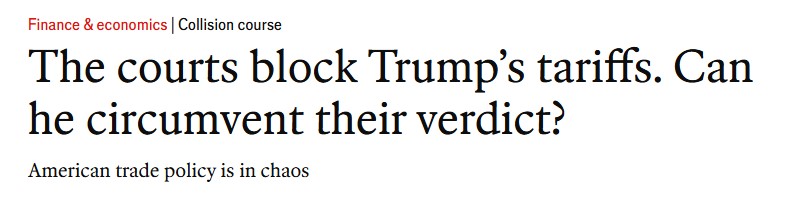
This unpredictable policy environment raised significant concerns about the stability of the U.S. economic system. Critics argued that such executive-driven trade policies circumvented the traditional checks and balances enshrined in the Constitution, effectively subjecting the national economy to the whims of a single individual. This situation prompted legal challenges, with various entities seeking judicial intervention to curb what they perceived as an overreach of executive power in trade matters, as highlighted in analyses by publications like The Economist. The outcome of these legal battles will be crucial in determining whether the constitutional framework can reassert its balance against such unprecedented executive actions.
Current Tariff Levels and Historical Context
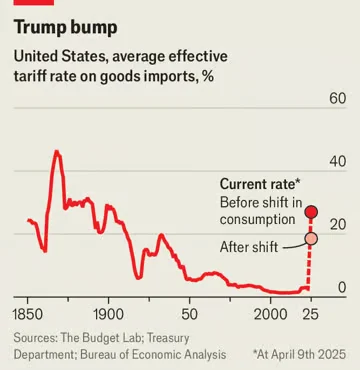
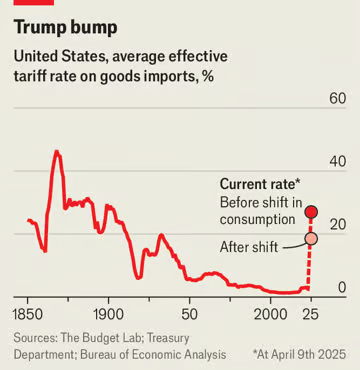
Despite the fluctuating nature of recent announcements, the effective tariff rates in early to mid-2025 remained significantly higher than those seen in the preceding 75 years. The U.S. economy has largely developed and thrived under a regime of very low tariffs and relatively free trade. A visual inspection of historical tariff data, such as that provided by The Economist, clearly illustrates a sharp departure from decades of established trade policy. While precise, real-time figures are challenging to pin down given the dynamic policy environment, estimates suggested that prevailing tariffs were approximately seven times higher than pre-2025 levels.
The Lag Effect: Why Price Hikes Haven’t Fully Materialized
Despite the substantial increase in tariffs, many consumers did not immediately experience a dramatic surge in prices. This lag can be attributed to several factors inherent in the U.S. economy’s operational scale. The United States, often compared to a massive cargo ship, possesses immense inventory levels for most goods, typically holding several months’ worth of stock.
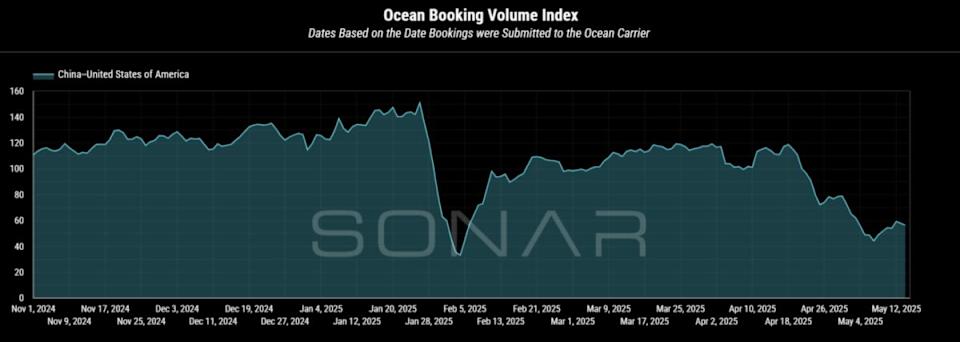
Anticipating the imposition of tariffs, many importers strategically accelerated their orders, stockpiling goods to pre-empt the higher taxes. This created a temporary buffer of cheaper products already in the country. However, as tariffs took effect, the volume of new imports dropped significantly, as evidenced by indices like the Freightwaves Ocean Shipping Index (OSI). This reduction in new supply means that the existing stockpiled inventory is being depleted rapidly. Should this trend continue, the latter half of 2025, particularly the summer and fall seasons, could see widespread shortages and noticeable price increases for various goods. While the absence of certain non-essential items might be tolerable, a shortage of fundamental tools, machinery, and components could have more severe economic consequences.
Future Scenarios: Pathways Forward
The current economic landscape presents two primary scenarios for how the tariff situation might evolve:
-
High Tariffs Persist: This scenario, while less likely given the broad economic opposition, would entail the current elevated tariff levels becoming a permanent fixture of U.S. trade policy. The long-term implications could include:
- Persistent Inflation: Consumers would continue to face higher prices for a wide array of goods, eroding purchasing power.
- Supply Chain Restructuring: Businesses would be forced to reconfigure global supply chains, potentially leading to costly "reshoring" efforts or diversification to non-tariffed countries, which could still increase production costs.
- Reduced Global Trade: International trade volumes would likely decrease, impacting economic growth not only in the U.S. but also among trading partners.
- Increased Diplomatic Tensions: Prolonged trade disputes could exacerbate geopolitical tensions, leading to retaliatory tariffs from other nations.
- Slower Economic Growth: The overall efficiency and dynamism of the U.S. economy could be hampered, leading to slower innovation and reduced competitiveness on the global stage.
-
Return to Low Tariffs and Free Trade: This scenario, widely anticipated by investors and economists, posits that the current tariff regime is primarily a negotiating tactic and will eventually be rolled back. The benefits of such a resolution would include:
- Market Stabilization: A clear resolution would reduce uncertainty, fostering greater investor confidence and market stability.
- Lower Consumer Prices: As tariffs are reduced or removed, the cost of imported goods would decrease, leading to lower prices for consumers.
- Enhanced Economic Efficiency: Businesses would regain access to cheaper international inputs, improving profitability and efficiency.
- Renewed Global Cooperation: A return to more open trade policies would likely improve diplomatic relations and foster greater international collaboration.
- Increased Economic Growth: The free exchange of goods and services is generally understood to be a powerful engine for economic growth, benefiting all participating nations. The principle of comparative advantage suggests that countries benefit most when they specialize and trade freely, allowing for optimal resource allocation and wealth creation.
Investor Resilience and Media Scrutiny
The tumultuous market period provided a stark lesson in investor psychology and media influence. On April 2nd, a significant tariff announcement triggered one of the largest single-day market drops since 1932, prompting panic selling among some investors, as exemplified by unfortunate comments from individuals locking in substantial losses. However, the subsequent two months demonstrated the market’s inherent resilience. As signals emerged that tariff policies might be reconsidered or reduced, stock prices rebounded, illustrating that investor confidence is highly sensitive to policy certainty and a belief in the long-term fundamentals of the economy. By early June, the U.S. stock market had largely recovered to its all-time highs, reflecting a collective wager by investors that the current "emergency tariff dictatorship" would eventually yield to a more stable and predictable trade environment.
This period also underscored the critical need for media literacy. Modern journalism, particularly in the click-driven digital age, often prioritizes attention-grabbing headlines over factual accuracy or nuanced reporting. The stark divergence in headlines and narratives between different media outlets regarding the same economic events highlighted a pervasive bias towards generating outrage and fear, as these emotions tend to drive engagement and revenue. For informed decision-making, it becomes imperative for individuals to either disengage from sensationalized news or cultivate deep expertise in areas of personal interest, allowing them to critically assess information from primary sources rather than relying on potentially distorted media portrayals.
In conclusion, while the economic landscape in early 2025 presented significant challenges and uncertainties, the inherent adaptability of markets and economies, coupled with a belief in the eventual triumph of sound economic principles, suggests that this period of volatility will ultimately pass. The fundamental lesson remains: maintaining a long-term perspective and basing financial decisions on robust analysis rather than transient headlines is crucial for navigating periods of economic turbulence.

