

Michael and Brian, a 34-year-old couple residing in central Connecticut, have reached a critical financial crossroads as they approach their tenth anniversary, balancing stable public sector careers against a mounting consumer debt load and the rising costs of the New England housing market. The couple, who represent a significant demographic of mid-career professionals in the "millennial" bracket, currently navigate a complex financial landscape characterized by high gross earnings but limited liquid assets. Brian serves as a quality assurance manager for a state-run hospital, while Michael operates as a project coordinator for a state behavioral health agency, supplemented by a secondary role as a disability leadership coordinator. Despite a combined gross household income of approximately $167,544, the pair faces structural financial hurdles that have delayed traditional milestones such as homeownership and legal marriage.

The Financial Profile: Income and Liability Analysis
A detailed audit of the couple’s finances reveals a robust earning potential tempered by significant monthly outgoings. Their annual net income, after taxes and benefit deductions, stands at $109,455.42. Brian’s position within the state government provides substantial long-term security, including a pension plan and "healthcare for life" benefits, which are increasingly rare in the private sector. However, the immediate balance sheet is burdened by $28,259 in consumer debt, primarily distributed across three credit cards with varying interest rates.
The debt is structured as follows:

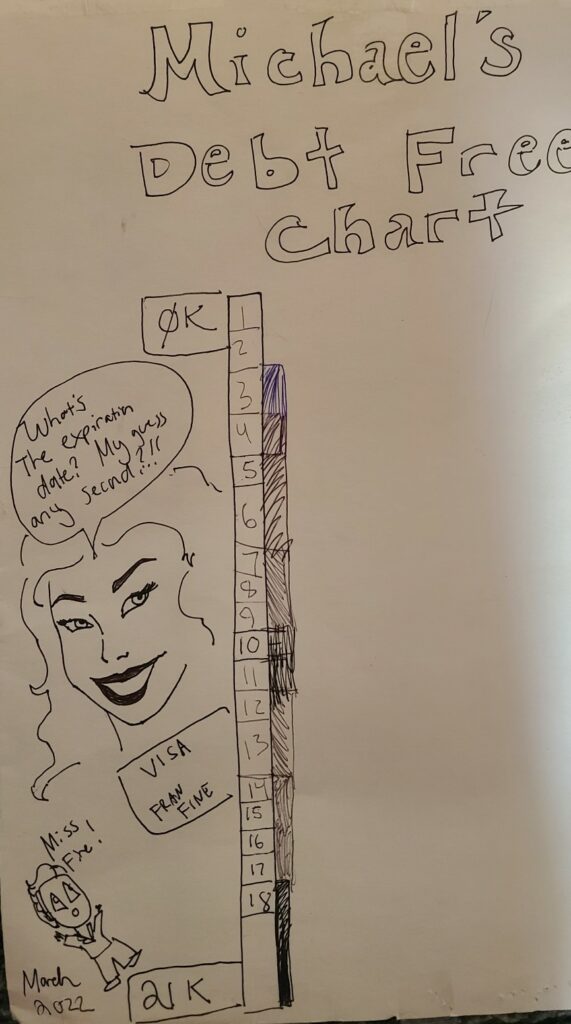
- A Sharon Credit Union Visa held by Brian with a balance of $16,057, currently at 0% interest but set to reset to 17.99% in November 2023.
- A Navy Federal Visa Platinum held by Michael with a balance of $9,700 at a 10.99% interest rate.
- A secondary Navy Federal Visa held by Brian with a balance of $2,503 at 0.99%, also set to jump to 17.74% in late 2023.
While Brian successfully liquidated $58,000 in student loans several years ago, the recent accumulation of consumer debt highlights a "feast and famine" spending cycle that financial analysts suggest often plagues households with high fixed costs and irregular emergency expenses.
Chronology of Financial Displacement (2022–2023)
The couple’s current financial anxiety is largely rooted in a series of disruptive events that occurred between late 2022 and early 2023. For eight years, Michael and Brian occupied a 600-square-foot studio apartment with a monthly rent of $945, allowing for a high degree of capital preservation. However, an unplanned transition into the 2023 rental market forced a move into a 1,200-square-foot luxury apartment in a refurbished mill. This transition resulted in a 111% increase in housing costs, with rent now totaling $2,000 per month.

The relocation coincided with significant veterinary expenses for two new kittens and a period of mechanical instability for their aging vehicles—a 2007 Mercedes C280 and a 2007 Subaru Outback, both with over 175,000 miles. These compounding factors led to the exhaustion of liquid savings and the subsequent reliance on credit cards to bridge the gap between income and escalating lifestyle costs. The move, while providing a necessary home office and improved living conditions, effectively reset their timeline for homeownership, which they had previously forecasted for late 2023.
Supporting Data: The Connecticut Economic Context
The couple’s struggle is emblematic of broader economic trends in Connecticut. According to data from the U.S. Bureau of Labor Statistics and regional housing reports, Connecticut remains one of the most expensive states for utilities and housing in the Northeast.

- Electricity Costs: The couple reports an average monthly electric bill of $235. Connecticut consistently ranks among the top five states for the highest residential electricity rates in the U.S., driven by aging infrastructure and reliance on natural gas.
- Housing Inventory: In central Connecticut, housing inventory has remained at historic lows throughout 2023, with prices remaining resilient despite rising mortgage rates. This creates a "barrier to entry" for first-time buyers like Michael and Brian, who must compete with all-cash offers and low supply.
- Public Sector Benefits: Brian’s access to a 403(b), a 457(b), and a state pension represents a "triple crown" of retirement security. However, these benefits require significant payroll deductions, which explains the delta between their $167,000 gross and $109,000 net income.
Strategic Roadmap for Debt Eradication
Financial experts suggest that for a household with a six-figure net income, a $28,000 debt load is manageable but requires immediate "austere" intervention to avoid the compounding effects of high-interest rates. The proposed strategy involves a two-pronged approach: aggressive expense reduction and tactical debt "snowballing."
Phase 1: Discretionary Spending Detox
To accelerate debt repayment, the couple must address "reducible" and "discretionary" expenses. Current data shows they spend approximately $200 on eating out, $200 on home goods, and $200 on gifts monthly. By eliminating these non-essential costs for a six-month period, they could redirect an additional $1,381.28 toward their principal balances every month. This would bring their total monthly debt-service capability to approximately $4,456.
Phase 2: High-Interest Mitigation
With $18,500 of their debt facing a massive interest rate hike in November 2023, the timeline is critical. The recommendation is to prioritize the 10.99% Michael Visa while simultaneously paying down the 0% Sharon Credit Union Visa before the 17.99% rate triggers. At the current proposed repayment rate, the couple could reach a "zero balance" status within seven months, effectively clearing the path for future asset accumulation.
Long-Term Wealth Building and Homeownership
Once debt-free, the couple’s focus shifts to the three pillars of financial independence: emergency fund restoration, retirement optimization, and a down payment for real estate.

The Emergency Fund Buffer
The couple currently holds $9,000 in cash, which covers roughly 1.1 months of their $8,035 monthly expenses. Standard financial planning for public sector employees—who enjoy high job security—suggests a minimum of three to six months of expenses in a High-Yield Savings Account (HYSA). For Michael and Brian, this target is approximately $25,000 to $30,000. This fund is categorized as a "debt-prevention tool," designed to absorb future car repairs or veterinary bills without necessitating credit card usage.
Retirement Account Optimization
The couple possesses an enviable array of tax-advantaged vehicles. Michael currently contributes 10% to a 401(k) with a 4% match. Brian has access to both a 403(b) and a 457(b). The 457(b) is particularly valuable, as it allows for penalty-free withdrawals upon separation from service, regardless of age—a key tool for those considering early retirement or a career pivot. Experts recommend maximizing these contributions to lower their taxable income, which is particularly beneficial in a high-tax state like Connecticut.

The ROI of Higher Education
A significant point of internal debate for the couple is whether Brian should pursue a master’s degree. From a purely journalistic and analytical perspective, the Return on Investment (ROI) for graduate degrees in the public sector must be weighed against the opportunity cost of the tuition and the time away from capital accumulation. Unless the degree is a prerequisite for a specific salary grade increase that exceeds the cost of the degree within three to five years, experts often advise against taking on further educational debt while in a recovery phase.
Broader Impact and Implications
The case of Michael and Brian highlights the "middle-class squeeze" in high-cost-of-living corridors. Despite having what many would consider "dream" jobs with state-backed security, the couple feels "behind" their peers. This psychological component—financial shame—is a growing trend among millennials who reached career maturity during a decade of volatile housing markets and inflationary spikes.

However, an objective analysis of their balance sheet suggests they are in a superior position compared to the national average. They possess $91,250 in total assets and zero student loan debt. Their primary challenge is not a lack of income, but a lack of "cash flow management." By transitioning from a reactive financial posture (using debt to cover emergencies) to a proactive one (using an emergency fund to cover volatility), they are likely to achieve their goal of homeownership within 24 to 36 months.
Conclusion: The Path Forward
Michael and Brian’s journey toward "adulting 2.0" requires a shift in perspective from debt-shame to strategic management. By leveraging their stable state incomes and high-quality benefit packages, they have the tools to eradicate their consumer debt by mid-2024. The transition from luxury renting to rural homeownership in Connecticut is feasible, provided they maintain the discipline to prioritize liquid savings over discretionary consumption. As they celebrate their 10th anniversary, the couple is not merely surviving a series of financial setbacks; they are laying the groundwork for a "lasting legacy" built on the foundation of public service and fiscal prudence.

