

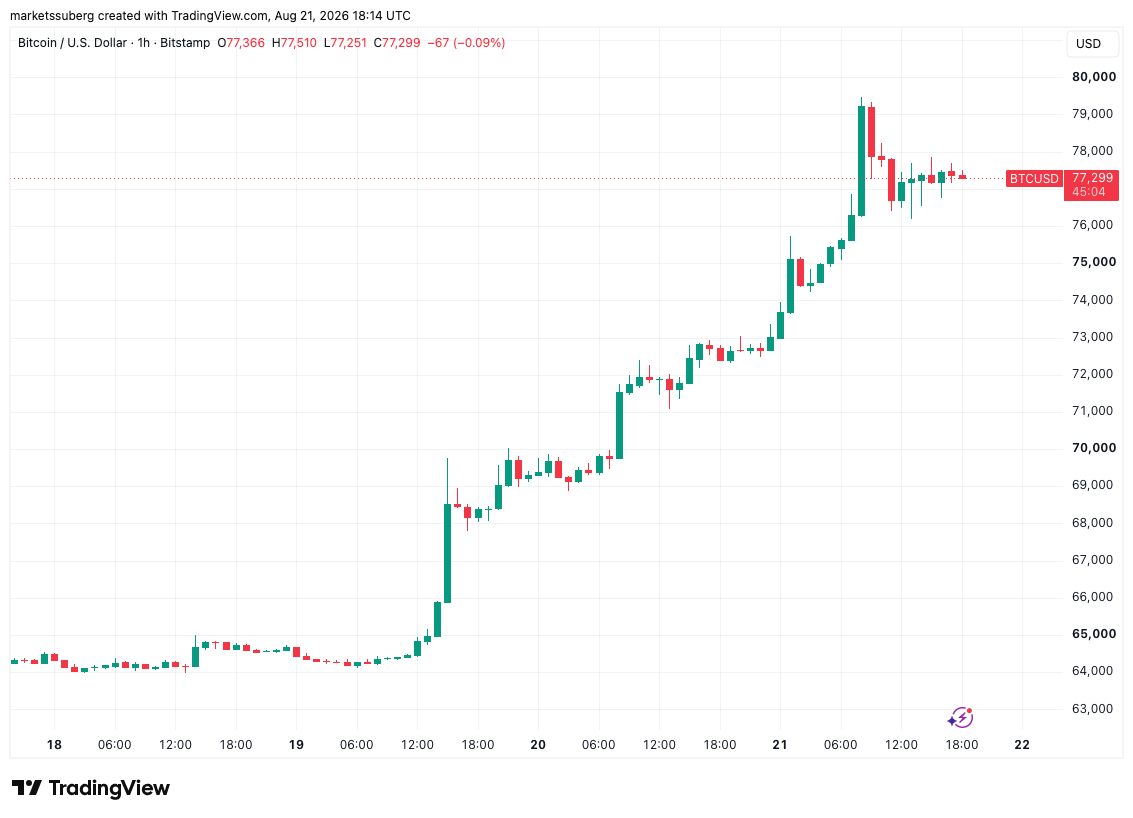
Bitcoin (BTC) maintained its upward momentum, consolidating above the significant $77,000 mark following the opening of Wall Street trading on Friday. This surge coincided with gold also experiencing a robust rally, reaching its highest levels in 14 weeks. The parallel ascent of these traditional and digital safe-haven assets underscores a growing investor concern over persistent inflation and shifts in fiscal policy.
Market Dynamics: A Synchronized Rally
Data from TradingView revealed that BTC/USD, after touching its highest points since May 15, was trading with gains of nearly 6% on the day. This upward movement indicates a strong bullish sentiment in the cryptocurrency market. Simultaneously, gold prices mirrored this trend, climbing to $4,632 per ounce, marking a 2.2% increase by the time of reporting. Over the past month, both Bitcoin and gold have demonstrated significant appreciation, with BTC/USD up by 13% and XAU/USD by 16%, respectively. This synchronized performance between a leading cryptocurrency and a classic inflation hedge suggests a shared underlying driver.
Analysis: Inflation, Deficit Spending, and Treasury Policy as Key Catalysts
Market observers have pointed to a confluence of macroeconomic factors as the primary drivers behind the recent gains in both Bitcoin and gold. The Kobeissi Letter, a prominent market commentary service, stated, "What’s happening now in gold and crypto should not come as a surprise." This sentiment highlights the predictable nature of these assets’ reactions to specific economic conditions.

The analysis attributes these rapid gains to a combination of persistent inflation, escalating government deficit spending, and evolving U.S. Treasury policy. Specifically, record levels of government deficit spending, coupled with the Treasury Department’s recent pledge to at least double the size of certain debt buyback operations to $4 billion, have been identified as significant catalysts. These fiscal actions can lead to an increase in the money supply and a devaluation of fiat currencies, making assets like gold and Bitcoin more attractive as stores of value.
Cross-Asset Signals: Beyond U.S. Borders
The financial stress signals driving this market movement appear to extend beyond the United States. Trading company QCP Capital noted in its latest Market Color analysis that the surge in Japanese government bond yields, following a rare joint currency intervention in the yen earlier this month, is a notable indicator. This intervention, aimed at supporting the yen, has had ripple effects across global financial markets, highlighting the interconnectedness of monetary policies and their impact on asset valuations.
QCP Capital further elaborated on the divergence observed in market reactions following the U.S. Treasury’s announcement. While Treasuries initially rallied before relinquishing much of their gains, Bitcoin and gold exhibited greater resilience, failing to retrace to the same extent. This suggests that while short-term market fluctuations can impact all asset classes, these alternative assets are demonstrating a stronger conviction in their upward trajectory, driven by broader macroeconomic concerns.
"That does not establish a new liquidity or monetary regime, but it does highlight the sensitivity of alternative assets to changes in long-end rates and the dollar," QCP Capital stated, emphasizing the nuanced relationship between traditional financial instruments and newer asset classes.
Polymarket Odds: A Look Towards Future Price Targets
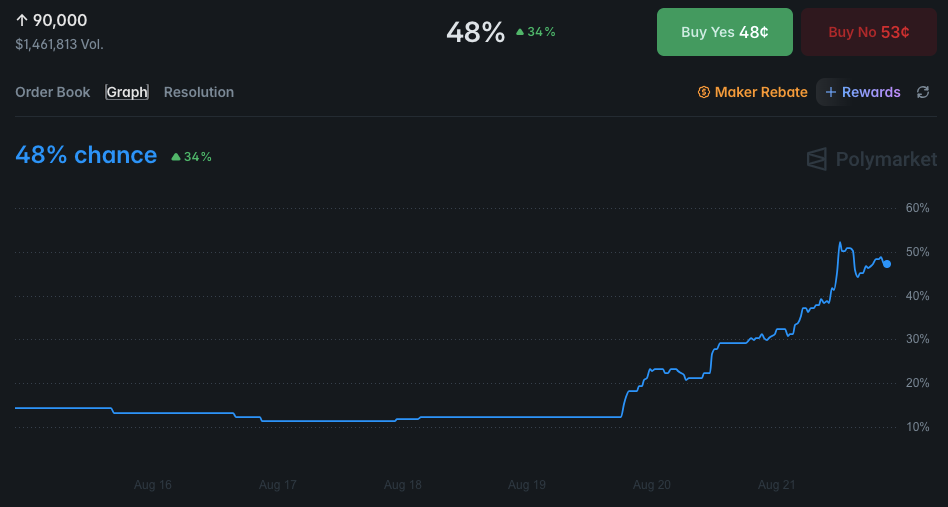
The recent price appreciation has also led to an improvement in consensus regarding potential year-end price targets for Bitcoin. Data from the prediction service Polymarket indicates that the odds of BTC/USD reaching $90,000 before 2027 have climbed to 48% at the time of reporting. This represents a significant increase from the beginning of the week, suggesting growing optimism among market participants about Bitcoin’s future upside potential.
The upward revision in these odds reflects a renewed confidence in Bitcoin’s ability to act as a hedge against economic uncertainty and currency debasement. Investors are increasingly viewing Bitcoin not just as a speculative asset but as a potential long-term store of value, similar to gold.
Technical Analysis and Skepticism
Despite the generally positive sentiment, some market participants remain cautious, emphasizing the importance of key technical indicators. Trader and analyst Rekt Capital highlighted that Bitcoin needs to reclaim its 50-week exponential moving average (EMA) at $77,232 to confirm a sustained entry into a new technical macro uptrend. This level has previously acted as resistance, having been rejected in January.
Rekt Capital warned on X, "Break the Downtrend and Bitcoin will confirm entry into a new technical Macro Uptrend. Reject from here however and price will maintain its series of Lower Highs." He further cautioned, "History suggests there’s still time for price to continue its Downtrend," implying that while the current rally is encouraging, a sustained upward movement requires overcoming significant technical hurdles.
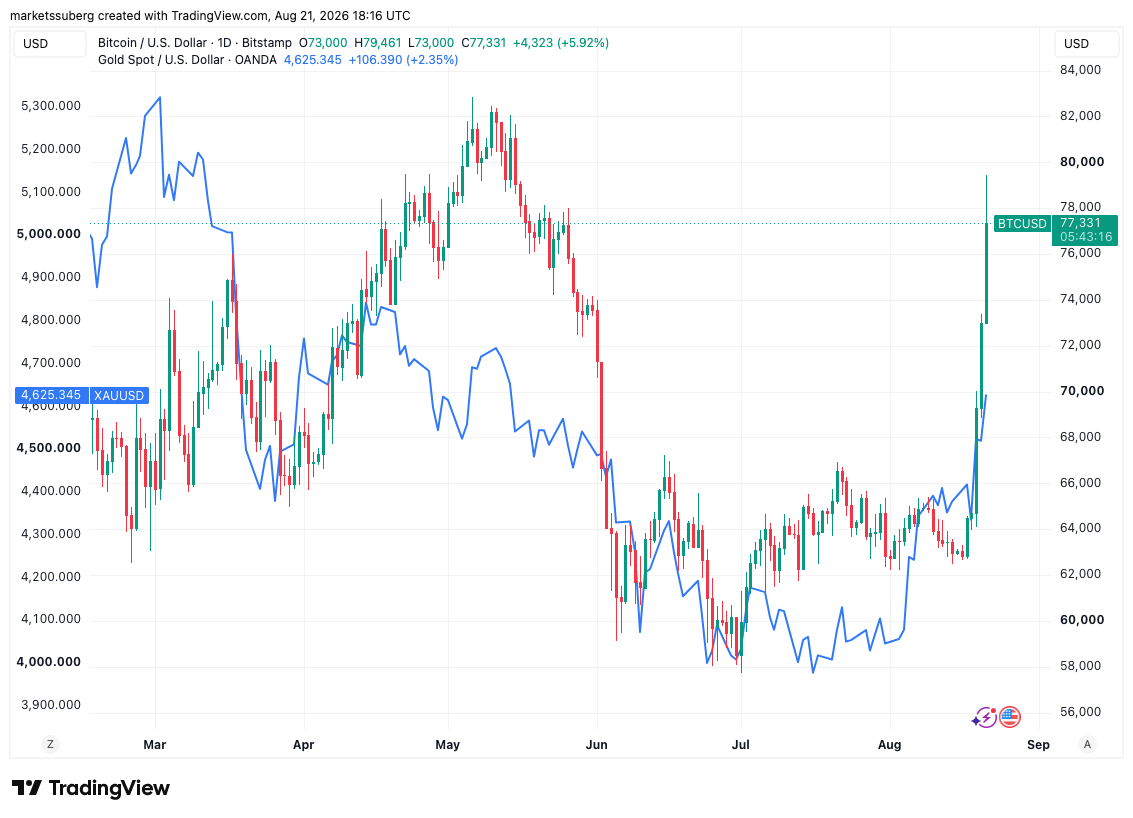
The rejection from this crucial technical level in the past suggests that while market sentiment is currently bullish, traders are closely watching for confirmation of a more sustainable trend reversal. The ability of Bitcoin to hold its gains above $77,000 and subsequently break through the 50-week EMA will be critical in determining its short-to-medium term trajectory.
Broader Implications and Market Context
The synchronized rise of Bitcoin and gold in the face of macroeconomic headwinds offers a compelling narrative about investor behavior in uncertain economic times. Historically, gold has been the go-to asset for hedging against inflation and currency devaluation. However, the increasing correlation with Bitcoin suggests that digital assets are gaining traction as a viable alternative or complementary safe-haven asset.
The current economic climate is characterized by elevated inflation rates globally, driven by a combination of supply chain disruptions, geopolitical tensions, and expansive fiscal and monetary policies implemented during recent crises. Governments worldwide have engaged in significant deficit spending to support their economies, leading to an increase in national debt levels. This expansionary fiscal policy, when not matched by corresponding economic growth, can devalue existing fiat currencies, prompting investors to seek assets that are perceived to hold their value or appreciate.
The U.S. Treasury’s actions, particularly concerning debt buybacks, are designed to manage the national debt and influence interest rates. However, large-scale interventions in the debt market can also have broader implications for liquidity and investor confidence. When such actions lead to a perception of currency weakening or increased economic instability, investors often flock to assets perceived as more stable or uncorrelated with traditional financial markets.
The response of Bitcoin and gold in this environment suggests a growing recognition of their roles as potential inflation hedges. Bitcoin, with its capped supply of 21 million coins, is often compared to digital gold, offering a decentralized and scarce store of value. Gold, on the other hand, has a long-established history as a safe-haven asset, valued for its tangible nature and historical resilience during economic downturns.
The fact that both assets are rallying in tandem indicates a shift in investor sentiment and potentially a diversification of strategies for wealth preservation. It also underscores the increasing maturity of the cryptocurrency market, with Bitcoin exhibiting characteristics that appeal to a broader range of investors seeking to mitigate risks associated with traditional financial systems.
The ongoing developments in fiscal policy, inflation data, and geopolitical events will continue to shape the narrative for both Bitcoin and gold. As investors navigate this complex economic landscape, the interplay between traditional safe havens and emerging digital assets will remain a key focus for market participants. The sustained strength of this correlated rally could signal a more profound and lasting change in how investors perceive and allocate capital in a world grappling with persistent economic uncertainties.
This article was produced in accordance with Cointelegraph’s Editorial Policy and is intended for informational purposes only. It does not constitute investment advice or recommendations. All investments and trades carry risk; readers are encouraged to conduct independent research.

