
A groundbreaking new peer-reviewed study has revealed that the complex fault system underlying the densely populated regions of Los Angeles and the Inland Empire is currently experiencing a level of stress unparalleled in the last millennium. This critical research indicates a heightened risk that a single seismic rupture could simultaneously tear across both the formidable San Andreas and San Jacinto faults, triggering a major earthquake with potentially catastrophic consequences for the region. The findings underscore the urgent need for continued vigilance and preparedness in one of the world’s most seismically active urban landscapes.
The comprehensive research, spearheaded by Dr. Liliane Burkhard of the University of Bern and published in the esteemed Journal of Geophysical Research: Solid Earth, employed sophisticated computational models to simulate 1,000 years of earthquake cycles within the southern San Andreas and San Jacinto fault systems. These simulations allowed scientists to reconstruct the historical accumulation and release of tectonic stress, providing an unprecedented long-term perspective on the current seismic state of the region. The study’s core revelation is the current stress levels, which are shown to be significantly higher than at any point in the simulated millennium, raising alarms among seismologists and emergency planners alike.
The Critical Junction: Cajon Pass as an "Earthquake Gate"
At the heart of this elevated risk lies Cajon Pass, a geologically and infrastructurally vital junction situated northeast of Los Angeles. This narrow mountain pass is where the southern segments of the San Andreas and San Jacinto fault systems converge, forming a complex intersection that the research team aptly describes as an "earthquake gate." The significance of Cajon Pass extends far beyond its geological role; it is a critical transportation and utility corridor for Southern California. Interstate 15, a primary artery connecting Southern California to Las Vegas and points north, traverses the pass, alongside major freight rail lines that are essential for regional and national commerce. Furthermore, vital power corridors and the aqueducts supplying Southern California’s water — a lifeline for millions — all cross through this vulnerable choke point. Any significant seismic event originating or propagating through Cajon Pass would not only cause immediate ground shaking but could also cripple essential infrastructure, leading to cascading failures across the region.
Unprecedented Stress Levels: The Coulomb Stress Model
The study’s simulations quantified the accumulated stress using the concept of Coulomb stress, a measure of the effective shear stress on a fault that takes into account both shear and normal stresses. The model projected a Coulomb stress value of 3.6 megapascals (MPa) on the San Jacinto-Bernardino segment of the fault system. This figure represents the highest value observed anywhere within the entire 1,000-year reconstruction, indicating an extraordinary level of tectonic strain. Concurrently, the San Andreas Mojave South segment showed an elevated Coulomb stress of 2.8 MPa. Both values are not only high in isolation but are also "closely aligned," a configuration that historical seismic events suggest often precedes joint ruptures.
Researchers, however, emphasize a crucial caveat: these figures are "modeled values that depend on the simulation’s assumptions, not direct measurements from underground." While the models are highly sophisticated and based on extensive geological and seismic data, they are inherently theoretical reconstructions. Nevertheless, the consistency and magnitude of the projected stress levels provide a compelling scientific basis for concern. The concept of an "earthquake gate" at Cajon Pass is particularly relevant here, as it illustrates how this junction can either act as a barrier, stopping a propagating rupture, or, under specific stress conditions, facilitate its passage, allowing the rupture to jump between or propagate along multiple fault segments.
Historical Context: Lessons from Past Earthquakes
California’s seismic history offers stark reminders of the potential for powerful earthquakes along these fault lines. The region has experienced several major ruptures, two of which are particularly pertinent to the current study’s findings:
- 1857 Fort Tejon Earthquake: This event, estimated at a magnitude of roughly 7.9, was a massive rupture along the San Andreas Fault. Historical accounts suggest that this earthquake’s rupture stopped at Cajon Pass, highlighting the pass’s potential role as a rupture terminator. The immense energy released by this quake caused widespread damage, even in the sparsely populated California of the mid-19th century, demonstrating the sheer power of the San Andreas. Over 160 years of tectonic slip – the gradual movement of the Earth’s plates – has accumulated since this event, meaning the fault segments have been continuously loading with stress, much like a spring being wound tighter and tighter.
- 1812 Wrightwood Earthquake: In contrast to the 1857 event, the 1812 Wrightwood earthquake is believed by many seismologists to have successfully crossed both the San Andreas and San Jacinto faults. This through-going rupture scenario is precisely what the new study warns could occur again. A similar event today, given the current stress levels, could reach a magnitude of 7.4 to 7.8, according to the research. Such an earthquake would dwarf many of the more recent, smaller seismic events that Californians have experienced.
These historical precedents underscore the dynamic nature of the fault systems and the variable behavior of Cajon Pass. The fact that a dual rupture has occurred in the past, combined with the current unprecedented stress levels, makes the present situation particularly concerning.
The "ShakeOut" Scenario: Projecting Catastrophic Impacts

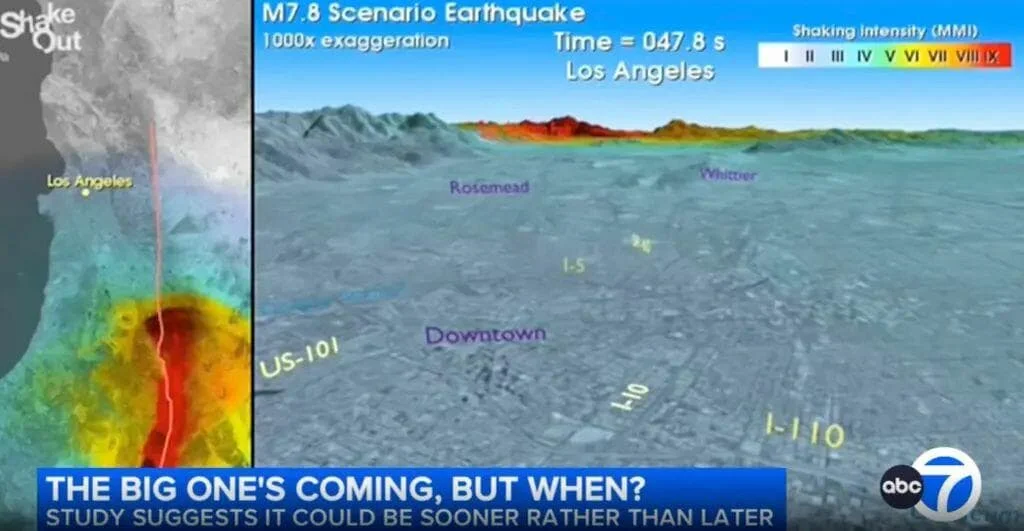
To grasp the potential scale of a major earthquake in Southern California, it is essential to consider scenarios like the widely cited magnitude-7.8 "ShakeOut" scenario, which Caltech seismologist Lucy Jones helped develop. The ShakeOut scenario, a collaborative effort by numerous scientists and emergency planners, projects the potential impacts of a large-scale San Andreas rupture. The findings are chilling:
- Duration of Shaking: Nearly two minutes of intense ground shaking, a duration far longer and more violent than what most residents have ever experienced.
- Human Cost: Over 1,800 fatalities and more than 50,000 injuries. These figures reflect the dense urban population, the vulnerability of older buildings, and the potential for widespread infrastructure collapse.
- Economic Devastation: Over $200 billion in damages. This staggering figure encompasses direct structural damage to homes, businesses, and infrastructure, as well as indirect costs from business interruption, supply chain disruptions, and the long-term economic recovery effort.
- Infrastructure Collapse: The scenario anticipates widespread disruptions to water, power, communications, and transportation networks, exacerbating the humanitarian crisis and hindering response efforts.
Such a scenario highlights the immense challenges facing emergency services, healthcare systems, and the economy in the aftermath of a major earthquake. The current study’s findings suggest that the conditions for such an event are more primed than they have been in a millennium.
Expert Perspectives and Warnings: "Not If, But When"
Leading seismologists are reinforcing the study’s implications with stark warnings. Caltech seismologist Lucy Jones, a renowned expert in earthquake preparedness, articulated the inherent uncertainty in timing but certainty in occurrence, stating in an interview with ABC7, "It could go another 100 years. It could be tomorrow." This sentiment encapsulates the challenge of earthquake prediction: while scientific models can indicate heightened risk and potential magnitude, pinpointing the exact moment of rupture remains beyond current capabilities.
Dr. Liliane Burkhard, the study’s lead author, echoed this perspective when speaking to Newsweek. While stopping short of forecasting a specific date, she emphasized the system’s current state: "the system is as loaded as it has ever been in our record, and the question is not really if but when." This clear statement from the research team underscores that the geological forces are inexorably building, and the region is operating under a historically unprecedented level of tectonic strain. These expert opinions serve as a crucial call to action, urging both public and private sectors to bolster preparedness measures.
Broader Impact and Implications: A Call for Enhanced Preparedness

The findings of Dr. Burkhard’s study carry significant implications for public safety, infrastructure planning, and emergency management across Southern California.
- Public Awareness and Education: The study reinforces the need for continuous public education campaigns on earthquake preparedness. This includes encouraging residents to secure their homes, prepare emergency kits, develop family communication plans, and participate in drills like the annual Great California ShakeOut. Understanding the "Drop, Cover, and Hold On" protocol is paramount.
- Infrastructure Resilience: The vulnerability of Cajon Pass, with its concentration of critical infrastructure, highlights the need for ongoing investment in earthquake-resistant construction and retrofitting programs. Ensuring the resilience of bridges, highways, rail lines, power grids, and aqueducts against severe seismic shaking is not merely a precautionary measure but an economic imperative. The costs of proactive mitigation are often far less than the recovery costs following a catastrophic event.
- Emergency Response Planning: Emergency management agencies at federal, state, and local levels are undoubtedly reviewing these findings to refine their response plans. This includes scenarios for mass casualties, widespread fires, extended power outages, and the logistical challenges of delivering aid and coordinating rescue efforts across a vast, damaged area. The potential for a dual rupture complicates these plans, requiring more comprehensive and integrated strategies.
- Long-Term Urban Planning: The study serves as a critical input for long-term urban planning and land-use policies. Decisions about where and how to build new communities, especially in seismically active zones, must incorporate the latest scientific understanding of fault behavior. This includes enforcing strict building codes and considering the cumulative impact of development on vulnerability.
- Continued Research and Monitoring: The study underscores the vital importance of ongoing geological and seismological research. Continuous monitoring of fault activity, deployment of advanced sensor networks, and further refinement of simulation models are essential for improving understanding and, ultimately, enhancing prediction capabilities and preparedness strategies.
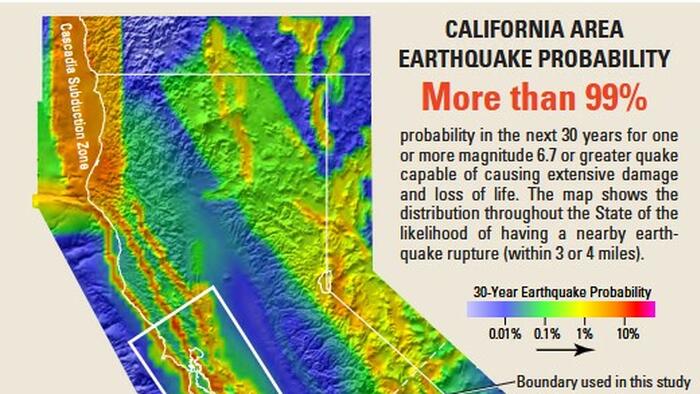
A 2008 USGS forecast had already placed the 30-year odds of a magnitude-6.7 or larger earthquake on the southern San Andreas Fault at 59 percent, the highest probability for any fault in California. While the new study does not offer a revised probability, it significantly enriches the understanding of the underlying stress conditions, painting a picture of a system that is currently more loaded than at any point in recent history.
In conclusion, the new research from the University of Bern provides a sobering assessment of the seismic risk in Southern California. By simulating a millennium of tectonic activity, scientists have identified an unprecedented accumulation of stress on the San Andreas and San Jacinto fault systems, particularly at the critical Cajon Pass junction. While the exact timing of the next major earthquake remains elusive, the scientific consensus is clear: the question is not if Southern California will experience a major seismic event, but when. This knowledge must serve as a powerful impetus for sustained preparedness efforts, robust infrastructure investment, and continuous public education to mitigate the inevitable impacts of a region living on the edge of tectonic plates.

