
SAN DIEGO, Calif. — Smart Passive Income (SPI), the preeminent online business education platform founded by entrepreneur Pat Flynn, has officially announced the debut of the Superfans System. This new initiative marks a strategic pivot for the organization, transitioning from a traditional library of digital courses to a guided, stage-based roadmap designed to help creators navigate the complexities of building a sustainable business in an increasingly saturated digital landscape. Launched on April 21, 2026, the system is integrated directly into the SPI Community, providing a structured framework for entrepreneurs to identify their current business stage and execute the specific strategies required to reach the next level of growth.
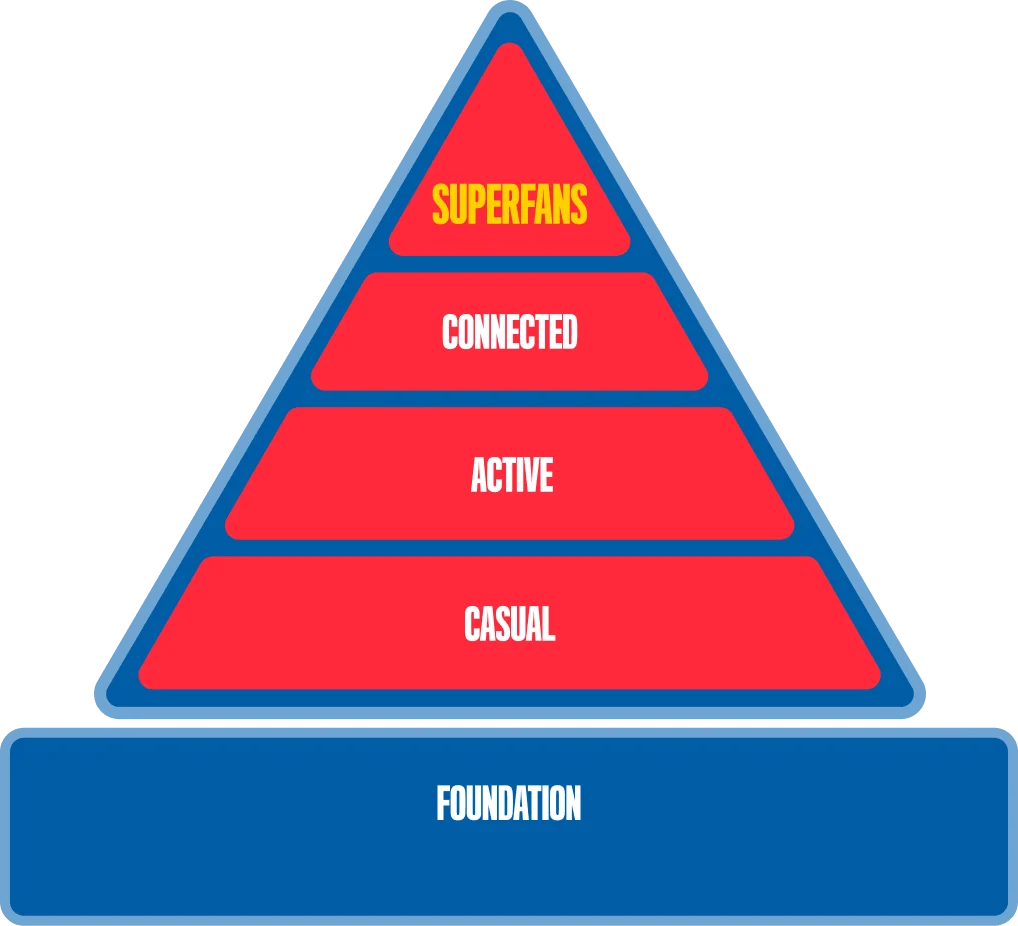
The Superfans System is predicated on the "Pyramid of Fandom" philosophy introduced in Flynn’s 2019 bestseller, Superfans. By organizing the entrepreneurial journey into five distinct phases—Foundation, Casual, Active, Connected, and Superfans—SPI aims to address the primary challenge facing modern creators: information overwhelm. Rather than presenting users with a vast, unorganized catalog of content, the system utilizes diagnostic tools to place members within the appropriate tier, offering a curated selection of courses, community support, and monetization strategies tailored to their specific needs.
Addressing the Crisis of Information Overwhelm in the Creator Economy
The launch of the Superfans System arrives at a critical juncture for the creator economy, which is projected to reach a market valuation of nearly $480 billion by 2027. Despite the proliferation of platforms such as TikTok, YouTube, and various newsletter services, many entrepreneurs struggle to translate raw audience numbers into viable business models. Pat Flynn, speaking during the system’s launch event, noted that the modern entrepreneur does not suffer from a lack of information, but rather a lack of direction.
"Entrepreneurs today don’t have an information problem. They have an overwhelm problem," Flynn stated. "There are thousands of videos, podcasts, courses, and experts telling you what you should be doing. The harder question is, ‘What should I be doing right now?’ That’s what we wanted the Superfans System to answer."
This shift reflects a broader trend in the EdTech and professional development sectors, where "curated pathways" are replacing "buffet-style" learning. Industry analysts suggest that as artificial intelligence continues to lower the barrier to content creation, the value of human-centric community and structured implementation has increased. SPI’s move toward "community-powered courses" emphasizes accountability and peer-to-peer feedback, moving away from the passive consumption models that dominated the early 2010s.
A Chronology of Evolution: From Blog to Business Infrastructure
To understand the significance of the Superfans System, it is necessary to look at the evolution of Smart Passive Income over the past two decades. Founded by Pat Flynn in 2008 following his departure from the architecture industry, SPI began as a blog documenting Flynn’s journey in generating passive income through niche websites.
In 2010, the launch of the Smart Passive Income Podcast catalyzed the brand’s growth, establishing Flynn as a trusted voice in the "transparent business" movement. Over the subsequent decade, SPI expanded its offerings to include high-ticket courses, workshops, and a premium membership community. However, as the catalog grew, the difficulty of navigating the resources increased.
The publication of Superfans in 2019 provided the conceptual blueprint for what would eventually become the 2026 system. The book argued that business longevity is not found in "going viral," but in building deep, meaningful connections with a core group of advocates. The 2020-2024 period saw SPI testing these theories through various "accelerator" programs and "cohort-based" challenges. The April 2026 launch represents the culmination of these experiments, formalizing the philosophy into a permanent digital infrastructure.
The Five-Level Roadmap: A Structural Breakdown
The Superfans System divides the creator’s journey into five logical tiers, each with its own set of objectives and monetization milestones.
Level 0: Foundation – Establishing the Core
At this entry stage, the focus is on clarity and market positioning. Entrepreneurs are tasked with defining their target demographic, identifying the specific problems they intend to solve, and establishing a unique value proposition. Resources at this level are designed to prevent the common mistake of building a product before confirming market demand.
Level 1: Casual – Discovery and Growth
In the Casual phase, the objective is "getting found." This stage focuses on top-of-funnel discovery through short-form video, social media algorithms, and search engine optimization. Monetization at this level is often external, involving affiliate marketing, sponsorships, and brand partnerships that leverage early audience attention.
Level 2: Active – Relationship Development
Once an audience is established, the focus shifts to intentionality. Creators move their "casual" viewers into owned media channels, such as email lists and podcasts. This stage emphasizes the transition from being a "discovery" creator to a "destination" creator. Revenue streams typically evolve to include the creator’s own products, services, and introductory digital courses.
Level 3: Connected – Community Integration
The Connected level marks the transition from a one-to-many relationship to a many-to-many environment. Creators are encouraged to build communities, memberships, and live experiences where audience members can interact with one another. This fosters a sense of belonging and significantly increases customer lifetime value through recurring revenue models.
Level 4: Superfans – Advocacy and Experience
The highest tier of the system focuses on the "Superfans"—the most loyal subset of an audience who act as brand ambassadors. Strategies at this level involve creating exclusive, high-touch experiences and loyalty programs. The goal is to build a "moat" around the business through deep emotional connection and word-of-mouth growth that is independent of platform algorithms.
Market Analysis and Strategic Implications
The introduction of the Superfans System highlights a significant shift in how online businesses are valued. While the "funnel" model—where large amounts of traffic are poured into a system to yield a small percentage of buyers—remains a staple of digital marketing, Flynn argues that it often ignores the human element of connection.
"Most people are taught to think about their audience like a funnel," Flynn explained. "Funnels are useful, but they don’t automatically create connection. Superfans are created by the moments and experiences you give people over time."
Economic data from the creator sector suggests that niche-focused businesses with high engagement rates often outperform broad-reach accounts in terms of profit margins. By prioritizing "connection" over "reach," SPI is positioning its members to survive "algorithm volatility"—the phenomenon where sudden changes in social media platforms can decimate a creator’s traffic overnight.
Furthermore, the integration of "community-powered courses" addresses the historically low completion rates of self-paced online learning. Industry benchmarks show that completion rates for standard Massive Open Online Courses (MOOCs) often hover below 10%. By contrast, cohort-based and community-integrated models have shown completion and implementation rates upwards of 70%, as they provide the social pressure and support necessary for long-term commitment.
Official Responses and Industry Outlook
The launch has been met with positive early feedback from within the SPI Community. Participants in the 14-Day Video Challenge, which served as a precursor to the system’s rollout, noted that the roadmap provided a much-needed sense of "permission" to ignore certain trends that were not relevant to their current stage.
Industry observers suggest that SPI’s restructuring could serve as a template for other education-based brands. By organizing a library around a "journey" rather than a "topic," SPI is effectively acting as a digital mentor rather than a simple content provider.
Sandra Mann, Director of Marketing at Smart Passive Income, emphasized that the system is designed to grow with the user. "Information is everywhere now. Technically, you can find out how to do almost anything we teach somewhere online. What’s missing is having that information put into a system, knowing when you need it, and having other people taking that journey alongside you," Mann said.
Conclusion and Future Outlook
As the Superfans System becomes the central pillar of the SPI ecosystem, the company plans to continue integrating new technologies, including AI-driven diagnostic tools, to further personalize the member experience. The system is currently available to all members of the SPI Community, with Flynn providing ongoing guidance through specialized podcast episodes, including the recently released SPI Podcast episode 928, which delves deeper into the "Creator Empire" concept.
By moving away from the "more is better" philosophy of information and toward a "right thing at the right time" approach, Smart Passive Income is attempting to set a new standard for entrepreneurial education. In an era where the digital landscape is more crowded than ever, the Superfans System offers a structured path for those looking to build businesses that are not only profitable but also resilient and human-centered.

