

The United States finds itself navigating an exceptionally turbulent period, marked by profound political polarization, significant domestic infrastructure disruptions, and evolving international dynamics. A widespread perception of a fractured societal consensus on fundamental realities underscores the challenges facing the nation, from the corridors of power to everyday life. This era is characterized by a rapid succession of events that test institutional resilience and public trust, creating an environment where a shared understanding of "what is actually happening and what it means" appears increasingly elusive. The underlying currents suggest a departure from conventional political sparring, pushing the nation into a complex phase that some analysts describe as a constitutional stress test.
Heightened Political Tensions and Constitutional Debates
The political landscape in America has intensified beyond traditional partisan disagreements, giving rise to discussions about the very foundations of its constitutional framework. Experts and commentators from various ideological spectrums have expressed growing concerns over the erosion of established norms and the increasing difficulty in achieving bipartisan consensus on critical national issues. This environment fosters a sense of instability, where trust in governmental institutions and the electoral process is frequently questioned.
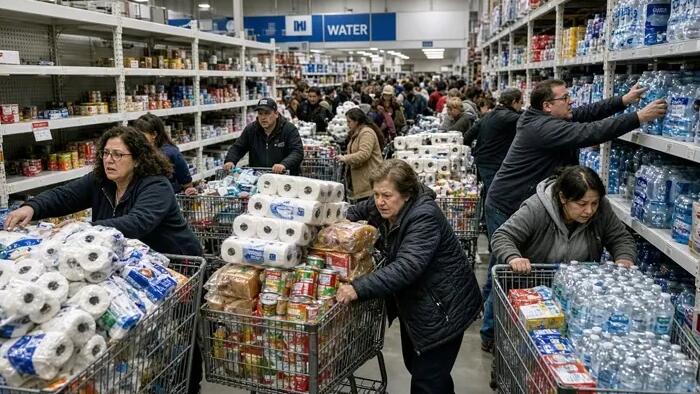
The concept of a "constitutional crisis" is often invoked during periods of severe political deadlock or when there is a fundamental disagreement over the interpretation and application of constitutional principles. While the term itself carries significant weight and is not universally agreed upon as a current descriptor, the ongoing debates reflect a deep-seated anxiety about the nation’s political trajectory. For instance, the fierce contestation of election results, the weaponization of political rhetoric, and the perceived breakdown of checks and balances contribute to this heightened sense of constitutional vulnerability. Political scientists frequently point to factors such as increased partisan loyalty, the rise of identity politics, and the influence of social media in fragmenting public discourse as contributors to this challenging environment. The perceived inability to coalesce around a baseline understanding of facts or shared national objectives creates fertile ground for societal anxiety, which can manifest in diverse ways, from consumer panic buying to widespread public cynicism.
Security Posture and Executive Branch Movements
In recent days, reports have highlighted an unusual level of security and discretion surrounding high-ranking government officials, including the President and key cabinet members. While specific details remain under wraps due to national security protocols, observations of the President maintaining a reduced public profile and certain cabinet officials being reportedly relocated to secure regional military installations have fueled public speculation. These actions align with established continuity of government (COG) procedures, designed to ensure the uninterrupted functioning of federal operations during times of national emergency or heightened threat.
The Vice President, for example, was reportedly at Camp David, a common secure location for executive branch continuity. Such movements are typically coordinated by security agencies, including the Secret Service and various intelligence branches, in response to credible threat assessments. While the original reports alluded to unsubstantiated rumors of an Iranian drone plot targeting these officials or concerns about domestic terrorist cells potentially activated by recent migrant influxes, official sources have not publicly confirmed these specific threats. However, intelligence agencies continuously monitor a wide array of potential threats, both foreign and domestic, ranging from state-sponsored cyberattacks to extremist violence. The general context of these enhanced security measures is often attributed to the overall volatile geopolitical climate and domestic political tensions, which necessitate a proactive approach to protecting critical government personnel and infrastructure. The Department of Homeland Security and the Federal Bureau of Investigation routinely issue advisories regarding potential threats, and security postures are adjusted accordingly based on the latest intelligence.
Election Integrity and Intelligence Community Oversight
The period following recent midterm elections has been marked by intense scrutiny of the electoral process, with various claims and counterclaims regarding the fairness and accuracy of the results. Public confidence in election integrity has become a significant point of contention, leading to widespread calls for transparency and accountability. The original article’s reference to "election shenanigans" and "new maff" reflects a segment of public opinion that doubts the legitimacy of certain outcomes, citing unexpected results or statistical anomalies. However, election officials nationwide consistently affirm the robustness of their systems, which incorporate multiple layers of verification, audits, and legal oversight.
The Director of National Intelligence (DNI), a position currently held by Jay Clayton, plays a crucial role in assessing and reporting on foreign influence in U.S. elections. The DNI is typically mandated to provide an unclassified report on election security to Congress within a specific timeframe after an election, detailing any attempts by foreign actors to interfere with the democratic process. This report relies on intelligence gathered by various agencies, including the CIA, NSA, and FBI. The intelligence community’s historical public image, occasionally marred by past controversies, sometimes leads to skepticism about its findings, as alluded to by the article’s mention of the CIA’s "bad odor" since 1963. However, the DNI’s role is to synthesize intelligence from across the community to provide an objective assessment, which is vital for national security and maintaining confidence in the democratic process. Legal challenges to election results are a standard part of the American system, allowing aggrieved parties to present evidence in court, with outcomes ultimately determined by judicial review. The process is designed to be transparent and subject to public scrutiny, even when it is contentious.
Geopolitical Dynamics: Focus on Iran
Amidst domestic political volatility, the United States continues to grapple with complex geopolitical challenges, particularly concerning Iran. The original article highlights a perceived shift in the U.S. approach to Iran post-election, suggesting a more assertive stance after a period of apparent restraint. For several years, US-Iran relations have been defined by tensions over Iran’s nuclear program, its regional influence through proxy groups, and its ballistic missile development. International sanctions have significantly impacted Iran’s economy, leading to internal unrest and external pressure.
During the lead-up to the midterm elections, the US administration reportedly maintained a cautious approach to avoid any actions that could be interpreted as politically motivated or destabilizing during a sensitive domestic period. This included a reported deferral of stronger responses to Iranian provocations, partly due to appeals from other Persian Gulf nations fearing retaliatory attacks on their vital infrastructure—such as oil refineries, terminals, and desalination plants. This period allowed Iran to project an image of strength and defiance, leveraging the perceived US restraint.
However, the post-election landscape has the potential to reshape this dynamic. Analysts suggest that a new political calculus could empower the U.S. administration to adopt a more robust foreign policy. The Islamic Revolutionary Guard Corps (IRGC), a powerful and influential branch of Iran’s military, has faced considerable pressure from sanctions, impacting its funding, operational capabilities, and the morale of its personnel. Reports of economic hardship within Iran, including inflation and the depreciation of its currency, could potentially erode the IRGC’s "infamous fortitude" and generate internal dissent, especially among those whose livelihoods are directly affected. The implication is that a more assertive U.S. stance, coupled with sustained economic pressure, could alter Iran’s strategic calculations and potentially lead to a recalibration of its regional behavior. International diplomatic efforts, often involving European partners and other global powers, continue to seek a pathway to de-escalation and a resolution to the nuclear issue.
Domestic Infrastructure Disruptions
The period has also witnessed significant disruptions to critical domestic infrastructure, underscoring the vulnerabilities of modern interconnected systems. These incidents, occurring in quick succession, have raised concerns about resilience and preparedness.
Cybersecurity Incident: Microsoft Cloud Outage
A major cybersecurity incident occurred when Microsoft’s cloud network experienced a two-day outage, severely impacting a wide range of organizations. The disruption affected businesses, hospitals, public utilities, and government agencies reliant on Microsoft’s ubiquitous cloud services, including Azure and Microsoft 365. The outage led to widespread operational impediments, data access issues, and significant financial losses for affected entities.
The exact cause of the outage was initially under investigation, but preliminary reports pointed towards a complex technical issue within Microsoft’s global infrastructure rather than a malicious cyberattack. However, such incidents invariably highlight the increasing dependence on centralized cloud providers and the cascading effects when these critical systems fail. Cybersecurity experts have long warned about the potential for widespread disruption from single points of failure in cloud architecture, emphasizing the need for robust redundancy, contingency planning, and diversified service providers. The incident prompted a review of disaster recovery protocols across various sectors and underscored the importance of cybersecurity resilience for national economic stability and public service delivery.
Nationwide Air Service Ground Stop
Following the Microsoft incident, the United States experienced an unprecedented nationwide air service "ground stop," causing widespread travel chaos. The Federal Aviation Administration (FAA) issued a directive halting all domestic flight departures, leading to hundreds of thousands of passengers being stranded at airports across the country. This first-order clusterfuck created immense logistical challenges, disrupting travel plans, impacting supply chains, and causing significant economic losses for airlines and related industries.
The official culprit identified was a faulty router in Arkansas, which impacted the Notice to Air Missions (NOTAM) system. The NOTAM system is a critical component of aviation safety, providing pilots with essential real-time information about potential hazards, flight restrictions, and airport conditions. A failure in this system can compromise flight safety, necessitating a complete halt to operations. While the incident was attributed to a technical malfunction, the severity and widespread impact raised questions about the aging infrastructure of critical aviation systems and the need for enhanced redundancy and modernization efforts. For many, the incident evoked memories of past national emergencies, such as 9/11, heightening public anxiety about the security and reliability of air travel. The FAA launched a comprehensive review of the incident to prevent future occurrences and improve system resilience.
Emergency Preparedness and International Engagements
In a planned exercise to test national readiness, the U.S. government scheduled a nationwide Emergency Alert System (EAS) test. On Tuesday, November 17, at 2:20 p.m. Eastern time, televisions, cable broadcasters, and satellite providers were programmed to broadcast a one-minute alert. The purpose of such tests is to ensure that in the event of a national emergency, the public can be effectively informed and instructed. While a routine exercise, the timing amidst a period of heightened public anxiety can inadvertently contribute to a sense of unease among the "poorly-informed." These tests are vital for maintaining the functionality of critical communication channels in real-world crisis scenarios, from natural disasters to national security threats.
Looking ahead, the international stage presents a significant upcoming event: a summit between President Trump, President Putin of Russia, and President Xi Jinping of China, scheduled for Thursday in Shenzhen, China. Such high-level multilateral meetings are pivotal for global diplomacy and address a range of pressing international issues. The agenda for this summit is expected to encompass critical topics such as trade relations, regional security concerns (including those in the Middle East and East Asia), climate change, and global economic stability. The meeting will undoubtedly draw significant global attention, serving as a platform for the leaders of three major world powers to discuss cooperation, address points of contention, and potentially reshape international alliances and policies. These discussions will unfold against a backdrop of complex domestic and international events, with their outcomes potentially influencing the ongoing efforts to establish a clearer, more agreed-upon reality in a fragmented world.
The confluence of profound political divisions, heightened security measures, challenges to democratic processes, complex geopolitical maneuvers, and critical infrastructure failures paints a picture of a nation grappling with a multifaceted and evolving landscape. The ability to distinguish between verified facts, informed analysis, and unsubstantiated speculation becomes paramount for both policymakers and the public in navigating these turbulent times. The call for a renewed consensus on reality underscores the fundamental challenge of the current era: to forge a shared understanding that can guide collective action and restore confidence in the nation’s path forward.

