
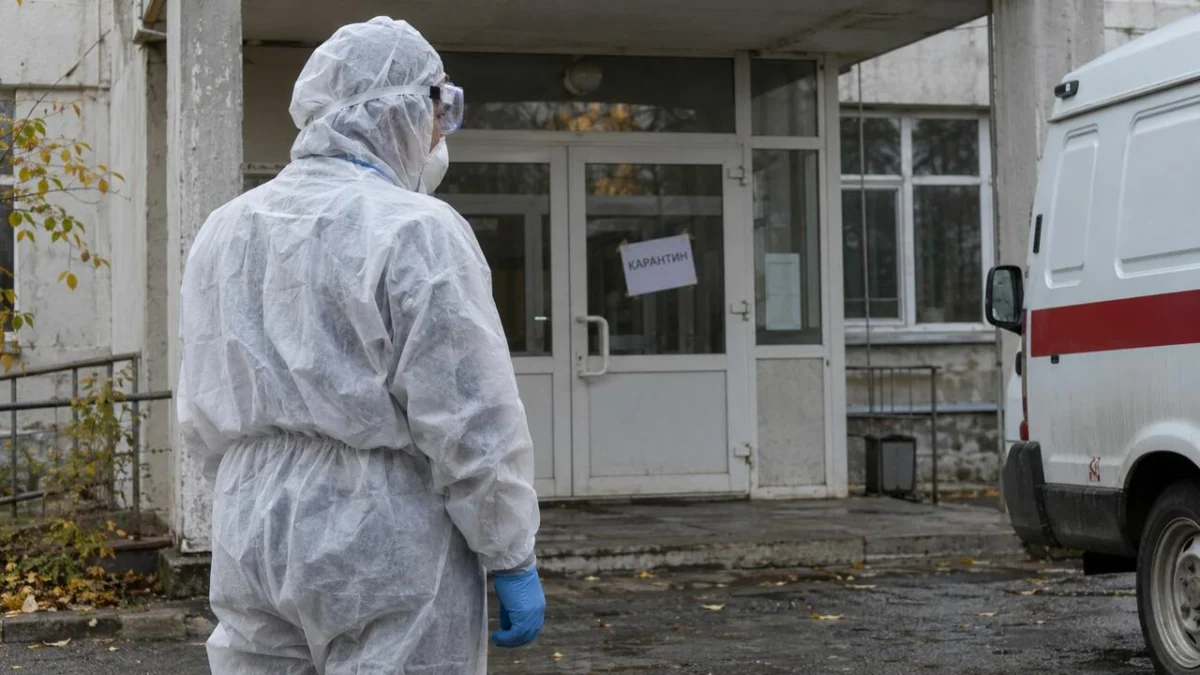
A grave public health crisis has unfolded in Siberia following the death of a 28-year-old employee of an anti-plague laboratory, triggering an extensive and rigorously enforced containment operation across the Irkutsk region. The incident, shrouded in a degree of official ambiguity yet marked by an unmistakable show of force, has seen a hospital wing placed under quarantine, nearly 200 individuals brought under medical observation, and Russia’s chief sanitary official dispatched to the scene. Local media reports have highlighted the extraordinary involvement of Federal Security Service (FSB) units, reportedly escorting ambulances transporting the deceased woman’s contacts for examination, underscoring the severity with which authorities are treating the potential threat.
The Fatal Incident and Initial Response
The deceased laboratory worker has been identified as Daria Shipilova, a 28-year-old assistant at the Irkutsk Anti-Plague Research Institute of Siberia and the Far East. Her death has sparked a wave of urgent action and considerable public concern. According to initial reports from local outlets such as Lyudi Baikala and REN TV, Shipilova was admitted to a hospital in Shelekhov with severe pneumonia. Despite being placed on a ventilator, her condition deteriorated rapidly, leading to her death. While some reports, including from The Moscow Times, suggest she was admitted on September 29 and died within 48 hours, other accounts indicate she spent three days in the hospital.
Crucially, Shipilova reportedly informed medical staff that she had accidentally broken a tube containing live bacteria while collecting samples. Lyudi Baikala, citing journalist Pavel Stepanov and the Telegram channel Mash, pinpointed this alleged accident to September 25 and directly linked it to plague bacteria. These reports further described her illness as pneumonic plague, the most virulent and transmissible form of the disease. However, it is vital to note that neither the diagnosis of pneumonic plague nor the specific details of the laboratory accident have been publicly confirmed by official investigators, contributing to a climate of uncertainty. Adding to the diagnostic complexity, IRK.ru reported that doctors initially suspected a severe case of COVID-19 and transferred her to the hospital’s dedicated COVID center, illustrating the challenge in identifying such a rare and dangerous infection amidst common respiratory illnesses.
The swiftness and scale of the response indicate the high-risk nature of the suspected pathogen. By the evening of October 1, security and administrative officials were reportedly convening in Irkutsk. Lyudi Baikala, citing sources close to law enforcement, reported that FSB units began accompanying ambulances transporting Shipilova’s contacts for examination on that very day. This extraordinary measure was corroborated by The Insider, while residents in the affected areas reported seeing individuals in full protective suits on the streets, a visual testament to the gravity of the situation. The FSB has not issued an official confirmation of these escorts.
Chronology of Events and Escalating Containment
The timeline of the incident and subsequent official actions paints a picture of rapidly escalating concern and a comprehensive, albeit guarded, response:
- September 25: Alleged date of the laboratory accident where Daria Shipilova reportedly broke a tube containing live bacteria, according to media reports.
- September 29/October 1: Daria Shipilova is admitted to a hospital in Shelekhov with severe pneumonia. Reports vary on the exact admission date.
- October 1 (Evening): Security and administrative officials hold an urgent meeting in Irkutsk. FSB units reportedly begin escorting ambulances carrying Shipilova’s contacts.
- October 2:
- Irkutsk Governor Igor Kobzev announces a suspected "particularly dangerous infection" and assures residents that identified contacts are symptom-free and testing negative. He convenes the sanitary-epidemiological commission.
- Anna Popova, head of Rospotrebnadzor (Russia’s federal agency for disease surveillance and owner of anti-plague institutes), travels to Irkutsk to personally oversee the situation.
- Shelekhov district head Maxim Modin confirms the quarantine of the hospital’s inpatient department.
- Irkutsk postpones a city-wide cleanup day scheduled for October 3, signaling broader disruption.
- Buryatia’s leader, Alexey Tsydenov, initially confirms Shipilova died of "plague" but later edits his post to say she "may have died of plague," highlighting official caution and evolving narratives.
- October 2 onwards: Extensive contact tracing continues, with approximately 197 individuals identified and 189 hospitalized for observation across three facilities. Pharmacies in Irkutsk and Shelekhov report selling out of antibiotics.
- October 3: Public information begins to disappear, with Baikalsk’s administration removing a notice urging residents to limit travel to Shelekhov and nearby settlements, and REN TV deleting five Telegram posts related to hospitalization figures.
- Ongoing: No secondary infection has been officially confirmed among the contacts. Investigations into the incident, including a reported criminal case under Article 236 for sanitary violations causing death by negligence, are underway.
The Scope of Containment and Official Statements
The scale of the containment effort underscores the potential threat. Maxim Modin, head of the Shelekhov district, confirmed that the inpatient department of the local hospital was under quarantine, though the outpatient clinic remained operational. Governor Kobzev’s statements consistently referred to a "particularly dangerous infection" rather than explicitly naming plague, a linguistic choice that reflects a strategy of caution and control over information in the initial phases of a public health emergency. He stated that the sanitary-epidemiological commission had convened on October 2, with Anna Popova’s presence emphasizing the federal government’s direct involvement. Despite the high-level response, Kobzev maintained to TASS that it was premature to identify the disease and made no mention of a death in his early official communications.
The reported contact numbers are indicative of the extensive net authorities are casting. REN TV and Izvestia reported approximately 197 total contacts, with 189 hospitalized for observation: 114 in one facility, 63 in another, and 12 at the anti-plague institute itself. Eight individuals remained under observation outside hospital settings, and some accounts suggested the list of contacts was still growing. While Governor Kobzev’s October 2 statement affirmed that all contacts were asymptomatic and had tested negative, some media reports, such as one from Profile.ru, claimed that several individuals under observation had developed symptoms, further fueling public anxiety and highlighting the inconsistencies in reported information.
Information Control and Public Trust

One of the most notable aspects of this unfolding situation has been the apparent struggle with information control and transparency. While regional leaders like Alexey Tsydenov, the head of Buryatia (the region adjacent to Irkutsk), initially provided a more direct acknowledgment, stating that the woman who died of "plague" in Irkutsk had not visited his republic and that Buryatia had no plague foci, his post was later edited to say she "may have died of plague." This rapid alteration of official communication, alongside the removal of public notices and media reports, raises questions about the flow of information during such a critical period. The Baikalsk administration, for instance, posted a notice urging residents to limit travel to Shelekhov based on "unofficial information" about a plague case, only to remove it roughly two hours later. Similarly, REN TV reportedly deleted five Telegram posts detailing the Shelekhov hospitalization figures.
This selective dissemination and retraction of information can erode public trust, particularly in a crisis where clear and consistent communication is paramount. Governor Kobzev’s later social media posts, focusing on an inspection by Roszdravnadzor (the healthcare-quality regulator) rather than directly addressing the infection, further contributed to the perceived lack of direct answers. Comments on his posts asking for official statements went unanswered, while local reports indicated a surge in demand for antibiotics, leading to shortages in pharmacies across Irkutsk and Shelekhov. This suggests that the public, despite official reassurances, was responding to the perceived threat with urgency.
The Threat of Plague: Background and Context
The disease at the center of this crisis, plague, is caused by the bacterium Yersinia pestis and remains one of the most feared pathogens in human history. Historically responsible for devastating pandemics like the Black Death in the 14th century, which wiped out an estimated one-third of Europe’s population, plague continues to pose a threat in various parts of the world, including natural foci within Russia.
There are three main forms of plague:
- Bubonic Plague: The most common form, characterized by swollen, painful lymph nodes (buboes), typically transmitted through the bite of an infected flea.
- Septicemic Plague: Occurs when the bacteria multiply in the bloodstream. It can develop from untreated bubonic plague or be the initial presentation.
- Pneumonic Plague: The most dangerous form from a public health perspective, as it infects the lungs and is the only form that can spread directly from person to person through airborne droplets. Without prompt treatment, pneumonic plague is almost always fatal. Its rapid progression and high transmissibility make it a priority for immediate and aggressive containment.
Natural plague foci, where the bacteria circulate among wild rodent populations and their fleas, exist in parts of southern Siberia, including the republics of Tuva, Altai, and Transbaikal. Russia has a long history of monitoring and managing these natural reservoirs to prevent human outbreaks. The last widely reported human case in Russia involved a child in the Altai Republic in 2016, which was linked to contact with marmots, a known carrier species.
The Irkutsk Anti-Plague Research Institute, where Daria Shipilova worked, was founded in 1934 specifically to combat plague. It is one of five such institutes nationally and holds a critical role as the only one covering Siberia and the Far East, conducting surveillance not only for plague but also for other highly dangerous infections like cholera, anthrax, and tularemia. Working with such virulent pathogens in a laboratory setting inherently carries risks, necessitating stringent biosafety protocols and highly trained personnel. The alleged incident of a broken tube containing live bacteria, if confirmed, would represent a severe breach of these critical safety measures.
Former Rospotrebnadzor head Gennady Onishchenko, who led the agency until 2013, questioned whether plague was involved at all, pointing to the dormant state of rodents and fleas during the colder months and the snow already falling in Buryatia. This argument addresses the possibility of a natural wildlife exposure, suggesting it might be unlikely at this time of year. However, it does not address or resolve the critical allegation that Shipilova broke a tube of bacteria at work, which would represent a laboratory-acquired infection rather than a natural one.
Implications and Unanswered Questions
The extensive and coordinated response to Daria Shipilova’s death highlights Russia’s robust public health infrastructure and its capacity to mobilize significant resources, including federal-level health officials and security services, when faced with high-consequence biological threats. The country’s historical experience with plague and its network of specialized anti-plague institutes mean it is uniquely prepared to tackle such challenges. The immediate deployment of contact tracing teams, quarantine measures, and prophylactic treatment protocols reflects this preparedness.
However, the incident also brings to light several critical implications and lingering questions:
- Laboratory Safety: If the death is confirmed to be a result of a laboratory accident involving Yersinia pestis, it would raise serious concerns about biosafety protocols, training, and equipment maintenance at the Irkutsk Anti-Plague Research Institute. Labs handling such dangerous pathogens operate under strict international guidelines (e.g., Biosafety Level 3 or 4), and any lapse can have catastrophic consequences. The reported criminal case under Article 236 (sanitary violations causing death by negligence) strongly suggests an internal investigation into potential procedural failures.
- Transparency and Public Trust: The conflicting reports, official reticence to confirm details, and instances of disappearing information can undermine public trust and fuel speculation. In a public health crisis, transparent and consistent communication from authorities is crucial to ensure public cooperation and prevent panic.
- Diagnostic Challenges: The initial suspicion of COVID-19 underscores the diagnostic difficulties that can arise, especially when rare diseases present with common symptoms. This highlights the importance of thorough differential diagnosis and the need for rapid, specific testing capabilities.
- Broader Health Security: While localized, any potential outbreak of a highly transmissible disease like pneumonic plague garners international attention, especially when it originates from a laboratory. It serves as a stark reminder of the continuous need for global health security vigilance and adherence to international biosafety standards.
As of the latest reports, no secondary infection has been officially confirmed among the hundreds of contacts under observation, which is welcome news and suggests that the immediate containment efforts may have been successful in preventing a wider spread. Governor Kobzev’s statements on October 2 indicating negative tests for contacts further support this. Nevertheless, the situation remains tense. A young laboratory worker is dead, a hospital wing is quarantined, and a significant portion of a community has been subjected to intense medical surveillance and security measures. The phrase "particularly dangerous infection" accurately describes the stakes of this situation. Yet, despite the widespread actions, a definitive and publicly confirmed explanation of what precisely transpired, and the official cause of Daria Shipilova’s death, remains elusive. The incident serves as a stark reminder of the inherent risks associated with biological research and the paramount importance of unyielding vigilance in public health protection.

