
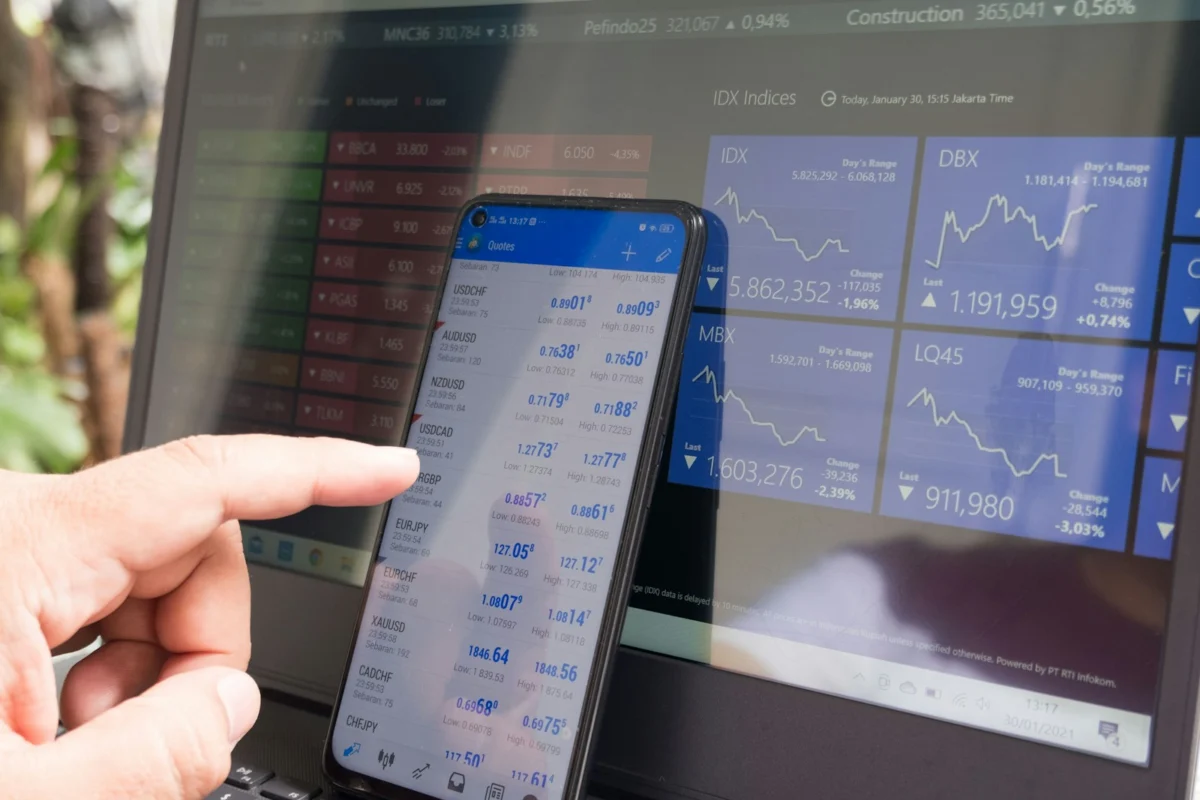
The allure of the foreign exchange (forex) market, with its promise of significant returns, often captivates young individuals eager to grow their financial portfolios. However, this global financial arena, while potentially rewarding, is fraught with inherent risks. The stark reality is that a considerable number of novice traders experience initial losses, underscoring two fundamental tenets for new entrants: never invest capital that one cannot afford to lose, and approach the market with a comprehensive understanding of its complexities and challenges. This dual consideration forms the bedrock of a sustainable and responsible trading journey, particularly for those just embarking on their financial market endeavors.
Understanding the Global Foreign Exchange Market: Scale and Structure
Forex, an abbreviation for "foreign exchange," refers to the global, decentralized, or over-the-counter (OTC) market for the trading of currencies. This colossal marketplace is where individuals, companies, and central banks exchange currencies. It is widely recognized as the largest and most liquid financial market in the world, with daily trading volumes consistently exceeding $7 trillion. For context, this dwarfs the combined daily turnover of global stock and bond markets. The primary participants include large international banks, multinational corporations, hedge funds, central banks, and, increasingly, retail traders.
The decentralized nature of the global forex market means that trades occur directly between two parties (OTC) rather than through a single central exchange. This structure facilitates continuous trading across different time zones, operating 24 hours a day, five days a week, from Monday morning in Asia to Friday afternoon in New York. This constant activity presents both opportunities and challenges, requiring traders to remain vigilant and adaptable to rapidly changing market conditions.
Forex in the United States: A Regulated Environment
While the global forex market is largely decentralized, its operation within specific national jurisdictions is subject to varying degrees of regulation. In the United States, the forex market is notably stringent and highly regulated, a critical distinction for American traders. This robust regulatory framework is primarily overseen by two key government agencies: the Commodity Futures Trading Commission (CFTC) and the National Futures Association (NFA).
The CFTC is an independent agency of the US government created in 1974 to regulate the commodity futures and options markets in the United States. Its mission is to foster open, transparent, competitive, and financially sound markets, and to protect market users and the public from fraud, manipulation, and abusive practices. The NFA, on the other hand, is the self-regulatory organization for the U.S. derivatives industry, including forex. It develops and enforces rules, provides programs and services that safeguard market integrity, and protects investors.
Under US regulations, retail forex participants are generally limited to trading spot currencies. This means currency pairs are bought and sold immediately, or "on the spot," at the prevailing market exchange rate. This contrasts with other forex instruments like futures or options, which are regulated under different frameworks and often have specific restrictions for retail participation. The emphasis on spot trading for retail investors aims to simplify the trading process and reduce certain complexities associated with derivative products.
Furthermore, US regulations impose specific leverage limits on retail forex traders. Leverage allows traders to control a large amount of currency with a relatively small amount of capital, amplifying both potential gains and losses. For major currency pairs (e.g., EUR/USD, USD/JPY), the maximum leverage permitted for US retail traders is typically 50:1. For non-major pairs, it is usually 20:1. These limits were significantly tightened following the 2008 financial crisis and subsequent legislative changes, primarily to protect retail investors from excessive risk exposure, which could lead to rapid and substantial account depletion. The rationale behind these regulations is to safeguard the financial well-being of individual traders and maintain market integrity, curbing practices that could be detrimental to less experienced participants.
The Journey for Aspiring Young Traders: Attraction and Initial Hurdles
The appeal of forex trading for younger generations is multifaceted. The digital native environment has fostered a generation comfortable with online platforms and rapid information flow, making the accessibility of online forex brokers particularly attractive. The perception of low entry barriers, with many brokers offering micro accounts requiring minimal initial deposits, further lowers the threshold for participation. Moreover, stories of rapid wealth accumulation, often amplified through social media, contribute to the market’s allure, creating an impression of quick and effortless financial success.
However, the reality for many young traders diverges sharply from this idealized image. Industry statistics, though varying, frequently indicate that a significant majority of retail forex traders, sometimes as high as 70-80%, lose money over time. This high attrition rate can be attributed to several factors: insufficient education, inadequate risk management, emotional trading decisions, and a fundamental misunderstanding of market dynamics. Many enter the market without a solid grasp of macroeconomic principles that drive currency valuations, or the technical analysis tools used to identify trading opportunities.
The Imperative of Education and Risk Management
Given the inherent challenges, a rigorous commitment to education and robust risk management strategies is paramount for any aspiring forex trader. The market is not a get-rich-quick scheme; rather, it demands continuous learning, discipline, and a methodical approach.
Most reputable brokers, recognizing the need for trader education, offer demo accounts. These simulated trading environments allow new traders to practice with virtual money under real market conditions. The importance of these demo accounts cannot be overstated. They provide a risk-free sandbox to:
- Familiarize with Trading Platforms: Learn the interface, order types (market, limit, stop-loss, take-profit), and charting tools.
- Develop Trading Strategies: Test various approaches (e.g., trend following, range trading, breakout strategies) without financial consequences.
- Understand Market Volatility: Observe how currency pairs react to news events and economic data releases.
- Practice Risk Management: Implement stop-loss orders, manage position sizes, and experience the psychological impact of wins and losses in a controlled setting.
Beyond practical platform experience, comprehensive theoretical education is crucial. This includes understanding:
- Fundamental Analysis: How economic indicators (GDP, inflation, interest rates, employment figures), geopolitical events, and central bank policies influence currency values.
- Technical Analysis: Interpreting price charts, identifying patterns, and using indicators (moving averages, MACD, RSI) to forecast future price movements.
- Risk Management Principles: The 2% rule (never risking more than 2% of total capital on a single trade), calculating position sizes based on stop-loss levels, and understanding leverage effects.
- Trading Psychology: Managing emotions like fear, greed, and impatience, which are often cited as major contributors to trading failures.
Navigating Brokerage Services and Trading Costs
Selecting a suitable forex broker is a critical step. A reputable broker should be regulated by relevant authorities (like the CFTC and NFA in the US), offer competitive trading conditions, provide robust platforms, and maintain transparent fee structures. Resources like "CompareForexBrokers.com" can assist in the initial vetting process, but individual due diligence is indispensable.
Demystifying Trading Expenses:
Trading costs can significantly erode profits, especially for frequent traders or those with smaller accounts. These costs typically include:
- Spreads: The difference between the bid (sell) and ask (buy) price of a currency pair. Brokers profit from this spread. A lower spread means lower trading costs. For example, OANDA, a well-known broker, is recognized for its competitive spreads, often around 1.4 pips (percentage in point) for the EUR/USD pair. A pip is the smallest price change a currency pair can make, representing 0.0001 for most pairs.
- Commissions: Some brokers charge a fixed commission per trade, especially those offering raw spreads (very low spreads but with a separate fee).
- Swap Fees (Overnight Interest): If a trading position is held overnight, traders may either pay or receive an interest amount, depending on the interest rate differential between the two currencies in the pair and the direction of the trade.
- Inactivity Fees: Some brokers, like OANDA, may deduct a fee (e.g., 20 units of currency) if an account remains inactive for an extended period (e.g., 12 months). This encourages active trading or closure of unused accounts.
- Deposit/Withdrawal Fees: While many brokers offer free deposits and withdrawals via common methods like debit cards and ACH, it’s crucial to check for potential fees associated with other methods or international transfers.
Strategic Broker Selection:
Beyond cost, consider the following when choosing a broker:
- Regulatory Compliance: Essential for security and investor protection.
- Platform Functionality: Ease of use, advanced charting, mobile compatibility, and integration with popular third-party tools like MetaTrader 4/5 and TradingView.
- Customer Support: Responsiveness and availability.
- Educational Resources: Webinars, tutorials, market analysis.
- Range of Currency Pairs: Availability of desired major, minor, and exotic pairs.
Leveraging Educational Resources and Tools:
Modern trading platforms offer a wealth of free tools and resources. For instance, OANDA provides free integration with TradingView, a popular charting platform, and a free Premium Upgrade for MetaTrader 4, enhancing analytical capabilities. These tools, when combined with dedicated learning, provide a significant advantage to aspiring traders.
Evolving Strategies: Automation and Professional Pathways
As traders gain experience and comfort with manual execution, many, especially younger, tech-savvy individuals, gravitate towards automation strategies. This involves using algorithms or expert advisors (EAs) to execute trades based on predefined rules.
The Rise of Algorithmic Trading:
Algorithmic trading, also known as algo-trading or automated trading, leverages computer programs to execute trades at speeds and frequencies impossible for humans. Its benefits include:
- Speed and Efficiency: Trades are executed almost instantaneously.
- Elimination of Emotion: Algorithms follow strict rules, removing psychological biases.
- Backtesting: Strategies can be tested against historical data to evaluate their potential profitability.
- 24/5 Operation: Algorithms can trade continuously without human intervention.
For those with a coding background, developing custom trading algorithms is a natural progression. Brokers like OANDA facilitate this through their US Forex API (Application Programming Interface). An API allows custom software applications to interact directly with the broker’s trading system. OANDA’s API provides access to live and historical price data, account management features, and order execution capabilities, enabling traders to build sophisticated automated strategies tailored to their specific needs. This approach demands not only trading knowledge but also programming skills (e.g., Python, C++) and an understanding of quantitative analysis.
High-Volume Trading and Rebate Programs:
For extremely active traders, typically those with substantial capital and high trading frequency, some brokers offer volume rebate programs. These programs incentivize large trading volumes by providing a portion of the spread or commission back to the trader once a certain monthly volume threshold is met. For example, to qualify as an "Elite Trader" with OANDA and access their rebate program, a trader might need to achieve a minimum monthly trading volume of $10 million. These programs are generally geared towards institutional or professional traders rather than typical retail participants, highlighting the vast difference in scale between individual speculation and professional market making.
Cultivating a Sustainable Trading Mindset
It is imperative to disabuse oneself of the notion that forex trading offers a swift and effortless path to riches. This pervasive myth is often propagated by unscrupulous entities or through anecdotal exaggeration. Any proposition that guarantees quick wealth with minimal risk in the forex market should be viewed with extreme skepticism, as it fundamentally misrepresents the intricate and challenging nature of currency trading.
Dispelling the "Get Rich Quick" Myth:
Successful forex trading is a marathon, not a sprint. It requires patience, discipline, resilience, and a commitment to continuous learning. Market dynamics are constantly evolving, influenced by a myriad of economic, political, and social factors. Traders must adapt, refine their strategies, and remain informed.
Core Principles of Prudent Trading:
- Capital Preservation: Always prioritize protecting your trading capital. "Rule number one is never lose money. Rule number two is never forget rule number one."
- Risk Management: Implement strict stop-loss orders, manage position sizes, and never over-leverage.
- Emotional Discipline: Stick to your trading plan, avoid impulsive decisions driven by fear (panic selling) or greed (over-trading, holding losing trades too long).
- Continuous Learning: The market is an ever-changing environment. Stay updated on global economic news, refine technical skills, and review past trades.
- Realistic Expectations: Understand that losses are an inevitable part of trading. Focus on long-term consistency and incremental gains rather than chasing unrealistic profits.
By committing to trading only what you can afford to lose, diligently learning the ropes, and adopting a cautious, steady approach, traders can gradually build their market knowledge and enhance their probability of achieving sustained success.
The Broader Significance of Forex Trading
Beyond individual speculative endeavors, the foreign exchange market plays a pivotal role in the global economy. It facilitates international trade and investment, allowing businesses to convert currencies for imports and exports, and enabling cross-border capital flows. Without an efficient forex market, global commerce would grind to a halt.
For individuals engaging in forex trading, the experience can foster a deeper understanding of global economics, geopolitics, and financial literacy. It compels participants to analyze economic data, understand central bank policies, and grasp the interconnectedness of international markets. This enhanced financial acumen can be valuable not only for trading but also for broader personal financial management and investment decisions.
The ongoing vigilance of regulatory bodies like the CFTC and NFA in the US ensures that the market operates with a degree of fairness and transparency, protecting retail investors from predatory practices. As the market continues to evolve with technological advancements and increasing retail participation, the balance between fostering innovation and safeguarding investor interests remains a critical focus for regulators worldwide. The journey into forex trading, particularly for young enthusiasts, is thus an entry into a complex, dynamic, and globally significant financial ecosystem that demands respect, diligence, and an unwavering commitment to informed decision-making.

