
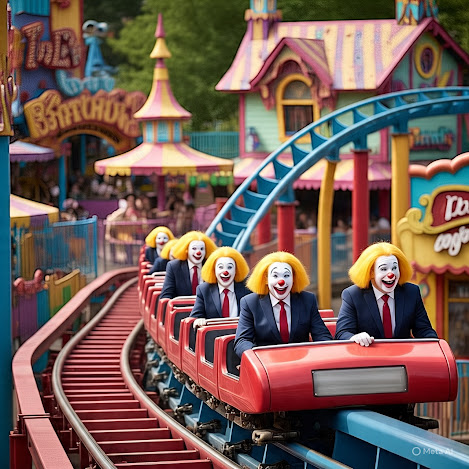
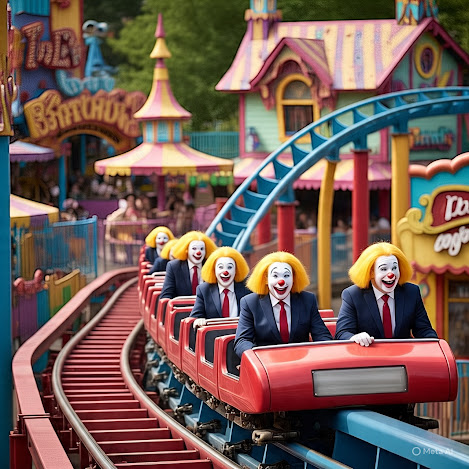
The global financial landscape has experienced significant turbulence following a period of unprecedented stability, with the stock market undergoing a dramatic roller coaster ride since February 2025. This volatility, characterized by steep drops and rapid recoveries, has been widely attributed to the imposition and fluctuating nature of international tariffs, casting a shadow of uncertainty over economic forecasts and investor confidence.
Market Volatility and its Immediate Catalyst
The financial markets, after a multi-year bull run that culminated in early 2025, entered a period of intense fluctuation. Beginning in February, major indices such as the S&P 500 witnessed a substantial decline, losing approximately 20% of their value at the nadir of the downturn. This sharp correction was then followed by an equally remarkable recovery, bringing market valuations back near their previous peaks. This pronounced oscillation, which saw billions wiped off and then reinstated in investor portfolios, starkly contrasted with the preceding calm. While market fluctuations often defy singular explanations, this particular episode has been almost universally linked to escalating global trade tensions and the implementation of new tariffs.
The immediate trigger for this economic whiplash was a series of tariff announcements and threats by the United States government. These measures, targeting a broad range of imported goods, created an environment of unpredictability, prompting businesses and investors worldwide to reassess strategies and valuations. The resulting uncertainty reverberated through supply chains, investment decisions, and consumer sentiment, transforming a stable climb into a tempestuous ride.
Understanding Tariffs: Definition and Economic Principles
At its core, a tariff is a tax levied by a government on imported goods or services. It is paid by the importer, which can be an individual purchasing directly from an overseas supplier or a large corporation like Amazon, Walmart, or Apple. However, the economic burden of tariffs ultimately falls on the domestic consumer. When the cost of importing goods increases due to tariffs, retailers and manufacturers typically pass these increased costs onto the end-user through higher prices to maintain their profit margins. This mechanism effectively transforms tariffs into a broad-based sales tax on imported products.
Beyond consumer goods, tariffs also impact domestic industries that rely on imported components or raw materials. For instance, construction projects, ranging from new commercial buildings to residential housing, face increased costs when tariffs are imposed on essential materials like steel, copper, and lumber. This inflationary pressure can stifle growth and reduce affordability across various sectors.
Economically, tariffs generate revenue for the imposing government, which can contribute to national budgets or deficit reduction efforts. However, this benefit is often offset by broader economic inefficiencies. By increasing prices and reducing the purchasing power of consumers, tariffs can slow economic activity. Most economists largely concur that while governments require a mix of tax revenues (sales, income, corporate) to function, these taxes should be as low, fair, and predictable as possible to foster an environment conducive to business planning, investment, and sustained economic growth. The current tariff regime, characterized by frequent changes and high, arbitrary rates, has introduced significant unpredictability, challenging these fundamental economic principles.
The Rationale Behind Tariff Implementation
Tariffs are occasionally employed by nations as a protectionist measure to safeguard domestic industries from foreign competition. By making imported goods more expensive, tariffs can give local producers a competitive advantage, potentially leading to increased sales, job creation, and investment within those protected sectors. This strategy can be deemed "strategic" when applied to industries critical for national security, such as aerospace or defense manufacturing, ensuring a robust domestic capability.
However, protectionist tariffs can also be influenced by political considerations, such as appeasing specific industry lobbies or voters in key electoral regions. A notable example involved tariffs on imported solar panel components, initially implemented during the Biden administration and subsequently increased. Critics argue that such tariffs impede access to cheaper, more efficient energy technologies, ultimately raising costs for consumers and hindering broader economic and environmental goals. The debate often centers on whether the benefits of protecting a specific domestic industry outweigh the broader economic costs of reduced competition, higher prices, and slower innovation across the economy.
Can Tariffs Generate More Jobs? A Nuanced Perspective
The argument that tariffs can boost domestic employment is a frequently cited justification for their implementation. Consider a hypothetical tariff of $5,000 on imported automobiles. This significant price increase could deter consumers from purchasing foreign-made vehicles, diverting demand towards domestic brands. Consequently, domestic automakers might increase production, expand factories, and hire more workers, potentially stimulating job growth and skill development within the automotive sector.
However, this perceived benefit comes with trade-offs. The higher cost of vehicles impacts all consumers, including businesses that rely on transportation fleets. This translates to increased operational costs for sectors like logistics and retail, which may then pass these costs onto their customers through higher prices. The overall effect can be a slight but pervasive increase in the cost of living and doing business across the economy, potentially stifling growth in other innovative sectors. Moreover, shielding domestic industries from international competition can diminish their incentive to innovate, improve efficiency, and develop new technologies, potentially leading to slower long-term growth and less competitive products.

Therefore, while tariffs might create jobs in specific protected sectors, the consensus among most economists is that their broad application typically leads to a net decrease in overall employment and economic efficiency. The costs of tariffs—higher consumer prices, reduced choice, and dampened innovation—often outweigh the localized benefits, making their use advisable only in very specific, strategically critical circumstances like national defense or essential food security.
The Current Administration’s Stance and Market Reaction
The current administration’s approach to tariffs has sparked considerable debate and confusion among economists and market participants. Public statements from the former President have often posited tariffs as a tool to enhance national wealth, focusing on the immediate, visible benefits to specific domestic industries. However, market reactions have consistently contradicted this optimistic outlook. Announcements of increased tariffs have typically been met with declines in share prices, reflecting the collective assessment of investors and business leaders that such measures generally lead to reduced corporate profitability and economic efficiency. Conversely, any indications of tariff reductions or pauses have frequently triggered market rallies, signaling investor relief and renewed optimism.
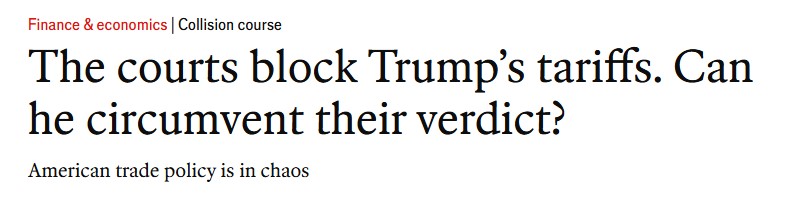
This disconnect between stated policy goals and observed market behavior has led to theories suggesting that tariffs are being employed primarily as a negotiating tactic to exert leverage in international trade disputes. The underlying premise is that by imposing or threatening tariffs, the administration aims to secure more favorable trade agreements or concessions from other nations. This approach, however, subjects the national economy to considerable uncertainty, as major policy decisions become contingent on the unpredictable actions of a single executive. Concerns have been raised regarding the concentration of such economic power, which potentially undermines the constitutional separation of powers designed to ensure checks and balances. Legal challenges, as highlighted in publications like The Economist, have already begun to emerge, testing the limits of presidential authority in trade policy.
Magnitude of Current Tariffs and Economic Lag
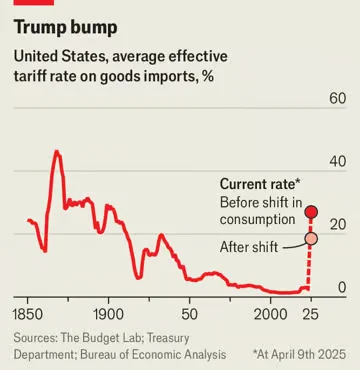
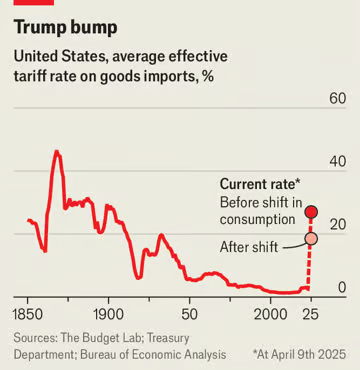
While specific tariff rates have fluctuated, they remain significantly higher than the levels observed over the past 75 years, representing a substantial departure from the relatively free trade policies that have underpinned the modern US economy. This shift is particularly impactful given that the US economic structure has evolved around low tariffs and extensive global supply chains.
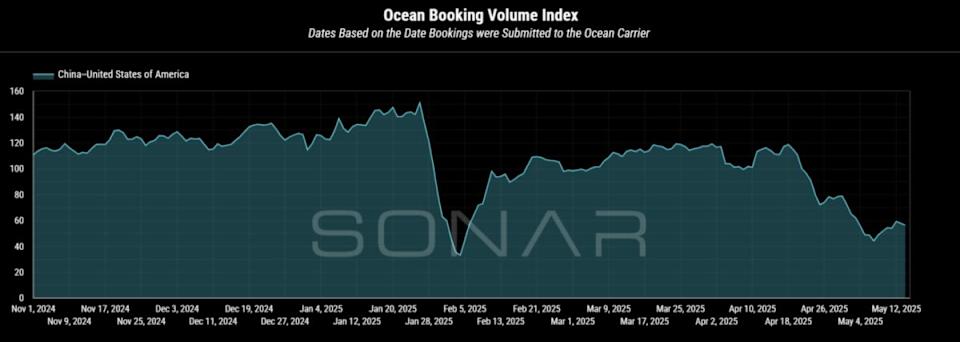
The immediate impact of these tariffs on consumer prices has not always been instantaneously visible. The US economy operates like a vast system with considerable inventory buffers. In anticipation of tariffs, many importers strategically increased orders to stockpile goods, creating a temporary surplus of cheaper products. Consequently, consumers have been drawing from this existing inventory, delaying the direct experience of higher prices. However, import data, such as that from the Freightwaves Ocean Shipping Index (OSI), indicates a significant reduction in new imports. As these stockpiled goods are depleted, shortages and price increases are projected to become more evident in the coming months. While the absence of certain non-essential imported goods might be easily absorbed, disruptions to the supply of critical tools, machinery, and components could have more profound and adverse economic consequences.
The Unfolding Scenarios: Pathways Forward
The current trade landscape presents several potential trajectories, each with distinct economic implications:
-
Sustained High Tariffs: If the current elevated tariff regime were to persist, the long-term economic outlook could be challenging. This scenario might involve a significant restructuring of global supply chains, with companies relocating production facilities closer to domestic markets or to countries with more favorable trade agreements. While this could lead to some re-shoring of manufacturing jobs, it would likely come at the cost of higher production expenses, reduced access to diverse inputs, and ultimately, higher prices for consumers. Such a shift could foster greater economic nationalism, potentially leading to retaliatory tariffs from other nations, further fragmenting global trade and stifling overall economic growth. Innovation could be hampered by reduced competition, and the overall standard of living might gradually decline as access to cheaper, higher-quality goods diminishes. This path could also exacerbate international political tensions.
-
Return to Lower Tariffs and Free Trade: Conversely, if the tariffs prove to be a temporary negotiating tactic that eventually leads to a de-escalation of trade tensions and a return to predominantly low tariffs, the economic prospects are considerably brighter. This outcome would likely see a resurgence in global trade, the re-optimization of supply chains, and a boost to consumer purchasing power as prices stabilize or decrease. Businesses would regain the predictability necessary for long-term investment and expansion. Such a resolution would reinforce the principle that open borders and the free exchange of goods and services foster collaborative prosperity among nations. Historical data consistently demonstrates that economies thrive under conditions of free trade, promoting efficiency, innovation, and mutual enrichment. The underlying belief among many investors that this scenario is more probable is likely contributing to the stock market’s resilience despite current tariff levels.
Long-Term Outlook and Investor Resilience
Despite the recent volatility, the long-term outlook for the US economy, assuming a return to democratic norms and rational economic policy, remains fundamentally robust. The current stock market’s near-record highs, despite the ongoing tariff regime, reflect a prevailing investor belief that the current trade disputes will ultimately resolve in favor of lower tariffs and a resumption of free international trade. This optimism is rooted in the historical resilience of markets and economies to political disruptions.
For individual investors, the primary lesson from this period of market turbulence is the enduring importance of a disciplined investment strategy. Panicking and liquidating assets during downturns, as illustrated by unfortunate examples of investors locking in losses, often leads to significant financial detriment. Decades of financial wisdom advocate for maintaining a diversified portfolio and remaining invested through market cycles, trusting in the long-term growth trajectory of the economy.
Navigating Information in a Complex Landscape
The current economic and political climate also underscores the critical need for media literacy. In an era where news headlines are increasingly optimized for engagement and revenue rather than strict factual accuracy, discerning reliable information is paramount. The disparate portrayals of economic events across various media outlets, often highlighting contrasting narratives to appeal to specific audiences, exemplify this challenge. Both politically aligned and commercially driven media sources frequently prioritize generating outrage or fear, as these emotions tend to maximize audience attention and, consequently, advertising revenue.
To counteract this pervasive bias, individuals can adopt two primary strategies: either disengage from the continuous news cycle and focus on personal well-being, or cultivate expertise in subjects of personal interest. By becoming well-versed in specific fields, one can critically evaluate news reports against original sources and expert consensus, quickly identifying inaccuracies or sensationalism. This approach reveals a consistent pattern: the more deeply one understands a subject, the more apparent the flaws and biases in mainstream media coverage become.
Ultimately, the current economic landscape, shaped by unprecedented tariff measures, serves as a powerful reminder of the interconnectedness of global economies and the enduring principles of sound economic policy. While short-term political decisions can introduce volatility, the fundamental drivers of long-term prosperity—innovation, efficiency, and collaborative international relations—are expected to prevail, offering a basis for cautious optimism.

