
Reports and anecdotal statements suggesting that Peter Adeney, widely known as Mr. Money Mustache (MMM), has abandoned his foundational principles of frugality and self-sufficiency since accumulating significant wealth have been directly addressed by the personal finance guru. Adeney, whose blog has been a cornerstone of the Financial Independence, Retire Early (FIRE) movement for over a decade, firmly asserts that his commitment to a conscious, efficient lifestyle remains unwavering, demonstrating that his ethos is not merely a means to an end but a deeply ingrained way of life that continues to yield substantial financial and personal benefits. This response comes as some long-time readers and new observers question whether his current financial standing has alienated him from the struggles of the "common person" he once sought to empower.
The Enduring Philosophy of Mustachianism
Mr. Money Mustache launched his blog in 2011, quickly gaining traction for his no-nonsense, often provocative advice on how to achieve financial independence through radical frugality and smart investing. Unlike many financial advisors who focus solely on income generation or traditional budgeting, Adeney’s philosophy, dubbed "Mustachianism," delves deeper into cultivating a mindset of efficiency, creativity, self-awareness, and continuous self-improvement. This approach posits that by optimizing various aspects of one’s life, individuals can not only reduce their monthly expenses but also enhance their overall well-being and happiness.
The core distinction, as articulated by Adeney, lies in the fundamental difference between "standard financial advice" and Mustachian principles. Standard advice often dictates a temporary period of sacrifice to reach a specific savings percentage, after which spending choices become largely discretionary, often leading to a "FatFIRE" approach where accumulated wealth supports a luxurious lifestyle. In contrast, Mustachianism advocates for an intrinsic love of efficiency that transforms life itself, leading to sustained enjoyment and reduced expenses over time, regardless of one’s net worth. This ethos suggests that true wealth is found not in lavish consumption but in the freedom derived from minimal needs and maximal self-reliance. This philosophical underpinning is crucial to understanding why Adeney continues these practices even when not financially compelled.
Debunking the Myths: Practical Frugality in Action
To counter the narrative that he has become "rich and fancy," Mr. Money Mustache offers concrete examples from his present-day life, illustrating how his daily routines embody the very principles he preaches. These examples serve as a practical demonstration that these habits are not about deprivation but about finding joy and efficiency in everyday activities. He also introduces a compelling metric for evaluating these savings: the "rule of 172," which suggests multiplying a monthly expense by 172 to estimate its compounded value over a decade if the money were invested instead. This highlights the long-term impact of seemingly small daily choices.
Mastering Home Autonomy: DIY and Property Enhancement
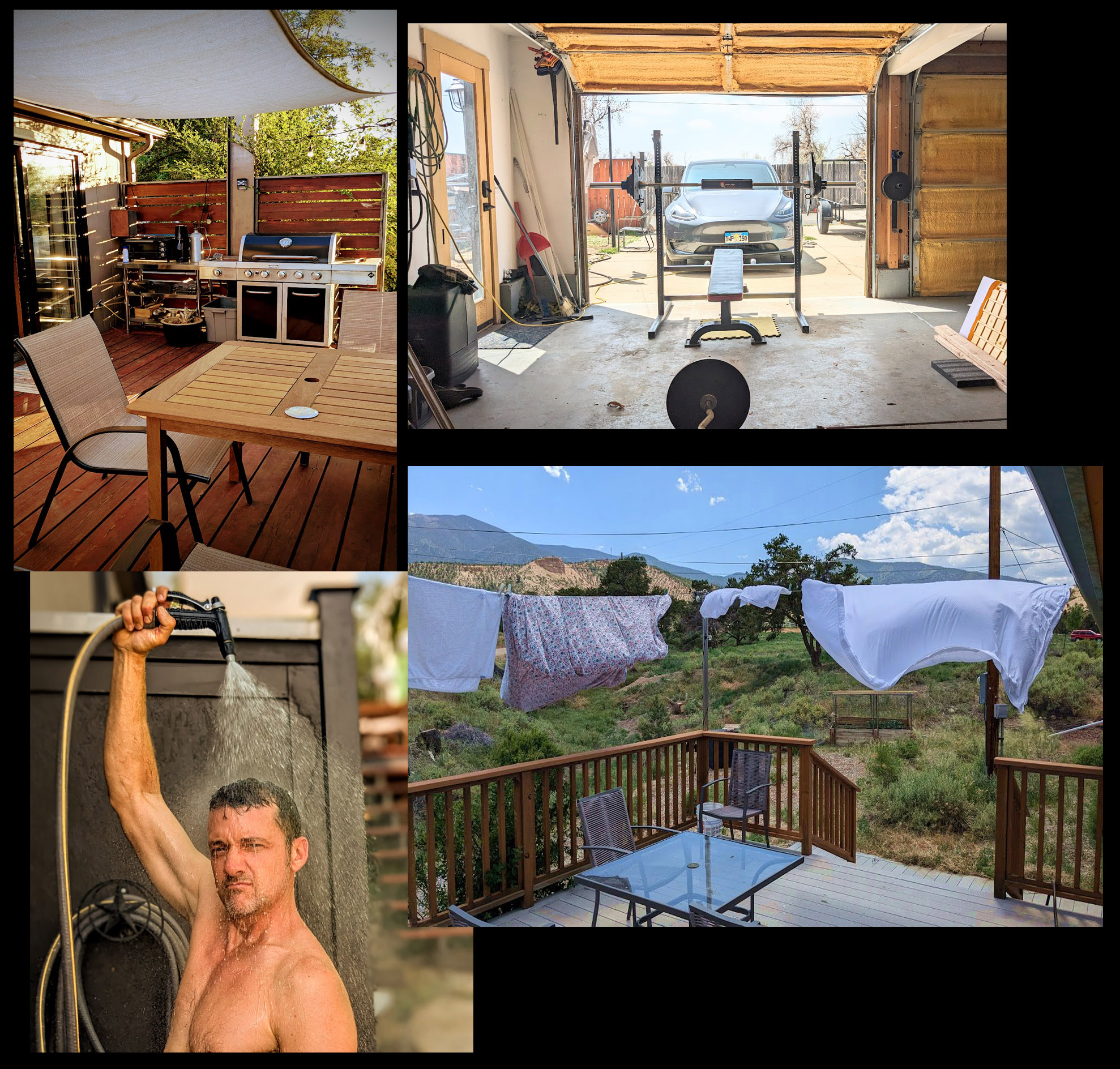
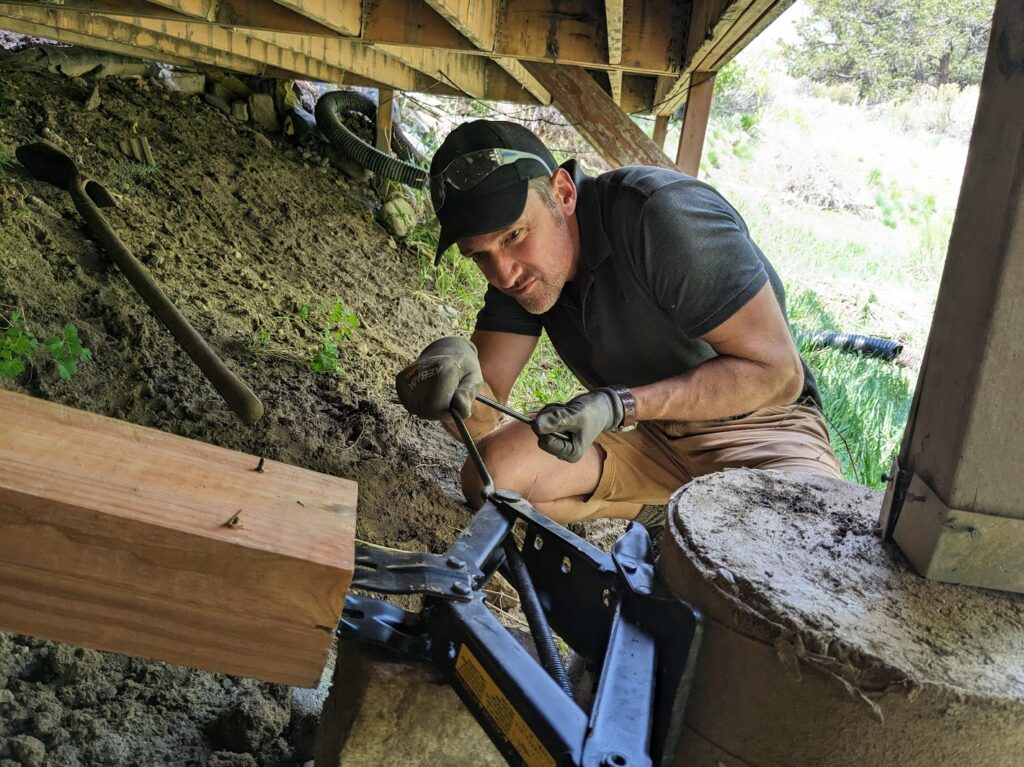
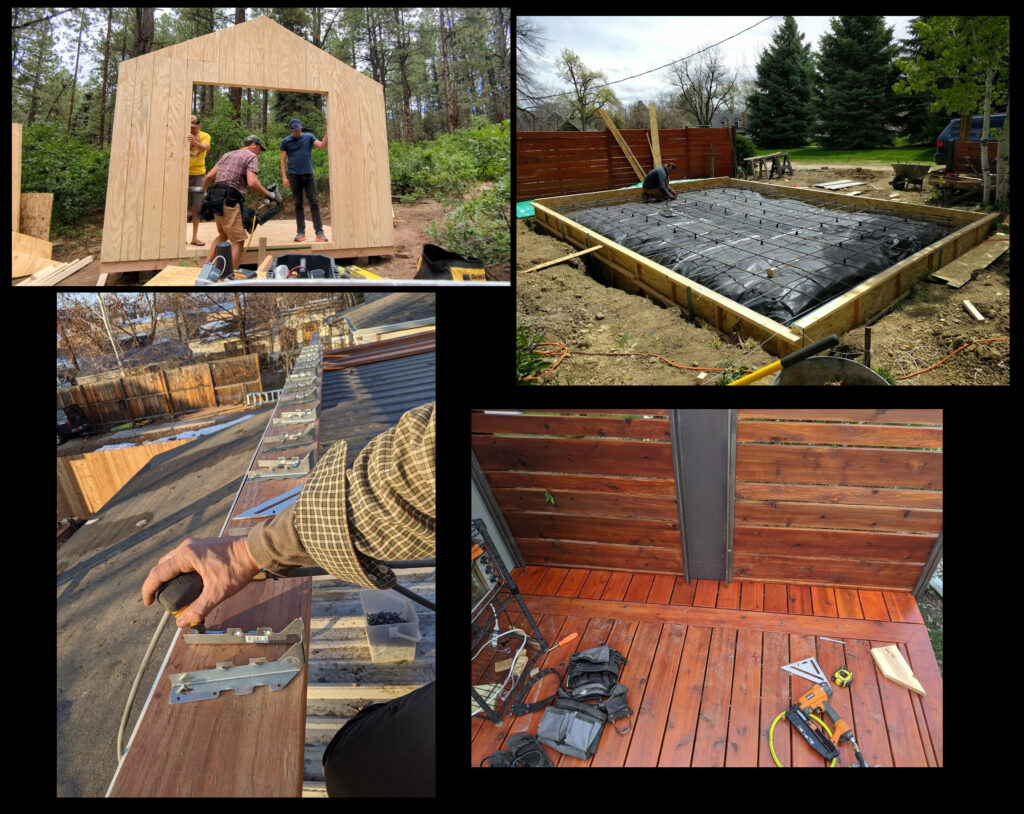
One of Adeney’s primary examples is his dedication to fixing and improving his own home, and even those of friends. This commitment to self-sufficiency in property maintenance and renovation is a cornerstone of his philosophy. He views homes not just as living spaces but as canvases for problem-solving and redesign, finding immense satisfaction in transforming "ugly and poorly designed" structures into "beautiful, functional spaces." This hands-on approach eliminates the need for expensive contractors, which, according to industry data, can account for a significant portion of renovation costs, with labor often representing 40-60% of a project’s total expense. By performing the work himself, Adeney estimates an average annual saving of $20,000, which, compounded over a decade, equates to a staggering $287,000. This practice not only saves money but also fosters a sense of empowerment and skill development, which he actively encourages in his community. The psychological benefit of mastering one’s environment and reducing reliance on external services is a significant, albeit intangible, aspect of this practice.
The Power of Community and Circular Economy
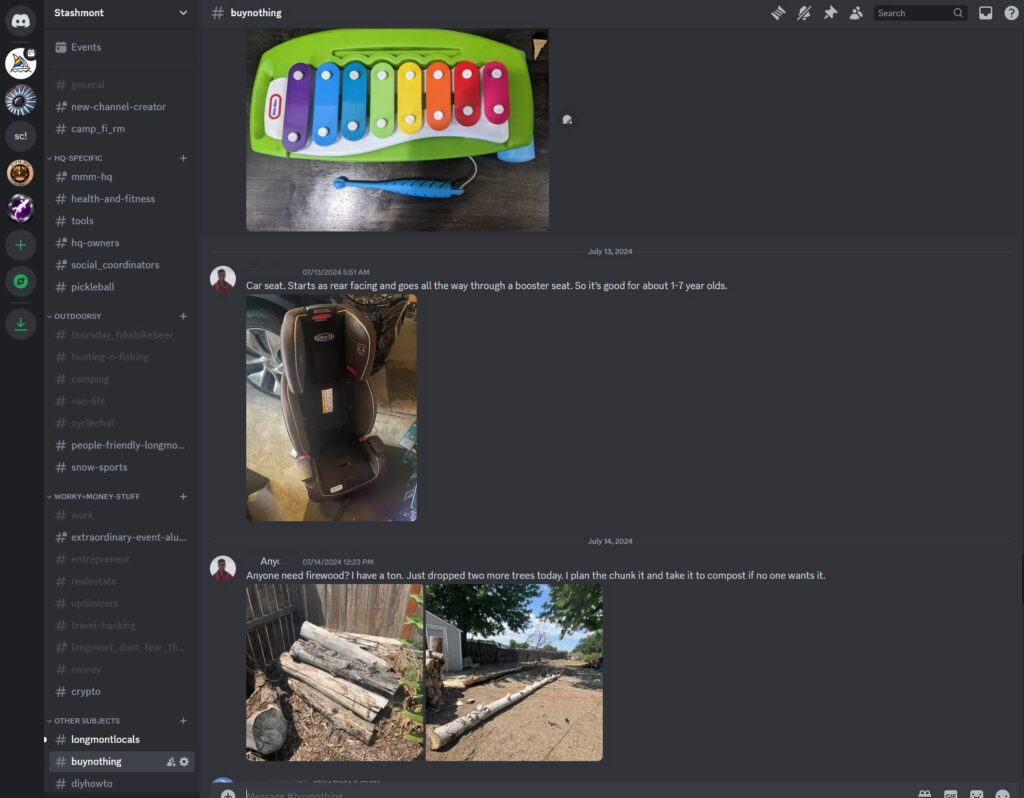
In an age dominated by instant gratification and consumerism, Mr. Money Mustache champions the virtues of the sharing economy and community engagement. He points to platforms like Craigslist, Facebook Marketplace, and local "Buy Nothing" groups as invaluable resources for acquiring high-quality used items and offloading unneeded possessions. Beyond the financial savings, which he estimates at approximately $42,000 per decade, this practice fosters a robust sense of community. Within the MMM-HQ community, a private Discord server facilitates continuous exchange, advice, and sharing among 200 local members. This network exemplifies a circular economy at a micro-level, where goods are repurposed and shared, reducing waste and strengthening social ties. This model contrasts sharply with the convenience culture propagated by e-commerce giants, emphasizing sustainable consumption and human connection over transactional purchasing. The growth of the sharing economy has been notable, with platforms like Craigslist and Facebook Marketplace facilitating billions in transactions annually, demonstrating a widespread desire for more sustainable and community-driven consumption patterns.
Prioritizing Health and Sustainable Mobility
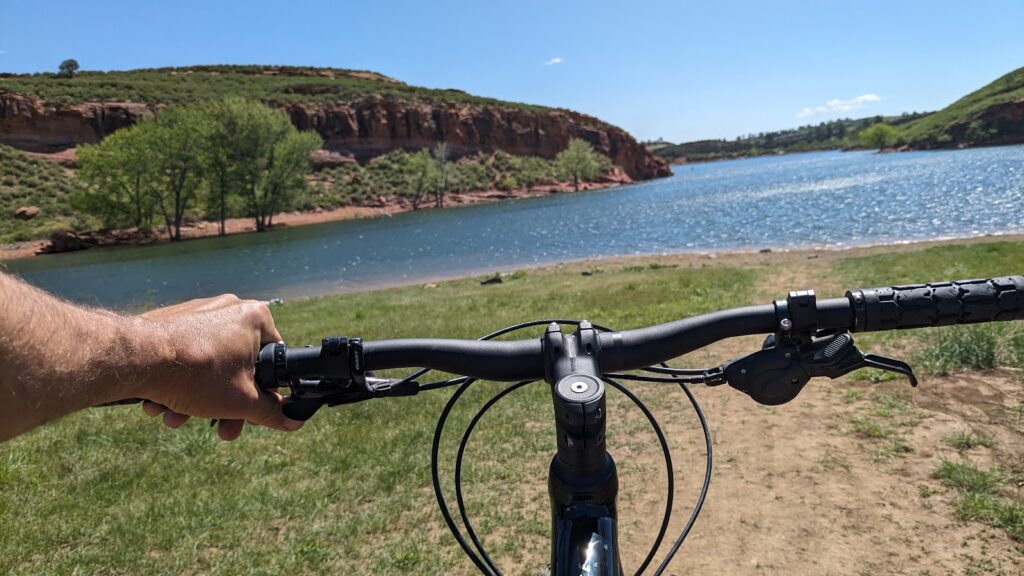
Adeney’s commitment to physical activity and sustainable transportation is another pillar of his frugal lifestyle. His insistence on "Bikes over Cars" is a long-standing tenet of Mustachianism. He highlights that cars are far more expensive to operate than many realize, with estimates from the American Automobile Association (AAA) often placing the average annual cost of car ownership (including depreciation, fuel, insurance, maintenance) at over $10,000. By choosing cycling or walking for 95% of his local trips, covering approximately 2,000 miles annually, he estimates a direct saving of $14,000 per decade.
Beyond transportation, his philosophy of "Muscle over Motor" extends to daily choices: taking stairs instead of elevators, running a golf course instead of using a cart, and performing manual labor like shoveling snow or moving furniture himself. This deliberate choice to exert physical effort directly contributes to improved health and fitness. The Centers for Disease Control and Prevention (CDC) and World Health Organization (WHO) consistently link regular physical activity to reduced risks of chronic diseases, improved mental health, and increased longevity. While difficult to quantify precisely, Adeney conservatively estimates a $10,000 annual saving in healthcare costs and increased productivity due to superior health, translating to a substantial $140,000 per decade. This intertwining of physical well-being with financial prudence underscores a holistic approach to life improvement, where health is treated as an asset that yields both personal and economic returns. The U.S. national health expenditure per person reached approximately $13,493 in 2022, according to CMS.gov, making any significant reduction in personal healthcare costs a powerful financial lever.
Ingenious Home Management: The "Glamping Retreat" Approach
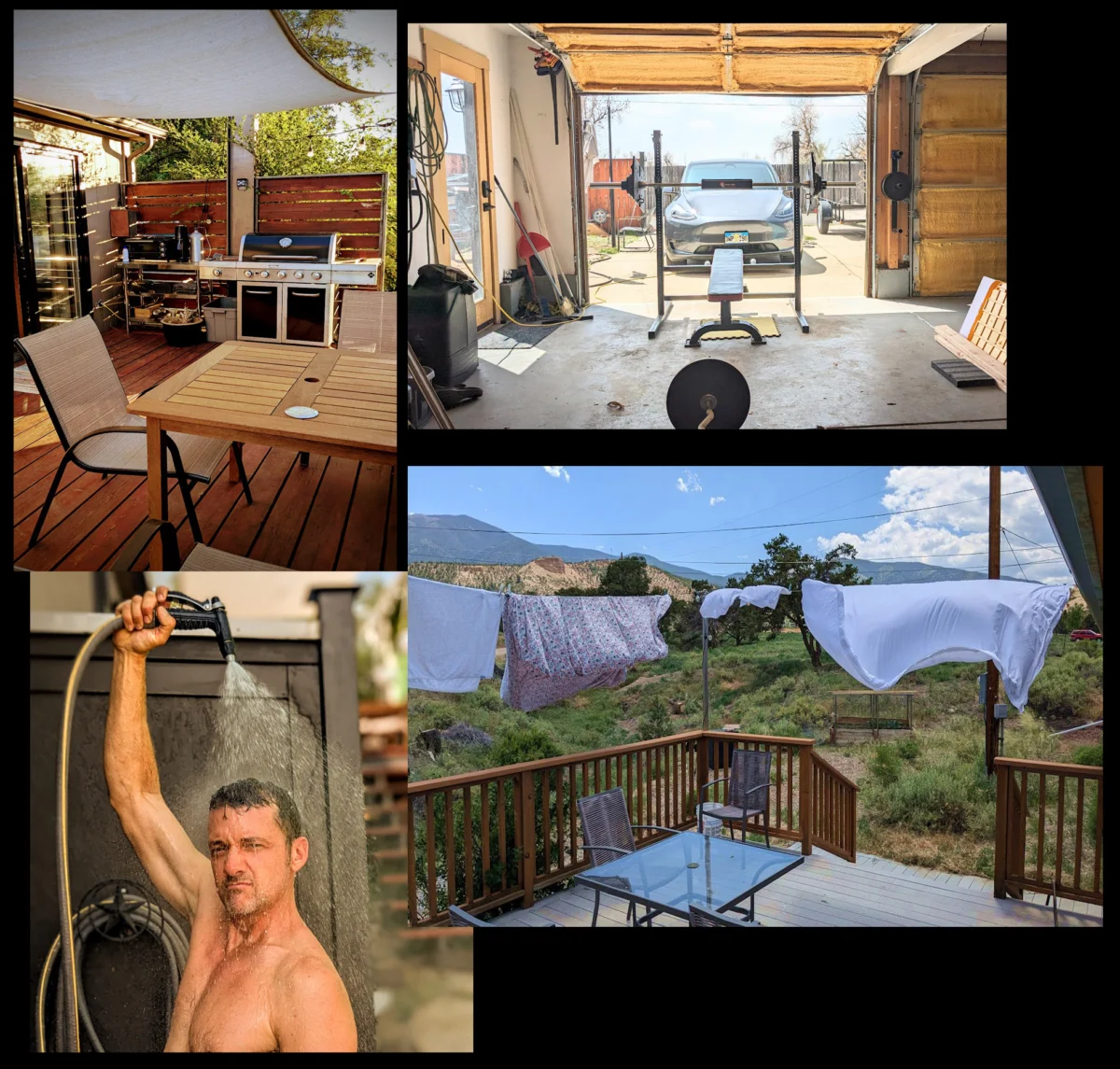
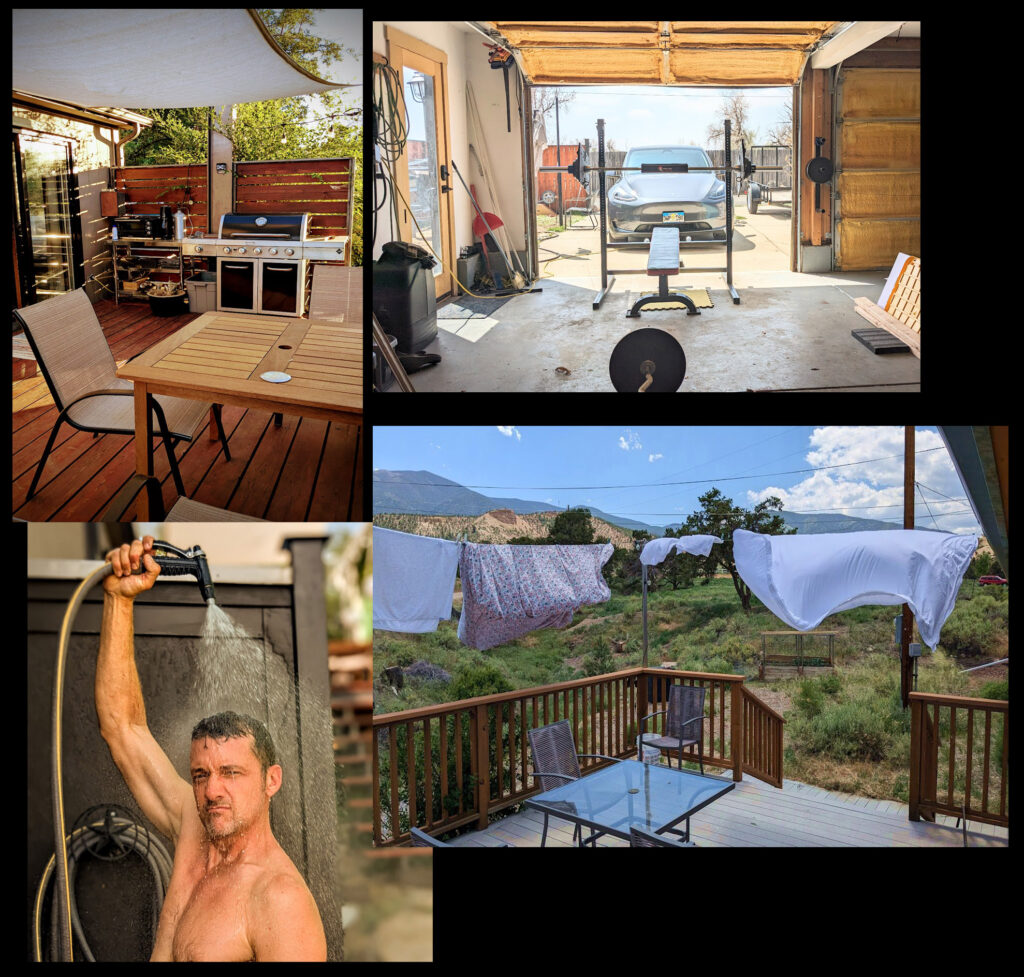
Perhaps the most unconventional yet illustrative example of Adeney’s sustained frugality is his approach to running his home like a "glamping retreat." This involves a series of creative, hands-on experiments and improvements aimed at radical energy efficiency and a closer connection to the natural environment. Examples include installing passive solar features like large windows and sliding doors, outdoor cooking, showering, and laundry, using clotheslines, and maintaining a homemade gym.
While these practices might seem extreme to some, Adeney finds profound joy in these "experiments." He notes that his combined gas and electric bill is approximately $75 per month, significantly lower than the local average of $250. This results in an estimated saving of $30,000 per decade. This category of frugality transcends mere cost-cutting; it embodies a creative, problem-solving spirit that transforms daily living into an engaging pursuit. It reflects a deeper connection to environmental stewardship, a reduction in carbon footprint, and a lifestyle that embraces seasonal rhythms and resourcefulness. The U.S. Energy Information Administration (EIA) reported the average monthly residential electricity bill in 2022 as $137.95, and natural gas bills can add another $50-100, validating the substantial savings achieved through such rigorous energy efficiency.
Embracing Local Living and Mindful Travel
Finally, Mr. Money Mustache advocates for "Local Living over Constant Travel," challenging the societal norm that equates frequent, distant travel with a fulfilling life. He observes that many individuals, even those with substantial means, often feel compelled to travel extensively, sometimes at the expense of local community engagement and personal well-being. By consciously choosing to prioritize local activities, community events, and simply enjoying home life, Adeney suggests a path to greater contentment and significant financial savings.

He outlines numerous benefits: reducing stress and logistical complexities, fostering deeper local friendships, supporting local businesses, and minimizing environmental impact. He estimates that replacing just two weeks of family travel with home-based activities can save $5,000 per year in direct costs and another $5,000 annually in incidental benefits (health, local relationships), totaling an impressive $143,000 per decade. While acknowledging the enriching aspects of travel, he stresses the importance of discernment, encouraging individuals to select the most meaningful trips and balance them with valuable time spent at home. According to the U.S. Bureau of Labor Statistics, average household spending on travel and vacations can easily exceed several thousand dollars annually, reinforcing the potential for significant savings through intentional local living.
The Compounding Impact: More Than Just Savings
Cumulatively, the habits detailed by Mr. Money Mustache—from DIY home maintenance to local living—represent a potential wealth increase of approximately $656,000 every decade. This figure is particularly striking when compared to the median wealth of many American seniors entering retirement, which, after over 40 years of work, often falls far short of this amount. Adeney emphasizes that these practices are directly responsible for a significant portion of his own recent wealth increases, proving their efficacy even for those already financially independent.
This consistent demonstration serves as a powerful testament to the long-term compounding effect of disciplined, intentional living. It challenges the notion that financial independence necessitates a departure from prudent habits; instead, it suggests that these habits are not merely tools for wealth accumulation but integral components of a sustainably fulfilling life.
Broader Implications: A Lifestyle of Intentionality
Mr. Money Mustache’s ongoing commitment to his core principles, despite his wealth, carries several broader implications. It underscores that Mustachianism is less about being "poor" and more about being "intentional" with resources, time, and energy. It provides a counter-narrative to consumer culture, suggesting that happiness and fulfillment are not directly proportional to spending.

His lifestyle choices promote environmental sustainability by reducing consumption, increasing resourcefulness, and minimizing waste. They also highlight the psychological benefits of self-reliance, community connection, and physical activity—factors that contribute significantly to mental health and overall life satisfaction, often overlooked in purely financial discussions.
Ultimately, Adeney’s response to his critics is not just a personal defense but a reaffirmation of a philosophy that has helped countless individuals redefine their relationship with money and consumption. It demonstrates that the pursuit of efficiency and self-improvement can be an enjoyable, lifelong journey, accessible to anyone, regardless of their current financial standing, and capable of yielding profound benefits long after financial independence is achieved. The "frugality-just-for-fun" aspect he touches upon suggests that these habits tap into a fundamental human drive for problem-solving and creation, making them inherently satisfying rather than burdensome.

