
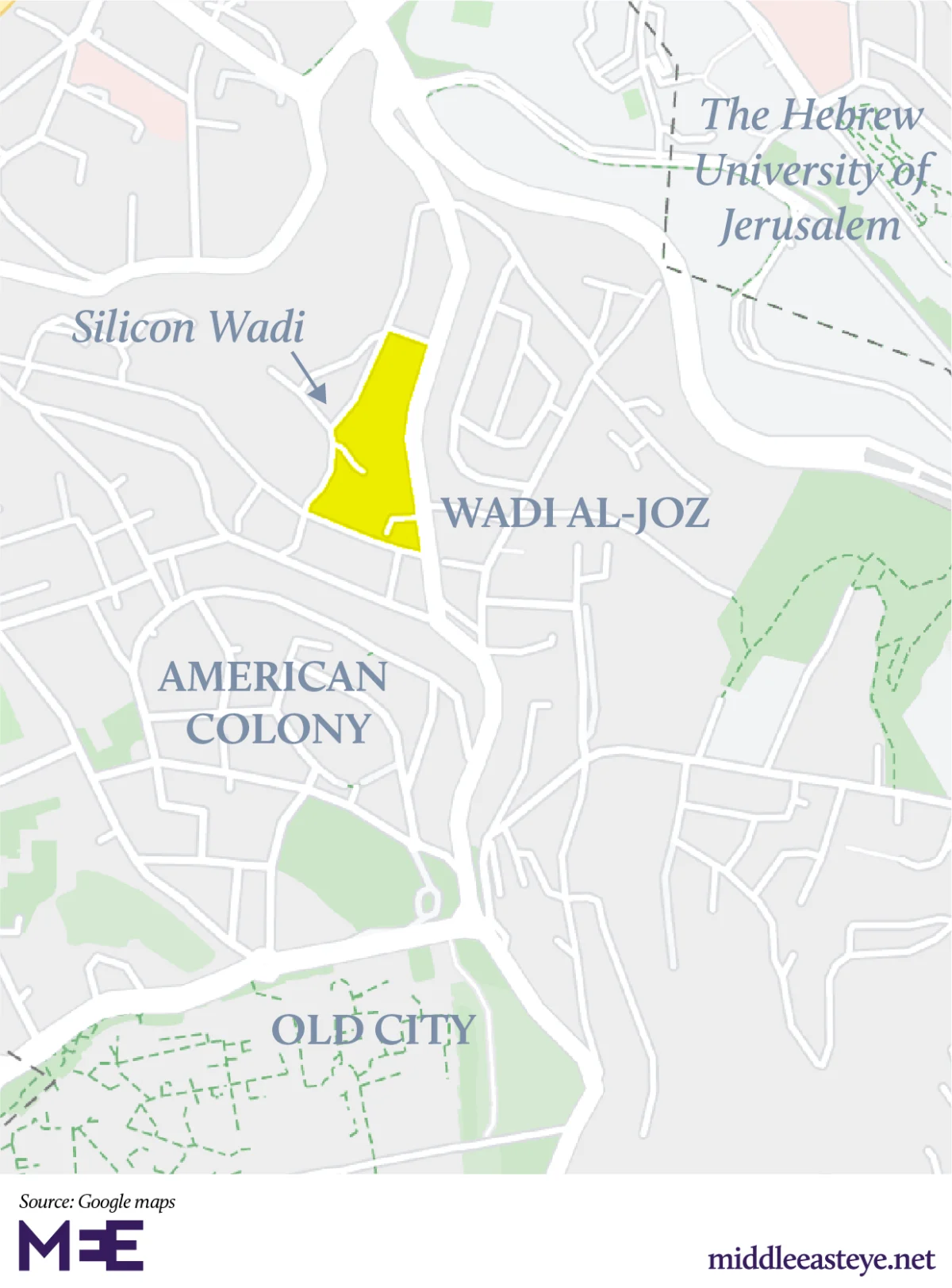
Jerusalem’s Israeli-run municipality has actively pursued investments from companies based in the United Arab Emirates for a substantial modern industrial park, tentatively named Silicon Wadi, slated for construction in the city’s occupied eastern sector. This ambitious project aims to transform the Wadi al-Joz area into a high-tech hub, yet its development has been notably shrouded in secrecy, drawing sharp criticism from Palestinian urban planning experts and political figures who warn of its potential to further entrench Israeli control and undermine the Arab identity of East Jerusalem.
The Vision for Silicon Wadi: A Regional Tech Hub
The proposed Silicon Wadi project represents a significant undertaking, envisioned as a sprawling technological and commercial center. According to details shared by Israeli officials and reported in Israeli media, the development will encompass approximately 250,000 square meters dedicated to high-tech companies, complemented by an additional 100,000 square meters allocated for commercial establishments and hotels. Proponents of the scheme project the creation of up to 10,000 jobs, positioning it as a major economic catalyst for the region. The estimated cost of this extensive development is approximately 2.1 billion Israeli shekels (around $600 million USD).
Deputy Mayor of Jerusalem, Fleur Hassan-Nahoum, a key proponent of the initiative, has been instrumental in cultivating ties with the UAE. Following a recent visit to the Emirates, where she manages the municipality’s foreign relations and tourism portfolios, Hassan-Nahoum expressed optimism about the project’s regional impact. "My dream is that Jerusalem will become a high-tech center for the entire Middle East," she told Makor Rishon newspaper, also highlighting an "opportunity" to integrate Palestinian high-tech graduates into the burgeoning sector with UAE involvement. She noted the strong "branding" of Jerusalem in the UAE, indicating a receptive audience eager to explore collaboration.
The project, initially announced in January by Jerusalem Mayor Moshe Lion, aims to replace the existing industrial area in Wadi al-Joz. This historic neighborhood, whose name translates to "Almond Valley," was once characterized by orchards on the eastern and northern slopes of Jerusalem, a short distance from the Old City walls. Today, it is a bustling Palestinian commercial and industrial district, home to hundreds of workshops, catering units, shops, warehouses, and mechanics workshops, serving a vital economic role for the local Palestinian community. The plans include the creation of 13 pedestrianized thoroughfares, fundamentally altering the area’s current landscape and functionality. Its proximity to the Hebrew University’s facilities and dormitories also positions it as a potential bridge between academic research and commercial innovation.
Abraham Accords: The Geopolitical Backdrop
The push for UAE investment in Silicon Wadi must be understood within the broader context of the normalization of relations between Israel and the United Arab Emirates. This groundbreaking diplomatic shift was publicly announced in August 2020 and formally solidified with the signing of the Abraham Accords in Washington D.C. on September 15, 2020, also including Bahrain. These accords marked a significant departure from decades of Arab policy, which had largely conditioned full diplomatic relations with Israel on the resolution of the Israeli-Palestinian conflict and the establishment of a Palestinian state.
The Abraham Accords have ushered in an era of burgeoning economic and cultural cooperation between Israel and several Arab nations. Beyond the high-tech sector, this normalization has extended to various fields, including tourism. Just last week, discussions between Israel and the UAE reportedly focused on facilitating visits for thousands of Gulf tourists to East Jerusalem’s Old City, including the revered Al-Aqsa Mosque compound. Hassan-Nahoum highlighted this potential, telling Israel Hayom that "Jerusalem will host between 100,000 and 250,000 Muslim tourists a year; they dream of visiting Al-Aqsa." This multifaceted engagement underscores a strategy to leverage economic and religious ties to build broader diplomatic bridges, potentially bypassing traditional political obstacles.
Secrecy and Palestinian Concerns

Despite the ambitious pronouncements from Israeli officials and widespread coverage in Israeli media, the Silicon Wadi project has been criticized for a notable lack of transparency and official procedure. Palestinian urban planning experts and local community representatives have voiced serious concerns regarding the clandestine nature of its development.
Khalil Tafakji, head of the maps department at the Arab Studies Society in Jerusalem and an expert on Israeli building projects in East Jerusalem, emphasized to Middle East Eye that "officially nothing has been launched." He pointed out the absence of customary public announcements in newspapers, which are standard practice for projects of this magnitude. "When you have a building project such as this, you will officially announce it in the newspaper. This did not happen," Tafakji stated, noting that the only information available has been through media statements rather than formal municipal publications.
Tafakji further elaborated on the procedural irregularities, stating, "Normally, when the municipality wants to build a project, they should publish and issue a building scheme, and also seize and expropriate the land, and this did not happen so far." This lack of official expropriation and public consultation raises significant questions about the legal and ethical framework of the project. Critics argue that the absence of these crucial steps prevents Palestinian residents and business owners in Wadi al-Joz from engaging in due process, challenging potential demolitions, or seeking fair compensation. The Israeli municipality did not respond to Middle East Eye’s request for comment on these procedural concerns by the time of publication, further fueling suspicions.
The Threat of "Judaization" and Displacement
Palestinian officials and activists view the Silicon Wadi project not merely as an economic development initiative but as a politically charged endeavor aimed at solidifying Israeli control over East Jerusalem. Hatem Abdel-Kader, a former minister for Jerusalem affairs in the Palestinian Authority, acknowledged that the project is still "under study and research" and has not yet commenced "official approval procedures." However, he expressed grave concerns about its implications, particularly if UAE investment is confirmed.
"I do not have information about UAE investment in the project, but if it is true, it is certainly dangerous," Abdel-Kader told MEE. He characterized the initiative as a "settlement project that harms the Arab identity of Jerusalem, despite Israelis claiming it will benefit Palestinians." This perspective highlights a fundamental divergence in how the project is perceived: as a benevolent economic opportunity by Israel, versus a tool for demographic and political manipulation by Palestinians.
Abdel-Kader specifically warned that Israel’s overarching plan is to connect East and West Jerusalem through projects like Silicon Wadi, thereby creating a "unified capital of Israel." From this standpoint, any Arab involvement, particularly from a state that has normalized relations with Israel, "means helping the Judaization of Jerusalem." The term "Judaization" refers to the perceived Israeli policy of altering the demographic, cultural, and physical landscape of East Jerusalem to diminish its Palestinian character and reinforce its connection to Israel.
The Precarious Status of East Jerusalem
The controversy surrounding Silicon Wadi is deeply rooted in the unresolved status of East Jerusalem, a core issue in the Israeli-Palestinian conflict. Israel captured East Jerusalem, along with the West Bank and Gaza Strip, in the 1967 Six-Day War. Shortly thereafter, Israel unilaterally annexed East Jerusalem, declaring the entire city its "eternal, undivided capital." This annexation is not recognized by the vast majority of the international community, which considers East Jerusalem to be occupied territory.
Under international law, particularly the Fourth Geneva Convention, an occupying power is prohibited from altering the demographic or cultural character of occupied territory, or from transferring its own population into it. The international community, including the United Nations, maintains that the status of Jerusalem must be resolved through negotiations between Israelis and Palestinians, with East Jerusalem envisioned as the capital of a future Palestinian state.

Wadi al-Joz, with its predominantly Palestinian population and thriving local businesses, is seen by Palestinians as an integral part of their cultural and economic life in East Jerusalem. Any large-scale Israeli development project there, especially one that could lead to the displacement of Palestinian businesses or residents, is viewed with profound suspicion and as a direct challenge to their claims and presence in the city. The area is currently slated for a different municipal project, which would also involve demolitions and affect Palestinian-owned properties, according to Tafakji, indicating a broader pattern of development that raises alarm among the Palestinian community.
Economic Development vs. Political Control
The Israeli municipality often frames such projects as essential for economic development and job creation, benefiting all residents of Jerusalem, including Palestinians. The argument is that high-tech hubs like Silicon Wadi can attract foreign investment, foster innovation, and provide high-quality employment opportunities that might otherwise be unavailable. Deputy Mayor Hassan-Nahoum’s suggestion of connecting Palestinian high-tech graduates to the UAE through this project aligns with this narrative of inclusive economic growth.
However, Palestinian critics argue that these economic benefits often come at a significant cost to Palestinian land, identity, and political aspirations. They contend that such projects are designed to integrate East Jerusalem more firmly into the Israeli economy and administrative structure, thereby undermining any future possibility of it becoming the capital of a Palestinian state. Moreover, concerns persist that the jobs created might not adequately compensate for the loss of existing Palestinian livelihoods due to the demolition of traditional businesses in Wadi al-Joz. The issue of land ownership and control is central: while Israel claims sovereignty, many properties in Wadi al-Joz are privately owned by Palestinians, whose rights are often challenged by Israeli municipal planning decisions.
The Broader Implications of UAE Involvement
The involvement of UAE companies, if confirmed, adds a complex layer of geopolitical significance to the Silicon Wadi project. For Israel, securing investment from an Arab state that has recently normalized relations would be a diplomatic coup, further validating the Abraham Accords and demonstrating tangible economic benefits from regional cooperation. It would also serve to challenge the long-standing Arab consensus on the Palestinian issue, potentially encouraging other Arab states to follow suit.
For the UAE, such an investment would underscore its commitment to economic diversification, technological advancement, and a regional role that prioritizes stability and prosperity. However, it also places the UAE in a precarious position, as its involvement in a project in occupied East Jerusalem would inevitably be seen by many Palestinians and their supporters as legitimizing Israeli control over the disputed territory. This could damage the UAE’s standing in the Arab and Muslim world, where solidarity with the Palestinian cause remains a deeply held principle.
The controversy surrounding Silicon Wadi is a microcosm of the larger dilemmas posed by the Abraham Accords. While proponents hail them as a pathway to peace and prosperity, critics warn that they risk marginalizing the Palestinian issue and entrenching the occupation. The project in Wadi al-Joz, with its promise of technological advancement juxtaposed against accusations of political expropriation, stands as a critical test of how these new regional alliances will impact the lives and aspirations of Palestinians in East Jerusalem. The coming months will likely reveal more about the true nature and implications of this ambitious, yet deeply contentious, development.

