
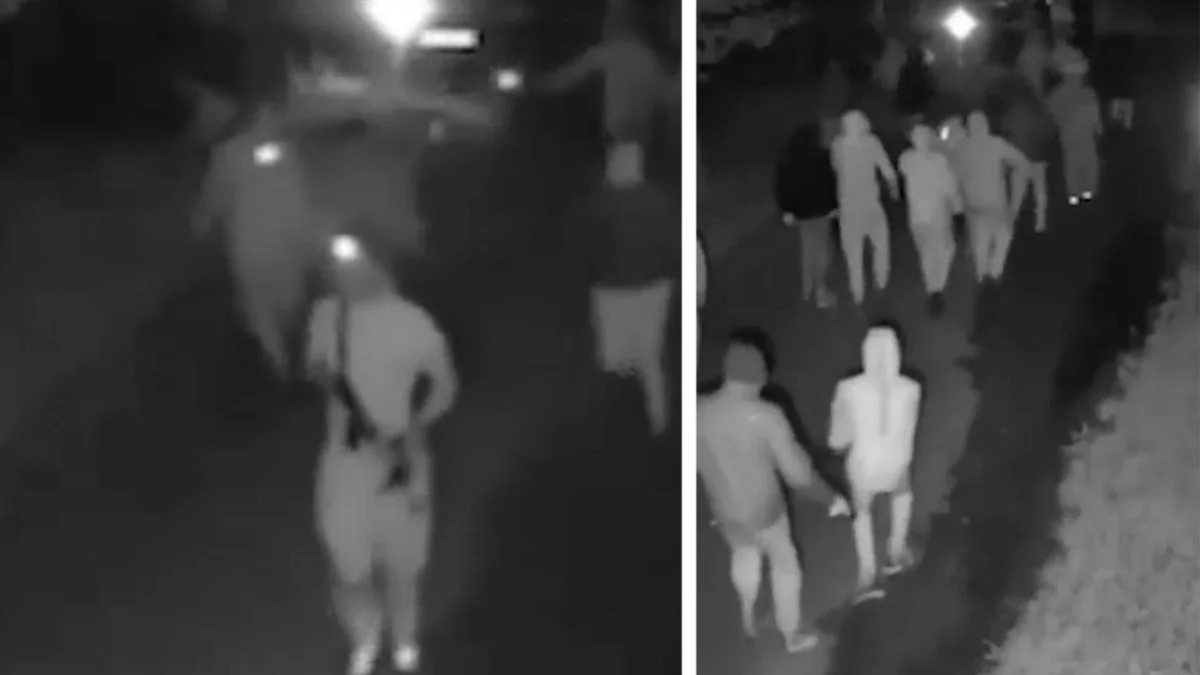
The tranquility of Overasselt, a small village nestled in the Dutch province of Gelderland, was shattered in the pre-dawn hours of September 1, 2026, by an explosion of extreme violence that left a security guard dead and two police officers critically wounded. This brazen assault, reportedly involving dozens of masked, heavily armed gang members, has sent shockwaves across the Netherlands, intensifying fears that the nation is increasingly succumbing to the pervasive influence and brutal tactics of international drug cartels, teetering on the brink of becoming a narco-state.
A Night of Unprecedented Violence in Overasselt
The horrific events unfolded around 4:00 a.m. when multiple vans, carrying an estimated dozens of masked individuals armed with assault rifles, descended upon a secluded farmhouse on Wurstweg. Surveillance footage, which has since been widely circulated and analyzed by authorities, captured the chilling moments as the heavily armed group approached a parked car on the property. According to a detailed report from the Dutch police, five shots were fired almost immediately, marking the beginning of a night of terror.
The initial victim was a 51-year-old security guard from the nearby town of Wijchen, who had been specifically hired to protect the property following a series of previous violent incidents. He was fatally shot, his murder a stark testament to the ruthless determination of the attackers. Neighbors, awakened by the cacophony of gunfire, later recounted hearing dozens of shots, with one resident telling local media that he counted at least 37 distinct shots before the arrival of law enforcement.
The situation escalated dramatically with the arrival of the first police officers responding to reports of a suspicious situation. As they approached the scene, they were met with an immediate and sustained barrage of gunfire from the well-armed assailants. Two officers sustained severe injuries in the ambush. In a testament to profound courage, their colleagues, under continuous fire, risked their own lives to drag the wounded officers to safety. One officer initially suffered life-threatening injuries, but both were later reported to be out of immediate danger, though the physical and psychological toll of the ordeal remains immense. This act of heroism was later lauded by senior police officials, underscoring the extreme danger faced by those on the front lines.
Nationwide Manhunt and Mass Arrests
In the immediate aftermath of the attack, Dutch law enforcement launched an unprecedented nationwide manhunt. The scale of the operation underscored the gravity of the situation, involving a vast array of resources including police helicopters providing aerial surveillance, specialized K9 units tracking suspects through fields and dense foliage, elite special intervention units, and strategic roadblocks erected on major highways, specifically the A73 and A76, to intercept fleeing perpetrators. Warning shots were reportedly fired by officers during intense searches of cornfields, private gardens, and other potential hiding spots, highlighting the volatile nature of the pursuit.
This extensive, coordinated effort yielded significant results. The operation led to the arrest of 34 suspects at multiple locations across the country. Apprehensions were made in a cornfield near the primary crime scene, at the Nijmegen train station, and along highways in the Limburg province, indicating a sophisticated escape plan that was ultimately foiled. The detained individuals represent a diverse international cohort, including Dutch, Belgian, French, and Algerian nationals, underscoring the transnational nature of organized crime networks operating within the Netherlands. In addition to the arrests, police seized a substantial cache of evidence, including various weapons, vehicles suspected of being used in the attack, and data carriers crucial for forensic analysis. A large-scale investigation team (TGO) has been formally established to meticulously process the evidence and build comprehensive cases against all detainees, who remain in custody.
The Troubled History of the Overasselt Farmhouse
The farmhouse on Wurstweg is far from an innocent backdrop to this latest act of violence; it possesses a documented and deeply troubling history as a nexus of criminal activity, particularly related to drug manufacturing and trafficking. This recurring pattern of incidents at the property offers critical context for understanding the recent escalation.
In 2019, the property first drew significant police attention when a professional drug lab, housed within shipping containers, was discovered following a fire. This discovery revealed the sophisticated scale of illicit operations being conducted in what outwardly appeared to be a rural setting. Years later, in 2024, the farmhouse once again became a focal point for law enforcement when armed men were found loitering at its gate, suggesting ongoing criminal connections and the persistent threat of violence.
The most direct precursor to the September 2026 attack occurred in July 2025. In that incident, an assailant fired at least 25 rounds from an AK-47-style rifle directly at the house. This brazen act of aggression led to the conviction of a 21-year-old individual from Amsterdam. In response to this escalating pattern of threats and violence, the residents of the property had resorted to hiring private security personnel, a measure that tragically proved insufficient to prevent the latest fatal assault.
Mayor Joerie Minses of the Heumen municipality, which encompasses Overasselt, has publicly expressed his profound dismay and frustration over the property’s persistent criminal ties. Following the recent murder and police shootings, he stated his intention to explore legal avenues to permanently close the farmhouse, hoping to sever its connection to organized crime and restore peace to the community.

The "Bolle Jos" Connection and the Dutch Drug War
The scale and brutality of the Overasselt attack have immediately been linked by Dutch media, citing police sources, to Jos Leijdekkers, widely known by his menacing alias "Bolle Jos." Leijdekkers is one of the Netherlands’ most wanted fugitives, a notorious drug trafficker whose operations span continents. He has been convicted in both the Netherlands and Belgium, including a 14-year sentence in the high-profile Belgian "Costa case," which exposed a vast network of cocaine trafficking through the port of Antwerp, a critical gateway for illicit drugs into Europe. He faces decades more in prison for a litany of other serious crimes. While police have not officially confirmed his direct involvement in the Overasselt incident, Leijdekkers is believed to be orchestrating his vast criminal empire from his suspected hideout in West Africa.
The immediate catalyst for the September 1st attack is believed to be a dispute over an 812-kilogram cocaine shipment seized on August 29 at the French-Spanish border. The drugs, originating from Africa and transported via Portugal, were found in a Dutch-registered truck. It is speculated that the masked gang members who stormed the Overasselt farmhouse were either seeking a missing portion of this substantial load or targeting an intermediary directly connected to Leijdekkers’ extensive network, possibly in a violent reprisal or an attempt to recover assets. This incident highlights the ruthless "settling of accounts" that characterizes the international drug trade, where enormous sums of money and vast quantities of narcotics lead to extreme violence.
The Netherlands has long grappled with its role as a major hub for international drug trafficking, a consequence of its strategic geographic location and sophisticated logistics infrastructure, particularly the port of Rotterdam, Europe’s largest. This has fueled a protracted and often violent "drug war," increasingly characterized by intimidation, kidnappings, assassinations, and now, direct assaults on law enforcement. The Overasselt incident, with its brazen targeting of police and the sheer number of armed perpetrators, marks a dangerous escalation, raising alarm bells about the country’s vulnerability to becoming a "narco-state"—a term used to describe a nation where organized crime groups wield significant power, influencing governance and public safety.
Official Condemnations and Broader Implications
The shocking violence in Overasselt has elicited strong condemnations from all levels of government and law enforcement, reflecting a deep concern over the erosion of public safety and the rule of law.
Jolanda Aalbers, Deputy Police Chief of the East Netherlands unit, described the night as "indescribable," emphasizing the profound psychological impact on her officers. "For colleagues, this is a truly intense incident," Aalbers stated. "Colleagues were wounded, and they were brought to safety by other colleagues at risk to their own lives. It was a real act of heroism. We are grateful that the wounded colleagues are out of life-threatening condition." Her words underscored the bravery of the officers and the growing challenges they face.
Justice Minister David van Weel expressed outrage, condemning the "horrible violence" and declaring, "we do not tolerate this." Speaking to Dutch news outlet NOS, Van Weel characterized the scale of the violence as "unprecedented and new" for the Netherlands. "The fact that you have hordes of dozens of young people walking through the streets of a village and immediately opening fire on the police is unprecedented and new," he emphasized. He pointed to the likely involvement of international drug cartels operating across borders, highlighting the need for robust cross-border cooperation.
Deputy Chief Prosecutor Monique Vinkesteijn elaborated on the criminal context, describing the incident as part of a "long-running conflict." She confirmed that the 34 suspects face severe charges, including murder or manslaughter, attempted murder, conspiracy, and preparation of a kidnapping. Vinkesteijn’s revelation of "ten different crime scenes" underscores the sprawling and complex nature of the crime, with investigators now working diligently to link each suspect to specific locations and roles within the operation.
Local Mayor Joerie Minses of Heumen municipality echoed the sentiment of shock and disbelief, calling the violence "un-Dutch," "completely unacceptable," and something that "goes beyond all bounds." He articulated the distress felt by his community, stating, "What happened last night does not fit Overasselt." His commitment to potentially closing the troubled farmhouse reflects a broader desire within local communities to reclaim their safety and prevent such egregious acts from becoming normalized.
The Looming Threat of a Narco-State
The Overasselt attack serves as a stark warning sign of the escalating "Dutch drug war" and the very real possibility of the Netherlands’ institutions being undermined by organized crime. The concept of a "narco-state" implies a significant erosion of state authority, where criminal enterprises exert substantial influence over political and economic structures, often through violence and corruption. While the Netherlands is far from a failed state, incidents like this, where law enforcement is directly targeted by heavily armed gangs, demonstrate a dangerous level of impunity and capability on the part of criminal organizations.
The implications are far-reaching. Public trust in safety and security could diminish, leading to a climate of fear. The economic costs associated with combating increasingly sophisticated criminal networks—from enhanced law enforcement budgets to potential impacts on foreign investment and tourism—are substantial. Furthermore, the international dimension of these cartels necessitates greater cross-border intelligence sharing and collaborative law enforcement efforts to dismantle these networks effectively. The Netherlands, with its critical position in global trade and logistics, remains a prime target for drug traffickers.
The attack in Overasselt is not merely an isolated incident of crime; it is a profound societal challenge that demands a comprehensive and resolute response. It highlights the urgent need for sustained investment in law enforcement, judicial reform to expedite prosecution, and strengthened international cooperation to combat the global reach of drug cartels. The question facing the Netherlands is not just how to bring the perpetrators of this specific attack to justice, but how to safeguard its democratic institutions and protect its citizens from the encroaching shadow of organized crime, ensuring that quiet villages like Overasselt do not become battlegrounds in an unending drug war.

